What Is Eyelash Tabbing? (Everything You Need To Know)
Eyelash extensions, lash lifts, and eyelash tabbing can sound similar, but they create different results and involve very different application methods.
Understanding those differences can help you choose the option that best fits your desired look, budget, maintenance preferences, and how long you want the results to last.
Eyelash tabbing is less commonly discussed than traditional extensions, so it is easy to be unsure about what the service actually involves.
What is eyelash tabbing?
Eyelash tabbing is a temporary lash service that uses small clusters of false lashes to add length, volume, and definition. Unlike traditional extensions, which are usually applied lash by lash, tabbing uses clusters and is designed for short-term wear.
Eyelash tabbing sits between daily false lashes and longer-wearing professional extensions.
It usually requires less upkeep than traditional extensions, and unlike a lash lift, it does not chemically reshape the natural lashes.
Instead, the goal is short-term definition, volume, and length without committing to weeks of extension maintenance.
Tabbing can be a practical choice if you want an extension-like effect with a shorter commitment.
It can work especially well for a wedding, party, trip, photoshoot, or other special event, and it saves you from having to apply strip lashes yourself.
Because both services involve attaching false lash fibres near the natural lash line, eyelash tabbing and lash extensions are easy to confuse at first glance.
For some people, eyelash tabbing may be the more accessible option because the appointment is generally shorter and the result is intentionally temporary.
Before booking, it helps to know how the process works, how long tabbed lashes typically last, how they compare with extensions, and what aftercare or removal may involve.
What Is Eyelash Tabbing?
Eyelash tabbing is a short-term lash enhancement service that shares some similarities with eyelash extensions.
It involves attaching small lash clusters near the natural lash line, but the result is not designed to last as long as a full set of traditional eyelash extensions.
Because clusters cover more area at once, eyelash tabbing can require less appointment time and maintenance than individually applied extensions. Pricing still varies by salon, location, lash style, and technician.
That short-wear format makes it especially suitable for a special occasion or one-time event.
Eyelash Tabbing Process
The eyelash tabbing process is generally faster than a full individual extension set. Instead of attaching extensions one by one, the technician applies small clusters of lashes across the lash line.
When they are sized and placed carefully, the clusters can create a fuller, more defined effect that resembles traditional extensions.
Cluster extensions are quicker to apply than individual fibres and can be customized by mixing different lengths or placements.
Tabbing still requires careful placement and adhesive, so some parts of the appointment can feel similar to a traditional extension service.
Your eyes will usually remain closed during the application while the technician places the clusters with lash adhesive. If you feel burning, stinging, or significant discomfort, tell the technician immediately rather than trying to tolerate it.
Pros Of Eyelash Tabbing
One of the main benefits of eyelash tabbing is convenience.
The appointment can be shorter than a full set of individually applied lash extensions, and the short wear time means there is usually less ongoing maintenance.
It can also suit you if you like the look of extensions but do not want to wear them continuously.
Depending on local salon pricing, lash tabbing may also cost less than a full extension set because the service uses clusters and generally takes less time.
A professional application can also create a more customized finish than a single pair of strip lashes, especially when different cluster lengths are used across the eye.
Budget-Friendly
Eyelash tabbing uses clusters of false lashes to add definition along the natural lash line.
The number of clusters used depends on your natural lashes, the size of each cluster, and whether you want a subtle or fuller finish.
With careful placement, the result can give the impression of more individually defined lashes, even though several fibres are attached together in each cluster.
Because eyelash tabbing can take less application time than a full individual extension set, the service may also be priced lower.
Regular lash extensions can take considerably longer because individual fibres are placed one by one. The total cost varies widely depending on the salon, location, set type, and technician experience.
Always check the salon’s current price list before booking, since prices vary by salon, location, and lash technician.
Temporary
Eyelash tabbing is intentionally temporary. Wear time depends on the adhesive, application, aftercare, and your skin and lash routine, but it is generally designed for days rather than weeks.
This can make it a convenient option for a special event, weekend getaway, or short period when you want more defined lashes.
Eyelash tabbing can also be a low-commitment introduction to the look of traditional lash extensions.
If you are unsure whether you like the feel or appearance of added lashes, eyelash tabbing lets you try a similar aesthetic for a shorter period before committing to a longer-wearing service.
Low-Maintenance
Eyelash tabbing can fit well into a busy routine because it does not normally require the recurring refill schedule associated with traditional extensions.
Because eyelash tabbing is temporary, it is also relatively low maintenance. You typically do not need to plan ongoing refill appointments.
Application products, placement methods, aftercare instructions, and removal recommendations can vary by lash technician or salon.
Removal depends on the adhesive used. Follow the product or technician’s instructions, and avoid pulling or peeling clusters from the natural lashes. If you are unsure, ask your lash tech about professional removal.
Whatever method is recommended, the priority is to remove the clusters gently without tugging on the natural lashes or eyelid skin.
Cons Of Eyelash Tabbing
Eyelash tabbing will not suit everyone. The short wear time, feel of clustered lashes, adhesive sensitivity, and removal process are all worth considering before booking.
For some people, the temporary nature of eyelash tabbing is the main benefit. For others, having to repeat the service for another event may make it less practical.
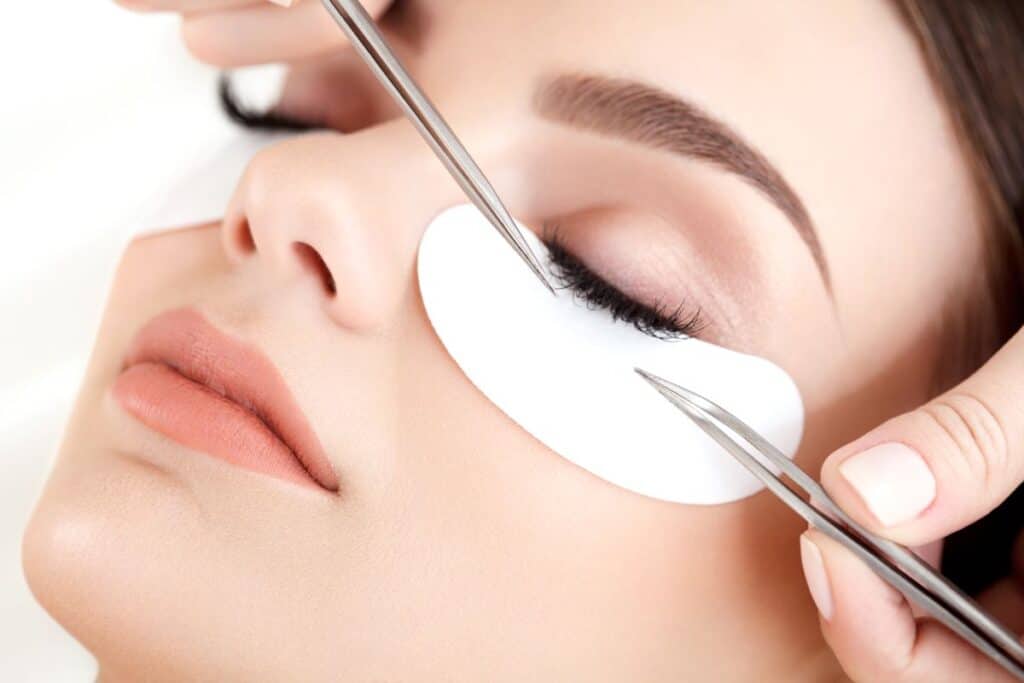
Lash clusters can also place extra weight or tension on the natural eyelashes if they are too heavy, poorly placed, or removed by pulling. Careful application and gentle removal can help reduce unnecessary stress on the lashes.
Temporary
Whether temporary lashes are a good fit depends mainly on how long you want the result to last and how much maintenance you are comfortable with.
Eyelash tabbing may not be the best option if you are looking for durable, long-lasting extensions that stay in place for weeks.
It may be better suited to people who prefer a low-maintenance option or only want enhanced lashes for a short period.
Traditional lash extensions are designed for longer wear and are maintained with regular refill appointments as the natural lashes grow and shed.
If your goal is to wake up with an enhanced lash look every day for several weeks, eyelash tabbing may be too temporary.
Heavy Lash Clusters
The lash clusters used in eyelash tabbing can feel heavier than individually applied extensions because several fibres are grouped together.
A larger or denser cluster may feel heavier because multiple fibres are concentrated in one area of the lash line.
Natural lashes may be stressed if clusters are applied too heavily, attached improperly, or removed by pulling. Gentle removal is especially important.
If the clusters feel uncomfortable, pull on the natural lashes, or irritate the eye area, contact the technician rather than trying to reposition or peel them off yourself.
For this reason, tabbed clusters may not feel as weightless as well-fitted individual extensions.
How Long Does Eyelash Tabbing Last?
The biggest practical difference between tabbing and traditional extensions is wear time.
Eyelash tabbing is typically intended for a few days of wear. Some applications may remain in place for around 3 to 5 days, but longevity varies with the adhesive, placement, aftercare, and individual routine.
In general, eyelash tabbing is a short-term service rather than a multi-week one, which is why it is commonly chosen for a special occasion.
If you want your extensions to last for weeks with scheduled fills, traditional individual extensions are the more relevant service to compare.
Eyelash Tabbing Vs Eyelash Extensions
Eyelash tabbing and eyelash extensions both use adhesive to add false lash fibres near the natural lash line, but the type of lash used and expected wear time are different.
The easiest way to differentiate the two is to compare the application method, longevity, maintenance, and cost.
Traditional lash extensions are designed for longer wear and require ongoing upkeep, whereas tabbed cluster lashes are temporary and generally require less maintenance.
Lash Fibers
One key difference between eyelash tabbing and eyelash extensions is how the added lash fibres are grouped and applied.
Eyelash extensions typically involve applying individual extension fibres or small handmade fans to isolated natural lashes.
Because the application is detailed, a full set can take considerably longer than a cluster-based service.
Eyelash tabbing uses pre-grouped lash clusters, allowing the technician to create visible fullness with fewer placement points and a shorter appointment.
Longevity
Another major difference is longevity. Eyelash tabbing and eyelash extensions suit different needs because one is intended for short wear and the other for ongoing maintenance.
Eyelash extensions are designed to remain wearable for weeks as the natural lashes move through their growth cycle, but they require regular care and refill appointments to maintain a full look.
Eyelash tabbing is better suited to a one-time event or anyone who wants to try an extension-like appearance without committing to recurring fills.
Tabbing is much more temporary, with the clusters generally intended to last only a few days.
Maintenance
If you are not looking to commit to regular lash appointments, eyelash tabbing may be the more convenient option.
The short wear time can suit a fast-paced lifestyle, although you should still follow any aftercare and removal instructions provided by your technician.
Eyelash extensions require more ongoing maintenance, including regular refill services and daily habits that help protect the extensions from premature shedding.
For some people, that extra maintenance is worthwhile because they prefer the convenience of having an enhanced lash look for longer.
Cost
Eyelash extensions can become more expensive over time because you are paying for both the initial set and ongoing maintenance.
You may also need to budget for refill appointments and any aftercare products recommended for your routine.

Eyelash tabbing may cost less because it is generally less time-consuming and does not involve the same ongoing refill schedule. Always compare current local prices rather than assuming one service will be cheaper everywhere.
Who Should Get Eyelash Tabbing?
Eyelash tabbing can be a good fit if you want to enhance your eyelashes for a special occasion but do not want to apply strip lashes at home.
It can also suit beginners who want to see how added lash length and volume feel before considering a longer-wearing extension service.
Tabbing is also practical for people who cannot keep up with regular refill appointments and only want their lashes enhanced for a few days.
When To Consult With Your Lash Technician
Before booking, consult with a qualified lash technician about any concerns, sensitivities, previous reactions to lash adhesive, or questions about eyelash tabbing.
Your lash tech can help you choose a suitable lash length, curl, and shape based on your natural lashes and the effect you want.
Your lash technician can also explain how long the clusters are expected to last and the safest method for removal based on the adhesive used.
Follow their aftercare instructions and avoid picking, pulling, or rubbing the clusters. If you develop persistent redness, swelling, pain, or eye irritation, remove the lashes as directed and seek appropriate medical advice if symptoms do not settle.
Wrap-Up
Overall, eyelash tabbing is a short-term, relatively low-maintenance lash service that adds visible length and fullness without the ongoing commitment of traditional extensions.
The application can take less time than a full set of regular lash extensions, and it may also cost less depending on the salon and style chosen.
At a glance, tabbing can look similar to extensions, especially when the clusters are carefully sized and placed.
The main differences are the application method, cost, maintenance, and longevity. The better fit depends on how long you want the result to last, how much upkeep you want, and how comfortable you are with the feel of cluster or individual lash extensions.
Eyelash Tabbing FAQs
Can You Wear Mascara With Eyelash Tabbing?
It is usually best to ask your lash technician before applying mascara to tabbed lashes. Mascara can add buildup around the clusters and may make removal or cleaning more difficult, especially if the product is waterproof.
Can You Remove Eyelash Tabbing At Home?
Removal depends on the adhesive used. Follow the instructions given by your lash technician or the adhesive manufacturer, and never pull the clusters off dry. If they do not release easily, professional removal is the safer option.
Is Eyelash Tabbing The Same As Cluster Lashes?
Eyelash tabbing generally refers to a professional cluster-lash application rather than the one-by-one method used for traditional extensions. Terminology can vary between salons, so confirm exactly what type of lashes, adhesive, wear time, and removal method your technician uses before booking.
Related Articles
How Long Do Hybrid Lashes Last?
Why Are My Eyelash Extensions Falling Out?