
Why Are My Eyelash Extensions Falling Out?
Eyelash extensions are a popular beauty treatment because they can add anything from subtle definition to dramatic length and volume without daily strip-lash application.
Because a full set takes time and money to maintain, it makes sense to want your extensions to stay neat and full for as long as possible.
It can still be frustrating to find extensions on your cheeks, fingertips, or pillowcase, especially when you are not sure whether the shedding is normal.
Some extension loss is expected because natural eyelashes shed. Rapid, patchy, or unusually heavy loss, however, can point to aftercare, adhesive, application, or lash-health issues.
There are several reasons extensions may fall early, so the most useful approach is to look at when the shedding started, whether a natural lash is attached, and whether there is any irritation or breakage.
So, why are your eyelash extensions falling out?
Eyelash extensions can fall out because the natural lash they are attached to reaches the end of its growth cycle. Premature loss can also happen because of friction, unsuitable makeup or removers, poor cleansing, adhesive or application issues, environmental conditions, or damage to the natural lashes.
Below, we’ll go through the most common causes and explain how to tell normal shedding from a retention problem.
We’ll also cover practical ways to protect your set without overcomplicating your routine.
Top Reasons Your Eyelash Extensions Are Falling Out
Here are some of the most common reasons you may notice your extensions loosening or shedding.
These are especially useful to know if you are new to eyelash extensions and still learning what normal retention looks like.
The Natural Eyelash Shedding Process
Eyelash extensions are attached to individual natural lashes, so when a natural lash sheds at the end of its cycle, the extension attached to it usually comes away too.
The eyelash growth cycle is commonly described in three phases:
- Anagen, the growing phase
- Catagen, the transition phase
- Telogen, the resting and shedding phase
The exact length of each phase varies from person to person and even from lash to lash, which is why shedding happens gradually rather than all at once.
Because different lashes are in different stages at any given time, seeing a few extensions shed over the course of a day can be completely normal.
There is no single daily number that is “normal” for everyone. Retention depends on your natural lash cycle, how many extensions were applied, your aftercare, and how long it has been since your appointment.
Mascara Use
There are several misconceptions surrounding the use of mascara with eyelash extensions.
Some people wear mascara over extensions, while others skip it entirely. Whether it is appropriate depends on the extension style and the product your lash artist recommends.
If you do use mascara, it is usually safest to keep it off volume or mega-volume fans, since coating the fans can make them clump and can make cleansing more difficult.
Additionally, use only water-based mascara (we recommend this one from Alluring).
Extension-compatible mascara is generally easier to remove than waterproof mascara, which reduces the amount of rubbing and tugging needed around the lashes.
Waterproof mascara is usually a poor match for eyelash extensions because it is harder to remove and often requires more manipulation around the lash line.
That extra rubbing, cleansing, and product buildup can contribute to premature extension loss or tangling.
If mascara is important to you, ask your lash artist which formulas are compatible with the adhesive and extension style they used.
Oils
Oil does not automatically dissolve every modern lash adhesive, but some oil-rich products can affect retention or make cleansing more difficult depending on the adhesive system.
Rather than assuming every oil is forbidden, follow the aftercare guidance for the specific adhesive your technician used.
Heavy makeup removers can also leave residue around the lash line, so whatever cleanser you use should rinse cleanly and be compatible with extensions.
Micellar water can work for some people, but it is not automatically lash-safe. Check whether the formula contains oils or other ingredients your lash artist advises against, and cleanse the lash line thoroughly rather than relying only on a cotton pad.
People with oilier skin may sometimes notice shorter retention, but skin type is only one factor among many.
Keep the lash line clean and let your technician know if you tend to produce more oil around the eyes so they can adjust prep or aftercare recommendations if needed.
Why Do My Eyelash Extensions Fall Out So Quickly?
If your extensions are suddenly shedding much faster than usual, especially after you have had consistently good retention before, consider whether anything changed in your aftercare, products, environment, or application.
Improper Application
Good application matters for both retention and natural-lash health. Poor isolation, too much adhesive, lashes that are too heavy, or an unsuitable attachment can lead to discomfort, clumping, or early loss.
Possible signs that a set needs to be assessed by another experienced lash professional include:
- Visible clumps of adhesive or several natural lashes stuck together. A tiny bonding point is normal, but bulky glue or lashes bonded to one another can create tension.
- An appointment that feels unusually rushed for the amount of work being done. Timing varies widely by technique, set size, artist experience, and fill level, so duration alone does not prove poor application.
- Persistent burning, significant redness, swelling, pain, or worsening itching. These symptoms are not something to simply tolerate and may require prompt removal or medical advice.
- Extensions that remain tangled or stuck together. A clean spoolie should separate properly applied lashes without pulling multiple natural lashes as a unit.
Do your research before booking with a new technician, especially because the service is performed so close to the eyes.
Look for strong hygiene practices, clear aftercare instructions, examples of their work, and appropriate licensing or certification where required in your area.
Dampened After Application
Your lash technician should explain the aftercare required for the specific adhesive system they used.
Older guidance often recommended keeping extensions completely dry for 24 hours, but curing recommendations vary with modern adhesives. Follow the timing given by your technician rather than a universal rule.
Getting lashes wet too soon can affect some adhesives, while other modern systems tolerate water much earlier.
You may still be told to avoid steam, saunas, very hot showers, or heavy moisture exposure for a period after application, depending on the adhesive.
The safest approach is to follow the specific aftercare instructions from the professional who applied your set.
Touching
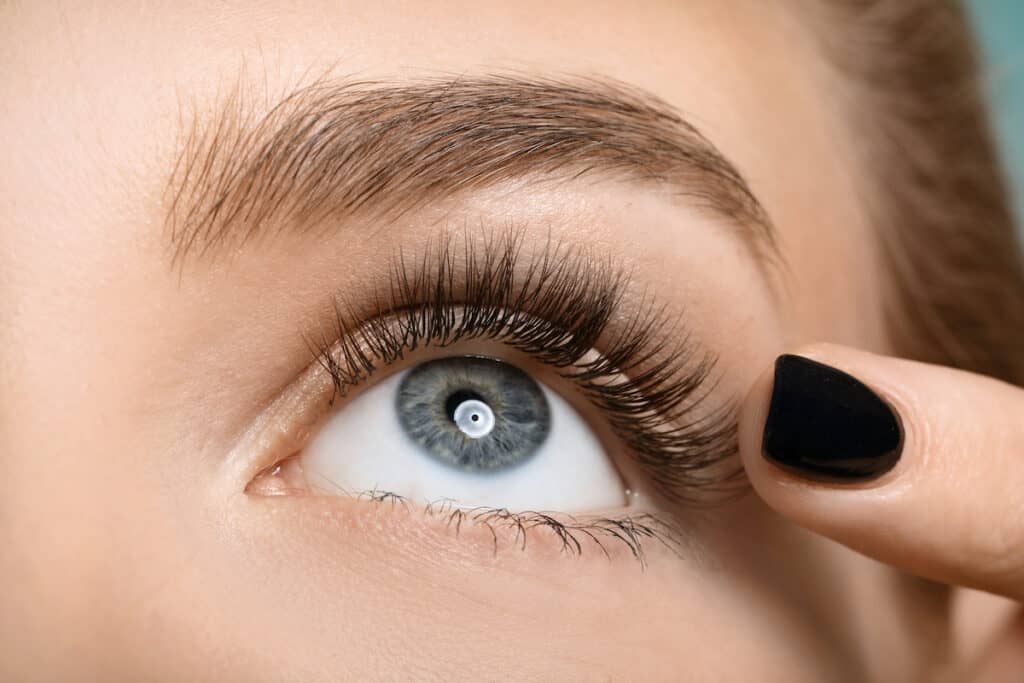
Try to keep unnecessary touching to a minimum. Here’s why:
- Oil, skincare, or makeup residue from your fingers can transfer to the lash line
- Rubbing or pulling can dislodge extensions or even pull on the natural lash
- Frequent handling can twist, tangle, or clump the extensions
This advice applies throughout the life of the set, not only during the first day after application.
An occasional gentle adjustment is unlikely to ruin a set, but repeated rubbing, picking, or pulling can shorten retention.
If you need to touch your lashes, make sure your hands are clean and be as gentle as possible.
How Much Is Too Much?
Some shedding is expected because your natural lashes are constantly cycling.
Instead of counting every extension, watch for sudden patchiness, clusters of lashes coming off at once, noticeable natural-lash breakage, or a sharp change from your usual retention.
There is no reliable rule that more than five extensions per day is automatically too much. Also, the small bulb at the end of a shed natural lash can vary in appearance and is not always bright white.
If shedding is clearly excessive or your natural lashes seem to be breaking, contact your lash technician and consider having the set assessed rather than simply changing products at random.
How Long Do Lash Extensions Last?
As the weeks pass, you will naturally see more gaps because more of the lashes carrying extensions reach the shedding stage.
A full set does not usually remain evenly full for 6 to 8 weeks without maintenance. Extensions shed gradually with your natural lashes, which is why many people schedule fills every few weeks to maintain density.
How To Make Lash Extensions Last Longer
Now that you know why extensions can shed, focus on gentle cleansing, minimal friction, and timely fills rather than trying to stop normal lash shedding completely.
- Clean and brush your lashes regularly. Use a cleanser that your lash artist confirms is extension-compatible and rinse the lash line thoroughly. Avoid using baby shampoo as a default cleanser because it is formulated for hair and scalp, not specifically for the eyelid margin or lash-extension adhesive. Use a clean spoolie only after the lashes are clean, and avoid sharing tools. You can buy disposable spoolies in bulk, or use another clean lash brush.
- Reduce overnight friction where practical. You do not have to train yourself to sleep on your back, but pressing your face directly into the pillow can bend or snag extensions. A smooth pillowcase and mindful sleep position may help.
- Keep eye makeup manageable. The more difficult a product is to remove, the more rubbing and cleansing it may require around the extensions. If you wear mascara or liner, choose formulas your lash artist says are compatible with your set.
- Schedule fills based on your retention. Many people book every 2-3 weeks, but the right interval depends on your natural lash cycle, extension style, and how quickly gaps appear.
Final Thoughts
Eyelash extensions can be a convenient way to add definition without applying strip lashes every day, but some shedding is always part of wearing them.
Common reasons for premature loss include friction, difficult-to-remove makeup, inadequate cleansing, adhesive or application issues, environmental conditions, and natural shedding.
Choosing a careful technician, keeping the lash line clean, following the adhesive-specific aftercare instructions, and avoiding unnecessary pulling can help your extensions last as well as possible without compromising your natural lashes.
Related Articles
Best Shower Goggles For Eyelash Extensions
Can You Use Micellar Water To Clean Eyelash Extensions?
Why I Stopped Eyelash Extensions – How To Decide If You Should