
Brow Lamination Vs Microblading
Eyebrow trends have changed dramatically over the years, from very thin arches to fuller, brushed-up brows.
Eyebrows now play a major role in many makeup routines, with products and salon services designed to add shape, hold, colour, or the appearance of fullness.
Because brows frame the eye area, even small changes in shape, direction, and density can noticeably change the finished makeup look.
That has led to a wide range of brow products and professional techniques, but they do not all solve the same problem.
Two popular brow services that often come up in the same conversation are brow lamination and microblading.
The key difference is whether you want to reposition the brow hairs you already have or create the appearance of additional hairs in sparse areas.
So, what are the differences between brow lamination and microblading?
In general, brow lamination temporarily redirects and smooths your existing brow hairs, while microblading is a form of cosmetic tattooing that places pigment in hair-like strokes to create the appearance of additional brow hairs.
Below, we compare how each service works, who it may suit, how long results last, what maintenance involves, and the main risks to consider before booking.
What Is Brow Lamination?
Brow lamination is a temporary chemical styling service that changes how easily the natural brow hairs can be brushed and positioned.
The finished effect can look sleek, lifted, fluffy, or feathered, depending on your natural hairs and how they are styled.
Essentially, brow lamination uses chemical solutions to make the brow hairs more pliable so they can be brushed and redirected into a neater, lifted shape. The finished look can be sleek and polished or soft and fluffy, depending on how the hairs are styled.
Because the service changes how easily the hairs can be positioned, it can make daily brow styling quicker. You may still need to brush the hairs into place, especially after cleansing or sleeping.
Brow lamination does not create new hair or make individual hairs longer, but arranging the existing hairs in a more uniform direction can make the brows appear fuller, fluffier, and more defined.
The lamination process also smooths brow hairs and leaves a slight sheen, a result that almost mimics how brows look after brow gel application.
If you want to see the full process, the video below from Huyana Beauty shows a typical brow-lamination workflow.
Who Is Brow Lamination For?
Brow lamination can work well when you already have enough natural brow hair to redirect into a more uniform shape.
It can be useful if you want to smooth brows that grow in different directions, make the hairs easier to style, or add more visible definition to your natural shape.
If you have gaps from over-waxing, tweezing, or naturally uneven growth, brow lamination may help existing hairs cover some of those areas. It cannot fill a space where there is not enough hair to reposition.
If your brows are particularly sparse or you have minimal brow hair, lamination may not create much extra visible density because there are fewer hairs to reposition. A pigment-based service such as microblading addresses a different need.
Benefits Of Brow Lamination
Brow lamination is a needle-free cosmetic service that uses chemical processing on the brow hairs. Appointments are often relatively quick, although timing varies by product and provider.
It is also usually a shorter-term and less expensive option than cosmetic tattooing because it works with the brow hairs you already have rather than placing pigment into the skin.
The visual effect comes from softening and redirecting the brow hairs so they can be styled in a more consistent direction.
Brow lamination can make some small gaps look less noticeable by spreading and redirecting the hairs you already have, but it does not add new hairs or pigment.
Depending on the styling, the result can look sleek and polished or softer and more feathered.
Downside Of Brow Lamination
While no needles or tattoo pigments are used in brow lamination, the lifting and neutralising solutions can irritate the skin if you are sensitive to the formula or if the product is left on too long.
The skin around the brows and eyes is delicate, so avoiding contact with the eyes and following the product timing carefully matters.
Possible reactions include redness, itching, burning, swelling, or irritation. A patch test may be recommended by the product manufacturer or brow professional, but it cannot guarantee that a reaction will never occur.
Because lamination chemically processes the hair, overprocessing or repeating the service too frequently can leave brow hairs dry, brittle, or more prone to breakage. Follow the recommended interval for the system your professional uses.
Brow Lamination Process And Maintenance
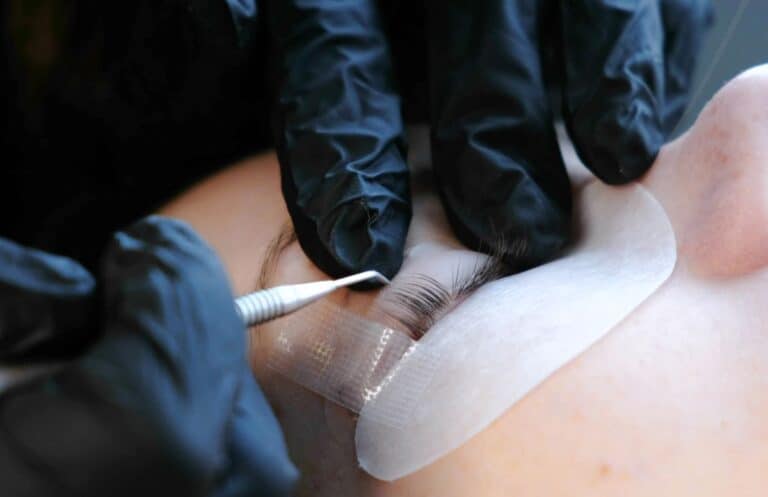
To begin the brow lamination process, a processing cream is applied to the brows to lift the hairs, making them pliable and easier to shape in the desired direction.
Next, the brows are brushed into the chosen direction and shape, then a neutralising solution is used to help reform the hair bonds in that position.
Many services finish with a conditioning serum or oil to improve the feel of the brow hairs after processing. This can add softness, but it does not prevent every possible reaction or instance of overprocessing.
Some appointments also include final grooming, such as tweezing, trimming, tinting, or waxing, if appropriate for the skin and service plan.
Aftercare varies by lamination system, but many providers advise keeping the brows away from water, steam, heavy sweating, and makeup for roughly the first 24 hours. Follow the instructions given for the exact products used on you.
Brow lamination is temporary. The styled effect commonly lasts several weeks as the hairs grow and are replaced. Rather than automatically reprocessing on a fixed schedule, wait until the brows have recovered and follow your provider’s recommended interval.
What Is Microblading?
Microblading is a longer-lasting option than lamination because it works by placing pigment into the skin rather than reshaping the brow hairs.
It creates the appearance of fuller brows through a fundamentally different technique and comes with a different healing process and risk profile.
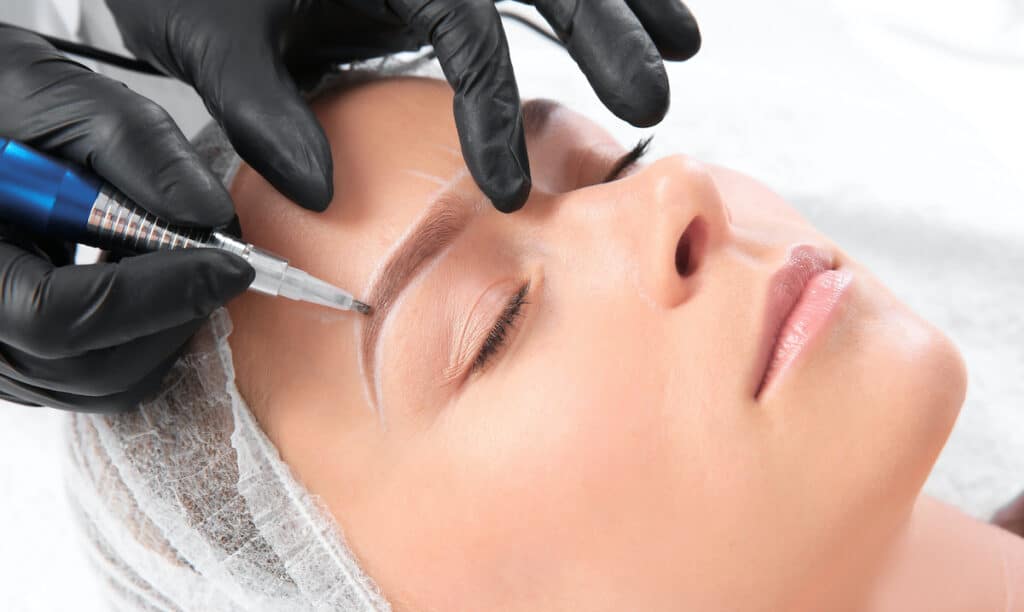
Microblading is a form of cosmetic tattooing. A handheld tool with very small needles is used to create hair-like strokes and place pigment into the skin.
The goal is to make the brows appear fuller, denser, and more defined by adding pigment where natural hairs are sparse or absent.
To see the full process, the video below from It’s Laura Miranda shows a typical microblading appointment.
Who Is Microblading For?
Microblading may suit people with sparse or patchy eyebrows who want to create the appearance of hair in areas with limited natural growth.
It can also be used to add more definition or visually reinforce the shape and fullness of existing brows.
Microblading is not suitable for everyone. Your skin condition, tendency to scar, medications, medical history, and expectations can all affect whether a cosmetic tattoo is an appropriate choice.
Microblading can be adapted for a wide range of skin tones and brow colours, but pigment selection and technique matter. Look for a practitioner whose healed portfolio includes clients with a complexion and brow colour similar to yours.
Benefits Of Microblading
If you regularly spend time filling sparse areas with brow makeup, microblading may reduce how much daily pencil or pen work you want to do.
Its main benefit is the appearance of hair-like strokes in sparse areas, which can make the brow shape look more complete even without daily makeup.
You may still choose to add brow gel, pencil, or powder for certain looks, but the tattooed strokes can provide a base shape and definition on their own.
The effects of microblading depend on your natural brow pattern, skin, pigment choice, and desired eyebrow look. A good consultation should include brow mapping and a discussion of how bold or subtle you want the finished result to be.
For example, strokes can be concentrated through a sparse tail or used more broadly to create the appearance of a fuller shape. The goal should be a result that works with your natural growth pattern and facial features.
Microblading is often marketed as semi-permanent because the visible strokes fade over time, but it is still a form of tattooing and pigment can persist in the skin. How quickly it fades varies widely with technique, pigment, skin, sun exposure, and aftercare.
Downside Of Microblading
Some redness, tenderness, mild swelling, flaking, or itching can occur during normal healing after microblading. Because the skin barrier is intentionally broken, there is also a risk of infection, allergic reaction, scarring, pigment changes, or other tattoo-related complications.
Aftercare protocols differ, so follow the instructions from the practitioner who performed the service. In general, avoid picking or scratching the area and be cautious with makeup, skincare, soaking, and heavy sweating while the skin is healing.
The brows may become dry, itchy, flaky, or lightly crusted as they heal. Not everyone develops obvious scabs, and picking at flakes or crusts can interfere with healing and pigment retention.
Microblading requires healing time because the procedure creates tiny openings in the skin while depositing pigment.
The most visible surface healing often happens within roughly one to two weeks, while the colour and final appearance can continue settling for several weeks.
During the healing process, the brows may temporarily look darker, lighter, patchier, or more textured than the final healed result.
Some flaking or light crusting can be normal, but increasing pain, spreading redness, significant swelling, or drainage should not be dismissed as routine healing.
Many artists schedule a follow-up after the initial healing period to assess colour retention, shape, and symmetry and make adjustments if needed. Not everyone needs the same amount of additional work.
When a perfecting session is recommended, it is commonly scheduled after the initial healing period, often around 6 to 8 weeks, depending on the artist and how your skin has healed.
A topical numbing product may be used during a microblading appointment when appropriate. Comfort varies by person, and any numbing product should be used according to its directions and the practitioner’s protocol.
Because microblading breaks the skin, seek medical advice if redness, swelling, warmth, pain, or drainage is worsening rather than improving, or if you develop fever or feel unwell. People with a history of keloid scarring, active skin irritation around the brows, or other health factors that affect healing should discuss the procedure with an appropriate healthcare professional before booking.
Microblading Process And Maintenance
The first step in the microblading process is discussing the desired outcome with your specialist and collaborating on what works best for your individual features.
When appropriate, the microblading practitioner may apply a topical numbing product according to the product directions and local practice rules before beginning the pigment work.
Using a handheld microblading tool, the practitioner creates small, hair-like strokes while placing pigment into the skin.
The same tool places pigment into the small manually created strokes.
Because the strokes are created manually, the practitioner can adjust their direction, spacing, and placement to suit the mapped brow shape. The finished result still depends heavily on technique, pigment choice, and how the skin heals.
At the end of the appointment, the practitioner should explain their aftercare protocol and what changes are expected during healing.
After the first session, a follow-up may be recommended after healing to assess pigment retention and make any needed adjustments.
Additional sessions should be based on how the brows heal and what your practitioner recommends rather than on a fixed number of appointments.
Long-term colour refreshes vary widely. Some people return after a year or more, while others wait longer, so avoid reworking the skin simply because a set amount of time has passed.
Microblading appointments can take an hour or more once consultation, brow mapping, numbing, and pigment work are included. The visible healing stage is shorter than the full settling period, which can take several weeks.
The visible results from microblading often fade gradually over months to years, but there is no universal lifespan and residual pigment may remain even after the strokes look much lighter.
On oilier skin, fine strokes may fade or blur more quickly for some people. That does not mean the skin simply “absorbs” the pigment, and it is one reason an experienced artist may suggest a different cosmetic-tattoo technique.
Can Both Be Done?
Microblading and brow lamination can complement each other because one adds pigment to the skin while the other changes how the existing hairs are styled.
While microblading adds the appearance of hair-like strokes in the skin, brow lamination changes how the existing brow hairs can be positioned for a more defined or fluffy shape.
If you want both services, do not laminate freshly microbladed skin. Wait until the cosmetic tattoo is fully healed and ask both professionals how they prefer to space the appointments.
Both methods involve the delicate brow area, but their risk profiles are different. Lamination uses chemical processing on the hairs, while microblading breaks the skin and carries tattoo-related risks.
It is important to research the professional, their training, local licence or registration requirements, sanitation practices, healed results, and aftercare policy before booking.
Read reviews and ask to see fully healed results, not only fresh photos. Ask questions about sterile single-use tools, pigment brands, aftercare, and complication policies before booking.
Best Products To Try
If you are not ready for a professional service, temporary brow gels, pens, pomades, and styling waxes can help you test different shapes and finishes first.
If you are still unsure whether you want to try brow lamination or microblading, temporary brow makeup is an easy way to test different shapes before committing to a service.
These products will not duplicate a chemical lamination or cosmetic tattoo, but they can help you preview a lifted, fuller, or hair-stroke effect at home.
To mimic the lifted, brushed-up look of a brow lamination, a strong-hold brow gel or styling wax can help define and position individual brow hairs for the day.
A product like this, a no-colour gel, allows you to shape and lift your brow hairs into a feathered look.
Use a clean spoolie to distribute a small amount through the hairs, then brush them into the direction you prefer. This gives you temporary hold without chemically processing the brow hair.
If you want a fluffy brow with some added colour, a tinted brow gel combines hold and pigment in one step.
A tinted gel can help shape and define the brows while adding temporary colour to the hairs.
Coating the individual hairs can make the brows look slightly fuller and more dimensional without adding permanent pigment.
If you want to mimic a hair-stroke effect temporarily or fill sparse areas more precisely than a gel can, an eyebrow pen gives you more control.
The fine-pen tip applicator lets you mimic hair-like strokes with precision.
Using light flicks in the direction of natural growth can create the appearance of individual hairs and a fuller brow.
Similar to a brow pen, a brow pomade lets you draw on brow hair with a brush, just as you would with a gel eyeliner and a slanted brush.
A pomade with a small angled brush can be easier for some people to control, while a fine brow pen may be better if your priority is drawing very thin, individual-looking strokes.
A brow gel can be layered with either an eyebrow pen or brow pomade when you want both added definition and hold.
Trying one or more of these brow products can help you experiment with different shapes, levels of fullness, and finishes before booking a longer-lasting service.
They are especially useful if you are deciding whether you prefer the brushed-up effect associated with lamination or the hair-stroke definition associated with microblading.
Which One Is Best For You?
In general, brow lamination suits people who already have enough brow hair and mainly want it to look more uniform, lifted, controlled, or fluffy.
The hairs usually remain easier to style while the treatment effect lasts, but they may still need brushing. Lamination works best when there is enough existing brow hair to redirect and arrange.
Microblading creates the appearance of added density and fullness by tattooing hair-like strokes into sparse areas. With very little natural brow hair, careful mapping and an experienced cosmetic-tattoo artist become especially important because there are fewer real hairs to blend with the pigment.
Microblading is the more involved option when your priority is making sparse areas look as though they contain additional hairs, but it also comes with healing time and tattoo-related risks.
The longevity is very different. Brow lamination is temporary and usually lasts several weeks, while microblading pigment can remain visible much longer and may persist in the skin even after it has faded considerably.
Brow lamination has to be repeated more often if you want to maintain the effect. With microblading, refresh timing should be based on visible fading, skin condition, and professional advice rather than an automatic yearly schedule.
Brow lamination does not intentionally break the skin, so there is no tattoo-healing phase, although the brows still have short-term aftercare restrictions and the skin or hairs can become irritated or overprocessed.
Microblading has a visible healing period that often lasts around a week or two, while the colour continues settling for several weeks. A follow-up session may be recommended, but it is not identical for every client.
At a single appointment, brow lamination generally costs less than microblading, but it also needs to be repeated much more often if you want to maintain the effect.
Pricing for brow lamination varies by location, salon, provider experience, and whether shaping or tinting is included.
Microblading pricing also varies widely by location, artist, and what follow-up work is included. When comparing prices, place more weight on sanitation, training, healed work, and local licensing requirements than on finding the lowest quote.
Conclusion
While brow lamination and microblading can both make brows look more defined, they solve different problems. Lamination rearranges the hair you already have, while microblading adds tattooed strokes where you want the appearance of more hair.
Your brow shape can change how the eye area and overall makeup look are framed, but there is no single brow style that suits everyone.
Whether you prefer going makeup-free most days or wearing full glam, the more suitable option depends on your starting brow density and how much maintenance or healing you are comfortable with.
Choosing the right brow service comes down to your starting brow density, desired finish, maintenance tolerance, budget, and comfort with the risks of chemical processing versus cosmetic tattooing.
Related Articles
I Hate My Brow Lamination (What You Can Do!)
What Is The Microblading Ghosting Phase? – And What To Expect
Microblading Scars – What To Know