
I Hate My Brow Lamination (What You Can Do!)
Brow services have expanded far beyond basic waxing and tweezing, with options such as microblading, tinting, and lamination now widely available.
From microblading to ombre brows, each service creates a different effect and comes with its own maintenance, cost, and level of commitment.
Brow lamination has become especially popular for creating a brushed-up, fuller-looking brow without adding pigment beneath the skin.
This temporary chemical brow treatment reshapes the direction of the brow hairs so they can look fuller and more defined.
It is also commonly paired with a brow tint, waxing, or tweezing for extra definition and dimension.
The fluffy brow look is not for everyone, and the result can feel much more dramatic than expected when the hairs are brushed very upright.
Eyebrow lamination is not one-size-fits-all. You may love the effect on someone else and still find that the shape, height, or texture does not suit your own brows.
So, what can you do if you hate your brow lamination?
Brow lamination is temporary, so the processed hairs will gradually grow out and be replaced. If you dislike the result, the safest options are usually to restyle the hairs gently, condition them, or ask the brow artist about a correction rather than trying to chemically reverse the service at home.
Brow services are not one-size-fits-all. Just as microblading will not suit everyone, lamination may look too upright, too flat, too fluffy, or simply different from what you expected.
If you are unhappy with your result, the next step depends on whether the issue is purely cosmetic or whether your skin and brow hairs feel irritated or damaged. Here is how to handle both situations.
What Is A Brow Lamination?
Brow lamination is a temporary chemical service that changes the direction and flexibility of the brow hairs, with a process that shares some similarities with a lash lift.
The technician uses a lifting or perming solution to soften the hair structure, brushes the brows into the desired direction, and then applies a neutralizer to help set that new shape.
A brow lamination can make the hairs sit flatter against the skin or sweep upward, helping sparse areas look more covered and the overall brow appear fuller and more defined.
Like other chemical reshaping services, a brow lamination relies on a lifting solution followed by a neutralizer.
The first solution temporarily alters bonds within the brow hair, making the hairs easier to reposition into the desired direction.
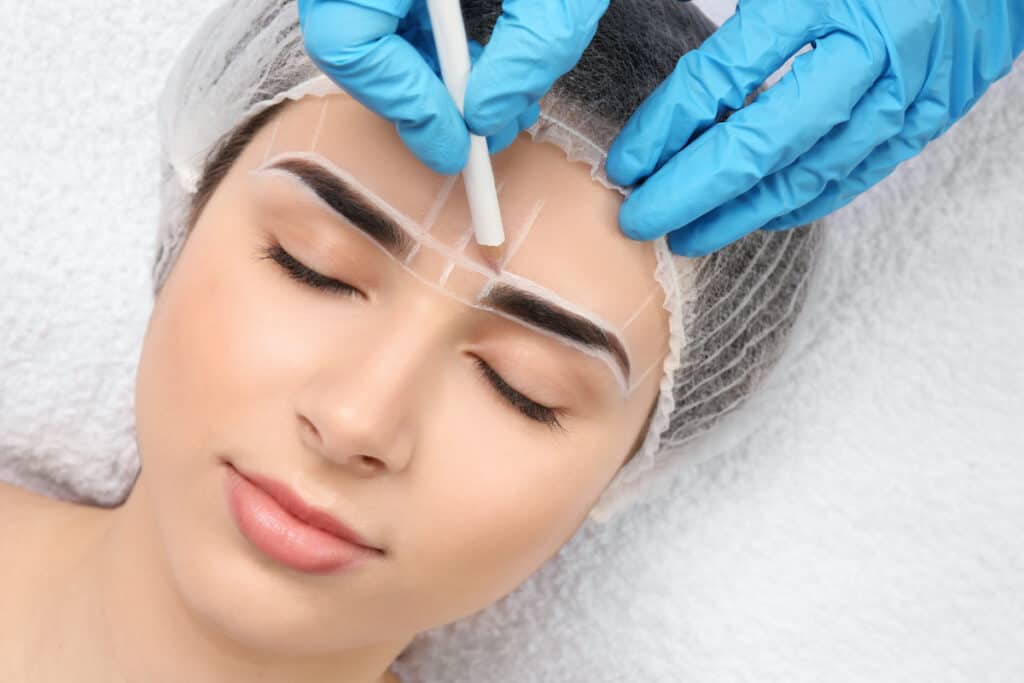
The neutralizer helps reform those bonds while the brows are held in their new shape.
Many technicians finish with a conditioning or nourishing oil to help the brow hairs feel softer after chemical processing.
Because the hairs have been chemically processed, they may temporarily feel drier, stiffer, or different in texture.
A brow lamination appointment often takes less than an hour, although timing varies if you add other services.
For example, brow tints, waxing, and tweezing can be combined with your brow lamination to create your ideal brows.
Even when the treatment is performed correctly, not everyone likes the finished shape.
If you already have thick or dense brows, brushing every hair sharply upward can make the result feel more dramatic or rigid than expected.
Others may simply find that the laminated shape looks too intense for their face or usual makeup style.
How Long Does A Brow Lamination Last?
Individual brow hairs grow and shed on their own cycle, so the laminated hairs gradually disappear as they are replaced.
A brow lamination commonly looks its most noticeable for several weeks, with many results lasting around 4 to 8 weeks depending on hair growth, processing, and aftercare.
Because everyone’s hair grows at a different rate, the result can fade sooner for some people than for others.
Aftercare instructions vary by product and salon, so follow the guidance given by your technician. Many artists recommend keeping the brows dry and avoiding heavy steam for the first day or two.
The early aftercare period is also when the hairs and surrounding skin can feel most sensitive after processing.
Following the product-specific aftercare instructions can help the finished shape wear more evenly.
Your artist may also advise you on brushing, conditioning, cleansing, and when to resume stronger skincare around the brows.
If you dislike the result, deliberately ignoring aftercare is not the safest way to reverse it. The brows have already been chemically processed, so unnecessary water, friction, heat, or active skincare can increase irritation without reliably restoring the original texture.
Risks Of A Brow Lamination
Like any service that uses chemical processing near the eyes, brow lamination has risks and potential side effects.
These risks matter both before treatment and afterward, especially if you are tempted to use more chemicals or aggressive skincare to try to undo the result.
1. Overprocessing
Overprocessing can leave brow hairs kinked, curled, or pointing in inconsistent directions.
The hairs may also feel frizzy, rough, overly dry, or unusually stiff.
Severely overprocessed hairs can become brittle and more prone to breakage.
2. Skin Irritation
Lamination solutions can irritate sensitive skin, and some people may react to ingredients in the lifting, neutralizing, tinting, or aftercare products.
If processing time or product strength is inappropriate, the service can compromise the condition and strength of the brow hairs.
The surrounding skin can also react.
Possible signs of irritation include redness, itching, burning, flaking, tenderness, or swelling. Significant swelling, blistering, severe pain, eye symptoms, or trouble breathing warrants prompt medical attention.
What To Do If You Hate Your Brow Lamination
If you hate the finished look, you can usually make it feel less dramatic without trying to chemically remove the lamination.
The important point is that the hair has already been chemically processed. Applying more chemicals at home can make dryness, breakage, or irritation worse.
The safest way to fully move past a brow lamination is usually to let the processed hairs grow out and shed naturally.
The appearance usually softens well before every treated hair has been replaced, but complete grow-out can take longer depending on how fast your eyebrow hair grows.
You cannot truly restore a chemically processed hair strand to its untouched state. Once the treatment fades, newly grown hairs gradually replace the processed ones.
The treatment can also temporarily change the texture and flexibility of your brow hairs.
If they feel rough, straw-like, or brittle, focus on gentle handling rather than trying to process them again.
Trying to chemically reverse freshly processed brow hairs can cause more harm than good.
Possible consequences include breakage, frizz, uneven texture, or hairs bending in different directions.
If the issue is only the style, letting the lamination soften and grow out is generally the lowest-risk approach.
That also avoids putting already processed brow hairs through another unnecessary chemical service.
You do not necessarily have to wait for every treated hair to grow out before the look becomes easier to manage. Gentle restyling and conditioning can help lessen the intensity while the effect gradually fades.
Whatever you do, treat the brow hairs and surrounding skin gently. If the problem involves burning, swelling, broken skin, or obvious chemical damage rather than simply disliking the shape, contact the salon and consider seeking medical advice.
1. Book A Correction
Start by contacting the eyebrow stylist who performed the service and asking whether they recommend a correction or simply allowing the brows to settle.
A professional can assess whether the hairs look merely over-styled or actually overprocessed before deciding what, if anything, should be done next.
This is safer than experimenting with another chemical treatment on your own.
The same brow artist also knows which products were used, how long they were processed, and whether tinting or waxing was performed at the same appointment.
If you do not feel comfortable returning to the same artist, seek another experienced brow professional rather than attempting a chemical reversal yourself.
Ask the salon what kind of correction is appropriate and whether there is a charge, since policies vary.
Always check with the brow artist before booking another chemical service on freshly laminated hairs.
2. Be Careful With Washing
If it has been less than 24 to 48 hours since your brow service, do not deliberately soak or scrub the brows simply to undo the style. Follow the product-specific aftercare instructions unless you are dealing with irritation that needs to be rinsed away.
Wetting or aggressively cleansing freshly processed brows may change how the result wears, but it does not reliably reverse the chemical process and can leave the hairs looking uneven.
If your skin is burning, stinging, or visibly irritated, contact the salon promptly for advice rather than trying to preserve the lamination at all costs.
The brow area can be sensitive after processing, so avoid hot water, scrubbing, steam, and strong cleansers until the skin feels calm.
Once the initial aftercare period has passed, normal gentle cleansing will not instantly return the hairs to their pre-lamination state, but the effect will gradually soften with time.
3. Skip Harsh Exfoliants
Your brow artist may have told you to avoid strong skincare around the brows during the early aftercare period.
That commonly includes chemical exfoliants such as AHAs and BHAs, as well as retinoids and other potentially irritating actives.
Do not intentionally use these products on or close to freshly laminated brows in an attempt to make the result fade faster. They can increase irritation without safely reversing the lamination.
Resume stronger skincare around the brow area only according to the product and salon guidance, once the skin has settled.
4. Brush Through Your Brows
One useful thing to remember is that laminated brows are not glued permanently into one position.
Your brow artist may recommend brushing through the brows daily to keep the hairs neat.
Once your artist says brushing is appropriate, you can also guide the hairs into a softer, less upright shape.
With a spoolie or clean mascara wand, gently brush the hairs slightly outward rather than straight up until the shape looks more natural to you.
Freshly laminated hairs may feel less flexible, so avoid forcing them against their natural direction if they resist.
You can also opt to use this sturdy brow and lash shaper.
Because it is multifunctional, it can still be used for everyday brow grooming after the lamination has faded.
As new brow hairs grow in and treated hairs shed, the laminated effect will gradually diminish and the brows will become easier to style in different directions.
5. Condition Your Brows
If the hairs feel dry after lamination, a simple brow conditioner or lightweight conditioning product recommended by your artist can help them feel softer.
Chemically processed eyebrows may not feel as soft as they did before the service, so conditioning can improve their feel and flexibility.
A moisturizing or conditioning step can help reduce the dry or stiff feeling, although it cannot repair severely damaged hair.
Be gentle with the hairs as they grow out and avoid unnecessary chemical processing until they feel normal again.
Overall, conditioning is mainly about making processed brow hairs feel softer and more manageable while the lamination fades.
The Takeaway
Brow lamination can create a polished, fluffy finish, but it is not for everyone. If you hate your brow lamination, the good news is that the look is temporary.
The effect will gradually soften as the processed hairs grow and shed.
If the issue is cosmetic, start by gently restyling the hairs and contacting your brow artist if you want a professional correction. Full grow-out takes longer, but the appearance usually becomes less intense before then.
These approaches avoid unnecessarily reprocessing already treated eyebrow hairs.
Avoid trying to speed up the process with harsh exfoliants, repeated washing, or another chemical treatment. Gentle brushing and conditioning are the safer at-home ways to make the brows feel more manageable.
If you notice persistent redness, swelling, burning, broken skin, or significant hair breakage, contact the salon and seek medical advice when appropriate.
Brow Lamination Fix FAQs
Will Brow Lamination Relax After A Few Days?
Often, yes. Freshly laminated brows can look especially upright or glossy immediately after the appointment. Once the early aftercare period is over and you return to normal gentle cleansing and styling, the result may look softer and less dramatic.
Can I Reverse Brow Lamination At Home?
There is no reliable way to return a chemically processed brow hair to its untouched state at home. Applying another perming product, strong exfoliant, or other chemical treatment can increase the risk of irritation and breakage. If you want a correction, ask an experienced brow professional to assess the hairs first.
What If My Brows Look Too Fluffy Or Upright?
Once your technician says it is safe to brush them, use a clean spoolie to guide the hairs slightly outward instead of straight up. A softer direction can make the same lamination look much more natural without reprocessing the hair.
What If My Skin Burns After Brow Lamination?
Burning, marked swelling, blistering, or worsening redness is different from simply disliking the brow shape. Contact the salon promptly, avoid applying additional active skincare to the area, and seek medical care if symptoms are severe, involve the eyes, or continue to worsen.
Related Articles
How To Take Off Acrylic Nails With Hot Water
Gel Polish Remover Machines – Do They Work?