
Great Mascara Alternatives
If mascara is part of your everyday routine, skipping it can make your lashes look noticeably lighter, straighter, or less defined.
Fortunately, there are several ways to define, curl, darken, or visually thicken your lashes without applying traditional mascara every day.
Whether you want a lighter makeup routine, dislike removing mascara, or simply want to save time in the morning, the best alternative depends on whether you want more curl, darker lashes, extra definition, or a fuller-looking lash line.
Mascara is hard to replace with one single product because it can add several effects at once, including colour, separation, lift, and apparent thickness.
So, what are some great mascara alternatives?
For a quick mascara-free look, try curling the lashes, using a tiny amount of an eye-area-safe conditioning product for definition, or placing eyeliner close to the lash line. For longer-lasting cosmetic results, professional lash lifts, tints, or extensions are options, but each has its own maintenance, aftercare, and irritation risks.
Below, we break down ways to make lashes look longer, darker, or fuller without mascara, along with the trade-offs and eye-area safety points worth knowing before you try them.
How To Make Lashes Look Longer Without Mascara
Lengthening mascara is one way to emphasise lashes, but it is not the only way to make them look longer or more lifted.
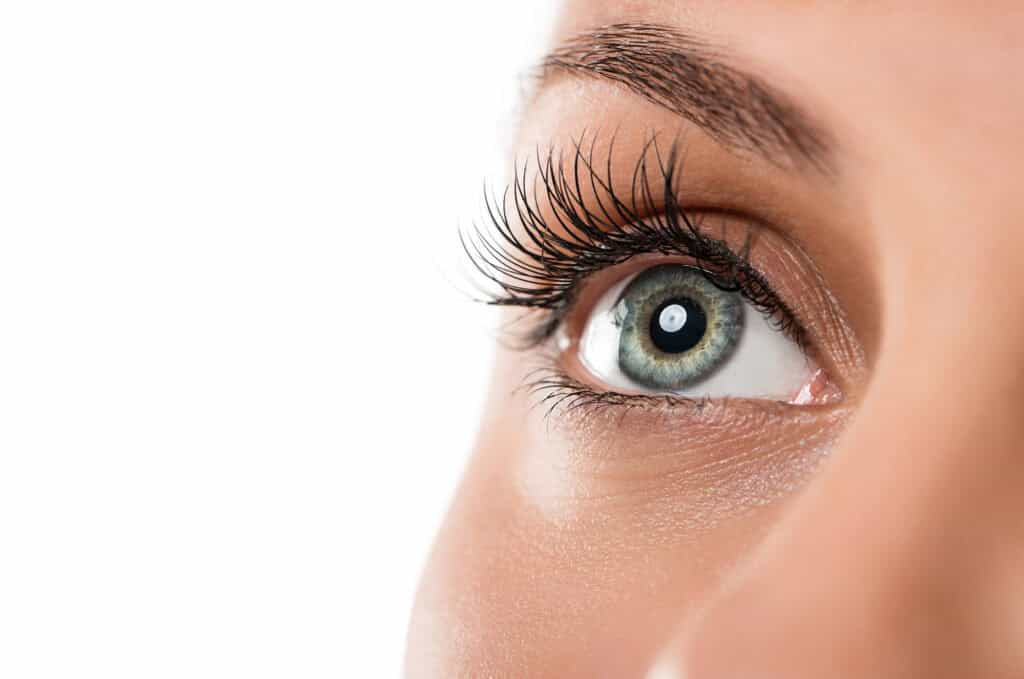
There are several mascara-free methods that can make your eyelashes appear longer or more lifted, even though they do not actually change the length of the lash hair.
1. Eyelash Curlers
An eyelash curler is one of the simplest mascara alternatives because it changes the angle of the lashes without adding pigment.
If you normally curl before mascara, you can simply stop after the curling step and keep the look more natural.
Using a curler on its own can make the lashes look longer and more open by lifting them away from the lash line.
If your curl falls quickly, the result may depend on lash texture, humidity, the curler shape, and technique.
A well-fitting eyelash curler, such as this one from Wet n Wild, can be used on clean, dry lashes before other eye makeup.
Avoid heating a standard metal eyelash curler with a blow dryer. Metal can become hotter than expected and may burn the eyelid or damage lashes.
If you want a heated option, use a tool specifically designed as a heated lash curler and follow its temperature and safety directions.
When curling, position the curler close to the lash base without pinching the eyelid, then press gently rather than clamping hard.
For a softer curve, move slightly toward the middle of the lashes and press gently again. Replace worn pads and stop if the tool tugs, pinches, or pulls lashes out.
2. Vaseline
Vaseline does not make eyelashes grow longer, but a very small amount can coat the lash hairs and make them look darker, shinier, and slightly more defined.
This can be useful if you want a subtle, glossy lash look without pigment.
Petrolatum can reduce moisture loss from skin and hair surfaces, but use only a tiny amount around the lashes and keep it out of the eye itself.
After curling, use a clean spoolie or disposable mascara wand to pick up a very small amount of petrolatum.
Brush it lightly through the lash hairs without coating the waterline or inner eyelid. Stop if your eyes sting, blur, water excessively, or become irritated.
3. Beauty Oil
Castor oil and argan oil are often promoted for lashes, but there is not good evidence that applying them makes eyelashes grow longer, denser, or faster.
They may coat the lash hair and make it look glossier, but not every facial or hair oil is formulated or tested for use around the eyes. Only use a product whose directions allow eye-area use, apply very sparingly, and keep it out of the eye.
Castor oil has not been shown to reactivate eyelash follicles or reliably stimulate new lash growth.
Its fatty-acid content can give the lash hair a more conditioned feel, which may make dry lashes look smoother.
Argan oil also contains lipids and vitamin E, but that does not mean it will make eyelashes grow.
If you like the cosmetic effect of an oil, choose an eye-area-safe formula and use the smallest amount needed to avoid migration into the eye.
4. Massage
Morning puffiness around the eyes can make the lash line look less defined even though the lashes themselves have not changed.
Temporary puffiness can have many causes, including sleep position, salt intake, crying, allergies, or simple fluid retention.
When the eyelids look puffy, the visible lash line can appear less open, which may make the lashes seem shorter or less noticeable.
A clean cool compress can make temporary puffiness feel more comfortable. Gentle massage around the surrounding facial area may feel soothing, but it does not make eyelashes grow.
You can try a clean cool compress or a gently used gua-sha around the orbital bone, not on the eye itself. Avoid firm pressure, and seek medical advice for persistent, painful, one-sided, or severe swelling.
5. Lash Serum
If you want to support the appearance of longer or fuller lashes over time, you may consider a lash serum, but the expected result depends heavily on the formula.
Results and timelines vary widely by formula. Cosmetic conditioning serums should not be assumed to produce the same type of growth as prescription eyelash treatments.
Check the ingredient list and directions carefully. If you have eye disease, very sensitive eyelids, a history of reactions, or you are considering a serum with a prostaglandin analogue or similar active, discussing it with an eye-care professional is a sensible precaution.
Examples include GrandeLASH-MD and Babe Lash. Formulas can change, so review the current ingredient list and directions before use. Stop if a serum causes redness, itching, burning, eyelid irritation, or any other eye-area reaction.
How To Make Lashes Look Thicker Without Mascara
If your lashes already have enough length but you want them to look thicker or more defined at the roots, focus on the lash line rather than the lash hairs themselves.
A few cosmetic products you may already own can create the illusion of a denser lash line without coating every lash.
1. Gel Eyeliner
Gel eyeliner comes in several forms, including pots and pencils.
Some gel liners offer strong pigmentation and long wear, although performance varies by formula.
The benefit is control: a pigmented gel can fill small gaps along the lash line without requiring a thick visible wing.
For this technique, we recommend a gel liner in pencil form.
Look for a formula that is precise and long-wearing if those qualities matter to you, such as this one from Laura Geller.
For tightlining, use only an eyeliner specifically labelled for use in the eye area and follow its directions. Apply gently along the upper lash line rather than forcing product into the eye.
If your eyes water, sting, or become red, stop rather than repeatedly going over the area.
Use a clean tissue or cotton swab around the outer eye only, taking care not to scratch the eye surface.
2. Liquid Eyeliner
If you prefer not to place product close to the waterline, liquid eyeliner can create definition from the outer lash line instead.
You can create a similar denser-looking lash line with liquid eyeliner, such as this one from Stila.
Liquid liners typically come in pen or dip form, so choose whichever format gives you the most control.
Apply the liner close to the upper lash line to mimic the look of denser roots. Work slowly so you can keep the line thin and controlled.
Instead of drawing one long line, try a small stamping motion between sections of the lashes for more control.
3. Strategic Eyeshadow
If precise eyeliner feels difficult, pressed eyeshadow can be a more forgiving way to define the lash line.
Eyeshadow gives you more room to soften or blend mistakes, which can make this technique easier for beginners.
Choose a pigmented eyeshadow in a shade that creates the amount of contrast you want.
For dark lashes, black or deep brown can add stronger definition. For blonde or light brown lashes, a softer brown may look more natural.
We recommend Anastasia Beverly Hills single shadows for serious colour payoff!
Then, grab a small, condensed eyeshadow brush.
This one from Jane Iredale is one example of a small brush designed for precise placement.
Pick up a small amount of colour and tap off loose excess before bringing the brush close to the eye.
Then, gently press or stamp the shadow along the upper lash line, keeping loose powder out of the eye.
Darken Eyelashes Without Mascara
1. Almond Oil
Sweet almond oil is commonly used as a cosmetic emollient, but its benefits for lashes are often overstated.
Almond oil is sometimes used cosmetically to condition hair, but there is no reliable evidence that it permanently darkens, thickens, or stimulates eyelash growth.

Its emollient texture may make the lash hair look smoother, shinier, and temporarily more defined.
Only use almond oil near the eyes if the product is intended for that area, and avoid it if you have a nut allergy or if it causes irritation.
2. Jojoba Oil
Jojoba oil is another cosmetic emollient sometimes used on dry hair. If your lashes feel brittle, improving surface conditioning may make them look smoother, but it does not treat unexplained lash loss.
Jojoba oil is an emollient that can reduce a dry or brittle feel, but it should not be relied on to treat infection or eye irritation.
It also has not been shown to restore lost lash pigment. If lashes are suddenly thinning, breaking, or changing color, consider the underlying cause rather than trying to mask it with oil.
3. Lash Tinting
If you want a longer-lasting darker lash appearance, professional lash tinting is one option, but it deserves extra caution because chemical dye is being used very close to the eyes.
Lash tints are different from lifts or extensions because no artificial hair is being added to your lash line.
A tint may appeal to people with lighter natural lashes, but sensitive skin or a history of cosmetic reactions does not make tinting low-risk. Dye ingredients can trigger irritation or allergy even when adhesives are not involved.
Lash-tint formulas and regulations vary by country. In the United States, the FDA specifically restricts which color additives may be used to dye eyelashes and warns against at-home eyelash tinting.
This method does not make lashes longer or more curled. It changes their visible color, which can make pale tips look more noticeable.
Appointment length and wear time vary by product, technician, and natural lash cycle. Ask the technician exactly what tint system is being used and what aftercare it requires.
The visual difference is usually most obvious on blonde, light brown, grey, or lighter-tipped lashes.
4. Getting A Lash Lift
If your main reason for wearing mascara is to make lashes look more curled, a professional lash lift is a longer-lasting option to consider.
A lash lift is a chemical reshaping service for the natural eyelashes, often compared with a very small-scale perm.
The goal is to keep the lashes looking lifted and curved without daily use of an eyelash curler.
Lash lifts don’t involve any artificial hair, but there are chemicals involved during the procedure.
The lifting and setting solutions can still cause irritation, overprocessing, or an allergic reaction, particularly if they contact the skin or eye.
If you have sensitive eyelids, active eye irritation, a history of cosmetic reactions, or an eye condition, discuss the service with a qualified professional before booking.
What To Expect At A Lash Lift Appointment:
1. Cleaning
Most technicians ask you to arrive makeup-free around the eyes so the lashes can be cleaned and prepared properly.
Keep rich eye creams, oils, and other products away from the lashes before the appointment unless your technician tells you otherwise.
If your technician gives pre-appointment cleansing instructions, follow those rather than aggressively wiping or rubbing the lashes yourself.
Your lash technician should still cleanse and prepare the lashes before processing, so you do not need to scrub the eye area immediately before the appointment.
2. Silicone Moulds
Depending on your lash length and the amount of lift desired, the technician chooses a silicone shield or rod that suits the service.
The shield or rod sits on the eyelid, while adhesives and processing products are used close to the lash line. A careful technician should minimise skin and eye contact, but accidental exposure is still possible.
3. Separating
Once the silicone shield is secured to the eyelid, the technician positions the natural lashes onto it using the adhesive supplied or approved for that system.
The aim is to separate and align the lashes evenly so they do not process crossed over one another.
Before booking, look at the salon’s hygiene practices, technician training, reviews, and examples of healed results rather than judging only by dramatic before-and-after photos.
4. Solutions
Once the lashes are positioned, the technician applies the lifting solution according to the specific system, usually avoiding unnecessary saturation of the delicate lash tips.
The service should not cause burning, sharp pain, or intense stinging.
If you feel burning, sharp pain, or intense stinging, tell the technician immediately rather than waiting for the processing time to finish.
If product enters the eye or causes significant burning, the technician should stop the service and follow the product’s eye-exposure instructions immediately.
5. Waiting
Processing time depends on the specific lash-lift system, lash condition, and technician’s assessment.
Do not use a generic time range as a substitute for the manufacturer’s directions, since overprocessing can leave lashes dry, frizzy, or weakened.
6. Setting
After the lifting solution has processed for the specified time, the technician removes it as directed and applies the setting or neutralising solution.
The setting or neutralising solution helps reform the bonds in the lash hair so the lashes hold the new lifted shape.
7. Conditioning
After processing, a conditioning step may be used to help the lashes feel smoother and less dry.
A conditioner does not restore the lash to its original structure, but it can improve softness and surface feel.
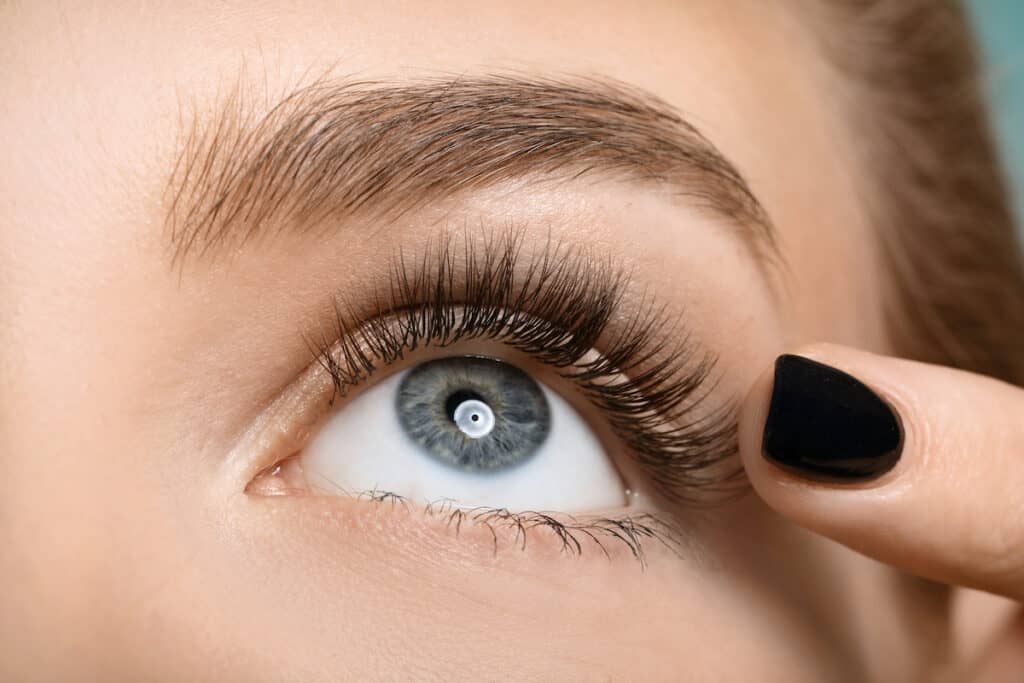
Once all processing products have been removed and the service is complete, your technician should explain the aftercare for the exact system used.
Aftercare varies by lash-lift system. Many technicians advise avoiding excess water, steam, and eye makeup for roughly 24 hours, while some systems have different instructions.
Follow the exact aftercare given by your technician rather than extending the dry period on your own.
Once the recommended setting period has passed, normal gentle cleansing can resume unless your technician says otherwise.
A lash lift may remain noticeable for several weeks, gradually changing as natural lashes grow and shed. The exact duration varies by lash cycle, technique, and aftercare.
To see the process in action, take a look at this video from LashBase on YouTube.
Getting Eyelash Extensions
Eyelash extensions are another mascara alternative for people who want a fuller, longer, or more dramatic lash look without applying pigment each morning.
Depending on the mapping and extension style, the result can look relatively natural or much more dramatic. The trade-off is ongoing maintenance and exposure to lash adhesive.
During an appointment, a technician attaches individual extension fibers or small fans to natural lashes using adhesive. A full set can take well over an hour depending on the style and technique.
The adhesive should attach the extension to the natural lash rather than gluing lashes to the eyelid skin or sticking multiple natural lashes together.
Even with an experienced technician, adhesive allergy, irritation, redness, swelling, and other eye-area reactions can occur. Seek prompt care for significant pain, vision changes, marked swelling, or persistent redness.
Extensions require gentler handling than natural lashes. Cleansing is still important, but rubbing, pulling, and picking at the extensions can damage both the extensions and your natural lashes.
Because natural lashes shed continuously, extensions usually look their fullest for a limited time and often need maintenance fills every few weeks. Follow your technician’s directions for swimming, cleansing, eye makeup, and products around the adhesive, and avoid rubbing the eyes.
Extensions are not the right option for everyone, especially if the eye area is already irritated or you have a history of adhesive reactions.
Tell your lash technician about contact lenses, eye conditions, previous adhesive reactions, allergies, or sensitive skin. Contact-lens use is not automatically a permanent barrier to extensions, but lenses may need to be removed during the service. Product restrictions around the adhesive can also vary by system.
Related Questions
How To Train Your Eyelashes To Curl Naturally
How To Make Your Eyelashes Grow Overnight
How Long Can You Wear Fake Eyelashes?