
C vs CC vs D Curl Lashes: Compare the Lift
Eyelash extensions can change the way your eyes look by adding length, density, lift, or definition with individual lash fibers.
Your lash artist attaches individual extensions, or small fans depending on the service, to create a pattern that controls volume, length, curl, and overall shape.
Two sets can use the same lash length and still look quite different because of their curl pattern.
A softer curve lets the lashes extend outward, while a stronger curve turns the tips upward more noticeably.
You may hear your stylist mention J, B, C, CC, or D curls. C, CC, and D are common options, but choosing among them takes more than picking the curliest one.
So, what is the difference between a C, CC, and D curl eyelash?
C curl usually gives moderate lift, CC adds a stronger curve, and D is the most curled of these three. Exact profiles vary by brand, so compare samples from the lash line your technician uses.
The right curl depends on several factors, including your natural lash direction, lash strength, eye shape, eyelid space, and the finish you want.
Your lash technician should discuss your goals and assess your natural lashes before choosing a curl, since attachment angle and lash health matter as much as appearance.
C, CC and D at a Glance
| Curl | Typical curve | What to discuss with your lash artist |
|---|---|---|
| C | Moderate, softer lift | Ask about C if you prefer an understated set. |
| CC | More lift than C | Compare it with C when you want a little extra curl. |
| D | Most pronounced of these three | Ask how it will sit against your natural lash angle and eyelid space. |
For example, London Lash’s curl guide describes CC as more lifted than C and D as the stronger curve. These are relative descriptions. Compare actual samples from the brand your technician uses, since curl names vary.
What Are Eyelash Extension Curl Patterns?
A curl pattern describes the shape of an extension viewed from the side. It is separate from the fiber’s length and diameter.
The curl pattern affects how lifted, open, soft, or dramatic the extensions appear after application.

Your natural lashes act as the starting angle. An extension on an upward-growing lash can look much curlier than the same extension on a downward-growing lash.
Here’s how C, CC, and D compare, plus what to check before choosing your next set.
C Curl
C Curl eyelashes are a moderate-curl option in many lash systems, giving more lift than straighter curls without reaching the intensity of a typical D curl.
It can create a soft lifted effect for an everyday set, especially when you want definition without a very rounded finish.
What Does A C Curl Lash Look Like?
What defines a C Curl lash extension? In most systems, it has a noticeable but moderate curve that creates lift without looking extremely rounded.
Depending on the lash map, C curls can be used for an open, rounded, or softly lifted finish across many eye shapes.
Compared with D, C generally leaves more of the lash pointing outward rather than curling sharply upward.
For someone who wants the most understated possible result, a straighter curl may still feel more natural.
Is The C Curl Natural Or Dramatic?
C curl is a useful starting point for a softer look, particularly if you like the appearance of curled natural lashes.
The same C curl can look relatively natural or more noticeable depending on length, density, mapping, and the wearer’s natural lashes.
For example, a short classic C-curl set can look understated, while a longer volume set using C curls can still look bold.
What Eye Shapes Fit A C Curl?
The C Curl can work across a wide range of eye shapes, which is one reason it is commonly used.
C Curl may add visible lift to straight or downward-facing natural lashes, but the technician should still make sure the extension has enough attachment area and is not fighting the natural lash angle.
If your lashes already point upward, ask to see C alongside CC before deciding. Extra curl may be more noticeable on you than it is in a reference photo.
What Other Lash Patterns Complement A C Curl?
You can mix curl types within one set. This lets your artist adjust the effect where your natural lash direction changes.
For example, a technician may mix C and D curls in different zones to create more lift in one area while keeping another softer.
CC can also act as a transition between C and D when the artist wants the change in curl to look gradual.
D Curl
The next option is the D Curl. In most lash lines, the D Curl has a more pronounced upward curve than C.
It creates a stronger visual lift, so it is often chosen for more dramatic sets rather than very natural-looking ones.
How dramatic it looks depends on the natural lash angle, extension length, mapping, and eye shape.
What Does A D Curl Lash Look Like?
A D Curl is usually more curved than a C Curl and often turns upward more quickly through the lash body, although the exact profile varies by manufacturer.
Viewed from the side, the tips turn back upward more noticeably than those of a softer curl.
That makes lid clearance worth checking: the finished lashes should have room when your eyes are open.
Is The D Curl Natural Or Dramatic?
If you want a more lifted and dramatic set, D Curl can create stronger visual impact than C.
You can still keep the set relatively light by choosing suitable shorter lengths and a less dense design.
A close-up photo of a D-curl volume set shows several choices at once. The fullness comes from the application style as well as the curl.
What Eye Shape Fits A D Curl?
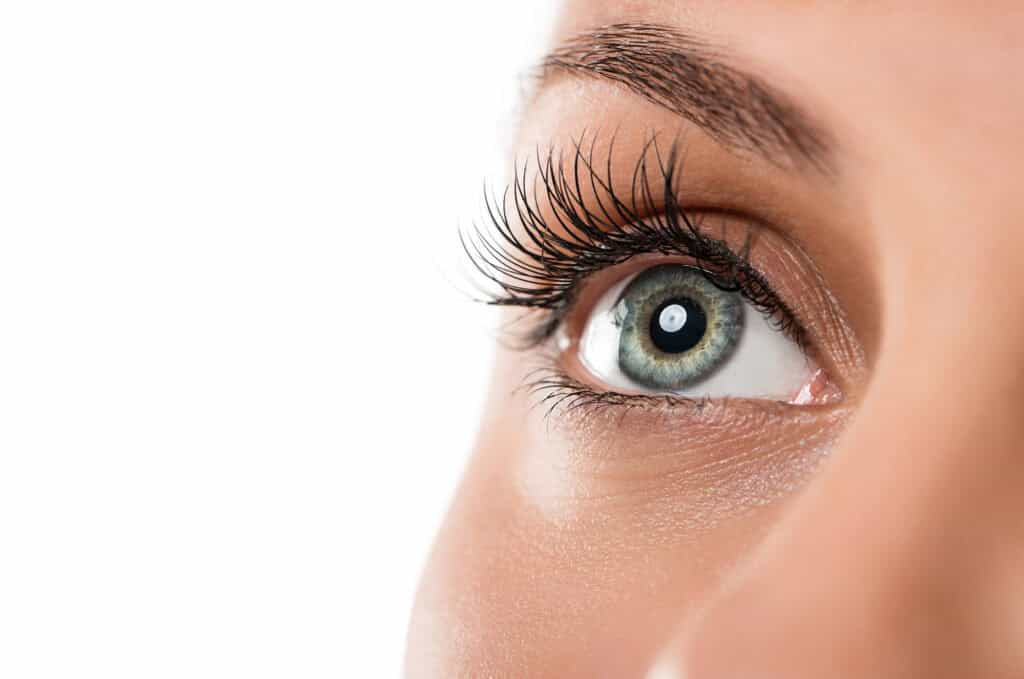
D Curl can look striking on many eye shapes, but very long or dense D-curl extensions may feel visually heavy on smaller eyes. Mapping and length usually matter more than the curl letter alone.
For hooded eyes or lashes that already curl upward, the artist should check whether a strong curve brings the tips too close to the lid.
D curl does not automatically add volume or thickness. A classic D-curl set and a dense volume D-curl set can have very different finishes.
D Curl can be used on different natural lash types, but a technician should make sure the curvature still gives enough bonding surface for secure attachment.
What Other Lash Patterns Complement A D Curl?
C or CC can be paired with D to soften selected areas of the lash line while keeping stronger lift elsewhere.
The placement should follow your own lash direction and the intended shape, rather than a fixed formula for everyone.
Ask your artist to explain where they would use the stronger curl and what that changes when your eyes are open.
CC Curl
So what exactly is a CC Curl? This is where lash naming can get confusing, because curl charts are not fully standardized across brands.
For example, LashBase’s curl guide places CC between C and D in curl intensity. Use the chart for your salon’s brand when comparing options.
Think of CC as a middle option when C looks too subtle but D feels more curled than you want.
This article contains affiliate links. As an Amazon Associate, we earn from qualifying purchases.
For lash professionals comparing supplies, this VAVALASH CC-curl tray in 0.05mm, mixed 8–15mm lengths is one example of a CC-curl extension material. Check the selected curl, diameter and length against your intended set before ordering. For a salon appointment, ask your technician to show samples from the range they use.
CC vs D Curl
CC and D are distinct curl labels, not interchangeable names. D is generally stronger, although the size of the difference depends on the brand.
For a fair comparison, look at CC and D samples in the same length and diameter from the same range. Otherwise, you may be reacting to extra length or thickness as well as curl.
Neither label guarantees better retention. How well the extension fits and attaches to the natural lash matters more than choosing CC or D by name.
If a previous set felt too curled, tell your artist what bothered you: the rounded appearance, tips near your lid, or too much overall fullness. Each may call for a different adjustment.
What Does A CC Curl Look Like?
A CC Curl typically has a stronger flare than C, with the lash turning upward more noticeably through its length.
A wispy finish comes from varying lengths and placement; CC curl alone does not create that texture.
CC is usually chosen when someone wants more lift than C. Whether it looks natural or dramatic depends heavily on length, density, and lash mapping.
Is The CC Curl Natural Or Dramatic?
The CC Curl offers noticeable lift and can be styled softly or dramatically depending on the rest of the set.
The curl itself does not add volume or thickness, but it can make a set appear more lifted and prominent.
If you like lift but dislike a dense lash line, ask about a lighter CC-curl design before ruling out the curl itself.
What Eye Shape Suits A CC Curl?
CC Curl can work on many eye shapes, including hooded or deep-set eyes, but the technician should adjust the length, placement, and density so the extensions do not touch the eyelid or overwhelm the eye.
Mixing in C curl can soften parts of the set while leaving more visible lift where it is wanted.
A hooded eyelid does not automatically mean you need CC or D. The position of the fold and the direction of your natural lashes affect the choice.
What Other Lash Factors To Consider Besides Curl Pattern?
The curl letter is only one part of the appointment. Length, diameter, density, and placement all influence the finished look.
A lash map is the plan for where different lengths and curls go across the lash line.
Changing that map can make a bigger difference than moving up one curl level.
Eye Size
Consider how much visible space there is around your eyes and how prominent you want your lashes to look.
The size of your eyes can influence how dramatic a particular length, density, or curl appears.
For example, a very long, dense CC-curl set may feel too heavy visually on smaller eyes, while a shorter, lighter CC map could still work well.
You do not need to rule out stronger curls just because your eyes are small. Start by discussing shorter lengths and a lighter finish.
Eye Shape
Another important factor is your eye shape. Curl, length, and mapping can change whether the eyes appear more open, elongated, rounded, or lifted.
For deep-set eyes, the technician may choose more curl or length to make the lashes visible from the front, while still checking that the tips do not press against the brow bone or lid.
Bring your glasses if you wear them regularly, so you can discuss whether the planned length will interfere with the lenses.
Length Of Lash Extensions
Extension lengths are labeled in millimeters, but the number does not tell you how far the tips will project outward once applied.
The right length should suit the natural lash’s strength and the desired style rather than being chosen only for appearance.
Extensions that are too long or heavy may feel uncomfortable, touch the eyelid or brow area, and place more stress on the natural lash.
A stronger curl may look shorter from some angles because more of the fiber turns upward. Do not automatically choose a longer D curl to compensate; have your artist compare the overall fit first.
Volume Of Lash Extensions
Classic, volume, and hybrid describe application styles, not curl levels. Classic sets typically use one extension per natural lash; volume uses fans of finer extensions; hybrid combines the two.
Your artist should assess your natural lashes before choosing the extension diameter and fan size. A thicker fiber is not automatically a better choice for a fuller look.
Extensions that are too heavy for the natural lash may reduce retention and place unnecessary stress on the lash over time.
Which Eyelash Extension Curl Pattern Is Right For You?
Start with the finish you want: soft definition, a little extra lift, or a visibly curled effect.
Then use these curl choices as a conversation starter with your artist.
Other profiles, including straighter curls and curls with different base shapes, may suit some lashes better. There is no need to force every set into C, CC, or D.
C Curl
Consider C if: you want moderate lift and a softer everyday finish.
It is also worth comparing with your current curl if a previous set looked too rounded.
Ask how your artist would adjust the map if you prefer an elongated look rather than a rounded one.
CC Curl
Consider CC if: you like the softness of C but want the tips to turn upward more noticeably.
It can be a useful middle choice when you are undecided between C and D. Compare actual samples before committing.
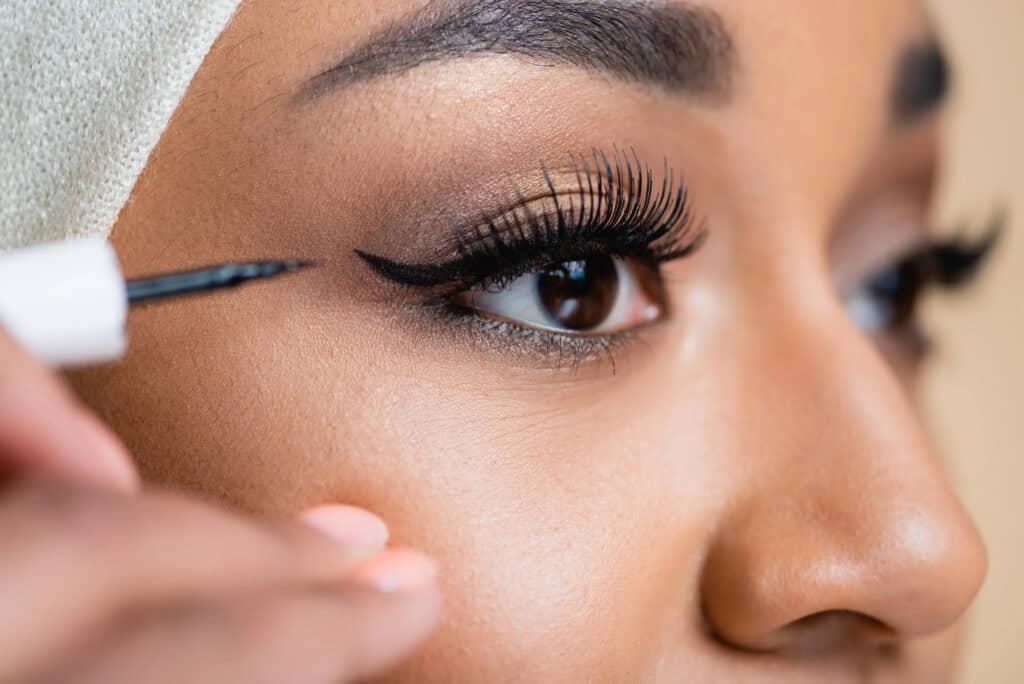
Keep length and density in the conversation, especially if you want extra lift without a much bolder lash line.
D Curl
Consider D if: you want a pronounced upward curve and your artist confirms that it works with your natural lashes and eyelid space.
It is generally the strongest curl of these three, but a suitable length and lighter application can keep it from looking overly full.
If you only want extra lift in selected areas, ask whether blending D with C or CC would suit the design.
Mix & Match
You do not have to choose a single curl for the whole lash line.
Mixing curls gives the artist room to account for lashes that point in different directions.
C, CC, and D can appear in one set, although using all three is not a requirement for a good result.
Mixing curl patterns can help a technician transition between areas of the eye, customize lift, and create a more intentional shape.
The video below from Eyelash Excellence – Frankie Widdows offers a visual explanation of choosing lash curls.
Consult A Lash Technician
Bring one or two reference photos and explain what you like about them: the curl, length, fullness, or overall shape. A photo helps communicate a preference, but your own lashes determine what can be recreated.
Useful questions include: “Which curl suits my natural lash direction?” and “Can we get this lift with a shorter or lighter set?”
If you liked a previous set, ask the artist to record its curl, lengths, and map. That gives you a clearer starting point for your next appointment than remembering the curl letter alone.
Takeaway
For a quick comparison, think C for moderate lift, CC for extra curl, and D for the strongest upward curve of the three.
C is often a good starting point for a soft finish; CC offers a step up when you want more visible lift.
D gives a more pronounced curl, but it does not automatically make lashes thicker or make a set last longer.
Rather than matching a curl letter to one specific eye shape, focus on length, weight, natural lash direction, and mapping. A strong curl can look soft or dramatic depending on how the set is designed.
Choose the effect you enjoy, then let your artist tailor the curl and map to the lashes you have.
Related Articles
Why Do My Eyelashes Go Down When I Apply Mascara?
Why Won’t My Eyelashes Curl Anymore?
Does Jojoba Oil Work For Eyelashes?