
Can You Use Toner Without Developer?
When it comes to colour-treating your hair, it is easy to get confused about toner and developer. Do you need both, and what happens if you use toner straight from the bottle?
The answer depends on the formula. “Toner” describes a product’s job of adjusting the tone of your hair, but different toning products work in different ways.
So, can you use toner without developer?
Yes, if it is a ready-to-use, direct-dye toning product, such as a purple shampoo or a colour-depositing mask. No, if it is an oxidative toner whose instructions require developer. That formula needs the specified developer to work as intended.
Before you mix anything, check the directions on your exact product. A bottle labelled “toner” or “gloss” does not tell you enough on its own.
What Is Toner?
Toner works to adjust unwanted tones in the hair, often after lightening. It can soften the appearance of brassiness or help create a cooler, warmer, or more neutral finish.
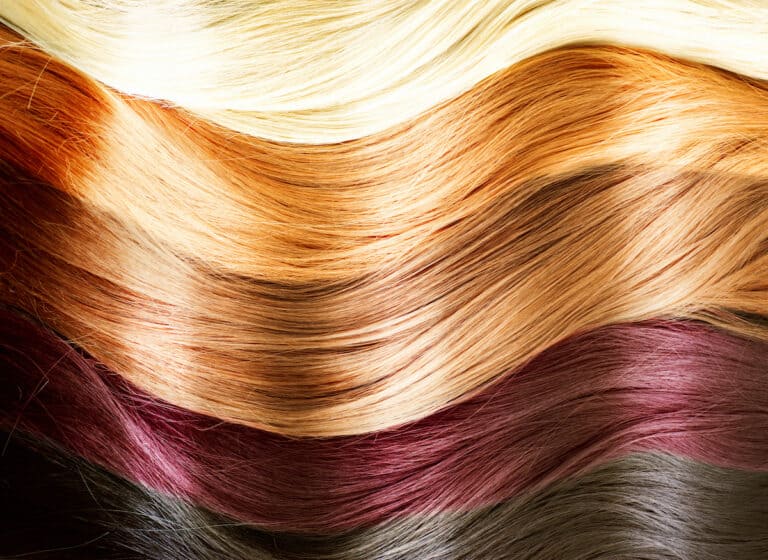
The right shade matters. Violet-based products target yellow tones, while blue-based products target orange. A toner designed for pale blonde hair will not necessarily give the same result on darker, orange-toned hair.
Toning is not just for blondes. Brunette, highlighted, and grey hair can also benefit from a product chosen for the colour already present and the finish you want.

A colourist can apply different formulas to different sections for a more balanced result. This is particularly helpful when the ends are lighter or more porous than the roots.
Toner can also refresh colour between appointments, and some formulas leave hair looking glossier. However, added shine does not mean that bleach damage has been repaired.
How long the result lasts depends on the formula, your hair’s condition, and how often you wash it. A toning shampoo needs repeat use as directed, while a salon colour service can retain its effect for several weeks. Neither has a guaranteed lifespan on every head of hair.
What Is a Developer?
Hair developer is a hydrogen-peroxide-based product used with compatible oxidative hair colour, toner, or lightener. It is sometimes called an activator or processing lotion.
In an oxidative colour formula, it helps develop the colour. In a lightening mixture, it helps lighten natural pigment. The complete formula determines how much colour is deposited or lifted; developer is not a stand-alone toner.
It is also too simple to say that developer alone “opens the cuticle.” The alkalising ingredients in many colour and lightening formulas help the hair swell, while peroxide supplies the oxidising action.
Developer strengths are often described as 10, 20, 30, or 40 volume, and some toning systems use lower strengths or their own dedicated activator. A higher number does not mean a better toning result.
Use only the developer type, strength, and mixing ratio specified for your toner. Do not choose 40 volume simply because your hair is brassy, or assume that every toner takes 10 or 20 volume. A stronger mixture can introduce unwanted lift and additional damage.
Why Are Toner and Developer Used Together?
An oxidative toner and its compatible developer form a colour system. Skipping the developer changes how that system works, so the shade shown on the packaging is no longer a reliable guide.
When hair is lightened, underlying warmth can become visible. Once the lightener has been thoroughly rinsed out according to its directions, a suitable toner can refine that warmth. Toner is a separate step, not something to add to leftover bleach on your hair.
There is no universal processing time. Follow the instructions for your formula, including whether to apply it to dry or towel-dried hair. Do not assume every toner should sit for 10 to 15 minutes.
For example, Wella’s permanent liquid toner directions specify a developer mixture. Those instructions should not be transferred to a different toner or a ready-to-use mask.
Toning is useful when the current shade needs adjusting, but it is not automatically required after every colour service. If you like the tone already, adding more pigment can make it look duller or cooler than you intended.
Can Toner Be Used Without Developer?
Check the mixing instructions first. If they tell you to combine the toner with developer or an activator, do not apply it unmixed. It may leave an unpredictable tint or staining, but it will not develop as intended.
If the instructions say to apply the product directly from the bottle or tub, it is designed to work without a separately added developer. This is how many toning shampoos, conditioners, and direct-dye masks work.
“Demi-permanent” does not mean developer-free. Many demi-permanent toners and glosses require an activator, even when they are marketed as gentle or ammonia-free.
Water, conditioner, shampoo, and household hydrogen peroxide are not substitutes for the specified developer. Do not add developer to a ready-to-use product unless its manufacturer explicitly instructs you to do so.
Before a full application, test the product on a small hidden strand using the manufacturer’s directions. This helps you check the colour result, especially on porous ends that may take up pigment more strongly.
A strand test does not replace an allergy alert test. Follow the product’s allergy-testing instructions each time, wear gloves when directed, and never exceed its processing time. The FDA’s hair-dye safety guidance also advises following package directions and testing for skin reactions before use.
Toner Alternatives
If you want to refresh your colour without mixing developer, choose a product formulated for direct application. These options are useful for maintenance, but they cannot reliably turn a too-dark or uneven base into an even pale blonde.
Purple and Blue Shampoos
Purple shampoos can help soften yellow tones in blonde, platinum, highlighted, or grey hair. They deposit violet pigment rather than bleaching the hair lighter.
Orange warmth usually calls for a blue-based product suited to your hair colour. Purple shampoo is not a catch-all fix for every shade of brassiness.
Follow the recommended contact time and frequency. More product or more time is not always better: very light or porous areas can pick up a violet cast. Wella’s purple shampoo guide explains how overlong application can leave an unwanted purple tint.
Colour-Depositing Masks and Glosses
A ready-to-use colour-depositing mask or conditioner can refresh tone while providing conditioning. Choose a shade intended for your current base colour and test a hidden strand before applying it all over.
Check glosses individually. Some are direct-dye products, while others are oxidative systems that need developer. “Gloss” describes the service or finish, not a guarantee of how the product works.
Can Apple Cider Vinegar Replace Toner?
An apple cider vinegar rinse is sometimes suggested for dull or brassy hair, but acidity is not the same as colour correction. Vinegar does not supply the violet or blue pigments used to counter yellow or orange tones.
Apple cider vinegar is not formulated as hair toner. Do not mix it into toner or developer, and do not rely on a kitchen dilution to produce a predictable colour result.
If dullness is your main concern, first distinguish it from unwanted warmth. A haircare product intended for your particular buildup or conditioning needs may be more useful than adding pigment.
Can Tea Rinses Tone Hair?
Green, black, and oolong tea rinses are also suggested as homemade alternatives. However, the colour of brewed tea does not tell you how it will behave on your hair.

Tea rinses are not a reliable substitute for a formulated toner. They do not offer a controlled shade or a dependable way to neutralise brassiness, so repeated applications should not be presented as a guaranteed fix.
“Natural” also does not mean chemical-free or automatically suitable for your scalp. For predictable toning without developer, a ready-to-use hair product with clear directions is a more practical choice.
Conclusion
You can use toner without developer only when the formula is designed for it. Oxidative toners need their specified activator; ready-to-use toning shampoos, conditioners, and direct-dye masks do not.
Match the product to the warmth you can actually see, follow its directions, and check the result on a hidden strand. If your hair is uneven, breaking, or much darker than your target shade, ask a colourist to assess it before adding another chemical service.
Related Articles
Hair Too Ashy After Toner – What To Do
What Does Hair Toner Do To Highlights?
Do You Put Toner On Wet Or Dry Hair?