
Why Is My Hair Curly Underneath But Straight On Top?
We’ve all heard of combination skin, but combination hair? What’s that?
If you have curly or wavy hair, you may already be familiar with having more than one texture across your head.
That can mean having different textures of hair on different parts of your head, including straighter hair on top and curlier hair underneath.
This variation in hair textures is more common in people with curlier locks.
However, it can affect every hair type to a certain extent.
It can be frustrating to deal with such different textures as you try to style your hair.
You might wonder whether the difference means something is wrong with your hair, but mixed curl patterns are common.
So, why do you have curly hair underneath but straight on top?
It’s common to have a curl pattern that varies by section. Genetics can play a role, while heat, chemical processing, friction, length, and styling habits can also make the more exposed top layers look straighter than the hair underneath.
In this post, we will discuss the different reasons you might have curly hair on the bottom and straight hair on top.
We will also go over some of the ways you can even out the textures of your hair and help it stay more uniform.
Why Is My Hair Curlier Underneath?
Several factors can explain why your hair is curlier underneath. The most common ones are natural variation, changes in the hair or scalp over time, and damage to the more exposed top layers.
Genetics
Yes, a lot of times, uneven hair patterns are just due to your DNA.
Hair texture is influenced by multiple genes, so it is completely possible for different sections of the scalp to produce noticeably different curl patterns.
The hair textures can change throughout a person’s life, with certain genes becoming more prominent than others as the person ages and goes through hormonal fluctuations.
If your hair is straight on top but curly underneath, this could be due to your genetics, even if your hair hasn’t been that way all your life.
Age, hormonal changes, pregnancy, and changes in overall health can all coincide with shifts in hair texture. These changes can happen gradually and may not affect every section of the scalp equally.
If your mixed texture is mostly genetic, it may remain part of your natural pattern, although curl behavior can still change over time.
Your hair can also respond differently as it gets longer, shorter, more or less damaged, or exposed to different styling habits.
In the meantime, there are things you can do to even out your hair texture, which we will discuss in a moment.
Your Health
Another reason why your hair texture might be different in different parts of your head is your health status.
Some health conditions can affect the look of your hair – these include hyperthyroidism, hypothyroidism, lupus, and others.
If you notice a sudden change in your hair texture, as well as some other changes in your health, it’s best to check with a doctor.
If a medical issue is contributing to a sudden texture change, addressing the underlying condition may help, but the outcome depends on the cause.
Damage
Another common reason for hair being straighter on top and curlier at the bottom is damage to the hair.
If you naturally have a curly texture, putting your hair through damaging activities can weaken the curl and cause it to look straighter.
The top layer of the hair often receives more sun exposure, heat, brushing, and chemical processing, so damage can become more visible there than underneath.
Here are some of the most common causes of damage that can make hair lose its curl:
Heat Styling
Heat styling means using a hot tool to style and control the way your hair looks.
It includes things like hair straightening, curling, blow-drying, blowouts, and hair rollers.
Frequent or excessive heat can damage the cuticle and weaken the hair fiber, which may make curls look looser, rougher, or less defined.
Damage to an existing hair shaft cannot truly be reversed, but you can reduce additional damage by using less heat, applying a heat protectant, and using conditioning products that improve softness and manageability.
When you damage the structure of your hair with heat, you often damage the texture of the hair, causing curly hair to become straighter and to lose its bounce.
Chemical Processing
Chemical processing is when you use powerful chemicals to alter the colour and texture of your hair.
Some common chemical processes that you’re probably familiar with are: colouring, bleaching, perming, and relaxing.
Depending on the treatment, chemical processing can permanently alter or weaken the existing hair fiber and make a natural curl pattern look looser or straighter.
The effect may be more noticeable on the top layers if those sections have been processed more often, overlapped during touch-ups, or exposed to more heat and environmental wear.
Environmental Exposure
The top layers of the hair are also much more exposed to environmental damage than the bottom layers.
Environmental damage includes UV exposure from spending a lot of time in the sun, as well as chemical pollution and harsh weather.
Over time, repeated UV exposure, weathering, and mechanical wear can weaken the hair fiber and make curl definition less consistent.
Over-Brushing
Brushing is not automatically damaging, but rough or repetitive brushing can increase breakage and disturb curl clumps, making the top layer look straighter or frizzier.
This is even more pronounced if you brush your hair too much while it’s wet, because your hair is more fragile and prone to pulling when it holds on to extra water.
Rough detangling on wet hair can lead to stretching and breakage. Use plenty of slip, work in sections, and detangle gently from the ends upward.
Sleeping Without Protecting The Hair
Another overlooked source of damage is sleeping without protecting the hair.
If you’re the type of person who tosses and turns during the night, this is something to pay attention to!
When you’re in bed, the top layers of your hair can rub against the fabric of your pillow, sheets, and blankets, which can do a surprising amount of damage to your hair.
This friction can contribute to breakage, tangles, and frizz, especially in the outermost layers.
Since the top layers of your hair are the ones rubbing against fabric the most, that’s where you’ll notice the biggest difference.
Try using a silk or satin pillowcase or head wrap to reduce friction while you sleep.
Going Too Long Without A Haircut
As your hair gets longer and heavier, the added weight can straighten your natural curl pattern.
This can lead to uneven hair textures, especially if you have sections of hair that are longer than others.
If you notice that the longer parts of your hair are straighter than the shorter parts, this can definitely be the culprit.
Sometimes getting a haircut is all it takes to make the texture of your hair appear more even.
How To Even Out Your Hair Texture
Whether it’s genetics or damage that’s causing your hair to be curly at the bottom and straight on top, there are things you can do to make it look more uniform.
Some of these strategies work best as short-term solutions, while others are better for evening out your hair texture in the long term and will require more patience.
Here are the things we recommend trying if you want your hair to be one texture all over:
Reduce Chemical and Heat Damage
This is more of a long-term solution. Once the existing hair shaft is structurally damaged, it cannot fully return to its original condition.
Conditioning and bond-care products can improve the feel and appearance of damaged hair, but the most damaged sections usually need to grow out or be trimmed away.
That being said, it’s a worthy pursuit since your hair will start growing out healthier, and the textures of your hair should become more uniform.
Of course, if your combination hair is a result of genetics, reducing heat and chemical damage won’t get rid of it entirely.
Even when the mixed texture is genetic, reducing unnecessary damage can help each section show its natural pattern more clearly.
To reduce chemical damage, think about embracing your natural hair colour and texture without altering it going forward.
This can be hard to do, especially if you’re coming back from significantly altered hair.
The middle stage, while your roots are growing out, can be pretty awkward.
But there are lots of ways you can get creative by wearing your hair up and accessorising while it grows out.
Heat damage is a little easier to avoid – simply reduce the frequency with which you heat style your hair.
You can also use a cooler setting whenever you are drying your hair.
Curl Your Top Layers To Match The Bottom
Ok, this sounds opposite from our advice above, and that’s because it is.
If you’re looking for an immediate solution, you can simply curl your top layers to make them match the bottom layers better.
This is a great short-term solution that works right away.
It won’t get you any closer to naturally even hair, but if you need something pronto, this is it.
To curl your top layers, you can use a curling wand or rollers.
Just make sure they are the right size so that the curl pattern looks similar to the curls on your bottom layers.
As an alternative, you can straighten your bottom layers to help them look more like your top layers of hair.
It’s up to you which direction you decide to take it.
Enhance Curls With Product
A lower-heat option is to encourage any natural wave or curl in the top layers with curl-enhancing products.
Gels, mousses, and curl creams can add hold and definition when applied to damp hair, especially if the top layer already has some natural bend or wave.
This can make air-drying easier and reduce how often you reach for hot tools, which helps limit additional heat damage.
In addition to using curl-enhancing products, you can also finger-coil the straighter parts of your hair to help them take shape while they dry.
If the top layer has some natural texture, the combination of styling product and finger-coiling may help reveal it. Truly straight sections will not permanently become curly from product alone.
Hydrate, Hydrate, Hydrate
Well-conditioned hair often forms smoother, more defined curl clumps.
If your top layers look straighter because of heat damage, conditioning can improve softness, flexibility, and definition, but it cannot fully reverse structural damage to the existing strand.
We suggest using moisturising shampoos and conditioners, as well as doing regular hair masks that include ingredients like shea butter, argan oil, and honey.
These ingredients help rehydrate the hair.
You can also look into incorporating a leave-in conditioner into your routine.
For example, this leave-in conditioner helps nourish your hair while defining and adding some hold to your curls.
Used consistently, a leave-in can also make finger-coiling easier and help reduce frizz while the hair dries.
If you use it along with the finger-coiling method described above, you can moisturize the hair while encouraging any existing wave or curl pattern in the straighter-looking sections.
Pin Top Layers While Air-Drying
If finger-coiling isn’t quite your thing, another way you can encourage your top layers to curl is to pin them up while they dry.
Pinning involves separating your hair into sections and rolling them up towards your scalp.
You can secure the rolled-up hair with a pin and let it dry for a few hours or overnight.
When you remove the pins after the hair is fully dry, the sections should hold a temporary curl or wave pattern.
If your hair is only straight at the top of your head, you’ll only need to pin your top layers, while allowing your bottom layers to dry as usual, since they’re already naturally curly.
Cut Your Top Layers Shorter
Since longer hair can make your hair straighter, one thing you can do to get your top layers to curl better is to cut them shorter.
A good stylist will know how to cut the right kind of layers in your hair to enhance your natural texture and help define more curls in the top part of your hair.
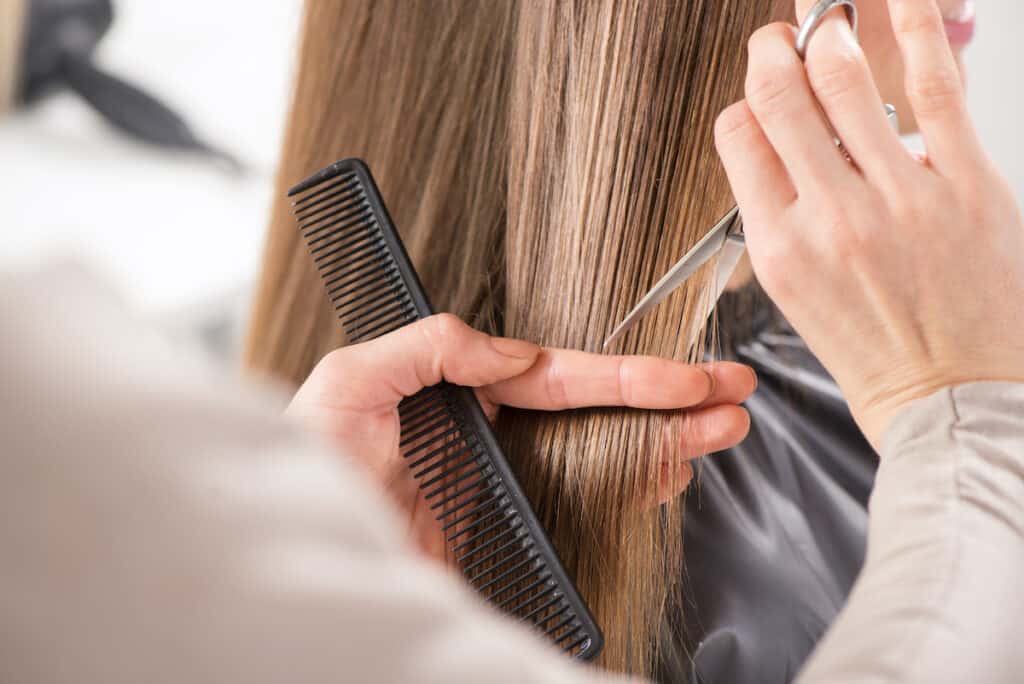
You can also ask a curl-focused stylist about a dry or curl-specific layered cut. The goal is to shape the hair around its natural shrinkage, density, and curl pattern rather than forcing every section to behave identically.
Wrap Your Hair While Sleeping
To prevent any further damage to your top layers, we recommend wrapping your hair up when sleeping.
This will not change your natural curl pattern overnight, but reducing nighttime friction can help protect the top layers from additional breakage and frizz.
It will also help tame frizz and reduce breakage, which is a win-win in our book.
A silk or satin hair wrap or scarf can reduce friction compared with rougher fabrics, as long as it is not tied tightly enough to create tension.
As an alternative, you can look into getting silk or satin pillowcases, which will help reduce the damage, too.
Avoid Ponytails And Tight Buns
Try to limit hairstyles and updos that repeatedly pull on the top layer, especially if they create breakage, stretched curls, or tenderness around the hairline.
This includes ponytails, tight buns, topknots, and similar hairstyles.
While this won’t help much if your combination hair is genetic, it can definitely reduce the overall damage to your top layers that contributes to the hair becoming straighter over time.
Final Thoughts
As you can see, there are a lot of different reasons why your hair might be curly underneath but straight on top.
From genetic predisposition to damage incurred from over-styling and over-processing.
Regardless of the reasons, you’re not alone, and lots of people deal with “combination hair” daily.
There are plenty of ways to make the textures look more cohesive, from styling the top layer to match the curls underneath to reducing damage and choosing a cut that works with your natural pattern.
We hope you find these tips helpful and embrace the natural variety of your hair!
Curly Underneath, Straight On Top FAQs
Can Hair Naturally Have Two Different Textures?
Yes. It is normal for different sections of the scalp to produce slightly different curl patterns. Some people have straighter pieces around the crown and tighter curls underneath, while others have the opposite pattern.
How Can You Tell If The Straight Top Layer Is Damaged?
Look for other signs such as roughness, split ends, breakage, unusual dryness, reduced elasticity, or a history of frequent heat and chemical processing. A naturally straighter section can still feel healthy even if it does not curl like the hair underneath.
Can Curl Products Make Straight Hair Curly?
Curl products can enhance texture that is already present, but they cannot permanently turn naturally straight hair into curly hair. Gels, mousses, and finger-coiling work best when the top layer already has some wave or curl to encourage.
Should You Cut The Straighter Top Layer Shorter?
Sometimes. Removing weight with well-placed layers can help curls spring up, but cutting too much can create a shape you do not like. A stylist experienced with wavy or curly hair can help determine whether layers will improve the balance.
Related Articles
Can You Use Curly Products On Straight Hair?
How To Know If You Have Curly Hair
Is My Straight Hair Actually Wavy?