
Should I Wet My Hair Every Day?
You can wet your hair every day if it helps with styling and your hair tolerates it well. You do not need to shampoo every time, and a light mist may be enough to refresh your style without soaking your whole head.
The best approach depends on your scalp needs, hair texture, chemical treatments, and styling habits. A quick curl refresh is a different routine from a full rinse followed by blow-drying.
Before reaching for the spray bottle or stepping into the shower, ask what your hair needs: reshaping, detangling, or cleansing? That helps you choose the right step.
The useful approach is to pay attention to how your hair responds. If daily wetting leaves it soft, manageable, and easy to style, it may fit your routine. If it leads to roughness, tangling, prolonged drying, or extra manipulation, you may be better off wetting it less often.
A hairstylist can help with breakage related to handling or chemical treatments. Persistent scalp irritation or unexpected hair loss calls for advice from a dermatologist.
It also helps to separate two questions: how often should you wash your hair, and how often should you simply get it wet?
They are not the same thing. A water rinse does not cleanse the scalp the way shampoo does, and shampoo frequency should be based mainly on oil, sweat, buildup, scalp comfort, and your styling routine.
Daily wetting can be perfectly workable for some people, but it is not automatically healthier and it is not necessary for every hair type.
So, should you wet your hair every day?
Daily wetting is optional, not a requirement for healthy hair. Try a light refresh when your style needs it, cleanse when your scalp needs it, and cut back on full rinses if they mean more tangling, pulling, or heat styling.
Wetting reshapes the hair, conditioner adds slip, and shampoo cleanses. Choosing the step you actually need can save you time and unnecessary product layering.
Hair is personal, so use the guidance below as a way to adjust your routine rather than as a rule that everyone needs to follow.
Does Wetting Your Hair Every Day Damage It?
Everyone has different hair and scalp needs, so daily wetting can be helpful, neutral, or inconvenient depending on the person.
Healthy, minimally processed hair may tolerate frequent wetting well, while bleached, highly porous, weathered, or already fragile hair may need more careful handling.
The main concern is not water itself. Hair swells when wet and contracts as it dries, and repeated wetting combined with rough detangling, towel friction, heat, or tight styling can add mechanical stress over time.

You may have heard that washing your hair every day is always bad, but that is too broad. Some scalps need frequent cleansing, particularly with heavy oil, sweat, exercise, or buildup.
For those people, a gentle shampoo used as needed may be more comfortable than stretching washes simply to follow a schedule.
So, does wetting your hair every day damage it? Not necessarily. The bigger issue is what you do before, during, and after it gets wet.
How To Wet Your Hair Properly
Wetting your hair can mean anything from lightly misting the lengths to fully saturating them in the shower. Those two approaches can feel very different on the hair, so you do not need to soak your whole head if you only want to refresh a style.
Water alone does not replace shampoo when your scalp needs cleansing, and it does not replace conditioner when your lengths need extra slip or softness.
Plain water is not as oil-removing as shampoo, but repeated rinsing can still leave some hair feeling rough, especially when it is followed by friction, hot water, aggressive detangling, or heat drying.
For a gentler refresh, use lukewarm water, avoid rubbing the hair with a towel, and blot or squeeze out excess water instead.
You may also want a light leave-in conditioner or styling product after wetting if your hair feels dry or tangles easily.
That is optional, though. Fine or easily weighed-down hair may need very little product, while dry or textured hair may benefit from more slip and conditioning.
Hair Type and Porosity
Your texture, strand thickness, density, porosity, chemical history, and styling routine all matter when deciding whether daily wetting makes sense. Curl pattern alone cannot tell you exactly how often your hair should get wet.
For example, someone can have fine individual strands but a high overall hair density, while another person can have coarse strands but lower density.
That is why terms such as fine, thin, dense, curly, and porous should not be treated as interchangeable.
Instead, notice practical signs such as how quickly your hair gets saturated, how long it takes to dry, how easily it tangles, and whether frequent wetting leaves it softer or rougher.
Hair Type
A commonly used curl-pattern system groups hair into four broad categories, with lettered subtypes. It is a styling shorthand rather than a complete measure of hair health or porosity:
- Straight (1A, 1B, 1C)
- Wavy (2A, 2B, 2C)
- Curly (3A, 3B, 3C)
- Coily (4A, 4B, 4C)
1. Straight
If you have straight hair, you can wet it daily if that suits your routine, but a full rinse may not be necessary just to refresh the style.
Wet hair needs gentle handling. For straight hair, let it dry a little before combing, and avoid pulling through stubborn knots. The American Academy of Dermatology’s hair-care guidance also distinguishes between detangling straight hair and detangling curls while damp.
A wide-tooth comb can be useful if you prefer detangling while damp, especially with enough slip. A lightweight leave-in nourishing product can also help if your lengths feel dry or snag easily.
Start with a small amount of product, particularly on fine or easily weighed-down hair, and add more only if needed.
If your hair tangles easily, gently removing major knots before a full rinse may make the process easier. However, do not force a brush through dry hair if that causes snagging or breakage.
Work from the ends upward in small sections, supporting the hair above a knot while easing it apart. Stop and add slip if the comb catches instead of repeatedly dragging it through.
2. Wavy
Wavy hair can respond very differently to daily misting or rinsing. Some waves spring back with a little water, while others become limp, frizzy, or weighed down.
Try a light refresh first rather than fully saturating your hair every day, then compare how your waves look and feel.
If your waves feel dry, a light leave-in conditioner can add slip and softness without requiring a full wash.
If daily wetting makes your hair harder to style or slower to dry, space out full rinses and refresh only the areas that need it.
The right amount of conditioner depends on your strand thickness and porosity, so use enough for manageability without automatically layering on more product every day.
3. Curly/Coily
Curly and coily hair often benefits from water-based refreshing because water can help reactivate styling products and reshape curls between wash days.
However, curl pattern does not automatically determine scalp oiliness. Curly and coily lengths can feel drier because scalp oils have a more difficult path down the bends of the strand, but the scalp itself can still be oily, dry, or balanced.
That distinction is important because the scalp and the lengths may need different care.
Daily misting is not automatically necessary, and fully soaking the hair every day can create extra drying time and manipulation.
For some curl routines, though, a small amount of water can be a convenient way to refresh definition.
For a style refresh, mist only the flattened or frizzy sections, gently reshape them with your fingers, and let them set. A light mist is for reshaping; if you need to detangle, dampen the section enough to work through it comfortably with conditioner and minimal pulling.
Remember that refreshing with water is still different from cleansing with shampoo. Water can reshape and temporarily hydrate the fiber, but it does not remove scalp oil and product buildup as effectively as a cleanser.
If your curls feel dry between wash days, a water-based refresh may help them feel more flexible and look more defined.
You do not have to add a heavy product every time. Try a light mist of water first, then add a little leave-in conditioner, curl cream, or gel only where needed. Oil can add lubrication, but it does not add water or cleanse the scalp.
Use the smallest amount that gives you the definition and manageability you want without creating buildup.
Porosity
Porosity describes how readily the hair fiber takes up and loses water. It is influenced by the condition of the cuticle and can change with bleaching, coloring, heat, weathering, and mechanical wear.
It can be useful when thinking about product weight and drying time, but you do not need a perfect porosity label to build a good routine.
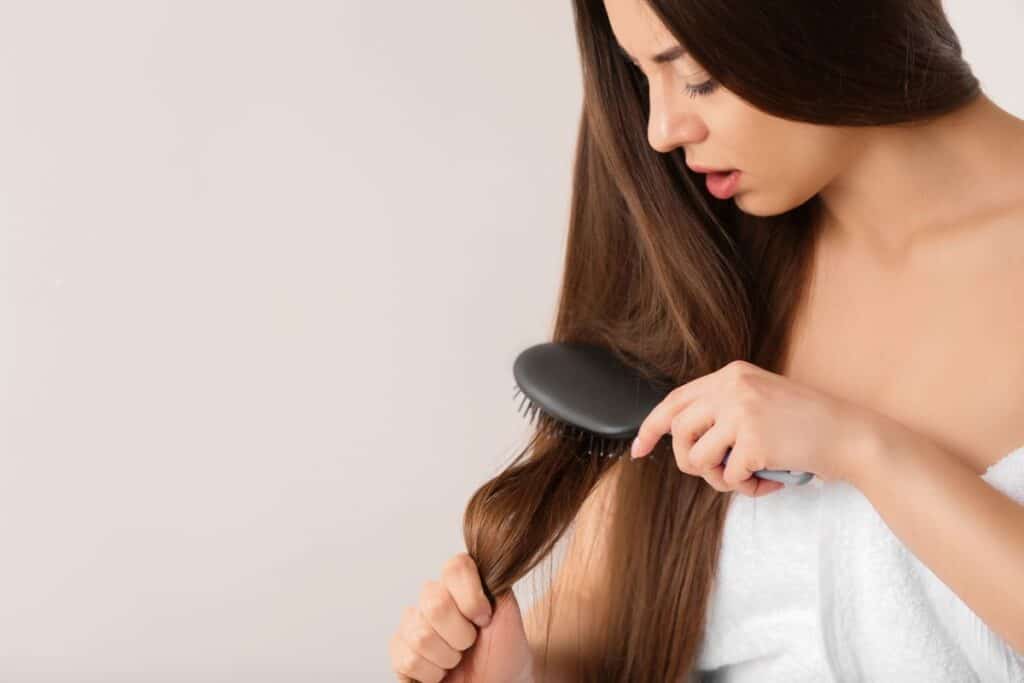
A quick hair lesson: the hair shaft is commonly described in layers, although the innermost layer is not present in every strand:
- The Cuticle – the outermost protective layer of the hair
- The Cortex – the main structural layer that contains much of the hair’s pigment
- The Medulla – a central core that may be absent in some hairs, particularly finer strands
The condition and arrangement of the cuticle influence how readily water moves into and out of the hair, which is why damaged or weathered hair often behaves as though it is more porous.
Porosity is often grouped into three broad categories:
- Low Porosity: Hair may take longer to become fully saturated and can be prone to product sitting on the surface. If daily wetting leaves it damp for a long time, a light mist may be more practical than a full rinse.
- Medium Porosity: Hair generally takes up and releases water at a moderate rate and may tolerate a wide range of routines.
- High Porosity Hair: Hair may become wet quickly and lose water quickly. If it is bleached or otherwise damaged, repeated soaking plus rough handling can make tangling and breakage more noticeable, so be especially gentle.
These categories are a rough guide. Drying time alone does not establish porosity: hair density, length, products, and humidity also affect it. Pay attention to tangling, softness, and buildup instead of choosing a wetting schedule from a label alone.
That information can also help you choose product textures, from lightweight sprays to richer creams, that better suit how your hair feels in real life.
How To Choose Your Daily Hair Refresh Routine
Start with the reason you want to wet your hair. A flattened fringe, tangled lengths, and an oily scalp need different solutions, even if all three show up on the same morning.
For bedhead or a flattened section: dampen your hands or lightly mist that area, reshape it, and let it dry. Leave the rest alone if it already looks the way you want.
For greasy roots or noticeable buildup: choose cleansing over another styling refresh. Repeatedly wetting oily roots will not remove the oil as effectively as shampoo.
For tangled lengths: make detangling its own step. Work slowly in sections with enough slip, rather than combining a quick rinse with hurried brushing.
You may also want to use gentle accessories that do not pull tightly on damp or fragile strands.
After exercise: a rinse can help remove some sweat, but check your roots afterward. If they remain greasy or coated with product, a water-only rinse has not met your cleansing needs.
If a refresh leaves your hair sticky or heavy: avoid adding another layer of cream or oil. Your next step may be washing out accumulated product, not adding more.
If your hair takes hours to dry: refresh earlier in the day or dampen smaller sections. A full soak may be more work than the styling result is worth.
If every rinse leads to heat styling: factor that into your routine. Try a smaller refresh that does not require a full blow-dry, especially on already fragile lengths.
Use a spray bottle with a fine mist so you can add water gradually. Stop once the section is pliable enough to reshape; dripping wet is not the goal for a quick refresh.
When comparing routines, look at your hair after it has dried. A refresh that looks good while damp but leaves more knots or residue afterward may need less water, less product, or fewer repetitions.
Change one thing at a time, such as misting instead of rinsing or using less leave-in. That makes it easier to tell which adjustment helps.
Reassess after coloring, bleaching, a change in climate, or a new hairstyle. A routine that suited untreated hair may feel too time-consuming or rough on more fragile lengths.
Keep a refresh simple: dampen the areas that need it, reshape gently, and give them time to dry. Add product only if water alone does not give you enough slip or hold.
If your hair already feels manageable and your style is holding, skip the refresh that day. There is no need to get it wet just because it is part of a daily habit.
The takeaway: wet your hair when it serves a purpose, and keep cleansing separate from styling. Daily misting can fit your routine without committing you to daily soaking or shampooing.
Frequently Asked Questions
Is It Bad To Wet Your Hair Every Day Without Shampoo?
Not necessarily. A daily water rinse or mist can work well for some people, especially when refreshing curls or rinsing away sweat. The important part is to handle wet hair gently and watch for signs that repeated wetting is making your hair rougher, more tangled, or harder to dry.
Can You Wet Curly Hair Every Day?
You can, but you may not need to fully soak it. Many curl routines work well with a light mist of water and a small amount of leave-in or styling product to reactivate definition. If your curls become weighed down, more tangled, or slow to dry, try using less water and product or refreshing less often.
Does Water Moisturize Hair?
Water can temporarily hydrate the hair fiber, but wet hair is not necessarily well-conditioned hair. Conditioner and leave-in products help with slip and softness. Oils can lubricate the strands, but they do not add water, and repeatedly soaking rough-feeling hair may not solve the problem.
Related Articles
Are Scrunchies Better For Your Hair?
Best Oils For Low Porosity Hair