My Hair Looks Bad In A Ponytail – What To Do
Hairstyling can take practice, especially when you are trying to recreate a polished salon look at home. A ponytail may look simple, but small details such as placement, tension, volume, and parting can completely change the result.
Have you ever tried to replicate a salon hairstyle like curls, a blowout, or the perfect low bun?
It can be challenging to style your hair at home, especially when you want a ponytail that feels secure, comfortable, and intentional rather than flat, lumpy, loose, or painfully tight.
Some people seem able to throw their hair into a tie quickly, while others need a little more sectioning, smoothing, or product to get the result they want.
If your ponytail feels flat, loose, overly tight, or different from what you pictured, a few styling adjustments can change the result. You usually do not need a completely different hairstyle, just a better match between your hair type and the way you secure it.
So your hair looks bad in a ponytail; what should you do?
There is no single “best” ponytail for every face or hair type. The goal is to find a placement, tension, part, tie, and finish that suit your hair and feel comfortable enough to wear.
Everyone has a different hair type, texture, and density, which all act differently when you throw it up in a ponytail.
Experimenting with height, parting, tension, and texture can help you find the version that works best for your hair and personal style.
For example, very dense or heavy hair can make a high ponytail feel uncomfortable or cause it to droop unless the weight is distributed well.
Dense hair may need a stronger or more supportive tie, while fine or silky hair may benefit from a little texture or grip without needing a large amount of product.
Keep reading for ways to adjust ponytail height, volume, grip, parting, and finish, plus simple fixes for drooping, bumps, scalp tension, and flat roots.
How To Create The Best Ponytail
Do you feel like ponytails never look good on you?
Common ponytail frustrations include a flat crown, visible bumps, slipping, drooping, a thin-looking tail, or too much tension around the hairline.
The tips below can help you troubleshoot limp, flat, bumpy, loose, or overly tight ponytails.
Consider density, strand thickness, texture, length, scalp comfort, and styling preference, then adjust through trial and error. Fine hair may need grip and volume, while thick or heavy hair often needs better weight distribution and a stronger tie.
These tips can make your ponytail easier to control, although no hairstyle will look identical every single day.
So, get your brushes ready; it’s time to master the art of the ponytail!
1. Ponytail Placement
Ponytail placement changes the overall silhouette of the hairstyle. Try a high, mid-height, or low ponytail and see which one gives you the look and comfort you prefer. A higher ponytail can create more lift, while a lower placement often feels softer and places less tension on the scalp.
You can wear it high, centered, or low near the nape. Face shape can inspire styling choices, but it does not determine which ponytail you are allowed to wear.
You can find where the ponytail sits naturally on your head and work on mastering your placement.
Your ponytail should always feel comfortable throughout the day. If you notice scalp pain, a headache, or pulling around the hairline, loosen it rather than treating discomfort as the price of a sleek finish.
The right placement is the one that gives you the balance, volume, and comfort you want.
2. Hair Parting
Next, decide whether you want a visible part or a brushed-back finish.
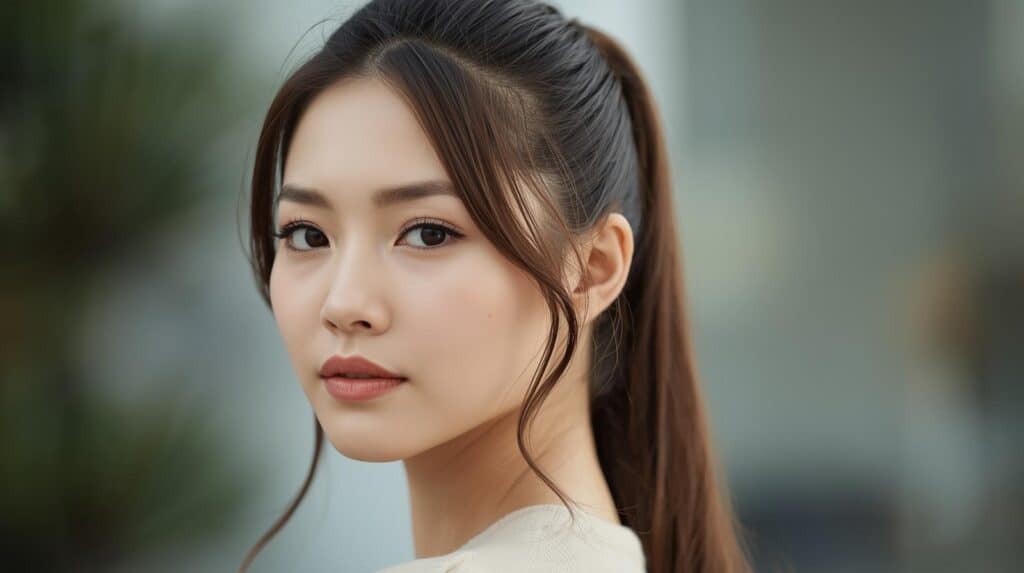
A brushed-back ponytail can look sleek and polished, while a middle or side part creates a different frame around the face. If the ponytail seems severe or flat from the front, changing the part can make a surprisingly noticeable difference.
If you prefer more softness around the forehead, a part, bangs, or face-framing pieces can change the look.
So instead, with a fine-tooth comb, create a hair part.
A deliberate part can make the style feel more structured, but a partless ponytail can look just as intentional.
You can part your hair in the middle or on the side, or skip a part entirely depending on the finish you want.
If you are feeling creative, you can even create zigzag parts or anything you desire!
3. Picking The Right Hair Tie
The hair tie affects hold, comfort, tension, and how quickly the ponytail starts to droop. A classic elastic works well for many styles, but if it feels painful or leaves your scalp sore, it is too tight for that placement.
Thankfully, there are many hair ties for every occasion.
For example, if you love a low ponytail that doesn’t tug on your strands, opt for a silk hair tie or scrunchie.
For a high ponytail, a bungee tie can give you more control over tension. Secure it firmly enough to hold without pulling painfully at the hairline or scalp.
4. Invest In Hair Gel
If you have curly or coily hair, a gel or styling cream can help smooth the base or define the ponytail while keeping your natural texture visible.
Gel can help create a sleek, put-together ponytail while still allowing your curls to be the center of attention.
Gel can improve hold and reduce flyaways, although humidity, activity, and hair texture still affect how long the finish lasts. Start with a small amount so the roots stay smooth without becoming stiff, flaky, or weighed down.
Use only enough gel to get the finish you want, and avoid repeatedly slicking the same area under high tension.
5. Use A Smoothing Brush
A smoothing brush or comb can help reduce bumps and distribute the hair more evenly before you secure the ponytail. It is often easier to smooth the hair in sections than to keep tightening the elastic after the ponytail is already tied.
A bristle brush or paddle brush can help detangle and smooth the surface, but use the brush that works with your texture without excessive pulling.
Take your time brushing your hair into your preferred ponytail placement.
Brush or comb only as much as needed to smooth the base, especially if your hair is fragile, tightly curled, or prone to breakage.
It will also save you time from having to start over completely because of bumpy hair.
6. Use Butterfly Clips Wisely
Let’s say you have found your perfect ponytail placement, but the tail lacks volume; what should you do?
Tiny butterfly clips can help give the tail a boost of volume without having to tease your strands. This works best when the clip stays hidden beneath the top section of the ponytail.
Split the tail of your pony in half, and open your butterfly clip.
Then, find the base of the tail where the hair tie is and clip in the butterfly clip.
Next, let go of the top section of the pony, so it covers the butterfly clip, and you should be left with instant volume.
7. Lay Down Your Edges (For Natural/Textured Hair Types)
If you like styling your edges or baby hairs, you can incorporate that detail into a sleek ponytail regardless of your curl category.
Edge texture, density, breakage, and styling preference vary from person to person and do not fit neatly into curl-pattern categories.
Use a small amount of gel or edge-control product with a clean detailing brush if you want a laid-edge finish. Avoid repeated hard brushing or very tight tension on fragile hairs.
This can create a more polished finish while still letting you decide how defined or soft you want the edges to look.
8. Add Dry Shampoo For Volume
If your roots feel oily or lack grip, dry shampoo may help absorb some surface oil and add texture.
Dry shampoo does not clean the scalp like regular shampoo, but it can temporarily absorb oil and make roots feel less slick.
Not everyone loves a sleek and gelled-down look; others want volume and texture to create a messy finish.
Dry shampoo can add texture and grip at the roots, which may make a ponytail look fuller and help very silky hair hold its shape more easily.
Note: Follow the product directions and give the powder or starch a little time to absorb oil before brushing out visible residue.
If you use a hair dryer afterward, choose cool or low heat rather than blasting the scalp with high heat just to “set” dry shampoo.
9. Define Your Curls
If you have curly or coily hair, use curl creams, mousses, gels, or leave-in products that support the definition and finish you want in the ponytail.
Curl creams, mists, and mousses can reduce visible frizz and improve definition, although they will not eliminate every flyaway.
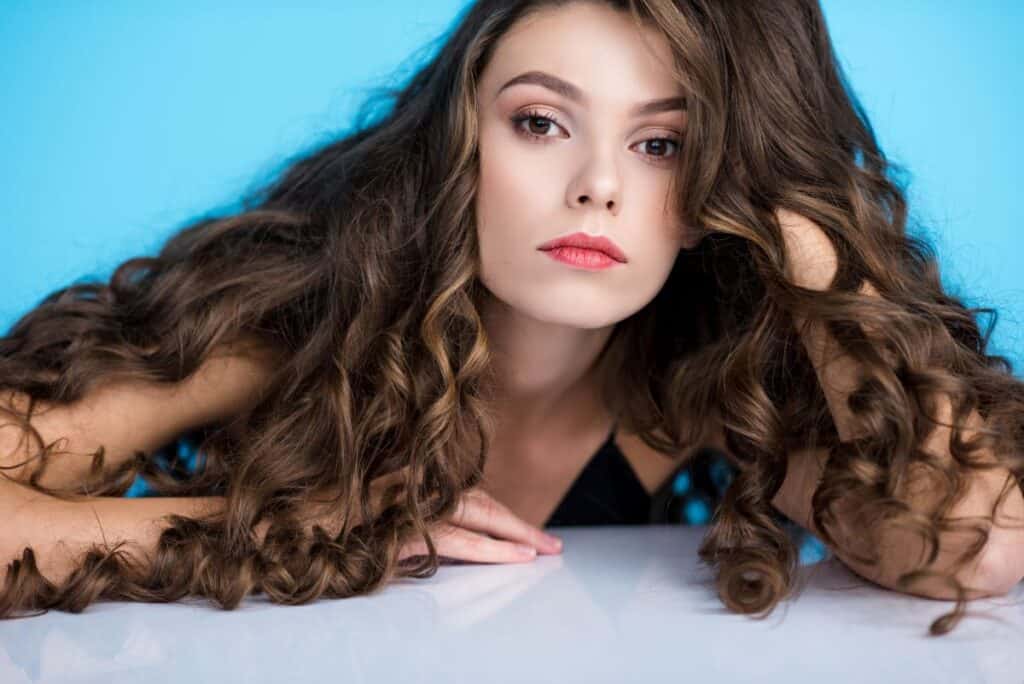
10. Keep Flyaways At Bay
Other ways to keep flyaways and frizz at bay include using hair or styling oil.
Frizz and flyaways can change the sleek look you want to achieve in your ponytail, although a few soft hairs around the hairline are normal and do not mean the style failed.
Hair oil can add shine, reduce friction, and smooth the appearance of flyaways, but it does not “feed” the nonliving hair shaft with nutrients.
11. Play With Your Bangs
If you have bangs, they can completely transform your ponytail.
Bangs can change the balance of a ponytail and add softness or structure around the face.
Also, bangs can be pinned back, teased up, or slicked back; the possibilities are endless.
12. Split Your Ponytail
Another way to keep your ponytail from drooping is by creating two ponytails. This can be especially useful when one elastic struggles to support long, dense, or heavy hair.
First, section from the top of the crown, from ear to ear, into a horizontal part, then tie it into a ponytail.
Then, gather the remaining bottom part and tie it with another hair tie into the first ponytail you made.
Using two ponytails can distribute weight more evenly for dense hair, but both elastics should still feel comfortable and not create scalp pain.
13. Avoid Wet Ponytails
If possible, avoid tying your hair in a ponytail while it’s soaking wet, especially if you tend to pull the elastic very tight.
Wet hair can stretch more than dry hair, so a very tight elastic can place extra stress on some strands.
If you need to tie damp hair back, use a loose scrunchie or soft tie and avoid high tension, especially if the hair is bleached, chemically processed, or already fragile.
14. Have Fun With Your Hair
Lastly, don’t overthink your ponytail. Instead, enjoy the process of experimenting and finding what’s suitable for you!
Hairstyling can be a creative way to express your personality without forcing your hair into a look that feels uncomfortable.
It can be challenging to practice styling your hair, but it can be worth it once you master your ideal look.
If a ponytail causes scalp pain, a headache, broken hairs around the hairline, or persistent tension, loosen it or switch to a lower-tension style.
Once you find a ponytail routine that suits your hair, it becomes easier to recreate a similar result without excessive brushing or tension.
The right combination of placement, tie, tension, texture, and styling products can help you build a ponytail routine that feels reliable and comfortable. If your ponytail still looks off, change one variable at a time so you can see whether height, parting, volume, or tension is making the biggest difference.
Ponytail Styling FAQs
Why Does My Ponytail Look Flat?
A flat ponytail can come from low root volume, very smooth hair, a heavy tail, or a placement that pulls the crown too tightly. Try loosening the hair slightly at the crown, adding a little dry shampoo or texture product at the roots, or using the two-ponytail method for extra lift.
Why Does My Ponytail Keep Drooping?
Drooping is common with long, thick, or dense hair because the weight of the tail pulls against the elastic. A stronger tie, bungee elastic, slightly lower placement, or two-section ponytail can help distribute that weight more effectively.
How Do I Make A Ponytail Look Fuller?
You can add fullness by creating root texture, gently loosening the crown, defining curls or waves in the tail, using a hidden clip underneath the ponytail, or stacking two ponytails vertically. Avoid aggressive teasing if your hair is fragile or prone to breakage.
Why Does My Scalp Hurt After Wearing A Ponytail?
Scalp pain usually means there is too much tension, too much weight in one spot, or both. Loosen the elastic, move the ponytail lower, switch to a softer tie, or wear your hair down for a while. Repeated high-tension styling can also contribute to breakage around the hairline.
Does A Ponytail Need To Be Perfectly Smooth?
No. A sleek ponytail is only one option. Soft volume, texture, curls, face-framing pieces, and a few natural flyaways can all look intentional. The best finish is the one that suits your style without requiring excessive brushing or tension.
Related Articles
Are Scrunchies Better For Your Hair?
Can White People Have Type 4 Hair?
Can You Use Curly Products On Straight Hair?