
Can You Use A Wet Brush On Dry Hair?
For many, choosing the right hairbrush seems like an impossible task.
Those who have thick, frizzy, knotty, dry, or even thin hair know how painful and frustrating it can be to brush through their hair.
If detangling still feels difficult despite conditioner or leave-in products, a flexible detangling brush may make the process easier.
A wet brush is a type of detangling brush designed with flexible bristles that can be used on damp or wet hair.
Many people like wet brushes because the flexible bristles can make detangling feel gentler than using a stiff brush through knots.
However, we don’t only brush our hair when it’s wet; we also need a brush to style it when it is dry.
Can you use a wet brush on dry hair?
Yes, you can use a wet brush on dry hair. Many detangling brushes also work on extensions and wigs, but the best technique depends on the fiber type, attachment method, and manufacturer care instructions.
That makes it a versatile option if you want one brush for both damp detangling and everyday dry-hair use.
Read on to find out all about using a wet brush on dry hair, and how to make the most of this handy little tool.
What Is A Wet Brush?
A wet brush is a particular brush design made to comb through damp hair.
The brush uses flexible bristles that bend around resistance instead of pulling as rigidly through a knot. This can reduce tugging, but no brush can guarantee zero breakage.
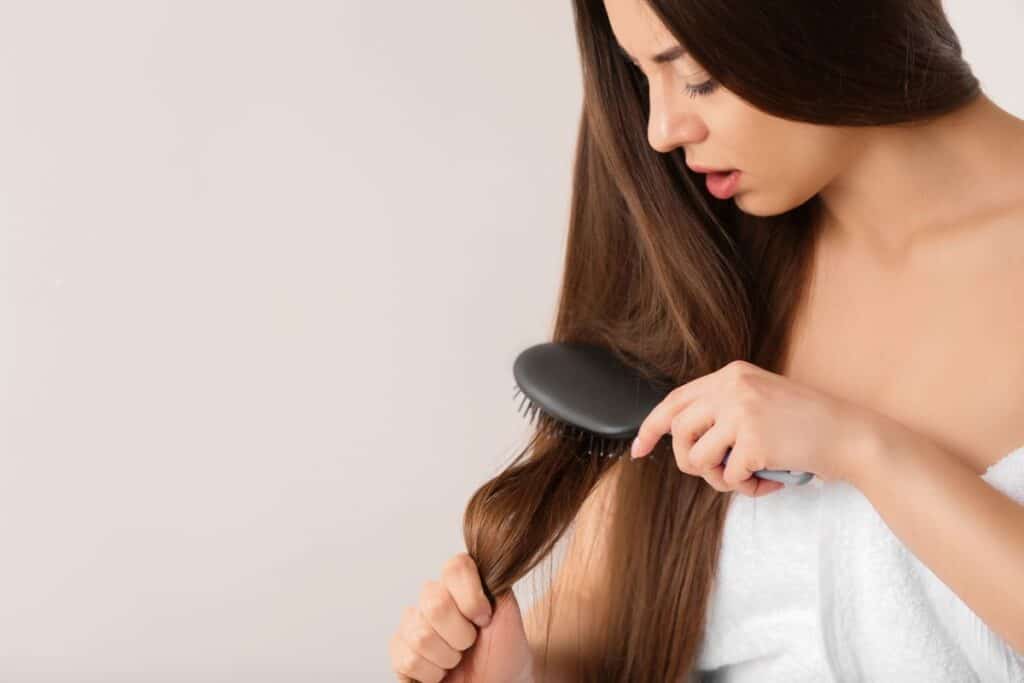
This can make wet detangling feel easier and less uncomfortable. It does not guarantee frizz-free results because frizz also depends on hair texture, humidity, damage, products, and drying method.
Different brands make detangling brushes in paddle, vented, compact, and shower-friendly designs, so size and bristle flexibility vary.
A wet brush can also feel pleasant on the scalp when used gently, but scalp massage is a comfort feature rather than the main reason the brush detangles effectively.
Brushing the scalp is not proven to deliver enough extra nutrient flow to make hair grow faster or become biologically stronger.
Can You Brush Dry Hair With A Wet Brush?
Although a wet brush is designed with damp detangling in mind, the same flexible bristles can also be useful on dry hair.
The flexible bristles can bend when they meet resistance, which may reduce pulling compared with a stiffer brush when you work through tangles slowly.
You can use a wet brush on dry hair. For wigs and hair extensions, first check the care instructions because some fibers and attachment methods require a specific brush or detangling technique.
Its flexible design can be useful for gentle detangling, but brush choice alone does not eliminate the risk of pulling, shedding, or damaging extension bonds and delicate wig fibers.
If you want one brush for both damp and dry detangling, a wet brush can be a practical option, especially when paired with gentle technique and enough slip from conditioner or leave-in product.
How To Brush Dry Hair With A Wet Brush
Starting at the roots and dragging a brush through a large tangle can compact knots toward the ends and increase pulling.
When brushing your hair with a wet brush, start at the bottom and work your way up.
No, this does not mean pushing the brush upwards, teasing your hair, and creating a bird’s nest on your head, but instead, it means you should work in sections.
Start at the ends of your hair and slowly brush with the wet brush downward, working out any knots and tangles.
Once you have finished this section, move up slightly and brush downwards again.
This way, by the time you reach your scalp and brush down through your whole length of hair, there should be no knots or tangles in the way, and it should be a smooth brush with your wet brush.
Use the same ends-first technique on wet hair. Hair fibers generally stretch more when wet, so aggressive pulling can increase mechanical damage and breakage.
Once the lengths are detangled, you can brush from the scalp downward if that feels comfortable. Avoid scratching or pressing hard on an irritated scalp.
Tip For Using A Wet Brush For Dry And Wet Hair
If you love using your wet brush on wet hair, you might want to start brushing your hair before you shower.
You don’t only have to save brushing for after a shower.
If your hair tangles easily, gently detangling it before you shower can reduce how much knotting you need to work through while it is wet.
This can reduce tugging later, especially for straight or wavy hair that tends to mat during washing.
Why You Should Use A Wet Brush
A wet brush can be useful on damp or dry hair when its flexible bristles suit your texture and detangling routine.
If you need more convincing, here are some great reasons to get a wet brush:
Gentle Brushing
Flexible bristles may reduce tugging, but any brush can cause breakage if you force it through knots or repeatedly brush fragile hair.
Used slowly from the ends upward, it can help work through knots in damp or dry hair with less pulling.
So brushing your hair doesn’t have to be such an ordeal!
Easy To Clean
Wet brushes can be easy to clean, but hair, oil, styling products, and debris can still build up between the bristles if the brush is not washed regularly.
The brush can be washed with some warm water and shampoo.
Increases Blood Circulation
The soft bristles can provide a gentle scalp massage when used without scratching or heavy pressure.
There is not good evidence that brushing or scalp massage with a wet brush meaningfully increases hair growth or nutrient delivery to follicles.
Suitable For All Hair Types
A wet brush can work for many hair types, but the best detangling method varies with texture, density, curl pattern, damage, and styling goals.
It can be used on fine, thick, straight, wavy, or dry hair, while tightly curled or coily hair may detangle more comfortably in sections with conditioner and fingers, a wide-tooth comb, or a brush designed specifically for curls.
Great To Use With A Product
A wet brush can be used for distributing some conditioning products through the lengths.
For conditioner or a mask, brushing through in sections can help spread the product more evenly. Avoid brushing scalp treatments through the lengths unless the product directions recommend it.
Compact
Most wet brushes are compact and fit easily into a bag.
Compact versions are convenient for travel or quick detangling during the day.
Why Do You Need A Special Brush For Wet Hair?
Hair fibers generally become more flexible and stretch more when wet, which can make aggressive detangling more damaging.
Wet or damp hair can be more vulnerable to mechanical damage, especially when already bleached, chemically treated, or highly porous.
Whether you should detangle wet or dry depends on hair texture. Straight and damaged hair often benefits from very gentle detangling with minimal tension, while curly and coily hair is often easier to detangle when wet and well-conditioned.
A wet brush can make wet detangling gentler, but it cannot guarantee that no breakage or damage will occur.
Its flexible bristles are intended to reduce tugging compared with a rigid brush, especially when you detangle from the ends upward.

You do not need a specific branded “wet brush” to detangle wet hair. A wide-tooth comb, fingers, or another flexible detangling brush may also work well depending on your hair type.
Related Questions
How should I wash a wet brush?
To wash a wet brush, first remove trapped hair, then use warm water with a small amount of shampoo or mild soap on the bristles and base.
Rinse the shampoo off the brush thoroughly to remove all residue.
Rinse thoroughly and dry it in a position that allows water to drain away from any cushioned or enclosed brush base. Follow the manufacturer’s cleaning instructions if the brush contains a vented, cushioned, or electronic component.
Is it better to brush wet or dry hair?
There is no single rule that dry brushing is always better. Straight or fragile hair may tolerate careful dry detangling well, while curly and coily hair is often easier to detangle wet with conditioner and sectioning.
A flexible detangling brush may reduce pulling compared with a rigid brush, but technique, hair condition, and product slip matter just as much as the brush itself.
Which brushes should I avoid using on my hair?
Avoid brushes with sharp, rough, cracked, or damaged bristle tips that scratch the scalp or snag the hair.
Any brush that repeatedly catches or scrapes the hair can increase breakage, friction, and static.
When blow-drying with a metal or ceramic round brush, avoid excessive heat and prolonged contact in one spot. The material itself is not automatically damaging, but it can become hot during styling.
Using A Wet Brush On Dry Hair
It is generally fine to use a wet brush on dry hair. For wigs and extensions, use the brush type and technique recommended for the fiber and attachment method rather than assuming there will be no damage.
The flexible bristles can make detangling feel gentler on both wet and dry hair when you work in small sections from the ends upward.
A gentle scalp pass can feel relaxing, but the main benefit of a wet brush is detangling rather than proven increases in hair growth or follicle health.
How To Detangle With Less Breakage
- Start at the ends: Work through the bottom few inches first, then gradually move higher instead of dragging a brush from roots to ends through a knot.
- Add slip when needed: Conditioner or a detangling leave-in can reduce friction, especially on curly, coily, bleached, or very dry hair.
- Work in sections: Dense or textured hair is usually easier to detangle in smaller sections rather than one large mass.
- Stop when the brush catches: Do not force the bristles through a tight knot. Use your fingers to loosen it first, then brush gently.
- Match the tool to your texture: A wet brush is one option, but fingers, a wide-tooth comb, or a curl-specific detangling brush may work better for some hair types.
Wet Brush FAQs
Can A Wet Brush Damage Dry Hair?
Yes, if you brush too aggressively or repeatedly pull through knots. Flexible bristles may reduce tugging, but technique matters more than the product name.
Is A Wet Brush Better Than A Wide-Tooth Comb?
Not universally. A wide-tooth comb gives simple, low-tension detangling, while a flexible brush can separate more strands at once. Curly or coily hair may respond differently from straight or fine hair.
Can You Use A Wet Brush On Curly Hair?
Yes, but many curls are easiest to detangle wet or damp with conditioner and sectioning. Brushing dry curls can disrupt curl clumps and increase visible frizz even when it does not seriously damage the hair.
Does Scalp Brushing Make Hair Grow Faster?
There is not strong evidence that using a wet brush on the scalp makes hair grow faster. Gentle massage may feel relaxing, but hair growth is primarily controlled by follicle biology, genetics, hormones, health, and nutrition.
Related Articles
7 Best Mirrors For Self Haircuts
Can White People Have Type 4 Hair?
Can You Use Curly Products On Straight Hair?