
Can You Use Curly Products On Straight Hair?
Building a hair-care routine can take some trial and error, especially when shampoos, conditioners, creams, oils, and styling products are all marketed toward different hair types and textures.
With so many products to choose from, it is easy to wonder whether something labelled for curls could still work on straight hair.
Sometimes the answer is yes, particularly if the formula addresses a concern you actually have, such as dryness, frizz, or lack of definition.
Other times, a richer curl-focused formula can leave straight hair feeling heavy, coated, or flat, especially if the strands are fine or get oily quickly.
So what happens if you have straight hair but are curious about products marketed for curly or textured hair?
Can you use curly products on straight hair?
Yes, you can use curly hair products on straight hair. They will not change your natural hair pattern, but some formulas may add moisture, slip, or texture. Rich creams, butters, and oils can also weigh down fine or oily straight hair, so choose products based on your hair’s needs rather than the label alone.
Below, we break down what curl-focused products usually do, which straight hair types may benefit from them, and which formulas are most likely to feel too heavy.
What Are Curly Hair Products?
Curly hair products are generally formulated around common needs such as moisture, frizz control, slip, curl definition, and flexible hold.
Hair varies in diameter, density, porosity, oiliness, damage level, and natural shape, so two people with the same broad curl category can still need very different products.
Follicle shape contributes to hair texture, but the relationship is more complex than saying curly hair always comes from an oval follicle and straight hair always comes from a round one.
The shape of the follicle and hair fibre can influence whether hair grows straight, wavy, curly, or coily, but genetics and multiple structural factors are involved.
Natural scalp oil can travel down straighter strands more easily than tightly curled strands, which is one reason some curly and coily hair types experience more dryness through the lengths.
That is why many curly hair products emphasize conditioning ingredients, emollients, oils, creams, or leave-ins that help reduce friction and improve softness.
Some curl-focused products are silicone-free, but many are not. Silicone content alone does not determine whether a product is suitable for curly or straight hair.
Silicones can work well on straight, wavy, curly, and coily hair when the formula suits the person using it.
Some silicones can build up if they are not removed effectively, but this can happen on any hair type and is usually managed with appropriate cleansing rather than avoided categorically.
Washing Curly Vs. Straight Hair
There is no universal wash schedule for straight hair. Some people wash daily, while others wash every few days, depending on scalp oiliness, styling products, exercise, and personal preference.
You do not need to “train” your hair to produce less oil. Sebum production is influenced mostly by biology, hormones, and scalp factors rather than how long you delay washing.
If your scalp becomes oily between washes, cleanse as often as needed with a shampoo that leaves the scalp comfortable.
Curly hair may be washed less often on average because the lengths can be drier, but wash frequency should still be based on scalp needs and product buildup.
Textured hair often benefits from conditioning and gentle handling, but it does not need to be kept coated in product at all times to stay healthy.
So they maintain healthy curls through the use of hair oils, serums, and curl-defining products – and their shampoos are likely extremely nourishing and moisturising.
So, if your straight hair is fine or gets oily quickly, very rich curl creams, butters, or oils may feel too heavy. Lighter curl products may still work well.
Who Can Benefit From Curly Hair Products?
If your straight hair feels dry, rough, frizzy, or chemically processed, some curl-focused conditioners and leave-ins may be useful because they are often designed to add softness and slip.
Brittleness and breakage can suggest dryness or damage, but increased hair shedding is different and is not a reliable sign that you simply need a richer conditioner.
Split ends can also point to weathering or damage, but products cannot permanently repair a split end once it has formed.
Pay attention to how your scalp feels as well as how the lengths behave.
An itchy or flaky scalp is not automatically a “dry scalp.” Dandruff and seborrheic dermatitis can also cause flaking and may need an appropriate anti-dandruff treatment rather than more oil.
If your lengths are dry but your scalp is comfortable, a richer conditioner or leave-in may help even if your hair is straight.
Frizzy straight hair may also benefit from smoothing or conditioning products, regardless of whether the bottle is marketed for curls.
However, curl products will not reveal a completely different hair type if your strands are naturally straight. They may simply help existing waves or bends look more defined.
If your hair already has subtle bends, waves, or inconsistent texture, a lighter curl routine may make that existing pattern easier to see.
Humidity-related frizz or bends around the hairline can occur in both straight and wavy hair, so those signs alone do not prove that your hair is secretly curly.
Will My Straight Hair Wave If I Use Curly Hair Products?
If you have truly pin-straight hair, curl products will not create permanent waves or ringlets.
They can change how the hair feels or styles temporarily, but they cannot alter the follicle shape that determines your natural growth pattern.
That does not mean straight hair should never use curl products. The key is choosing formulas that match your strand thickness, oiliness, and styling goal.
Very rich curl shampoos, conditioners, creams, or oils may weigh down fine straight hair and make it look greasy or separated if you use more than your hair needs.
On the other hand, lightweight curl mousses, gels, leave-ins, or anti-frizz products can work perfectly well on straight hair if you like the finish.
If you want more volume or texture, look for products designed specifically for grip, body, or flexible hold rather than assuming every curl product will provide lift.
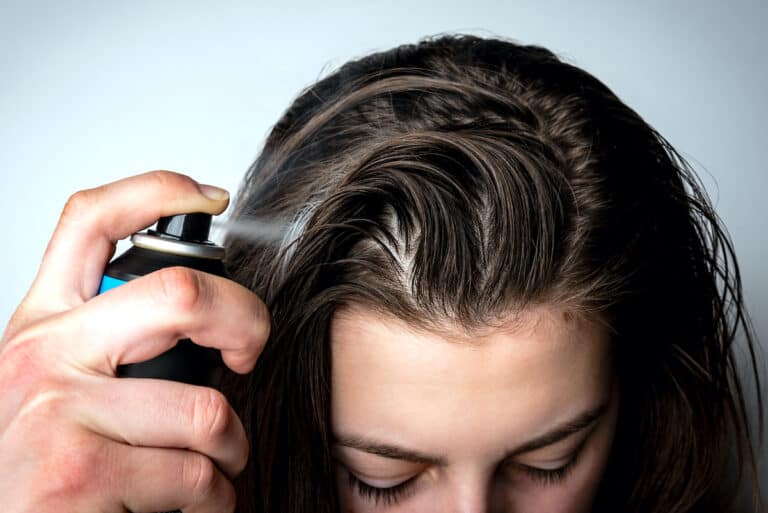
A sea salt spray can add grip and a rougher, beachy texture, although it may also feel drying on already dry or processed hair.
Sea salt sprays generally create texture and separation, not necessarily maximum hold, and the finish can range from soft to slightly gritty depending on the formula.
On textured hair, sea salt spray may help existing waves or curls look more defined. On straight hair, it can add body and piecey texture, but it will not create a lasting curl pattern on its own. We love this. sea salt spray from L’ange.
Using curl-focused products on frizzy or slightly wavy hair may improve softness and help existing texture clump more clearly, but the result depends on the formula and your natural pattern.
If you suspect your hair is actually wavy, you can experiment with a lighter version of a curly-hair routine and see whether your natural texture becomes easier to define.
This video from Audrey Victoria shows one person experimenting with the curly girl method on straight-looking hair. Treat it as an individual example rather than proof that the same routine will reveal curls for everyone.
How To Use Curly Hair Shampoo Effectively
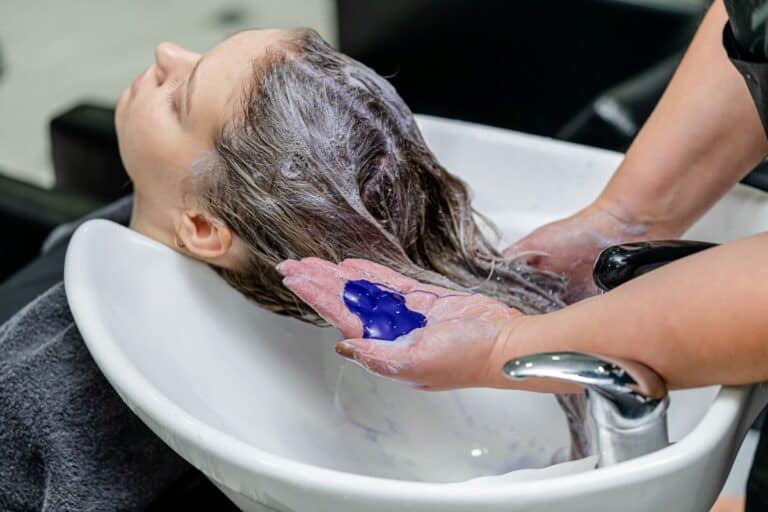
Trying a curly hair shampoo is not fundamentally different from using any other shampoo. Focus on cleansing the scalp well without using more product than necessary.
Use The Right Amount Of Product
Using too much shampoo does not automatically damage hair, but an overly strong cleanser or unnecessary repeated washing can leave some hair types feeling dry or rough.
A rich or low-cleansing curl shampoo may leave fine straight hair feeling coated if it does not remove enough oil or styling buildup for your scalp.
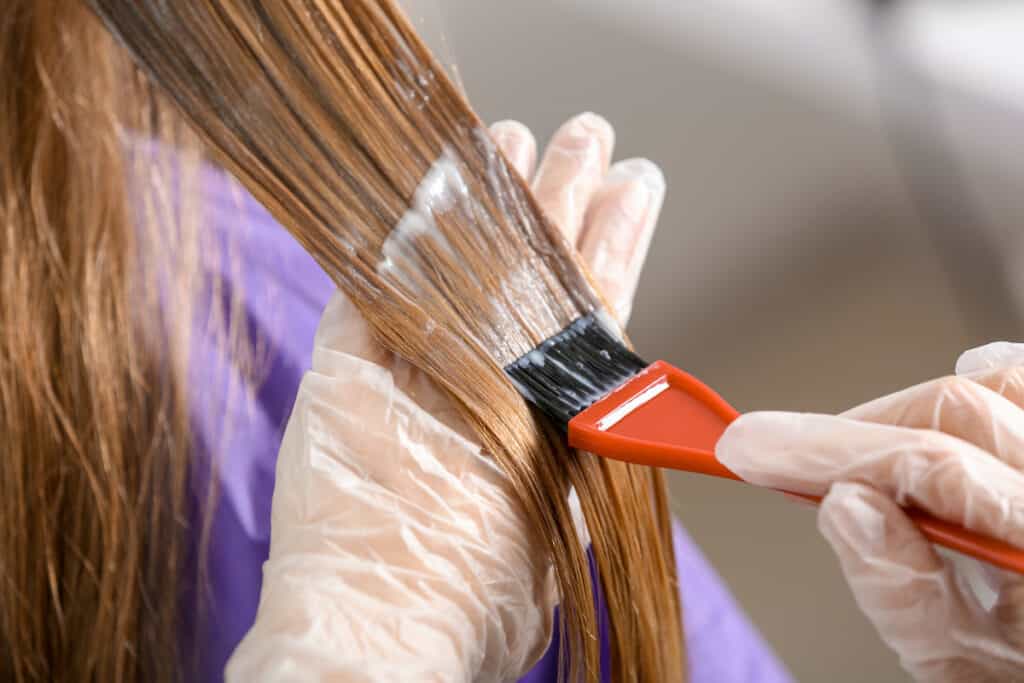
Use enough shampoo to cleanse the scalp and roots effectively. The exact amount depends on hair density, scalp oiliness, product buildup, and how concentrated the shampoo is.
There is no universal “quarter-sized” amount for every head of hair. Start small, add more if needed, and focus the cleanser on the scalp rather than loading the lengths with shampoo.
Emulsify
Rubbing shampoo between wet hands before applying it can help spread the product more evenly.
Apply shampoo mainly to the scalp, massage gently, then let the lather rinse through the lengths instead of scrubbing the ends aggressively.
Rubbing the product between your hands does not “activate” shampoo chemically, but it can help distribute a concentrated formula more evenly across the scalp.
Use Your Fingertips
Be gentle with the scalp and lengths while washing, especially if the hair is bleached, chemically treated, or prone to tangling.
Wet hair can be more vulnerable to stretching and mechanical damage, particularly when it is already compromised.
Use the pads of your fingers rather than your nails so you can clean the scalp without scratching or irritating it.
Massage shampoo into the scalp with your finger pads, then rinse thoroughly.
Rinse, Rinse, Rinse
Rinsing matters because leftover cleanser or conditioner can make hair feel coated or heavy.
Take enough time to rinse until the scalp and hair no longer feel slippery with shampoo residue.
You do not need to scrub every strand while rinsing. Let clean water run through the hair and use your fingers gently if certain areas hold onto product.
There is no need to time an extra minute or two. Simply rinse until the product is fully removed.
If a rich curl product leaves your straight hair feeling heavy, try using less, applying it farther from the roots, or clarifying occasionally when buildup is noticeable.
How To Use Other Curly Hair Products Effectively
If you are adding other curl-focused products to straight hair, introduce them one at a time so you can tell which formulas help and which ones feel too heavy.
Conditioner
A curly hair conditioner can work well on dry or frizz-prone straight hair if the formula is not too rich for your strands.
Start with a modest amount, especially if your hair is fine, and add more only if the lengths still feel rough or tangled.
Conditioner does not make the scalp produce oil faster. It can simply make hair look or feel greasy when too much is applied near the roots.
Use enough conditioner to coat the lengths lightly. The amount will vary with hair length, density, and dryness.
For most straight hair, focus conditioner on the mid-lengths and ends, especially if the scalp becomes oily quickly.
Distribute it gently through the lengths so the areas that need conditioning are covered.
If your roots are dry or your conditioner is specifically designed for scalp use, follow the product directions. Otherwise, there is usually no need to apply leftover conditioner to an oily scalp.
Rinse until the hair feels conditioned but not coated.
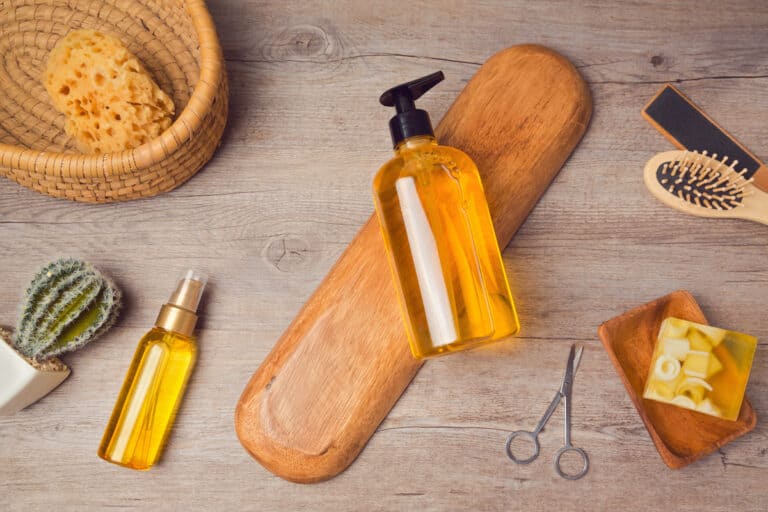
Hair Oil
A hair oil can be useful for reducing friction, adding shine, and smoothing dry ends, but it is not essential for every routine.
Richer oils can be helpful for dry, damaged, coarse, or frizz-prone hair, while fine straight hair often needs only a drop or two, if any.
To avoid greasy-looking strands, start by applying oil to the ends and driest areas rather than directly to the roots.
A small amount can add slip and shine without making the hair look flat, provided the formula suits your strand thickness.
There is no universal dime-sized amount. Start with the smallest amount you can spread between your palms, then add more only if needed.
Hair oil can be used on damp or dry hair depending on the product instructions and the finish you prefer.
Final Thoughts
Using curly hair products on straight hair will not transform naturally straight strands into permanent curls.
However, some curl-focused conditioners, leave-ins, mousses, or anti-frizz products can still work well if your hair needs moisture, slip, or definition.
The easiest way to experiment is to judge each product by its formula and function rather than the curl label on the packaging.
If your hair starts feeling flat, greasy, coated, or difficult to style, use less product or switch to a lighter formula. If it feels softer and easier to manage, there is no reason you cannot keep using it.
Related Articles
Is My Straight Hair Actually Wavy?
How To Know If You Have Curly Hair