
Can You Use Purple Shampoo On Green Hair? (+ What To Use Instead)
Green hair can be intentional fashion colour or an unwanted cast that appears after swimming, previous colouring, or uneven fading.
As a fashion colour, green can range from lime and mint to forest green or deep emerald. When the green is unwanted, however, the correct fix depends on what caused it.
Green tones can also appear in blonde or bleached hair after swimming, especially when dissolved metals such as copper in pool water deposit on porous strands.
Many blondes use purple shampoo to reduce the appearance of unwanted yellow tones, but that does not make it the right correction for every discoloration.
Chlorine itself is not usually the pigment that turns hair green. Pool chemicals can interact with metals such as copper, which may then bind to porous light hair and create a green cast.
Green can also be one of the more challenging tones to remove evenly, especially when the hair is porous or the pigment has built up in different areas.
Because purple shampoo is widely associated with colour correction, it may seem like the obvious first product to try.
So, can you use purple shampoo on green hair? You can wash green hair with purple shampoo, but it generally will not neutralise a true green cast. Violet pigment targets yellow, while green is corrected with red or pink tones or by removing the source of the green first.
So, can you use purple shampoo on green hair?
Purple shampoo is designed to reduce yellow, not green. If your hair turned green from pool minerals, remove the buildup first with an appropriate chelating or clarifying step. If the green comes from dye, a carefully controlled red- or pink-based correction may help, depending on the depth and condition of the hair.
The safest correction starts with identifying the cause. Pool-mineral buildup, faded fashion dye, and an accidental colour mix can all look green but may respond differently to treatment.
So, how can you neutralise or fix green hair? Read on for more!
First, Figure Out Why Your Hair Is Green
- Green after swimming: mineral buildup, especially copper, is a common cause on porous blonde or bleached hair. Removing the buildup is usually more logical than immediately depositing red pigment.
- Green from fashion dye: the pigment may need gradual fading, a remover suited to direct dye, or controlled colour correction.
- Green after colouring brown or blonde: the formula may not have contained enough warm pigment to balance the underlying hair. Corrective colour may need to restore red or orange warmth before the target shade is applied.
- Uneven green on damaged hair: porous areas may absorb and release pigment differently, so a full-head correction without a strand test can create an uneven result.
If you are unsure which situation applies, avoid immediately stacking purple shampoo, red pigment, remover, and bleach. Each additional process makes the final colour harder to predict.
Will Purple Shampoo Fix Green Hair?
It may seem logical to reach for purple shampoo, especially if you are blonde and already use it for brassiness. The problem is that the colour wheel relationship is different.
Dyed green hair can be especially stubborn because direct-dye pigments may remain unevenly in porous areas. Purple shampoo does not neutralise that pigment.
Purple sits opposite yellow on the colour wheel, so violet pigment can visually neutralise yellow in light hair. It does not literally remove the underlying pigment.
What Colour Neutralises Green Hair?
If purple does not correct green, what colour does? The starting point is the colour wheel.
If you look at the colour wheel, you’ll notice that green and red are opposite, just like purple and yellow.
Because red and green are opposites on the colour wheel, a carefully controlled red or pink-based pigment can neutralise a green cast. The key word is controlled: too much warmth on very light hair can create pink, peach, brown, muddy, or burgundy tones.
For some green casts, a product with red or pink pigment may be more useful than purple, but the amount and depth of pigment need to match the green you are correcting.
If Blonde Hair Turned Green After Swimming
When the green appeared after swimming, especially on highlighted or bleached hair, start by treating it as a possible mineral-deposit problem rather than a toning problem.
- Rinse the hair thoroughly after swimming.
- Use a chelating or mineral-removal product that is intended for swimmer’s hair, following the directions closely.
- Condition afterward because clarifying and chelating products can leave porous hair feeling dry.
- Reassess the colour before adding any red or pink pigment. If much of the green disappears after mineral removal, you may not need a strong colour correction.
How Can You Fix Green Hair?
What products can you use to fix green hair after it turns green?
There are multiple ways to address green tones, but the best method depends on the source of the colour, the depth of the green, the underlying base, and the condition of the hair.
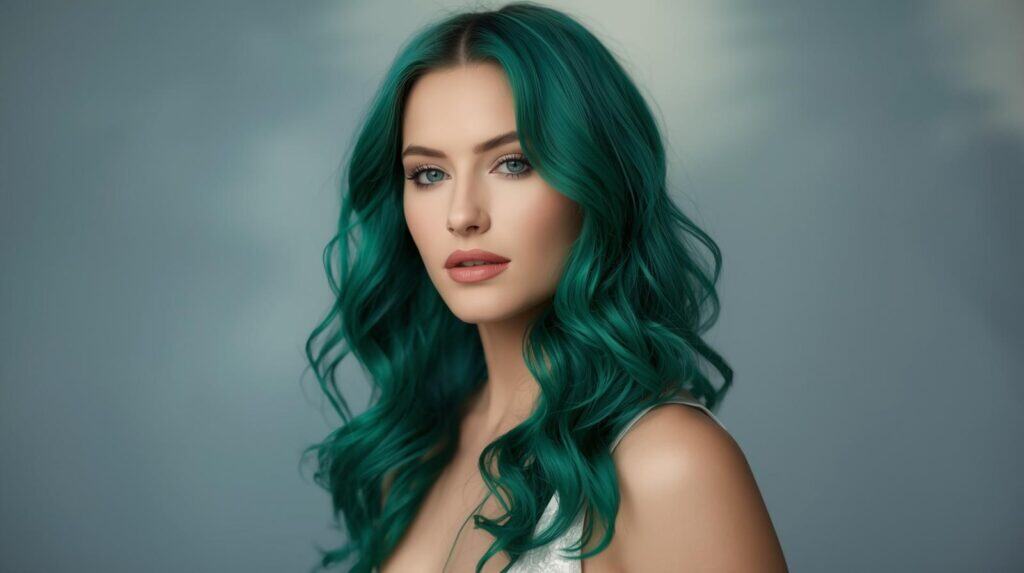
Some techniques are better under the supervision of a hairstylist.
Possible approaches include chelating or clarifying mineral buildup, adding a controlled red or pink corrective pigment, using a remover suited to the dye chemistry, or professional lightening when the goal is to return to a much lighter base.
Red Shampoo
A red-pigmented shampoo or cleanser may help mute a mild, even green cast, but it will not remove mineral buildup or reliably erase saturated green dye. Very light or porous hair can also grab the warm pigment quickly.
A red-pigmented product deposits warm pigment that can visually neutralise some green, especially when the green is light and even.
A pigmented shampoo is generally a lower-commitment option than oxidative colour or bleach, but it still deposits colour. Use it cautiously on pale blonde hair and stop once the green has been sufficiently softened.
Results vary. A mild green cast may look less noticeable after one or more uses, while heavily dyed green often will not be corrected by shampoo alone.
Color
Another option is to colour over the green, particularly when your target shade is darker or warmer than the current base.
For example, a red or warm-toned dye over green hair can neutralise some of the green, but the final shade depends on the intensity and depth of both colours.
Depending on the formula and how much green remains, the result may become brown, auburn, burgundy, or muted. This is usually not the right approach if your goal is to return to a very light blonde.
You can also cover green with another fashion colour such as blue or purple, but that is a new colour direction rather than true neutralisation, and the underlying green may influence how the new shade fades.
But it can still cause an issue down the road when you want to eliminate these colours too.
Color Remover
Colour removers can help with some artificial pigments, but different removers are designed for different dye chemistries.
A remover designed for oxidative permanent dye may not work well on a direct fashion dye, and a mineral-removal product serves a different purpose again. Identify what is in the hair before choosing a remover.
Bleach
Lightener can sometimes reduce artificial green pigment while also lifting the natural base, but the result is not always predictable and can expose additional yellow, orange, or uneven tones.
At-home lightening carries a higher risk when hair is already porous, previously bleached, or heavily coloured, especially if you cannot accurately assess strength and processing time.
Bleach can weaken the hair fibre and increase dryness or breakage, particularly on hair that is already chemically processed.
Therefore, this option is best executed with the assistance of a professional hairdresser.
How Effective Is Red Shampoo For Green Hair?
How well does red shampoo work on green hair?
A red- or pink-pigmented product is more relevant than purple when the goal is to neutralise a green cast, but the correction still needs to be matched carefully to the depth of the green.
How well the correction works also depends on porosity, starting level, and how evenly the green is distributed.
If the hair is heavily dyed green, a pigmented shampoo may make little difference and a more targeted colour-correction approach may be needed.
Because red and green can combine into muted brown, auburn, or muddy tones, perform a strand test before applying corrective pigment throughout the hair.
Benefits Of Red Shampoo
Red-pigmented shampoo may reduce a mild green cast, especially when the discoloration is light and even.
It is generally a lower-commitment correction than bleach or permanent colour, although it is not automatically suitable for every type of green discoloration.
On very light blonde hair, too much red pigment can leave a pink, peach, or muddy cast, so use a strand test and a very controlled amount.
How Effective Is Colouring Over Green Hair?
Colouring over green hair can be practical if your target is a darker brown, auburn, red, or another fashion shade that can incorporate the remaining pigment.
If you want a medium or dark natural-looking result, adding the correct warm pigment before or within the target shade can help prevent the green from showing through.
However, if you’d like to maintain fashionable hair colours, you can opt for covering green with other cool-toned dyes, such as blue or purple.
Benefits Of Re-Colouring Green Hair
Recolouring can cover green in one session in some cases, but uneven porosity or strong residual pigment can still affect the result.
A darker or more saturated overlay can provide strong coverage, although the green underneath may influence the undertone as the new colour fades.
However, it may not be beneficial to simply put a colour over green hair if you want a lighter base or to maintain blonde strands.
Risks Of Removing Green Dye At Home
Several factors should be considered before applying red shampoo or dye to your hair.
At-home green correction can be difficult because you need to identify the source of the green, the underlying level, the dye type, the hair’s porosity, and the target colour before choosing a correction.
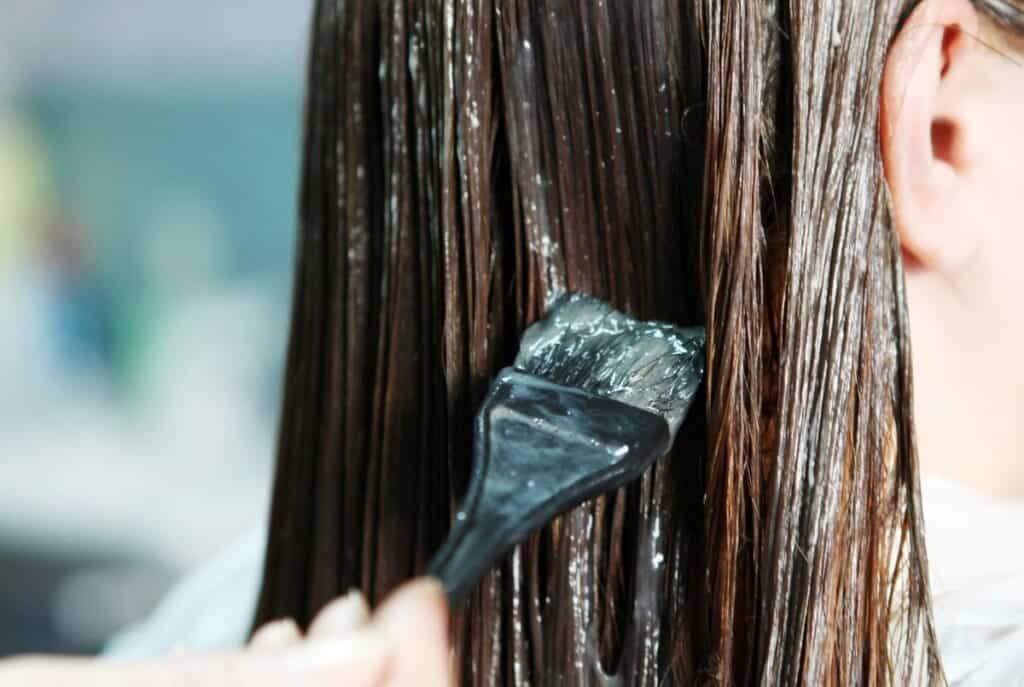
Over-processing, overlapping bleach, or using incompatible products can contribute to dryness, breakage, or scalp irritation.
Breakage
Breakage can occur if your strands are already compromised or heavily coloured and chemically treated.
If the hair is already bleached, stretchy, snapping, or heavily colour-treated, professional colour correction is the safer option than repeated at-home bleaching.
A strand test helps you preview both the colour result and how the hair tolerates the product, although it cannot guarantee that no breakage will occur elsewhere.
Brittle Strands
Brittle strands are more likely when hair has been repeatedly lightened, coloured, or processed too aggressively.
Additionally, your hair can often feel dry and straw-like if it has been over-processed.
Frequent shampooing, including with pigmented or clarifying formulas, can also leave some hair feeling drier, especially if the strands are already porous.
After chemical processing, use gentle cleansing, conditioner, and reduced heat to improve softness and manageability. These steps can help the hair feel better, but they do not reverse structural damage.
A deep conditioning mask, like this one from Moroccanoil, can improve softness and reduce a dry feel between colour services.
Scalp Irritation
Scalp irritation is another reason to be cautious with bleach and permanent colour.
Improper application, overlapping bleach, or sensitivity to hair-colour ingredients can cause itching, burning, redness, or irritation on the scalp.
It may be wise to visit a colour specialist in this case.
Severe chemical burns require prompt medical attention. Do not keep applying corrective colour over a scalp that is already irritated or injured.
Purple Shampoo And Green Hair FAQs
Will Purple Shampoo Make Green Hair Worse?
It usually will not neutralise the green because violet targets yellow. On very pale or porous hair, however, repeated use can leave extra violet or dull pigment behind, making the overall colour look more complicated rather than cleaner.
What Shampoo Removes Green From Blonde Hair?
If the green appeared after swimming, a chelating or swimmer’s shampoo designed to remove mineral deposits is more relevant than purple shampoo. If the green comes from dye, shampoo alone may not remove enough pigment.
Can Pink Shampoo Cancel Green Hair?
Pink or red pigment can visually neutralise a mild green cast, but the amount has to match the depth of the green. Very light blonde hair can over-absorb the warm pigment, so strand-test first.
Can You Get Green Hair Back To Blonde?
Sometimes, but the safest method depends on whether the green is mineral buildup or artificial dye and on how much lightening the hair has already undergone. If the hair is fragile, heavily bleached, or strongly dyed green, professional correction is the safer route.
Which Method Is Best For You?
So, how can you eliminate green hair without purple shampoo?
For pool-related green, start by addressing mineral buildup with an appropriate chelating or clarifying product. For dyed green, gradual fading, a dye-specific remover, carefully chosen warm pigment, or professional colour correction may be more appropriate.
Each method has pros and cons, and results can vary depending on the state of your hair.
You can also perform a test strand to see how well your hair reacts to a specific formula.
Color
Colouring your hair can be effective if you want a natural colour.
For example, a red or warm dye can neutralise some green, but the result may become brown, auburn, burgundy, or uneven depending on the starting shade, porosity, and amount of pigment used.
You may also decide to colour it with another fashion colour.
Please consult a hairstylist if you wish to eliminate green tones from your hair and achieve a blonde appearance.
Red Shampoo
If the green cast is mild and even, a red- or pink-pigmented product may be worth strand-testing. Do not assume it will correct every case quickly, especially on heavily dyed, very pale, or highly porous hair.
However, perform a test strand if you plan to use red shampoo on blonde hair to eliminate green from a pool or swimming.
Some discoloration may improve gradually, while stronger green dye often requires a different correction method.
Contact A Hairdresser
Colour corrections are among the most challenging salon services, requiring a colour specialist or years of experience.
Additionally, it may be challenging to remove green hair on your own, even with a red shampoo or dye.
Consult a hairdresser, especially if you plan to go light or want blonde hair.
A professional cannot guarantee zero damage, but they can assess porosity, previous colour history, elasticity, and hair strength before choosing a correction method.
The main takeaway is that purple shampoo targets yellow, not green. Identify whether the green comes from minerals, direct dye, or another colour process first, then choose the least aggressive correction that matches the problem.
Related Articles
What Will Happen If You Put Red Dye Over Green Hair?
How To Get Purple From Purple Shampoo Out Of Hair
Can You Mix Blue And Purple Shampoo?