
Benefits Of Sugaring
Most people are familiar with waxing, a hair removal method that pulls unwanted hair out from the root. Sugaring works toward the same goal, but it uses a sugar-based paste and a different application technique.
Waxing is often associated with pain and post-treatment redness, which is one reason people start comparing it with sugaring.
Waxing can be uncomfortable or painful, although the level of discomfort varies by person, body area, hair thickness, and technique.
If you have been avoiding waxing because of the heat, cleanup, or discomfort, sugaring is another root-level hair removal option worth comparing.
What are the benefits of sugaring?
The main benefits of sugaring are its relatively low working temperature, water-soluble cleanup, simple sugar-based formulas, root-level hair removal, and light surface exfoliation. Some people also find it more comfortable than waxing, although pain, redness, bumps, and ingrown hairs can still happen.
Those advantages do not make sugaring automatically better for everyone, so it helps to understand how the technique differs from waxing and what your skin may feel like afterward.
Below, we’ll break down how sugaring works, its biggest benefits and drawbacks, and what to expect from the results.
What Is Sugaring?
Sugaring or sugar waxing is a method of hair removal that involves using a sugar mixture instead of a traditional wax.
During sugaring, your hair will get removed in a similar way to waxing – it will get pulled out at the root, rather than cut off as it would be from shaving.
Because the paste and removal technique differ from traditional waxing, some people find sugaring more comfortable, but it can still cause pain, redness, or irritation.
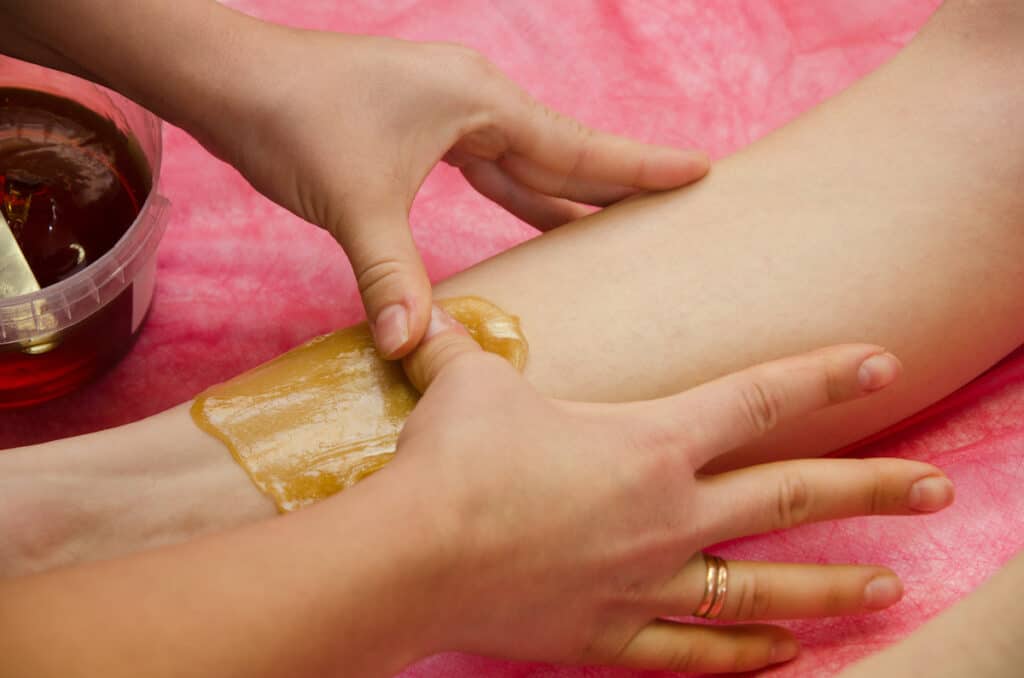
Instead of wax, you’ll be using a paste made out of sugar.
This paste is applied to the area where you want to remove hair. Depending on the sugaring method, it may be flicked off by hand or removed with a strip.
The process is similar to traditional waxing in that hair is removed from the root, but the paste, temperature, and removal direction can differ.
If you’d like to see the process in action, here’s a helpful tutorial from abetweene on YouTube.
Benefits Of Sugaring Hair Removal
The advantages below are the main reasons people choose sugaring instead of, or alongside, traditional waxing.
Sugaring is available at many salons and spas, and at-home kits are also sold for people who prefer to do their own hair removal.
And, if you decide you’d like to try it at home, you can purchase one of many sugaring kits, including this one by Sugar Me Smooth. Follow the kit directions carefully, especially for heating and skin preparation.
Lower-Temperature Application
Many traditional waxes need to be warmed until they reach the correct working consistency. If overheated or applied incorrectly, they can burn the skin.
If wax is too hot, the problem is not just discomfort. The skin can also be burned.
Wax burns can happen if the product is overheated or the temperature is not checked before application.
A burn can leave the area sore and irritated well after the hair-removal session is over.
That is why temperature control matters with any heated hair-removal product.
Sugaring paste is generally used at a lower temperature than hot wax, which can reduce burn risk, but heated paste can still be too hot if mishandled.
The sugar paste does not need to be used at the same high working temperature as many hot wax formulas.
It is often used around body temperature or slightly warmer, depending on the product and technique.
The lower working temperature can make the process feel more comfortable for some people, though root-level hair removal can still sting.
Simple Ingredient Lists
One appeal of sugaring is that many pastes use a short ingredient list, often based on sugar, water, and an acid such as lemon juice or citric acid.
A short ingredient list can be easier to evaluate if your skin is reactive, but natural ingredients are not automatically non-irritating.
Some recipes include lemon juice or citric acid to help create the right texture during cooking. The exact formula varies by brand.
Many traditional sugar pastes keep the formula short, although ready-made products can contain additional ingredients, so check the label if simplicity is important to you.
A simple ingredient list does not make a sugaring product food, and it should still be used only as directed on the skin.
If you prefer a short ingredient list or dislike the feel of traditional wax, sugaring may be worth trying, but no hair removal method is perfect for every skin type.
Easy Clean-Up
One of sugaring’s most practical advantages is easy cleanup. Sugar paste is water-soluble, so residue is usually simpler to rinse away than many traditional waxes.
If you’ve ever had a wax before, you know that after it’s over, there are often bits and pieces of wax stuck to your skin that didn’t get removed during the process.
Some wax residues are not water-soluble and may need oil or a dedicated post-wax remover rather than plain water.
It is better to dissolve or wipe away residue gently than to pick at freshly waxed skin.
Freshly treated skin can already feel tender, so being able to remove leftover product gently is a useful advantage.
Because sugar paste is water-soluble, leftover residue is usually easier to rinse away than traditional wax.
The sugar paste is water-soluble and can usually be removed with warm water; a gentle cleanser can be used if needed.
Exfoliation Of Dead Skin Cells
Both waxing and sugaring can provide some surface exfoliation in addition to removing hair from the root.
Sugaring paste is often described as adhering less strongly to living skin than some waxes, while still gripping hair and lifting some loose surface skin cells.
That can provide mild surface exfoliation, but sugaring can still irritate or remove some superficial skin if the technique is too aggressive or the skin is sensitized.
Some people experience less irritation with sugaring, while others find it just as uncomfortable as waxing. The smooth feel afterward mainly comes from root-level hair removal plus light surface exfoliation.
May Feel Less Painful For Some People
Some people report that sugaring feels less painful than traditional waxing, but pain perception varies widely.
One difference is the direction of hair removal, which may affect how much pulling or breakage you experience.
With traditional waxing, the wax is applied in the direction of hair growth and removed in the opposite direction.
The technique can remove hair efficiently from the root, but it also means the hair is being pulled opposite its growth direction.
Hair breakage and irritation can still happen, especially if the wax is too hot, the skin is not held taut, or the same area is treated repeatedly.
With traditional hand sugaring, the paste is commonly applied against the direction of growth and flicked off with the direction of growth. This may reduce some hair breakage, but it does not guarantee a pain-free session.
Can Be Hygienic When Properly Performed
Sugaring can be performed hygienically when the practitioner uses clean gloves, avoids cross-contamination, and follows proper salon sanitation practices.
With traditional waxing, hygienic practice requires a fresh applicator for each dip into shared wax or another method that prevents contamination.
A reputable salon should never double-dip applicators into a shared wax pot. Poor sanitation can create contamination risks with either waxing or sugaring.
Some sugaring techniques use gloved hands to work a portion of paste directly on the body.
Fresh gloves and single-client portions of paste help reduce cross-contamination, but overall hygiene still depends on the practitioner’s full sanitation process.
Whether you wax or sugar, avoid scratching or picking irritated skin afterward. Folliculitis and infection are uncommon but possible if the skin is irritated or contaminated.
Use It Anywhere On Your Body
Sugaring can be used on many body areas, including the arms, legs, underarms, bikini area, and some facial areas. The technique and paste consistency may need to change depending on the area. Avoid broken, sunburned, infected, or highly irritated skin, and use extra caution around delicate facial skin.
Sugaring Vs Waxing: What Is The Difference?
Both methods remove hair from the root, so both can provide smooth results that last longer than shaving. The biggest differences are the material used, working temperature, cleanup, and the direction used to remove the hair.
- Sugaring: commonly uses a sugar-based paste, is generally worked at a lower temperature, rinses away with water, and in traditional hand sugaring is removed in the direction of hair growth.
- Waxing: uses a wax formula that may need more heat, can require oil or a wax remover for residue, and is commonly removed against the direction of hair growth.
Neither method is guaranteed to be painless or irritation-free. Your skin, hair thickness, body area, practitioner, and technique can make a bigger difference than the method alone.
Are There Any Downsides To Sugaring?
Sugaring has several practical advantages, but it is still a form of root-level hair removal, so the tradeoffs matter too.
It may feel less painful for some people, often uses a simple sugar-based formula, and is easy to rinse away, but it still carries the usual risks of root-level hair removal.
Many people prefer sugaring to traditional waxing, while others find the results and discomfort fairly similar.
The main drawbacks to keep in mind include ingrown hairs, temporary redness, tenderness, and eventual regrowth.
Bumps And Ingrown Hairs
Anytime you remove hair at its root, you risk developing bumps and ingrown hairs.
As the hair grows back, it has to emerge through the follicle opening again.
A new follicle is not created each time. Instead, the existing follicle produces a new hair, which can sometimes curve or become trapped under surface skin.
Sometimes the regrowing hair curves back into the skin or becomes trapped under dead surface cells.
When a regrowing hair becomes trapped or curves back into the skin, it can create the familiar raised bump of an ingrown hair.
This can occur with both traditional hair waxing and sugaring.
Gentle exfoliation after the skin has calmed may help reduce ingrown hairs, but avoid harsh scrubs or strong acids immediately after sugaring.
Minor Irritation And Redness
Even if you personally find it more comfortable than waxing, sugaring is not pain-free.
You are still pulling hair from the root, so some stinging or tenderness during the process is normal.
You might also experience temporary redness, tenderness, or small follicular bumps afterward. How long they last varies.
Most mild post-sugaring irritation settles fairly quickly, but persistent pain, swelling, blistering, or signs of infection deserve medical attention.
Treat the area gently afterward and avoid fragranced products, strong exfoliants, intense heat, or friction until the skin feels calm again.
Hair Will Grow Back
Just like traditional waxing, sugaring is temporary. Regrowth timing varies by body area and individual hair cycle, often taking a few weeks.
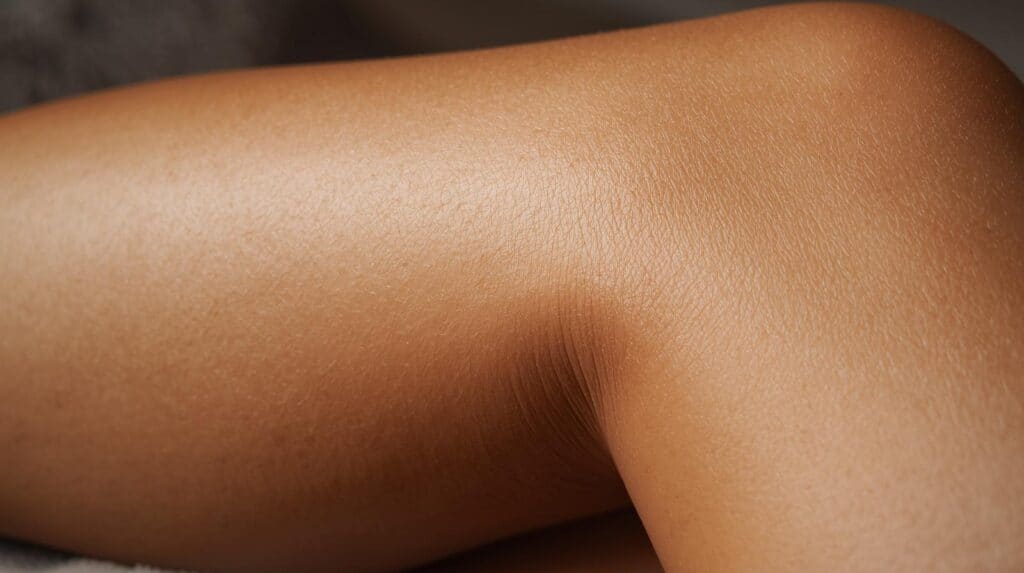
With repeated root-level removal, some people notice that regrowth feels finer or sparser over time, but sugaring is not a permanent hair-removal method.
If permanent reduction is your goal, treatments such as laser hair reduction or electrolysis are more appropriate options to research.
Sugaring Aftercare FAQ
What Should You Avoid Right After Sugaring?
Keep the area gentle while redness and tenderness settle. Avoid fragranced products, strong exfoliants, intense heat, scratching, and heavy friction until the skin feels calm again.
Can Sugaring Cause Ingrown Hairs?
Yes. Any method that removes hair from the root can lead to ingrown hairs. Once the skin has calmed, gentle exfoliation may help, but harsh scrubs or strong acids immediately after sugaring can make irritation worse.
How Long Do Sugaring Results Last?
Results are temporary. Regrowth varies by person and body area, but it often takes a few weeks for noticeable hair to return because the hair was removed from the root rather than cut at the surface.
Final Thoughts
Sugaring has several practical advantages, and some people prefer it to traditional waxing because of its lower working temperature, water-soluble cleanup, simple paste, and removal technique.
One of the main appeals of sugaring is the simple sugar-based paste, although “natural” does not automatically mean irritation-free.
It typically uses a lower working temperature than hot wax, rinses away easily with water, and can provide light surface exfoliation. Comfort still varies from person to person.
If you have never tried sugaring, consider whether its technique, cleanup, ingredient simplicity, and temporary results fit what you want from a hair-removal method. A professional first appointment can also help you see how your skin responds before you attempt the technique at home.
Related Articles
Best Numbing Creams For Waxing
Why You Should Use Glycolic Acid On Your Legs