
How To Tighten Skin On Thighs Naturally
Most people have a specific image of what their dream body looks like.
It’s always great to set new goals or improve your physical health and self-esteem.
It’s important to embrace who you are and your body, no matter what. Everyone takes care of themselves differently.
For example, some people work out to achieve a toned body, while others rely on a healthy diet or cosmetic products.
Most people want to target areas like the stomach, butt, and thighs. However, these are sensitive areas that need to be treated kindly.
Loose skin can be frustrating, especially after weight changes, pregnancy, or normal ageing, and the thigh area is one place where it may be noticeable.
There are non-surgical ways to improve the appearance, texture, and muscle tone of the thighs, although home methods cannot remove a large amount of true excess skin.
How can you tighten skin on the thighs naturally?
At home, you can improve how the thighs look and feel with strength training, moisturising skincare, sun protection, a balanced diet, and weight stability. These steps may make the area appear firmer, but they cannot fully tighten substantial loose skin.
It’s crucial to remember how important your body is, and you’ll want to nourish it with love.
It will be helpful to be patient during your skin-tightening journey.
Are you ready to find out how to tighten your thighs naturally?
What Causes Loose Skin?
Everyone’s body can undergo various changes.
Specific bodily changes can increase the amount of loose skin, even around the thighs.
Likewise, not every treatment will work for every person.
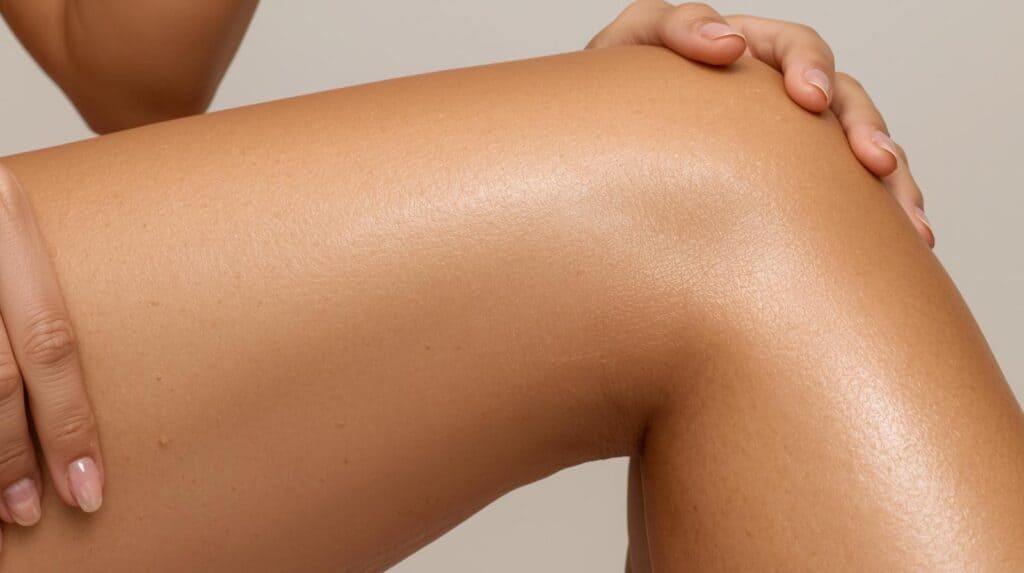
However, what are the most common causes of loose skin?
Ageing, weight loss, or pregnancy are common causes of loose skin, especially around the thighs.
While there are numerous reasons why skin may appear looser on the thighs, these are the most frequent:
Aging
Ageing is a normal process that every human will experience at some point.
If you’re worried about the ageing process, there are steps to take at home to prevent unwanted signs of ageing.
You cannot prevent every age-related change, but sun protection, avoiding smoking, maintaining a stable weight, and caring for dry skin can support the skin over time.
If you’re already dealing with ageing skin, it’s crucial to keep it nourished and loved.
A balanced diet and consistent skincare can support overall skin health, but neither can reverse all age-related laxity.
Weight Loss
Weight loss is another reason why you may be dealing with loose thighs.
If you go through a transformative period and lose weight, you could be feeling frustrated if you’re dealing with excess skin.
However, it’s crucial to celebrate your body for supporting you through a tremendous weight loss journey.
After weight loss, strength training can add muscle beneath the skin and moisturising can improve surface texture, but massage and creams do not remove excess skin.
Pregnancy
Most women feel the pressure to bounce right back after a baby.
Women’s bodies can change so many times within one lifespan.
With all the hard work your body goes through, you’ll want to heal it correctly and safely.
If you’re looking to treat loose skin around the thighs, it’s wise to seek advice from a doctor first, especially postpartum.
This can help you choose an approach that is appropriate for your recovery, especially if you are recently postpartum or still experiencing major body changes.
Can Loose Thigh Skin Really Be Tightened At Home?
It depends on what you mean by “tighten.” If the issue is mild crepiness, dryness, low muscle tone, or small changes after weight fluctuation, home care can make the thighs look smoother and firmer.
If there is a large fold of excess skin after major weight loss or pregnancy, creams, massage, supplements, and exercise cannot remove that extra tissue. Building muscle can improve the contour underneath, but the skin itself may remain loose.
Weight stability also matters. If your weight is still changing, it can be difficult to judge how much laxity will remain once your body has settled.
How Can You Tighten Skin Around The Thighs?
It can be challenging to tighten the skin around your thighs.
What is realistically possible depends on how much skin laxity you have, how long it has been present, your age, genetics, weight stability, and whether the concern is mainly skin, fat, or loss of muscle tone.
It can be challenging to do so for severe cases without a doctor’s help.
While there are surgical and nonsurgical options you can do at medical clinics, it may be wise to focus on what you can do at home.
At-home options work best for improving muscle tone, hydration, texture, and the overall look of the area. Results are gradual and usually modest when true excess skin is the main issue.
The following tips can help the thighs look smoother, more toned, and better supported while also building healthy habits. They should not be treated as a guaranteed way to shrink loose skin.
Whenever you’re in doubt, always seek advice from a medical professional.
Useful at-home strategies include strength training, moisturising skincare, sun protection, a balanced diet, and keeping your weight relatively stable.
Firming Cream
Firming creams can temporarily improve hydration, smoothness, and the way crepey skin looks, but they do not remove or substantially contract true excess skin.
To maintain youthful skin, you’ll need to keep your body and face moisturised.
Look for ingredients that improve hydration, texture, and the appearance of photoaged skin rather than expecting a cream to physically tighten loose tissue.
Consistent moisturising can make the surface look smoother fairly quickly, while active ingredients such as retinoids take longer. Massage may feel relaxing but is not a proven treatment for permanently tightening loose skin.
Skin Firming Ingredients
What ingredients should you look for in a firming cream?
For texture, look for products that support the skin barrier, improve hydration, or gently increase cell turnover.
Ingredients such as retinol may modestly improve the appearance of photoaged skin over time, while moisturisers support softness and sunscreen helps prevent additional UV-related collagen damage.
Look for a safe body product to use on the thighs.
You may also find creams specifically for your thighs.
Retinol
Retinol and other retinoids can increase cell turnover and support collagen production in photoaged skin, which may gradually improve texture and fine crepiness.
With consistent use, some people may notice smoother, more even-looking skin, but topical retinoids will not remove folds of excess skin.
Use retinoids according to the product directions, start gradually to reduce irritation, and use sunscreen on exposed legs. Avoid retinoids during pregnancy unless your clinician specifically advises otherwise.
Peptides
Peptides are used in some body creams for their skin-conditioning and anti-ageing positioning, but evidence that a topical peptide cream can significantly tighten loose thigh skin is limited.
They may improve the feel or appearance of the skin depending on the formula, but they should not be relied on to prevent future sagging.
Chemical Exfoliants
Chemical exfoliants such as AHAs can help remove built-up dead surface cells and improve rough texture, but they do not tighten loose skin.
If your thigh concern includes roughness, keratosis pilaris, or uneven texture, AHAs or BHAs may be useful depending on the cause and your skin tolerance.
SPF
If there is one skincare product you need, it’s SPF.
Sun protection is especially useful when your legs are exposed and you are using ingredients that can irritate the skin or make it more sun-sensitive.
Broad-spectrum sunscreen helps protect exposed thigh skin from UV damage that contributes to collagen breakdown, pigmentation, and premature ageing.
Massage
If you’ve ever wanted to treat yourself to a massage, now is the time.
Massage can feel relaxing and may temporarily reduce a puffy feeling or improve how the skin looks immediately afterward, but it does not build muscle or permanently tighten loose skin.
As mentioned earlier, you can even incorporate your firming creams and skincare products with your massages.
Lymphatic Drainage
Lymphatic drainage massage is a specialized technique that can help move lymph fluid in certain medical or postoperative situations, particularly when performed by a trained professional.
It should not be framed as a way to “detox” the body or permanently sculpt the thighs. The lymphatic system already transports fluid and waste as part of normal physiology.
If you have persistent swelling, lymphedema, recent surgery, or circulation concerns, get professional guidance before attempting lymphatic massage at home.
For ordinary cosmetic massage, a moisturiser or oil can reduce friction and make the skin more comfortable, but avoid vigorous pressure on irritated or bruised areas.
Dry Brushing
Dry brushing is a form of physical exfoliation that some people enjoy before showering.
It can loosen dry surface flakes and make the skin feel smoother, but brushing too hard can cause irritation.
The skin may look temporarily pinker or smoother after brushing because of friction, but this is not the same as tightening loose skin or improving circulation in a lasting way.

Dry brushing may temporarily smooth the surface, but there is little evidence that it meaningfully reduces cellulite.
Diet
Have you ever heard of the phrase, “beauty comes from within“
A balanced diet supports overall health and provides nutrients used in normal skin maintenance, but specific foods cannot selectively tighten thigh skin.
Focus on well-balanced meals with enough protein, fruits, vegetables, whole grains, and healthy fats rather than expecting one “skin food” to reverse laxity.
Look for foods that support healthy skin, such as green vegetables and antioxidant-rich foods.
Also, you don’t have to follow a strict diet. Instead, focus on adding more skin-loving foods rather than restricting.
Citrus & Red Peppers
Opt for foods rich in vitamin C, such as citrus fruits and red peppers.
Vitamin C provides numerous benefits for our immune system and the skin.
Vitamin C is also required for normal collagen synthesis and acts as an antioxidant in the body.
Sweet Potatoes
Sweet potatoes provide nutrients such as beta-carotene and can be part of a balanced diet that supports general skin health.
They contain vitamins A, C, B6, and more. Like citrus fruits, sweet potatoes also combat free radicals and support the body’s strength.
Dark Leafy Greens
Dark leafy greens are a useful source of vitamins, minerals, and fibre, but no single food can make loose skin firm.
Dark leafy greens are also rich in vitamin C and other antioxidants, which provide numerous benefits.
They’re high in fibre and keep you feeling your best.
Supplements
Supplements are not necessary for everyone, and they should not be the first-line strategy for loose thigh skin.
However, always check with a medical professional to see if a supplement fits your routine.
Evidence varies by supplement, dose, product quality, and the outcome being measured.
Another tip is to take your supplements as instructed on the label or by your doctor.
This will ensure you get the correct dose to work well for your body.
Supplements shouldn’t be the only factor to rely on if you’re looking to tighten the skin around the thighs.
They should not be expected to substitute for adequate nutrition, strength training, weight stability, or medical treatment when excess skin is significant.
If you are considering collagen, hyaluronic acid, or antioxidant supplements, discuss them with a clinician or pharmacist if you take medications, are pregnant, or have medical conditions.
Collagen
Collagen production and organization change gradually with age, sun exposure, smoking, hormones, and other factors.
Some studies of hydrolyzed collagen supplements report modest improvements in skin hydration or elasticity, but results vary and this does not mean supplements can remove loose thigh skin.
Collagen can easily be added to drinks like water or foods like yoghurt.
Products differ in taste, source, dose, and quality, so check the specific label rather than assuming every collagen supplement is identical.
Hyaluronic Acid
Hyaluronic acid is a versatile ingredient that provides various benefits.
Normal hydration supports skin function, but drinking extra water beyond your needs does not physically tighten loose skin.
Topical hyaluronic acid is a humectant that can help the surface of the skin hold water and look temporarily plumper.
That hydration can soften the look of fine dehydration lines, but it should not be confused with true tightening of excess skin.
Evidence and dosing for oral hyaluronic acid supplements are less straightforward than simply using a topical moisturising product.
Antioxidants
Antioxidants are part of a balanced diet and normal cellular defense, but taking more is not a guaranteed way to tighten skin.
Some antioxidant nutrients, including vitamin C, are involved in normal collagen synthesis and protection from oxidative stress.
Vitamins should be obtained in appropriate amounts rather than megadosed. More is not always better, and fat-soluble vitamins such as A and D can be harmful in excess.
Exercise
Regular exercise can improve muscle tone and body composition, which may make the thighs look firmer even though exercise does not shrink loose skin itself.
Finding a workout plan that works for your lifestyle and needs is crucial.
Working out should be a relaxing and fun activity rather than a chore.
Exercise also supports strength, mobility, cardiovascular health, and overall wellbeing.
You can do anything from taking walks, trying low-stress yoga, or even performing thigh-targeting exercises.
Endurance or Strength Training
Getting your heart rate up during daily workouts is crucial for long-term health, but it can also lead to additional benefits, such as a toned physique.
Strength training is particularly useful for building the quadriceps, hamstrings, glutes, and adductors beneath the skin, which can improve the contour of the thighs.
Find workouts you enjoy and that fit your lifestyle.
For example, endurance or strength training can include running, lifting weights, biking, and more.
It’s crucial to find what feels best for your body.
Pilates and Walks
You do not need an intense workout every day to support thigh strength and overall fitness.
Walking, yoga, and Pilates can support mobility, endurance, balance, and some muscular conditioning.
Rest and recovery are part of a balanced training plan, but neither exercise nor rest can directly contract a large amount of excess skin.
Yoga and Pilates will help you move more fluidly throughout your day and become more flexible.
With consistent practice, you may notice better muscle definition and posture over time.
Sleep
You may be surprised by how essential sleep is for our skin.
Sleep supports normal recovery, hormone regulation, and overall health, all of which matter for how you feel and function.
If your thigh skin feels dry, applying a moisturiser at night can reduce roughness and help it feel softer by morning.
Getting adequate sleep can help you feel more rested, but sleep alone is not a skin-tightening treatment.
Sleeping well supports general health and stress management, but it cannot reverse loose skin.

Try creating a relaxing nighttime routine to help you unwind, and use a thicker night cream on your thighs to lock in moisture overnight.
You may wake up with softer, smoother-feeling skin if the moisturiser reduces overnight dryness.
When At-Home Methods Are Not Enough
If loose skin is substantial and remains bothersome after your weight has been stable, a board-certified dermatologist or plastic surgeon can explain the difference between treatments that modestly improve skin laxity and procedures that actually remove excess skin.
Non-surgical energy-based treatments may produce modest tightening in selected cases, while surgery is the option that physically removes a large amount of excess skin. Results, costs, recovery, and risks vary, so an in-person assessment is important.
Contact Your Doctor
When you’re in doubt, contact your doctor.
This is crucial if you plan to adjust your diet or exercise regimen or add more supplements to your daily routine.
A clinician can help determine whether supplements are appropriate and can refer you to a physical therapist, dietitian, dermatologist, or plastic surgeon if your goals require more specialized guidance.
This is especially important if you have persistent swelling, pain, recent surgery, pregnancy-related concerns, or a large amount of excess skin after major weight loss.
Final Thoughts
Toning or firming the skin on your thighs can be challenging.
At-home methods can improve texture, hydration, muscle tone, and overall appearance, but substantial excess skin may not tighten significantly without a medical procedure.
Remember to be patient and nourish your body with love.
Useful habits include strength training, a balanced diet, weight stability, moisturising, and protecting exposed skin from the sun.
A moisturising body lotion can improve dryness and crepiness, while a retinol body product may modestly improve texture over time if your skin tolerates it.
You can combine these creams with various massage techniques.
Massage can feel relaxing and temporarily change the appearance of puffiness, but it does not “drain toxins” or permanently tighten loose skin.
Lastly, create a relaxing night routine to help you feel revitalised and hydrated every night.
Together, these steps can help the thighs look and feel healthier over time, while keeping expectations realistic about what home care can and cannot change.
Loose Thigh Skin FAQs
Can Exercise Tighten Loose Skin On The Thighs?
Exercise can build muscle underneath the skin and improve thigh contour, but it cannot directly shrink a large amount of excess skin.
Do Firming Creams Really Tighten Thigh Skin?
Firming creams can moisturise the skin and make mild crepiness look smoother. Retinol body products may gradually improve photoaged texture, but no topical cream can remove a fold of excess skin.
Can Collagen Supplements Tighten Loose Skin?
Some collagen-supplement studies show modest improvements in skin hydration or elasticity, but that is very different from tightening substantial loose skin on the thighs.
Does Loose Skin Go Away After Weight Loss?
Some skin may gradually contract after weight loss, especially when the change is modest and you are younger, but the amount varies widely with age, genetics, how much weight was lost, how long the skin was stretched, smoking, sun exposure, and time.
Related Articles
Best Showercaps For Curly Hair
Best Nighttime Hair Wraps And How To Use Them