
Polyhydroxy Acid (PHA) Toner (Complete Guide + The Best To Buy)
Introducing new products into your skincare routine can feel overwhelming, especially if you are branching out from a simple cleanser and moisturizer routine.
From serums and eye creams to toners and exfoliants, it can be difficult to tell which steps address a real skin concern and which ones simply add more actives to your routine.
Chemical exfoliants are common in skincare, including formulas based on AHAs, BHAs, and PHAs.
PHAs are less familiar to many shoppers, so it helps to understand what they can realistically do, how they differ from AHAs and BHAs, and whether you need another exfoliating step at all.
After all, what even is a PHA toner?
PHA toners use polyhydroxy acids such as gluconolactone or lactobionic acid to provide surface exfoliation. PHAs are often better tolerated than stronger AHA formulas and can also have humectant properties, but they can still cause dryness or irritation and should be introduced gradually.
Below, we explain how PHAs compare with other hydroxy acids, who may prefer them, how often to use them, and what to consider when choosing a PHA toner.
What Are PHAs?
You may already be familiar with alpha- and beta-hydroxy acids, especially if you have used exfoliating skincare before.
PHAs are now commonly discussed alongside AHAs and BHAs as another option for chemical exfoliation.
PHAs are polyhydroxy acids. They belong to the broader hydroxy-acid family and are often discussed alongside AHAs because they help loosen and shed excess surface skin cells.
AHAs and BHAs can cause stinging, dryness, redness, or irritation when the formula is too strong or used too often. Some AHAs, particularly glycolic acid, can also increase sun sensitivity during use.
PHAs tend to be milder than stronger AHA formulas, but they are not irritation-proof.
PHAs are sometimes described as second-generation hydroxy acids. Their larger molecular structure is one reason they generally penetrate more slowly and cause less sensory irritation than smaller AHAs such as glycolic acid.
PHA formulas may help smooth rough texture, improve the appearance of photoaged skin, and support a more even-looking tone. They should not be presented as treatments that erase acne scars, deep wrinkles, or other forms of true scarring.
You do not need to exfoliate in order for moisturizers, serums, or other skincare products to “work,” and pushing ingredients deeper is not always desirable. The main benefit is controlled removal of excess surface cells.
Some PHA ingredients also show antioxidant and metal-chelating activity in laboratory and cosmetic research. Those properties are interesting for photoaging, but they should not be simplified into a promise that one toner will prevent glycation or stop collagen breakdown.
The gentler reputation of many PHAs is partly linked to their larger molecular size. This can limit rapid penetration and may reduce stinging compared with stronger AHA formulas.
In practical terms, that can make a PHA product easier to tolerate for someone who finds stronger exfoliating acids too irritating.
Who Can Benefit From PHA Toners?
With exfoliation, more is not necessarily better. A routine your skin tolerates consistently is usually more useful than chasing stronger acids or layering several exfoliants at once.
Over-exfoliating can lead to redness, burning, flaking, and worsening irritation, so frequency should be based on your skin and the strength of the formula.
PHA formulas may provide gentle exfoliation while some ingredients, such as gluconolactone and lactobionic acid, also act as humectants. That can make certain formulas feel less drying, but they should not be described as “rebuilding” skin to perfect health.
Not every skin type needs an exfoliating toner. PHAs are most useful when gentle exfoliation addresses a specific concern and your skin tolerates the product.
If your skin reacts badly to daily AHA or BHA use, the first step is usually to reduce exfoliation rather than automatically alternating several acids. A PHA may be a milder replacement, but introduce it slowly.
PHA products may appeal to people with dry or sensitive-feeling skin who still want chemical exfoliation, as well as people concerned with rough texture or visible photoaging.
Dry skin can still tolerate chemical exfoliation, but the goal is not to “regulate oil production.” Choose a mild formula, avoid overuse, and maintain enough moisturizer to keep the skin comfortable.
Because many PHA formulas are relatively mild and humectant, they may feel less drying than stronger acid toners. The full formula still matters, and some products can sting, dry, or irritate the skin.
People with sensitive skin may tolerate PHAs better than stronger AHA products, but sensitivity varies and a patch test is still sensible.
Do not assume a PHA toner is suitable for daily use simply because PHAs are milder. Start at the frequency recommended by the brand, then reduce use if you notice persistent stinging, redness, tightness, or flaking.
For concerns related to photoaging, PHAs may help improve surface texture and the appearance of fine lines over time.
PHA suitability is not determined by age. More established wrinkles or sun damage usually require realistic expectations because an over-the-counter toner can improve surface appearance but cannot erase deep lines.
PHA Benefits
If you are already familiar with AHAs and BHAs, the main difference with many PHA toners is that they aim for a milder exfoliating effect with better tolerability for some users.
Potential benefits of a well-tolerated polyhydroxy-acid formula include:
- A refinement in skin texture
- Helping fade the appearance of some post-acne discoloration over time
- Providing gentle exfoliation that may help keep surface buildup under control
- Offering a milder exfoliation option for people who do not tolerate stronger acids well
- Supporting smoother, more even-looking photoaged skin
- Can be used in daytime routines when the product directions allow, with daily sun protection
Best PHA Toners
Now that we have covered how PHAs work, here are several PHA-containing toners with different supporting ingredients, textures, and exfoliant combinations.
| Rank | Product | Features |
|---|---|---|
| 1. | PYUNKANG YUL Calming Deep Toner | Cystic acne, tiger grass, sebum control |
| 2. | BOTANITY Makiol Toner | Mattifying, sebum control, cruelty-free |
| 3. | SOME BY MI 30 Days Miracle Toner | AHA/BHA addition, Korean, low pH |
| 4. | The INKEY List PHA Toner | Niacinamide, 2x daily use, super gentle |
| 5. | Glow Recipe Watermelon Glow PHA | Cactus water, calming, hydrating |
| 6. | BENTON PHA Peeling Toner | AHA/BHA, hyaluronic acid, clean formula |
| 7. | The Vegan Glow Kombucha PHA Toner | Unscented, vegan, no “concept” ingredients |
1. PYUNKANG YUL Calming Deep Toner
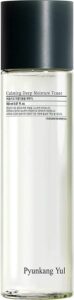
PYUNKANG YUL offers cleansers, serums, moisturizers, and toners, including this exfoliating formula.
This toner is positioned as a calming exfoliating option. Because it still contains exfoliating ingredients, sensitive or acne-prone skin should introduce it gradually rather than assuming a soothing label means it cannot irritate.
The product comes from Pyunkang Yul, but a brand’s background should not be treated as clinical proof that an over-the-counter toner treats skin disease.
This toner combines exfoliating ingredients with soothing and hydrating components. Keep in mind that “natural” does not automatically mean gentler or less irritating.
The formula also includes ingredients such as hyaluronic acid and panthenol, which can support hydration and skin comfort.
PHAs may be less drying than stronger exfoliating acids, and the hydrating ingredients are useful additions. Even so, any exfoliating toner can leave some users dry or irritated.
If your skin tolerates it, this combination may offer gentle exfoliation with more supporting hydration than a simpler, stronger acid toner.
The product is marketed with a lightweight texture, which may suit people who dislike richer or tackier hydrating toners.
The formula also includes cica (Centella asiatica), a plant-derived ingredient commonly used in soothing skincare. It may support skin comfort, but “healing” claims should be kept modest.
Cica and other soothing ingredients may make the formula more comfortable for some users, but this toner should not be presented as a treatment for rosacea or active acne. Anyone with rosacea or very reactive skin should patch-test carefully.
2. BOTANITY Makiol Toner
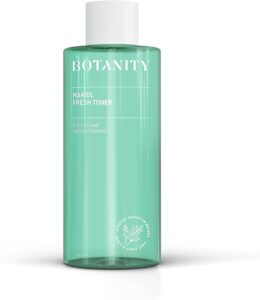
Whether a skincare ingredient is plant-derived or synthetic does not, by itself, tell you how effective, gentle, or irritating the finished product will be.
This BOTANITY toner uses a mix of botanical extracts and exfoliating ingredients, but plant-based formulas are not automatically gentler or better for every skin type.
The brand emphasizes plant-derived ingredients, but the finished formula and your own tolerance matter more than whether an ingredient comes from a botanical source.
This toner contains ingredients such as Aloe Barbadensis Leaf, Magnolia Bark, and Cica, which are commonly included in formulas intended to feel soothing or hydrating.
Together, these ingredients may make the formula a useful option if you want gentle exfoliation with additional conditioning ingredients, but comfort and results will still vary by skin type and routine.
The PHA provides gentle surface exfoliation that may help rough texture. It should not be described as a guaranteed oil regulator or scar reducer, and even mild exfoliants can irritate the skin barrier when overused.
This toner is most relevant for people who want mild exfoliation and a smoother-looking surface.
PHAs can feel less stripping than stronger acid formulas, but exfoliation should not be relied on to permanently normalize sebum production.
If claims such as dermatologist-tested, cruelty-free, or free-from certain ingredients matter to you, check the current packaging or brand information because certifications and formulas can change.
3. SOME BY MI 30 Days Miracle Toner
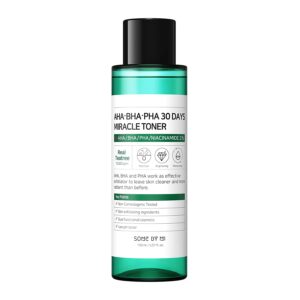
SOME BY MI 30 Days Miracle Toner combines multiple exfoliating ingredients in one formula.
The “30 Days” name is marketing, not a guarantee that every user will see a dramatic or clinically meaningful transformation within a month.
Positive reviews can tell you about texture, scent, and user experience, but they do not prove that a product will clear acne or transform every skin type.
Because this toner contains multiple exfoliating acids, it may be more active than a PHA-only formula even if the individual percentages are relatively low.
It combines PHA, BHA, and AHA, so it is best treated as a multi-acid exfoliant rather than assuming it will suit every sensitive skin type.
Lower acid percentages may improve tolerability, but they do not guarantee that you will avoid dryness, stinging, redness, irritation, or breakouts.
Some users may find the formula comfortable, while others may prefer a simpler exfoliant with fewer active ingredients.
The supporting ingredients may help the formula feel soothing, but anyone with active irritation or a compromised barrier should be cautious with a multi-acid toner.
The formula also includes tea tree leaf extract. Tea tree can be irritating for some people, so discontinue use if you develop burning, itching, or persistent redness.
A toner’s pH influences how an acid formula behaves, but pH alone does not determine whether the product will be non-irritating.
If the current formula is listed around pH 5.5, that may contribute to a milder feel, but the combination of acids and your own skin tolerance still determine how often you should use it.
4. The INKEY List PHA Toner
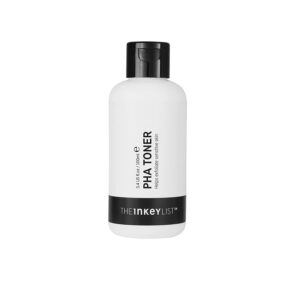
The INKEY List is known for ingredient-focused skincare, and its PHA toner follows a relatively straightforward formula approach.
If you are new to exfoliating acids, a relatively simple PHA formula may be easier to evaluate than a toner containing several exfoliants at once.
The benefit of a simpler formula is that it can be easier to tell whether the exfoliant agrees with your skin.
Their PHA Toner is described as containing 3% PHA and 3% niacinamide. Check the current ingredient list and product page because formulations can change.
Those concentrations are intended to provide gentle exfoliation and supporting care, but they do not guarantee freedom from irritation or redness.
The formula includes hydrating ingredients, but twice-daily exfoliation is not necessary for most people. Start with the brand’s current directions and scale back if your skin becomes dry or sensitive.
This is positioned as a milder exfoliating option than many high-strength acid products, but any leave-on exfoliant can become irritating if combined with too many other actives or used too frequently.
The formula also includes Aloe Barbadensis leaf juice, a common skincare ingredient used for hydration and skin comfort.
Use this toner after cleansing if that matches the current product directions. You can apply it with clean hands or a cotton pad, avoiding broken, freshly shaved, or already irritated skin.
Follow with a moisturizer, and use broad-spectrum sunscreen during the day.
5. Glow Recipe Watermelon Glow PHA
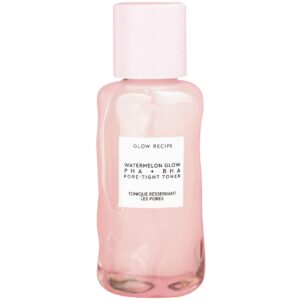
If your goal is healthy-looking, hydrated, glowing skin, exfoliation should support the rest of your routine rather than replace basic cleansing, moisturizing, and sun protection.
A healthy-looking glow usually comes from a routine that balances hydration, gentle cleansing, appropriate treatment steps, and daily sun protection.
Glow Recipe focuses heavily on hydrating, glow-oriented formulas, although the finish, fragrance tolerance, and feel will vary by skin type.
The formula includes watermelon extract, but being naturally derived does not automatically make an ingredient non-irritating.
The watermelon extract contributes to the formula’s conditioning profile, while the toner’s overall humectant base is more relevant to how hydrated the skin feels.
This toner combines PHA and BHA exfoliating ingredients, so it may offer broader exfoliation than a PHA-only toner but can also be more active.
Do not judge safety based on whether an ingredient is “natural.” If the current formula uses willow bark extract alongside other exfoliating ingredients, the finished formula and concentration matter more than the source.
Hydration from a toner can improve temporary skin comfort, but longer-lasting results still depend on the rest of your routine and how well your moisturizer supports water retention.
The formula also includes cactus-derived ingredients and other humectants intended to support hydration. These can complement exfoliation but do not literally seal or repair the skin barrier on their own.
6. BENTON PHA Peeling Toner
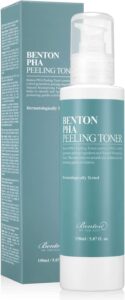
The BENTON PHA Peeling Toner combines a PHA exfoliant with supporting humectant and botanical ingredients.
The brand has described the box as using sugar-cane-derived packaging material. Packaging claims can change, so check the current product information if sustainability is a deciding factor.
If cruelty-free certification matters to you, verify the brand’s current certification before buying because policies and certifications can change over time.
Looking at the formula itself, PHA provides surface exfoliation. It may help rough texture and some congestion, but it is not automatically the best choice for every skin type.
The toner also includes supporting ingredients such as:
- Sodium Hyaluronate is a humectant that helps attract and hold water in the outer layers of the skin.
- Chrysanthemum extract is included as a botanical skin-conditioning ingredient. Botanical extracts can still irritate sensitive users, so patch-test if your skin reacts easily.
This toner should not be presented as a treatment for acne, Malassezia folliculitis, broken capillaries, or other medical skin conditions.
7. The Vegan Glow Kombucha PHA Toner
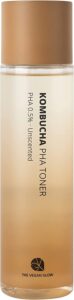
You may know kombucha as a fermented drink, but fermented extracts are also used in some skincare formulas for their skin-conditioning components.
Fermented extracts in cosmetics should not be assumed to deliver live “healthy bacteria” to the skin. Their role depends on the finished ingredient and formulation.
The formula is marketed around kombucha-derived acids, but check the current ingredient list for the exact exfoliating ingredients and concentrations.
Any exfoliating benefit should be attributed to the acids present in the finished formula, not to kombucha as a blanket treatment for texture or oiliness.
The brand emphasizes a streamlined ingredient philosophy, which may appeal to shoppers who prefer shorter or more focused formulas, but ingredient count alone does not predict tolerability.
A short ingredient list does not guarantee that a product will suit every skin type, so patch-test and judge the toner by your own tolerance.
If vegan or cruelty-free status is important to you, confirm the brand’s current claims before purchasing.
Free-from claims such as no parabens, SLS, SLES, PEGs, or silicones do not by themselves prove that a formula is non-comedogenic or suitable for every skin concern.
Related Questions
Here are a few practical questions that often come up when adding PHA toners to an existing skincare routine.
Should you wear SPF when using PHA toners?
Daily sun protection is a good habit regardless of whether your routine includes exfoliating acids, especially if you are treating uneven tone or visible photoaging.
PHAs such as gluconolactone have not shown the same UV-sensitising effect associated with glycolic acid in some studies, but that is not a reason to skip sunscreen. Use a broad-spectrum SPF 30 or higher when exposed to daylight.
Can I use PHAs with AHAs and BHAs?
Some formulas intentionally combine PHAs with AHAs or BHAs, so the ingredients can be used together when the finished product is designed that way. Layering several separate exfoliants is more likely to cause cumulative irritation and over-exfoliation.
If you have sensitive, dry, or easily irritated skin, start with one exfoliating product at a time and increase frequency only if your skin remains comfortable.
Can I use PHA with retinol?
PHA-containing products have been used alongside retinoids in clinical skincare, but that does not mean every person should layer a PHA toner and retinol in the same routine.
Retinoids and exfoliating acids can both cause dryness or irritation. If you use both, consider introducing them separately or alternating nights, especially if your skin is sensitive or already using other active ingredients.
Related Articles