
Sun Spots Vs Freckles
Every time summer approaches, you may notice your skin changing with the seasons.
As the days get longer, warmer, and sunnier, existing freckles can darken and new areas of sun-related pigmentation may become more noticeable on exposed skin.
However, it can be challenging to tell sun spots and freckles apart.
So, what is the difference between sun spots and freckles?
Freckles and sun spots can look similar, but they are not the same. Freckles, or ephelides, are usually small and may darken with sun exposure and fade when UV exposure decreases. Sun spots, also called solar lentigines or age spots, are typically larger, flat, more persistent patches that develop after cumulative UV exposure.
Freckles are usually small, flat tan or brown spots that appear on sun-exposed areas such as the face, shoulders, arms, and upper body.
Freckles are strongly influenced by genetics, but they generally become visible after sun exposure rather than being present at birth. They may darken in summer and fade during seasons with less UV exposure.
Neither freckles nor sun spots need to be “nourished,” but both are useful reminders to protect your skin from UV exposure and to pay attention to any new or changing pigmented lesion.
Sun spots are usually benign. They do not simply turn dangerous because they are “neglected,” but skin cancers can sometimes resemble harmless pigmented spots, so a lesion that changes, bleeds, becomes symptomatic, or looks different from the rest should be checked.
Freckles are generally benign and may become lighter when sun exposure decreases.
Whether you want to conceal your sunspots or freckles will be up to you.
Daily sun protection helps limit additional UV damage and may reduce further darkening of freckles and sun spots.
So, what else do you need to know about freckles and sun spots?
What Are Freckles?
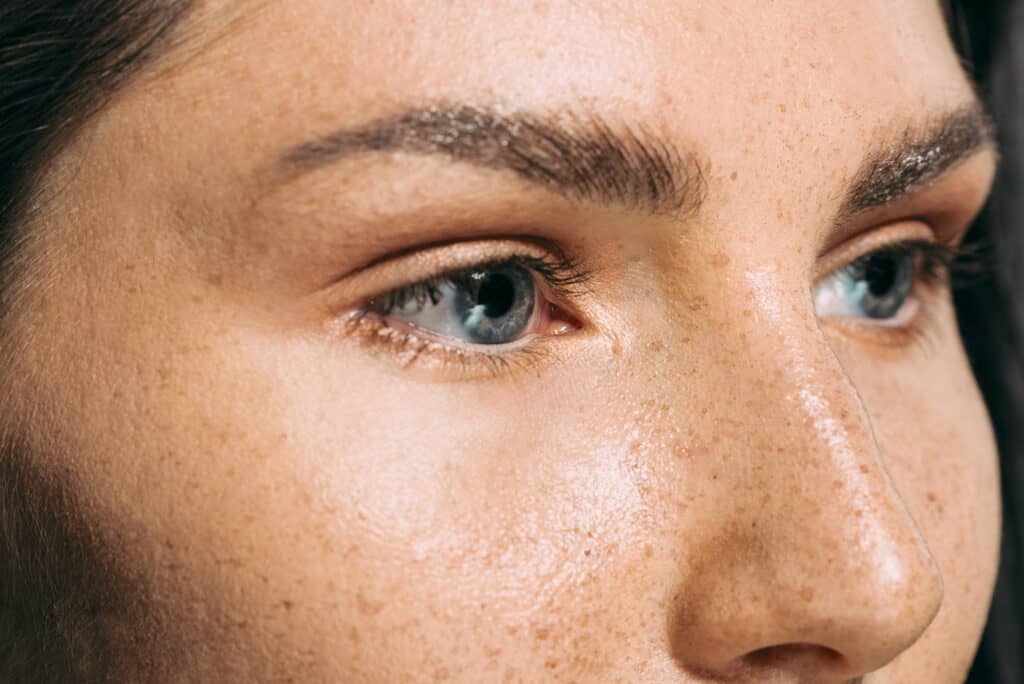
Freckles are linked to both genetics and UV exposure. They commonly become noticeable in childhood on sun-exposed skin and may darken during sunnier months.
Freckles are more common in people with lighter skin and certain genetic traits, although they can occur across a range of skin tones.
In most cases, freckles are harmless. They represent localized increases in melanin production rather than a dangerous skin change.
Freckles are usually small, flat tan-to-brown macules, often only a few millimeters across. They are most common on areas that receive regular sun exposure, including the face, shoulders, chest, and arms.
Variants in genes including MC1R are associated with freckling, but genetics are only part of the picture. Freckles often look fairly uniform in color and size, although they do not have to be identical.
While they may disappear in winter, some people keep them year-round.
What Causes Freckles To Appear?
According to Healthline, “The credit for freckles goes to both the natural environment and genetics. Your risk for burning can increase the incidence of freckles.”
MC1R is one of several genes associated with freckling, especially in people with lighter pigmentation traits.
UV exposure can trigger freckles to appear or darken in people who are genetically predisposed to them.
Healthline states that they result from overproduction of melanin, which is responsible for skin and hair colour. Overall, freckles result from stimulation by ultraviolet (UV) radiation.
What Are Sun Spots?
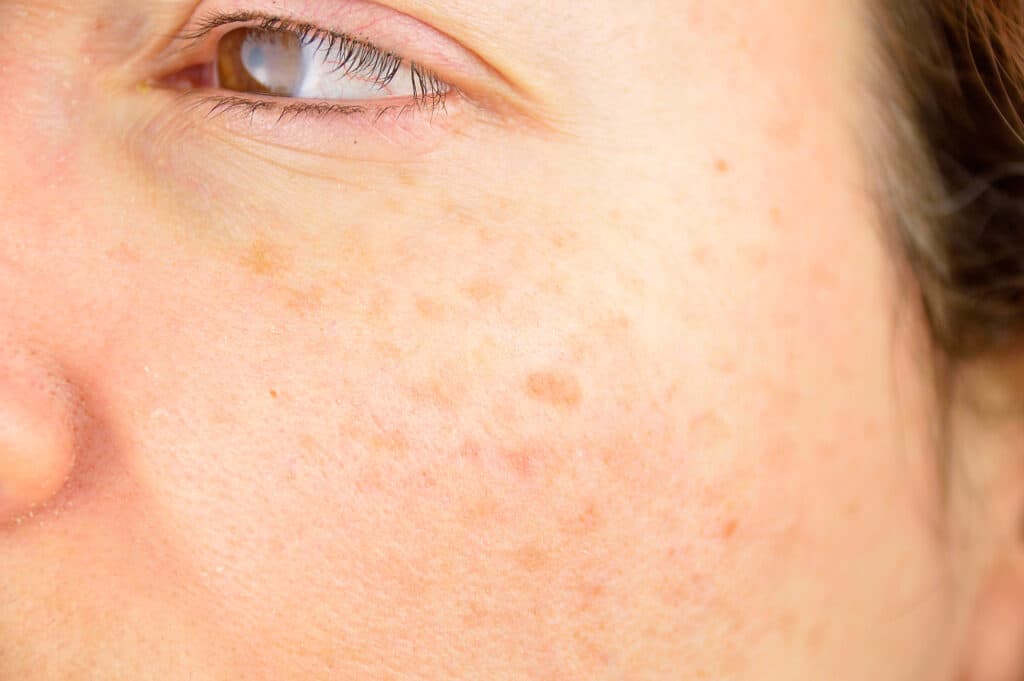
Sun spots are often confused with freckles.
The terms are sometimes grouped together in casual explanations, but dermatologically they are better separated: ephelides are freckles, while solar lentigines are sun spots, liver spots, or age spots.
Sun spots are more common in adults and older generations.
Like freckles, solar lentigines are usually benign. The important issue is distinguishing a stable sun spot from a new or changing lesion that may need examination.
Sun spots become more common with cumulative UV exposure and age. They can vary in shape, size, and shade, and they tend to persist rather than fading seasonally like freckles often do.
What Causes Sun Spots To Appear?
As the name suggests, sun spots are also caused by sun exposure.
Sun spots are often larger than freckles and usually appear as flat, tan-to-brown patches on chronically sun-exposed skin. Size alone is not enough to diagnose a spot.
They become more common with age because UV exposure accumulates over time.
Solar lentigines form when chronic UV exposure leads to localized increases in melanin and pigment-producing activity within the epidermis.
They are especially common on lighter skin and in older adults, but they can occur in many skin tones when there has been enough cumulative UV exposure.
Similarities & Differences
Freckles and solar lentigines are often discussed together because both involve pigmentation and sun exposure, but they are distinct types of lesion.
According to Healthline, “Ephelides are the common type most people think of as freckles. Solar lentigines are dark patches of skin that develop during adulthood. This includes freckles, ageing spots, and sun spots.”
Sun spots and freckles do share similarities.
Both can become more noticeable with sun exposure, and sun protection is important for preventing additional darkening. Their response to treatment is not identical, though.
Shade, protective clothing, and broad-spectrum sunscreen help reduce further UV stimulation. Freckles may fade naturally with less sun, while established sun spots are more persistent and may require targeted treatment if you want to fade them.
However, what sets freckles and sun spots apart?
Freckles often fade with reduced sun exposure and may become less prominent with age.
Freckles often become noticeable in childhood or young adulthood, whereas sun spots are more closely associated with cumulative UV exposure and therefore become more common later in life.
Genetic predisposition strongly influences whether someone develops freckles. Sun spots are more broadly linked to cumulative UV exposure, although skin tone also influences how likely they are to appear.
As noted above, MC1R variants are associated with freckling, but they are not the only genetic factor involved.
This means freckling reflects an interaction between genetics and UV exposure rather than one factor working entirely on its own.
Sun spots are associated with repeated or cumulative UV exposure, particularly on areas such as the face, hands, shoulders, and chest.
They often become more noticeable in adulthood and increase with years of sun exposure, although the age at which they appear varies.
Freckles and sun spots also differ in their appearance.
For example, freckles are smaller and more uniform, while sunspots are larger and vary in shape and size.
How To Care For Freckles
Whether you have freckles or not, everyone should learn to care for their skin.
Because freckles are common in people with lighter skin that burns more easily, sun protection is especially important, but anyone can benefit from limiting excessive UV exposure.
Freckles themselves are benign and do not normally “develop into” skin cancer. The reason to monitor pigmented skin is that a new or changing lesion can sometimes resemble a freckle or sun spot.
If a spot changes in size, shape, color, sensation, or behavior, have it assessed rather than assuming it is simply a freckle.
SPF
SPF should be an essential step for everyone’s skincare routine.
Broad-spectrum sunscreen helps protect the skin from UV exposure and may reduce further darkening of freckles.
Sunscreen also helps reduce sunburn, photoaging, and UV-related skin damage when used correctly.
When you are outdoors, reapply sunscreen about every two hours and after swimming, sweating, or toweling off, following the product directions.
Consistent sun protection is more important than trying to erase every visible freckle.
Also, you’ll need more frequent protection if you sit in the sun for long periods.
Minimise Sun Exposure
Another helpful tip for caring for freckles is minimising sun exposure.
This can help keep freckles from darkening as much and reduce additional UV-related pigmentation.
There are multiple ways you can reduce sun exposure.
For example, sunglasses, umbrellas, hats, long-sleeved t-shirts, and more can all help you minimise sun exposure.
It’s crucial to note that freckles can appear anywhere on the body, so you can conceal the skin with clothes to reduce sun exposure.
How To Enhance Freckles
Freckles are a normal pigmentation pattern, and whether you choose to highlight or conceal them is entirely a cosmetic preference.
Freckle-inspired makeup has also become common in editorial and everyday beauty looks, including products designed specifically to create temporary faux freckles.
If you want to enhance your freckles, makeup gives you a temporary way to do it without increasing sun exposure.
These methods will help you embrace your freckles without risking sun damage from spending too much time outside.
Draw On Freckles
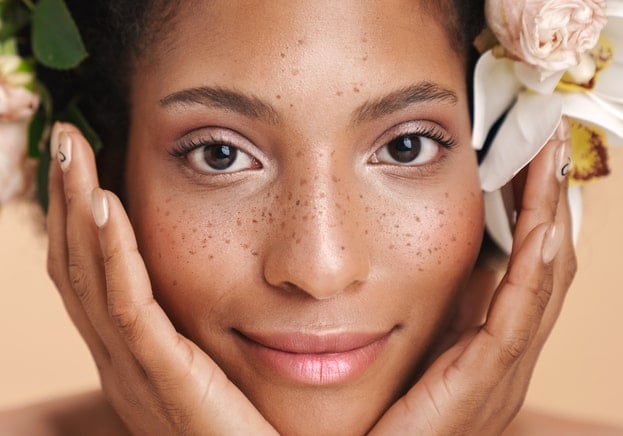
You can easily draw on freckles with makeup or go over the freckles you already have with makeup.
For example, take an eyeliner or brow product that matches your natural freckle shade.
Then, gently dot the product all over the face or body until you’re satisfied with your results.
There are special freckle pens on the market nowadays.
These freckle pens are formulated to mimic the natural look of freckles.
Focus On The Eyes
Let your freckles speak for themselves and focus on your eyes.
Creating a unique eye look can complement your freckles.
The eyeshadow shade you choose can also help make your freckles pop and stand out.
How To Diminish Freckles
Likewise, there is nothing wrong with preferring a more even-looking complexion or choosing to reduce the appearance of freckles.
There are multiple ways you can reduce the appearance of freckles.
This can include sun protection, targeted skincare, or makeup. Avoid over-exfoliating in an attempt to scrub pigmentation away.
It’s also crucial to note that freckles can fade away in winter or as you age.
However, if you need some remedies for the summer, follow along.
Stay In The Shade
Reducing unnecessary UV exposure can help keep freckles from darkening. You do not need to avoid the outdoors completely: shade, clothing, hats, and sunscreen are practical options.
You can cover up with clothes, hats, sunglasses, and umbrellas.
Reduced UV exposure can allow freckles to fade somewhat over time, especially after sunnier months.
Apply Foundation
If you’re looking to cover freckles temporarily, you can easily do so with foundation.
For maximum coverage, a full-coverage foundation or targeted concealer can mute freckles temporarily. Lighter formulas can also be used if you prefer to let some natural pigmentation show through.
This will ensure you achieve an even and opaque finish.
Exfoliate Frequently
Daily sunscreen can help prevent further darkening. Exfoliation should be used cautiously, because frequent or aggressive exfoliation can irritate the skin without reliably removing genetically driven freckles.
Some leave-on ingredients used for uneven pigmentation may gradually soften the appearance of discoloration. Professional options such as chemical peels should be chosen based on skin type, pigment type, and risk of irritation or post-inflammatory hyperpigmentation.
How To Care For Sun Spots
You can care for sun spots much like you would freckles.
Prevention is important because additional UV exposure can darken existing sun spots and contribute to new ones.
This is because sun spots are most likely to appear later in life, rather than when you’re young, unlike freckles.
The best way to prevent sun spots is to apply sunscreen daily.
You can also support an even-looking complexion with a gentle skincare routine and targeted ingredients if needed, but sun protection remains the foundation. Diet and skincare cannot substitute for UV protection.
Minimise Sun Exposure
Reducing UV exposure can limit further darkening of both freckles and sun spots, although established solar lentigines often persist even when sun exposure decreases.
Use shade, protective clothing, hats, and broad-spectrum sunscreen to reduce unnecessary UV exposure without feeling that you must stay indoors.
Consistent UV protection is the most important preventive measure.
How To Diminish Sun Spots
You’ll notice the same methods you use to reduce freckles can also reduce or prevent sun spots.
These methods include at-home skincare or even medical treatments provided by a skin care specialist.
SPF
We’ve mentioned the importance of SPF numerous times in this piece.
Sunscreen does not reliably erase existing sun spots, but it helps prevent further UV darkening and additional photodamage.
Broad-spectrum sunscreen can reduce UV exposure, lower the risk of sunburn and photoaging, and form part of an overall skin-cancer prevention strategy.
Thankfully, sunspots are usually harmless.
A typical sun spot does not become dangerous simply because it changes, but a changing lesion may have been misidentified in the first place. Seek medical assessment for spots that evolve, bleed, itch persistently, become painful, or look distinctly different from the others.
At-Home Exfoliation
You can incorporate chemical exfoliants in your routine or even a retinoid.
Depending on the ingredient, these products can increase cell turnover or exfoliate the surface and may gradually improve some forms of uneven pigmentation.
Consistent sunscreen is important during any pigmentation-focused routine because ongoing UV exposure can counteract progress and increase irritation or discoloration risk.
If you use both retinoids and exfoliating acids, introduce them carefully. Using too many irritating actives at once can cause redness, peeling, or barrier disruption, especially on sensitive skin.
Brightening/Antioxidant Serums
Some brightening and antioxidant serums can support a more even-looking complexion, depending on their active ingredients and concentrations.
They may complement sunscreen, but they should not be relied on as a substitute for UV protection or as a guaranteed way to prevent future sun spots.
Chemical Peels
If you’re already struggling with sun spots, you can also perform chemical peels with a licensed skin professional.
Professional chemical peels use controlled concentrations of acids to remove superficial skin layers and can be considered for some types of hyperpigmentation.
Chemical peels may help fade some sun spots, but results and risks vary by peel depth and skin tone. Post-inflammatory hyperpigmentation is a concern in some skin types, so professional assessment and careful sun protection matter.
Apply Concealer
You can also conceal sun spots temporarily with makeup.
For example, all you need is a high coverage concealer to cover your spots.
If your sun spots are very pigmented, you can use a colour corrector before your regular concealer.
Can Freckles and Sun Spots Pose Concern?
Freckles and sun spots are usually benign.
Freckles and typical solar lentigines are benign, but some skin cancers and atypical moles can resemble ordinary pigmented spots.
The useful approach is not to assume a freckle or sun spot will “turn into” cancer, but to monitor your skin for new or changing lesions.
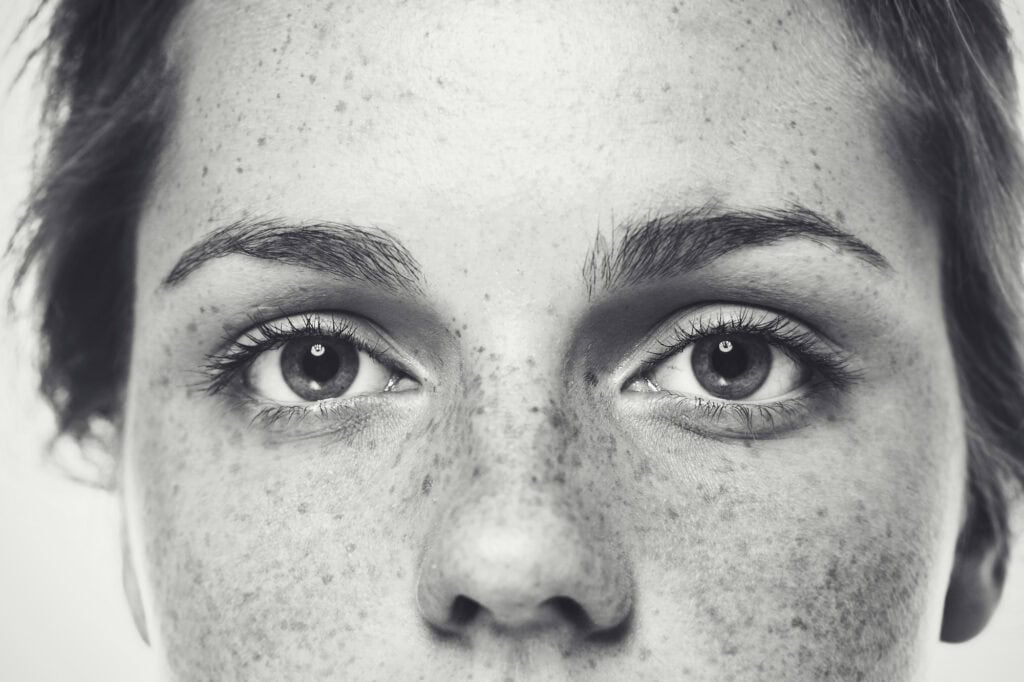
For example, if you notice any physical changes in your freckles and sun spots, you may want to seek help from a dermatologist.
If a pigmented spot changes in color, size, shape, texture, or symptoms, arrange a medical review, especially if it bleeds, becomes painful, or stands out from the rest.
However, if your freckles and sun spots always look the same, they’re usually harmless.
Most people live with freckles and sunspots without it affecting their daily lives.
Talk To A Dermatologist
A dermatologist can diagnose uncertain pigmented lesions and discuss cosmetic treatment options for freckles or sun spots if you want them lightened.
They can also explain options such as prescription topicals, peels, lasers, or other procedures, including the risk of irritation, recurrence, or pigment changes.
The right frequency for professional skin checks depends on your personal and family history, number of moles, sun exposure, skin type, and any previous skin cancer. A dermatologist can tell you how often you should be examined.
Between visits, become familiar with your normal skin so you are more likely to notice a lesion that is new, evolving, or unusually symptomatic.
A dermatologist can also help build a routine for sun protection and pigmentation management that suits your skin type and treatment goals.
The Takeaway
Freckles and sun spots share some similarities, especially their relationship with UV exposure, but they behave differently over time.
Both can become darker or more noticeable with sun exposure, so UV protection is useful for each.
Sunscreen mainly helps prevent further darkening and new UV damage. Freckles may fade with less sun exposure, while persistent sun spots may need targeted skincare or professional treatment if you want to lighten them.
Genetics, including variants in MC1R and other genes, influence freckling, while UV exposure affects how visible freckles become.
Sun spots are linked more directly to cumulative UV exposure and become increasingly common with age.
Freckles often appear earlier in life, while sun spots are more common after years of accumulated sun exposure.
Freckles can potentially fade away with age or in winter.
Meanwhile, sun spots tend to persist once established rather than fading seasonally.
They also differ in size, persistence, and typical age of onset. Both freckles and typical sun spots are usually harmless, but appearance alone cannot confirm every pigmented lesion.
If you notice a new, changing, bleeding, painful, or otherwise unusual spot, seek medical evaluation rather than assuming it is a freckle or sun spot.
Related Articles
Best Face Washes For Dark Spots And Hyperpigmentation
Best Numbing Creams For Waxing
Why You Should Use Glycolic Acid On Your Legs