

7 Best Aloe Face Washes (+ How To Make Your Own)
You’ve probably seen aloe vera in many beauty products, specifically ones used to calm and soothe the skin. But did you know that aloe vera makes an incredible face wash, too?
Aloe vera gel is obtained from the inner portion of the aloe leaf and is widely used in skincare for its hydrating and soothing feel.
In a cleanser, aloe can contribute to a more comfortable, less stripping feel, although the complete formula matters more than any single ingredient.
Aloe vera itself is not a complete facial cleanser. The cleansing work in a face wash comes mainly from the product’s surfactants, while aloe is included for conditioning and soothing properties.
A well-formulated aloe cleanser can remove oil, sweat, sunscreen, and light makeup without leaving the skin feeling excessively tight or dry.
Aloe can be a useful ingredient in a face wash, but it still needs to be paired with an effective cleansing system and a formula suited to your skin type.
Rather than judging a cleanser by whether it is “natural” or “chemical,” look at whether the formula cleans effectively, rinses well, and leaves your skin comfortable.
DIY aloe cleansers are also popular, but homemade water-based formulas need extra caution because they can become contaminated without a proper preservative system.
So, what are the best aloe face washes?
We’ve put together aloe face washes for different needs, from gentle daily cleansing to acne-focused formulas. We also explain why homemade aloe cleansers need careful handling and why a properly preserved commercial product is usually the safer choice for regular use.
Without further ado, let’s dive into it.
Aloe Face Washes Buyer’s Guide
What should you look for when shopping for an aloe face wash?

They are not all made the same. Here are some things you’ll want to be aware of before you buy one:
Additives
Most aloe face washes on the market aren’t made with just aloe vera.
They include some helpful (and sometimes unhelpful) ingredients to enhance the cleanser’s effectiveness.
Some additives that make a good aloe face wash are moisturizers like hyaluronic acid.
Because cleansers are rinsed off, ingredients such as glycerin, hyaluronic acid, squalane, and other conditioning agents can help the formula feel less drying, especially for dry skin.
Other useful additions may include gentle exfoliating acids for texture or acne concerns and conditioning ingredients that improve skin feel. Keep in mind that rinse-off vitamin C or botanical extracts may have less impact than leave-on treatments.
If your skin is sensitive, pay attention to fragrance, strong cleansing agents, essential oils, and other ingredients you already know irritate you. Parabens and phthalates should not automatically be treated as proof that a cleanser is harsh.
Aloe gel does not create an effective cleansing foam on its own. Face washes need surfactants to lift oil and debris so they can be rinsed away.
Pay attention to the ingredient list and product directions, especially if you have dry, acne-prone, or sensitive skin.
Quality
When purchasing any skincare product, always prioritize quality.
A reputable manufacturer, clear ingredient list, appropriate packaging, and sensible usage directions are more useful quality signals than vague marketing language alone.
Quality matters when cleansing your skin.
You want a cleanser that is stable, properly preserved, and appropriate for your skin rather than one that simply advertises a high aloe percentage.
Natural ingredients are not automatically safer or gentler. Plant extracts can still cause irritation or allergy, so judge the finished formula rather than the source story alone.
The options below cover several cleanser styles, from gentle daily formulas to stronger acne treatments, so choose according to your skin needs rather than the aloe content alone.
Choose An Aloe Cleanser By Skin Type
- Dry or sensitive skin: look for a gentle cleanser with glycerin, squalane, panthenol, or other conditioning ingredients and avoid anything that leaves the face tight after rinsing.
- Oily skin: a light foaming cleanser can work well, but you do not need an aggressively stripping formula to remove oil.
- Acne-prone skin: benzoyl peroxide or salicylic acid can be more important than the aloe itself. Introduce stronger acne cleansers gradually.
- Fragrance-sensitive skin: choose fragrance-free options when possible and be cautious with essential oils and heavily scented botanical formulas.
- Heavy makeup or water-resistant sunscreen: you may need an oil cleanser or micellar-water first step before an aloe-based water cleanser.
Best Aloe Face Washes
| Rank | Product | Key Features |
|---|---|---|
| 1. | COOLA Organic Glowing Greens Facial Cleanser | Aloe, cucumber, seaweed, and celery leaf extracts leave your skin cleansed & glowing |
| 2. | TONYMOLY Clean Dew | Gentle yet powerful foam cleanser that’s perfect for oily skin |
| 3. | Replenix Benzoyl Peroxide 10% Acne Wash + Aloe Vera | Powerful acne wash that doesn’t dry out your skin and soothes irritation and blemishes |
| 4. | Biossance Squalane + Amino Aloe Gentle Cleanser | Very hydrating cleanser that combines the moisturizing benefits of aloe vera and squalane |
| 5. | Aloe Attiva pH POWERBALANCE Natural Gel Cleanser | Luxurious and moisturizing aloe vera cleanser that balances the pH levels of the skin |
| 6. | HOLIKA HOLIKA Aloe Facial Cleansing Foam | Aloe vera cleanser that is 93% aloe vera - hydrating and comes in a cute aloe-shaped bottle |
| 7. | Nature Republic Cleansing Gel Foam | A simple aloe vera gel cleanser that is gentle enough for sensitive and irritated skin |
1. COOLA Organic Glowing Greens Facial Cleanser
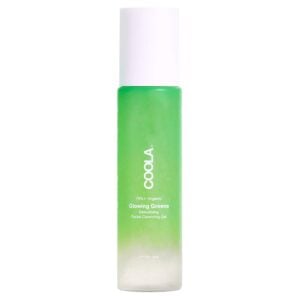
This COOLA cleanser combines aloe with other botanical extracts in a gentle daily face-wash format.
In addition to aloe vera, this face wash contains cucumber, seaweed, and celery leaf extracts.
It may suit people who want a cleanser that refreshes without leaving the skin overly tight. “Detoxifying” is not necessary for a face wash because your skin does not need a cleanser to remove internal toxins.
This cleanser is gentle and moisturizing, leaving your skin feeling fresh, clean, and radiant after use.
It can be used in the morning and at night before the rest of your skincare routine.
The formula includes multiple plant-derived ingredients, but its suitability still depends on the complete formulation rather than whether the ingredients are organic or natural.
It’s fragrance-free, vegan, and dermatologist-tested.
It may work for a range of skin types, although very sensitive skin should still check the current ingredient list and patch test if needed.
2. TONYMOLY Clean Dew
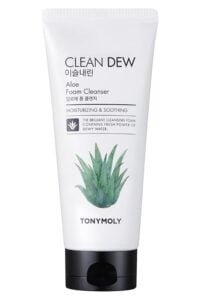
If you prefer a foaming cleanser, this TONYMOLY option is designed to give a more traditional lathered wash.
This Korean beauty face wash is formulated with a real forest dew complex and contains a fresh aloe vera extract to moisturize and hydrate the skin.
Foaming cleansers can feel comfortable for some skin types and drying for others, so judge this one by how your skin feels after rinsing rather than assuming foam is automatically harsh or gentle.
Leaving your face feeling fresh, clean, and smooth.
If you want to start your day with a feeling as fresh as a walk through a sunny forest after a night of rain, this product is for you.
The TONYMOLY Clean Dew face wash is scented, so it may be better for people who enjoy fragrance and do not find fragranced skincare irritating.
3. Replenix Benzoyl Peroxide 10% Acne Wash + Aloe Vera
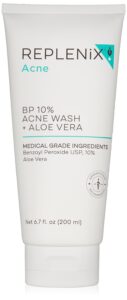
If you’ve been struggling with acne, don’t sleep on this cleanser from Replenix.
This product contains 10% benzoyl peroxide, a high-strength acne treatment ingredient that can reduce acne-causing bacteria and inflammation.
If you’ve used anti-acne face wash before, you know the conundrum.
On one hand, you need something powerful enough to target those zits, and on the other hand, you need something gentle enough to calm and soothe your skin.
Aloe may help the formula feel more comfortable, but 10% benzoyl peroxide can still be drying or irritating, especially if you are new to benzoyl peroxide or have sensitive skin.
This cleanser can target inflammatory acne, but it does not eliminate the usual benzoyl-peroxide side effects. Start gradually, moisturise, and stop if you develop significant burning, swelling, or rash.
Because 10% benzoyl peroxide is relatively strong, it may be more appropriate for body acne or experienced users than for every facial routine. Lower-strength benzoyl peroxide can also be effective for many people.
4. Biossance Squalane + Amino Aloe Gentle Cleanser
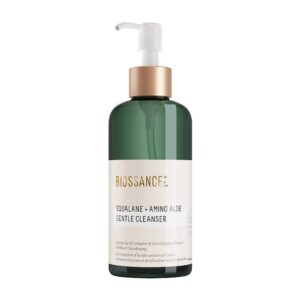
This Biossance cleanser is a foaming gel designed to remove everyday oil, sunscreen, and makeup while leaving a more conditioned feel than a traditional high-foam cleanser.
This face wash can help remove dirt, light makeup, sunscreen, and surface residue. Skin does not need to “breathe,” but removing buildup can leave it feeling fresher.
All without stripping your skin’s natural oils that keep it supple and hydrated.
Its cleansing system includes amino-acid-derived surfactants that help lift oil and debris so they can be rinsed away.
Aloe vera leaf juice contributes to the soothing feel, while squalane helps support a softer, less stripped finish.
The brand also markets the product as vegan and free of synthetic fragrance. Those features may matter to your preferences, but they do not by themselves determine whether the cleanser will suit your skin.
For dry or normal skin, this may be one of the more appealing options if you want a cleanser with a conditioned after-feel.
Its combination of aloe and squalane makes more sense as a comfort-focused cleanser than as a treatment for dry skin on its own, so follow with moisturiser if needed.
5. Aloe Attiva pH POWERBALANCE Natural Gel Cleanser
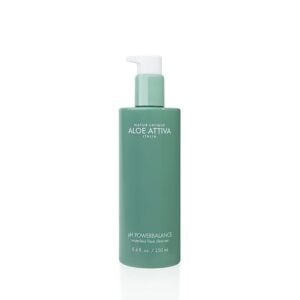
This luxurious aloe cleanser from Italy will leave your skin feeling pampered and soft.
This cleanser is marketed around a skin-friendly pH, which can help reduce the stripped feeling that some high-pH cleansers leave behind.
Made with a potent aloe elixir, seven types of hyaluronic acids, and moisturizing plant oils.
The formula is designed to cleanse while leaving the skin feeling hydrated and smooth. A rinse-off cleanser should not be expected to “heal” the complexion.
If the brand currently publishes clinical or consumer-testing claims, treat them as manufacturer data and check the latest product page for the study design and exact endpoint.
This cleanser is designed to lift away dirt, oil, and makeup while leaving the skin comfortable. Facial cleansers do not remove internal “toxins.”
If you prefer fragrance-free skincare, check the current ingredient list to confirm the formula still meets that preference.
6. HOLIKA HOLIKA Aloe Facial Cleansing Foam
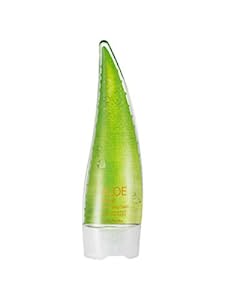
This aloe vera face wash comes in a beautiful bottle shaped like an aloe leaf.
The brand highlights its aloe source as a key part of the formula, but the age of the plant does not by itself prove that the finished cleanser is more effective.
If the product is marketed with a high aloe percentage, remember that the finished cleanser still contains surfactants and other ingredients needed for cleansing and preservation.
Botanical extracts may add to the formula’s sensory and conditioning profile, but they can also be potential irritants for very sensitive skin.
The formula is aimed at cleansing with a softer, more hydrating after-feel than a basic foaming wash.
There is no need to rely on claims about “small molecules” for a rinse-off cleanser. What matters is whether the formula cleans without leaving your skin tight or irritated.
The face wash comes out of the bottle as a clear jelly that quickly transforms into a thick and creamy foam on your face.
It can remove dirt, sweat, oil, and light makeup, while aloe and other conditioning ingredients may help the skin feel less dry after rinsing.
This is an affordable option if you want a foaming cleanser with aloe as a prominent part of its marketing and formula.
7. Nature Republic Cleansing Gel Foam
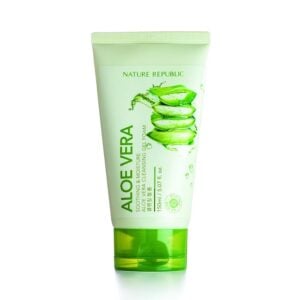
This Nature Republic aloe vera cleanser may appeal if you want an aloe-focused foaming wash, but sensitive skin should still check for fragrance and other potential irritants.
Formulated without parabens, talc, or artificial dyes.
This foam cleanser contains pure California Aloe Vera gel and hydrates your skin while cleansing.
Do not use a cosmetic cleanser as a treatment for rashes, burns, or unexplained redness. Irritated or sunburned skin often benefits from a very simple routine, and persistent symptoms may need medical advice.
The formula contains aloe, which may contribute to a soothing feel, but the complete cleanser still needs to suit your skin and should not sting or worsen redness.
How To Make Your Own Aloe Face Wash
Homemade aloe cleansers are not automatically safer than commercial formulas. Once you mix aloe with water and other ingredients, the product can support microbial growth unless it has been properly preserved and formulated.
DIY formulas give you control over what you add, but they also remove the benefit of professional preservation, stability testing, and controlled pH.
Mixing ingredients is easy; making a microbiologically stable facial cleanser is not. For regular use, a properly preserved commercial cleanser is usually the safer option.
Important: the water-and-aloe recipe below does not contain a validated broad-spectrum preservative system. Water-based cosmetics can grow bacteria, yeast, or mold even when they look and smell normal. For that reason, do not make a large batch and keep it in the bathroom for days or weeks.
DIY Aloe Face Wash Ingredients
If you still want to experiment, keep batches very small, use clean equipment, and understand that “organic” sourcing does not solve preservation or contamination risks.
Commercial cosmetic aloe gel is easier to control than fresh leaf material. Fresh aloe also contains yellow latex near the rind, which can irritate skin and should not be included in a facial product.
The original DIY formula below is best treated as a single-use experiment rather than a shelf-stable cleanser:
- ½ cup pure aloe vera gel
- ½ cup distilled water
- 2 tbsp castile soap
- 2 tsp jojoba oil
- (optional) essential oils are often included in DIY recipes, but we recommend skipping them on facial skin because imprecise dilution can cause irritation or allergic contact dermatitis
- A bottle with a pump
DIY Aloe Face Wash Recipe
- Combine all of the ingredients in the pump bottle
- Seal the bottle and shake it for 3-5 minutes until the contents are well mixed.
- Use the mixture immediately rather than storing it as a long-term cleanser. Discard leftovers if you have not formulated and tested a proper preservative system.
How To Use Your DIY Aloe Face Wash
Your aloe face cleanser can be used much like any other face cleanser.
The foaming comes from castile soap, not from aloe vera itself.
If you use a freshly mixed DIY cleanser, apply a small amount with clean hands and rinse it away promptly. Castile soap can be too alkaline or drying for some facial skin.
Massage gently for a short period rather than scrubbing for a fixed one-to-two-minute interval.
The surfactants help lift oil and residue from the skin so they can be rinsed away.
Finish off by rinsing the foam off your face with water. Your skin should feel clean, fresh, and hydrated!
How To Harvest Your Own Aloe Vera
If you decide to harvest your own aloe vera, you’ll need a healthy aloe plant.
Aloe plants are common as houseplants, and you can find them at most nurseries and gardening supply stores.
To get ½ cup of aloe vera gel, you’ll need 1-3 aloe leaves.
Cut them off at the base using a sharp knife. Then, carefully remove the skin and place the remaining gel into a blender.
Blend the gel-like pieces until they become homogeneous and malleable.
Freshly processed aloe should be used cautiously and promptly. Do not assume it is sterile or suitable for long-term storage in a cosmetic mixture.
What Essential Oils You Should Use
Adding essential oils to a DIY face wash is optional, but for facial skin we recommend leaving them out. Essential oils can cause irritation or allergic contact dermatitis, especially when dilution is imprecise.
Essential oils should not be relied on to treat acne, eczema, rashes, or other skin conditions. Those concerns are better addressed with proven treatments and, when needed, professional medical advice.
If you are comparing the oils commonly suggested in DIY recipes, keep in mind that each can irritate facial skin:
- Lavender essential oil – fragrant and potentially irritating, especially on sensitive or eczema-prone skin
- Chamomile essential oil – may be fragranced and can still cause sensitivity or allergy
- Tea tree oil – has some evidence in acne care at appropriate concentrations, but undiluted or poorly diluted oil can irritate skin
- Eucalyptus essential oil – strongly fragranced and not a treatment for itchy, painful, or inflamed facial skin.
Aloe Face Wash FAQs
Is Aloe Vera A Cleanser By Itself?
No. Aloe gel can feel soothing and hydrating, but it does not replace the surfactants needed to lift oil, sunscreen, makeup, and other residue from the skin.
Is Aloe Face Wash Good For Acne?
Aloe may make an acne cleanser feel more soothing, but proven acne ingredients such as benzoyl peroxide or salicylic acid do the treatment work. Aloe alone is not a substitute for acne medication.
Can You Use Aloe Face Wash Every Day?
Yes, if the cleanser is gentle enough for your skin and the label recommends daily use. Reduce frequency if you develop tightness, burning, peeling, or persistent redness.
Is Homemade Aloe Face Wash Safe To Store?
Not without a properly designed preservative system and stability testing. Aloe, water, and plant ingredients can support microbial growth, so a homemade water-based cleanser should not be treated as shelf-stable.
Related Articles
Coconut Oil And Aloe Vera For Hair Growth