
Can You Use Deodorant On Feet?
Your feet have a high concentration of sweat glands, so it is completely normal for them to sweat throughout the day.
If your feet get sweaty or develop an odour, you’re far from alone. Both are common, especially after long periods in closed shoes.
Foot sweat itself is normal. The smell usually develops when sweat stays trapped in shoes and socks and mixes with bacteria on the skin.
A warm, damp environment gives odour-causing bacteria more opportunity to thrive, which is why feet can smell stronger after a long day in closed shoes.
That raises a practical question: if deodorant helps with body odour elsewhere, can you safely use deodorant on your feet too?
The short answer is yes, but it helps to know the difference between a deodorant and an antiperspirant before you reach for one.
Can you use deodorant on your feet?
Yes, you can use many deodorants and antiperspirants on clean, intact skin on the feet. Deodorant helps control odour, while antiperspirant is designed to reduce sweating. Avoid applying either to broken, irritated, or freshly shaved skin, and follow the product label.
Foot products come in sticks, sprays, gels, roll-ons, creams, and powders. The most comfortable option depends on where you sweat, how much moisture you deal with, and what you usually wear on your feet.
A fast-drying formula can be especially useful because slippery residue on the soles can feel uncomfortable inside shoes.
Below, we’ll cover how deodorant and antiperspirant work on feet, how to apply them, what to avoid, and when persistent foot odour deserves extra attention.
What Causes Stinky Feet?
Smelly feet, sometimes called foot odour or bromodosis, are common and usually relate to a combination of sweat, bacteria, footwear, and skin conditions.
The good news is that everyday habits such as washing and drying your feet well, rotating shoes, and changing socks can make a noticeable difference.
A common trigger for smelly feet is moisture that stays trapped around the skin, especially inside socks and closed footwear.
Your feet contain many sweat glands, and factors such as heat, exercise, stress, footwear, and excessive sweating can all increase moisture.
Inside closed shoes, that sweat may evaporate slowly, especially if socks or shoes stay damp.
The longer moisture remains against the skin, the easier it is for odour-causing bacteria to break down sweat and skin debris.
This is why keeping feet clean and thoroughly dry, including between the toes, matters just as much as masking odour.
Persistent smell can also occur alongside athlete’s foot or other skin problems, especially when there is itching, peeling, cracking, or a rash.
Occasional foot odour is common, but persistent, suddenly stronger, or unusually foul odour is worth paying attention to, especially if you also have skin changes.
Can You Put Deodorant On Your Feet?
For many people, deodorant or antiperspirant can be used on clean, intact foot skin as long as the product directions allow that use.
Deodorant is useful for controlling odour, while antiperspirant is the option designed to reduce the amount of sweat reaching the skin.
How long a product lasts varies by formula, activity level, footwear, and how much you sweat, so avoid relying on a fixed number of hours unless the label gives one.
Not every formula will feel comfortable on every person’s feet, particularly on cracked, irritated, or very sensitive skin.
Fragrance, alcohol, baking soda, and other ingredients can irritate some skin, especially if your feet are cracked, freshly shaved, or already inflamed.
If a product stings, burns, or causes a rash, wash it off and stop using it. A different formula may suit your skin better.
What Kind Of Deodorant Can You Use On Your Feet?
Regular underarm deodorant may also be suitable for the feet if the label does not restrict that use and the formula does not irritate your skin.
You can also find products specifically marketed for feet, including sprays, powders, creams, and antiperspirants.
The formulas are not always identical, so compare the active ingredients, fragrance, texture, and directions rather than assuming every underarm product works the same way on feet.
Your main options include deodorants, antiperspirants, combination products, and moisture-absorbing foot powders.
If odour is the main issue, deodorant may be enough. If heavy sweating or persistently damp socks is the bigger problem, an antiperspirant is usually the more relevant choice.
Antiperspirant Vs. Deodorant
Although these terms are often used interchangeably, antiperspirants are not the same as deodorants.
Deodorants are designed to control or mask body odour, and some formulas also contain ingredients that help limit odour-causing bacteria.
They do not necessarily reduce sweating, so check the label if moisture is your main concern.
Antiperspirants are specifically designed to reduce sweating.
They commonly contain aluminium-based active ingredients that form temporary plugs in sweat ducts, reducing how much sweat reaches the skin.
Many antiperspirants also include deodorising ingredients, making them a 2-in-1 option for both sweat and odour.
Choose based on the problem you are trying to solve: odour, excess moisture, or both. Deodorant targets smell, while antiperspirant targets sweating.
If your main concern is smell rather than heavy sweating, a deodorant may be enough.
It can help reduce or cover odour, but results depend on the formula and your skin.
If your feet are frequently very sweaty or your socks and shoes stay damp, an antiperspirant-containing product may be more useful.
Fragrance-free versions are worth considering if your skin is sensitive or you simply prefer less scent, although any ingredient can still irritate some people.
Is Aluminium in Antiperspirants Safe For The Feet?
You may have heard concerns that the aluminium compounds in antiperspirants are linked with breast cancer.
That concern has circulated for years, but current evidence has not established that antiperspirant use causes breast cancer.
If you prefer to avoid aluminium, you can choose a deodorant without antiperspirant actives, but remember that deodorant alone is not designed to stop sweating.
For additional context, Penn Medicine discusses common concerns about aluminium-containing antiperspirants and how little is absorbed through healthy skin.
If you have kidney disease, very irritated skin, or questions about a specific medicated antiperspirant, it is sensible to check with a healthcare professional or pharmacist before using it regularly.
Deodorants Made For Feet
Some deodorants and antiperspirants are specifically marketed for feet. Their main advantage is often that the texture, applicator, or directions are designed with feet in mind.
That does not automatically make them better than an underarm product. Compare the active ingredients, intended use, drying time, and application directions before choosing.
For example, foot sprays can make it easier to reach the soles and sides of the feet without rubbing product in by hand.
Foot-specific labels may also provide clearer directions for frequency and placement.
However, formulas can vary widely, so avoid assuming that all foot and underarm deodorants are interchangeable or identical.
Foot deodorants are available with different scents, active ingredients, and textures.
Some contain aluminium-based antiperspirant actives, while others focus only on odour control.
Some use fragrance or essential oils, which may not suit very sensitive or cracked skin.
Ultimately, choose a product that matches your needs, dries comfortably, and does not irritate your skin.
If you use a stick or roll-on, keeping a separate one for your feet is a practical hygiene step so the applicator is not moved between body areas.
A product does not have to be labelled “foot deodorant” to be useful, but the label directions and active ingredients should guide how you use it.
Fragrance is optional. Prioritise a formula that dries comfortably, does not irritate your skin, and addresses either odour or sweat.
Stick, Spray, Or Roller
Foot and body deodorants come in several formats, including sticks, gels, sprays, roll-ons, creams, and powders.
The best format is usually the one that dries well, stays comfortable inside your usual footwear, and is easy enough to use consistently.
Pay particular attention to products used on the soles because a wet or greasy finish can feel slippery.
- Stick deodorants and antiperspirants are solid.
They are easy to control and often dry down with less slip than a wet formula.
Some sticks can leave a white residue on socks or inside shoes, so let the product dry before getting dressed.
- Gel deodorants are usually clear and can leave less visible residue.
Because some gels stay damp for a little while, allow them to dry completely before walking around or putting on socks.
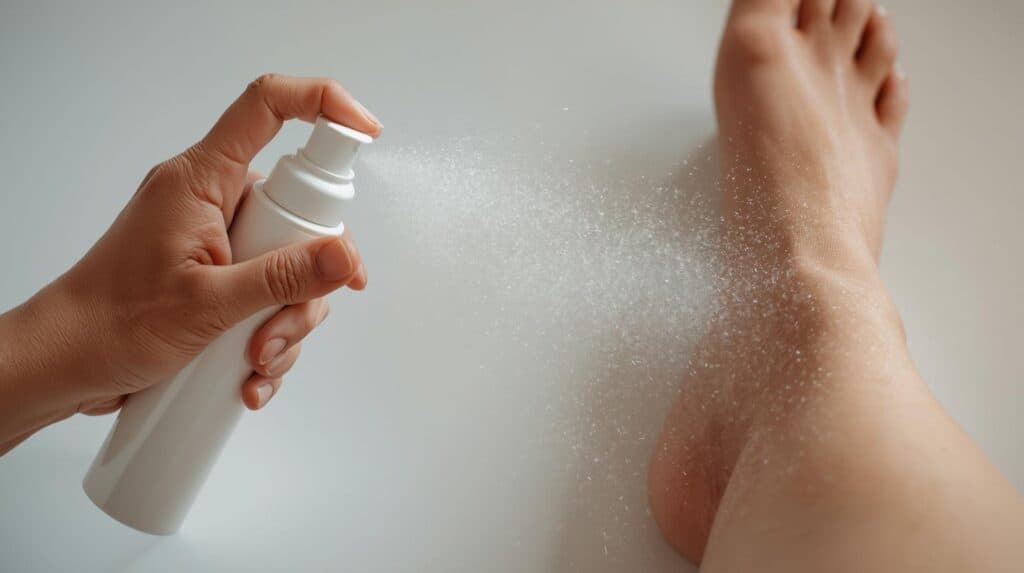
- Spray deodorants and antiperspirants are convenient for covering the feet evenly and often dry quickly.
Use them in a well-ventilated area, avoid inhaling the spray, and follow the distance and drying instructions on the label.
- Roll-on deodorants are easy to apply but may feel wet at first.
Give the product enough time to dry fully before you put on socks or shoes, especially if you apply it to the soles.
- Paste or cream – Some deodorants and antiperspirants come in a tub.
These formulas can be easy to spread over specific areas, but the finish varies.
Use a thin layer and let it dry so your feet do not feel greasy or slippery.
There are plenty of options, so you do not need to force yourself to use a formula that feels sticky, slippery, or irritating.
The best format is one you can apply consistently without making your feet uncomfortable inside socks or shoes.
Look for something that dries well and does not leave an uncomfortable residue on weight-bearing areas.
If you wear dark socks or open-toe shoes, also consider whether the formula leaves visible white marks.
How To Apply Deodorant To Your Feet
For the best chance of success, apply the product according to the label and start with clean, completely dry, intact skin.
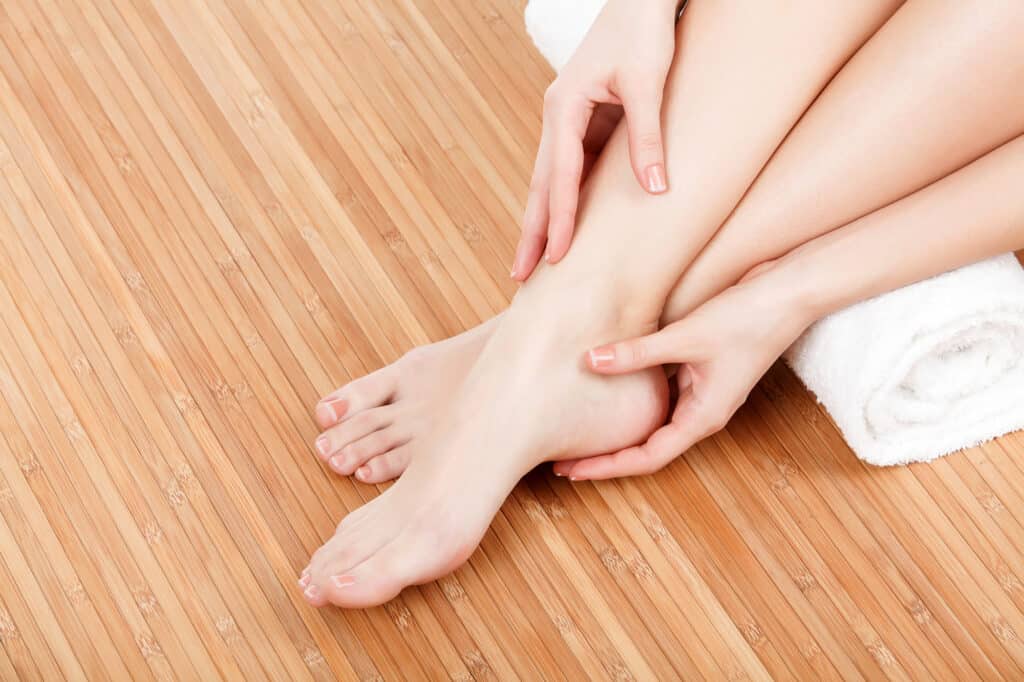
If you are using an antiperspirant for sweaty feet, focus on the areas that actually become damp, which often includes the soles and the skin around the toes.
Use a thin, even layer rather than coating the foot heavily. With antiperspirant, applying it to very dry skin can also help reduce irritation.
Some antiperspirants work best when applied before bed to completely dry skin, giving the active ingredients time to work while sweating is lower. Always follow the directions for your specific product.
Avoid applying deodorant or antiperspirant to cuts, blisters, cracked skin, rashes, or other irritated areas. If the product makes your soles slippery, use less or choose another format.
Before applying anything, wash your feet if needed and make sure they are fully dry, especially between the toes.
Applying product over damp skin can be less comfortable and may make some antiperspirants more irritating.
Socks or No Socks?
You can use deodorant or antiperspirant whether or not you wear socks, but clean, moisture-managing socks can help keep sweat away from the skin during the day.
If you’re planning on wearing socks, consider the following:
- Choose socks that keep your feet comfortable and help move moisture away from the skin
- Change out of damp socks rather than wearing the same pair for a long period
- Allow your deodorant or antiperspirant to fully dry before you put a sock over your foot
- Wash socks regularly, and rotate shoes so each pair has time to dry out between wears
If you’re not planning on wearing socks, choose a formula that dries down well and does not make your foot slide inside the shoe.
Excess rubbing from a slippery or sticky product can make footwear uncomfortable and may contribute to friction or irritation.
Whichever format you choose, let it dry before putting on shoes.
Can You Use The Same Deodorant On Your Feet As You Do On Your Armpits?
If you like the deodorant you already use under your arms, you may be able to use the same type of formula on your feet if the label permits it.
For sticks and roll-ons that touch the skin directly, keeping a separate product for your feet is a practical hygiene step.
That way, you are not moving skin debris or microorganisms from one body area to another through the applicator.
This matters even more if you have signs of athlete’s foot, broken skin, or another foot infection.
If you suspect a fungal infection, treat the underlying problem rather than relying on deodorant to cover the smell.
If you use the same brand and scent for both areas, label the foot product so the two do not get mixed up.
Other Tips To Prevent Smelly Feet
Deodorant or antiperspirant can help, but it works best alongside regular foot hygiene, clean socks, dry footwear, and moisture control.
These practical habits can help reduce the conditions that allow foot odour to build up:
- Wash your feet at least once a day with soap and water, then dry them thoroughly, especially between the toes.
- Keep your toenails clean and trimmed, and remove visible dirt gently from around them.
- Remove thick dead skin gently with a foot file or pumice stone when needed, but stop if the skin becomes sore or irritated.
- If you use chemical foot exfoliants, follow the product directions rather than combining strong acids or using them on cracked, inflamed, or infected skin.
- Give your feet time to dry and air out. Soaks can feel relaxing, but they are not a substitute for treating athlete’s foot or excessive sweating.
- Let shoes dry fully between wears and clean them according to the manufacturer’s care instructions. Rotating pairs can help prevent moisture from staying trapped inside.
- Foot powder can help absorb excess moisture inside socks or shoes. Choose a product intended for feet and follow its directions rather than assuming every powder is antibacterial.
- If odour or sweating doesn’t improve with self-care, affects your daily life, or comes with itching, peeling, pain, sores, or a rash, talk to a doctor, dermatologist, pharmacist, or podiatrist.
Persistent heavy sweating may be hyperhidrosis, and stronger antiperspirants or other treatments may be available.
Final Thoughts
Smelly and sweaty feet are common, and in many cases a few changes to hygiene, socks, footwear, and moisture control can noticeably improve them.
If odour is the main issue, a deodorant can help control smell. If heavy sweating is driving the problem, an antiperspirant is the product designed to reduce how much sweat reaches the skin.
Whichever option you choose, apply it to clean, dry, intact skin and give it time to dry before putting on socks or shoes.
You may be able to use a regular underarm deodorant or antiperspirant on your feet if the label allows it, so a foot-specific product is not always necessary.
For products that touch the skin directly, keep a separate applicator for your feet, and stop using any formula that causes burning, rash, or irritation.
If persistent odour comes with itching, peeling, cracking, pain, sores, or unusually heavy sweating, getting the underlying cause checked is more useful than simply covering the smell.
Related Articles
Why Are My Toenails Growing Sideways?
Best Nail Files For Thick Toenails