
Vanicream Vs CeraVe
Skincare routines quickly become complicated and overwhelming.
If you’re using many products at once or layering several potentially irritating actives, it can become harder to tell which product is causing dryness, stinging, breakouts, or a rash.
For many people, a simple routine built around cleanser, moisturiser, sunscreen, and only the treatments they actually need is easier to tolerate.
A common misconception regarding skincare is that it must cost a fortune to achieve your desired results.
Two widely available drugstore skincare brands frequently discussed for simple, fragrance-free routines are Vanicream and CeraVe.
Vanicream and CeraVe both offer cleansers, moisturisers, and other barrier-focused products, but their formulas and product ranges are not identical.
Both are positioned as accessible brands and include products for multiple skin types, although no single formula is guaranteed to suit everyone.
The best choice comes down to the exact product, your skin concerns, and which ingredients and textures you tolerate.
However, what is the difference between Vanicream and CeraVe?
While they are both beloved drugstore skincare brands, they have a few characteristics that set them apart. Their ingredients, product range, packaging, and prices all vary.
So next time you’re out shopping for staple skincare products, how do you know which brand is right for you?
Thankfully, we’re here to break down the similarities and differences between Vanicream and CeraVe so you can get the most out of your skincare routine.
Vanicream
Vanicream is specifically positioned around products for sensitive skin.
Vanicream formulates many products without fragrance, masking fragrance, dyes, lanolin, parabens, or formaldehyde releasers. That can be useful if you are trying to avoid those ingredients, but no skincare line can promise zero irritation or “heal” every compromised skin barrier.
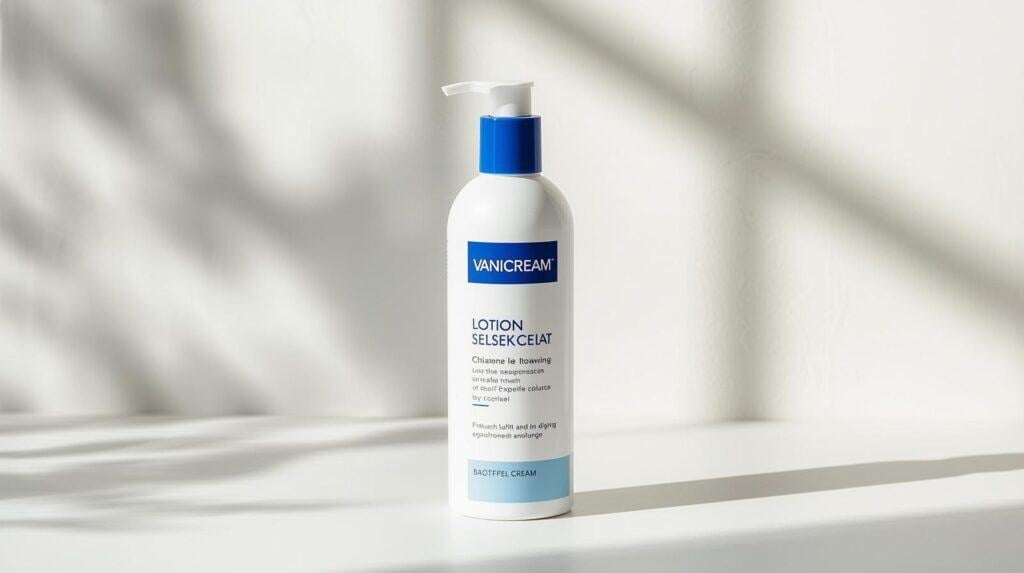
Vanicream emphasizes sensitive-skin formulation and manufacturing quality controls.
Their website states that they “are regularly inspected by the FDA and licensed by the Minnesota State Board of Pharmacy as a pharmaceutical manufacturer.”
Overall, Vanicream focuses on straightforward products for people who want to avoid several common fragrance and contact-allergy triggers. Individual tolerance still matters, even within a sensitive-skin line.
Product Range
Two of Vanicream’s best-known staples are the Gentle Facial Cleanser and the Moisturising Cream.
Both products are commonly discussed in sensitive-skin routines because they keep the formula and use case relatively simple.
However, Vanicream’s product range includes more than just a facial cleanser and moisturiser.
For example, Vanicream sells products for the face, body, hair, sun protection, and babies. The brand designs these lines with sensitive skin in mind, but suitability still depends on the individual product and person.
This makes Vanicream easy to consider if you prefer a routine with fewer fragrance and ingredient variables.
Still, “formulated for sensitive skin” does not mean reaction-proof. Patch testing a new product is sensible if you have a history of contact dermatitis or multiple ingredient sensitivities.
Ingredients
Vanicream states that its products are formulated without several ingredients it classifies as common irritants, including dyes, fragrance, masking fragrance, lanolin, parabens, and formaldehyde releasers. That is a formulation choice rather than evidence that every listed ingredient is unsafe for everyone.
Vanicream explains the functions of ingredients used across its range on this list. CeraVe emphasizes three essential ceramides across its core brand identity, while Vanicream is better known for avoiding selected potential irritants and keeping many staple formulas relatively straightforward.
For a practical comparison, look at the current ingredient lists for Vanicream Moisturizing Cream and CeraVe Moisturizing Cream. Both use rich emollient and occlusive ingredients, although formulas can change over time.
The Vanicream cream is generally positioned as a simpler formula, while CeraVe adds its ceramide-focused system and other humectants. Check the current label if a specific ingredient matters to you.
Is Vanicream Cruelty-Free?
Vanicream states that Pharmaceutical Specialties, Inc. does not test its products on animals.
Animal-testing policies, third-party cruelty-free certifications, sustainability claims, and “clean beauty” marketing are separate issues, so check which standard matters to you rather than treating them as interchangeable.
Vanicream currently states that it does not test its products on animals. If third-party certification matters to you, verify the brand with the certification program you personally follow.
The phrase “clean beauty” has no single regulated definition, so it is more useful to compare specific policies, ingredients, certifications, packaging, and manufacturing practices.
Price
Vanicream is generally sold at drugstore-to-midrange prices, but current prices vary by product size, retailer, region, and promotions.
Compare cost per ounce or millilitre when you are choosing between similar moisturisers or cleansers.
A shorter ingredient list does not mean a product is lower quality, and a higher price does not automatically mean a formula is more effective.

Vanicream may appeal most if you want basic cleansing and moisturising without many added treatment actives. If you want acne, pigment, or anti-aging actives in the same routine, you may need separate treatment products.
However, for others, this won’t be a problem. It entirely depends on your skin and preferences.
Packaging
Most of Vanicream’s packaging also reflects its formulas.
Simple, but it gets the job done. Their branding is also minimal, and all of their product lines use their iconic blue-and-white color scheme, which represents the company.
Most Vanicream products will also have a pump to easily dispense their creams or cleansers.
Pumps can make larger cleansers and moisturisers easier to dispense, although packaging varies by product and size.
CeraVe
If there is one thing to know about CeraVe, it’s that they are all about ceramides.
CeraVe is another widely available drugstore brand built around barrier-supportive skincare and dermatologist-developed positioning. So what else do you need to know about CeraVe?
CeraVe centers its formulas around three essential ceramides and barrier-supportive positioning.
According to CeraVe, ceramides are lipids that make up a substantial portion of the skin barrier.
A healthy skin barrier helps reduce water loss and protects against environmental irritants.
CeraVe offers fragrance-free options commonly used by sensitive skin, along with products designed for acne, dryness, rough texture, sunscreen needs, and other concerns.
The range includes products marketed for acne-prone skin, signs of aging, eczema-prone skin, dryness, roughness, and more.
Many CeraVe products combine barrier ingredients with additional actives, making the overall range broader than Vanicream’s more minimalist core staples.
Product Range
How does CeraVe’s product range differ from Vanicream’s? CeraVe also offers multiple product lines for the face, body, babies, and sunscreens.
However, their products are also organized by skin type, concern, and key ingredient.
CeraVe’s product range is broad and includes formulas aimed at dry, oily, acne-prone, rough, mature, and sensitive skin.
If you are dry, oily, or acne-prone, there may be a CeraVe product designed around that concern, but tolerance and results still vary.
CeraVe has a “shop by key ingredient” tab that allows you to search for products by formulation.
For example, if you love niacinamide, click the niacinamide tab to shop their products that contain it.
Ingredients
As mentioned earlier, CeraVe strongly emphasizes ceramides across its product range.
Ceramides can support barrier function and reduce water loss, which is especially useful in dry or compromised skin. They are not a cure-all for every skin concern.
This is especially helpful for sensitive or compromised skin types.
However, CeraVe’s ingredients go much deeper than just ceramides.
Many CeraVe formulas combine ceramides with ingredients such as glycerin, hyaluronic acid, niacinamide, salicylic acid, retinoids, or acne actives depending on the product. A longer list is not inherently more sophisticated or better.
We looked at the Vanicream Moisturizing Cream; now it’s time to look at CeraVe’s Moisturizing Cream.
The two creams share some types of emollient and occlusive ingredients, but always compare the current labels because formulations can change.
CeraVe Moisturizing Cream is known for combining ceramides with humectants and emollients in a richer barrier-supportive cream.
These ingredient categories are widely used in moisturisers, but individual reactions are still possible.
Is CeraVe Cruelty-Free?
CeraVe’s current FAQ states that CeraVe products are not tested on animals. Whether you personally consider a brand “cruelty-free” may also depend on the certification standard or parent-company policy you use.
On CeraVe’s website, the FAQ section currently states that CeraVe products are not tested on animals.
CeraVe is owned by the L’Oréal Group. L’Oréal states that it does not test its products or ingredients on animals and does not delegate such testing. China’s rules have also changed, so it is outdated to say that all cosmetics sold there must be animal-tested.
If cruelty-free purchasing is important to you, compare CeraVe’s current policy with the criteria of the independent certification organization you trust, since brand statements and certification programs can use different standards.
Price
CeraVe is widely sold through drugstores and mass retailers, but current prices vary by product, size, region, retailer, and promotions.
Depending on the retailer and size, comparable CeraVe and Vanicream products can trade places on price, so compare the exact products rather than assuming one brand is always cheaper.
Ingredient count alone does not explain retail price or indicate higher quality. Packaging, active ingredients, size, retailer margins, and promotions can all affect cost.
A more useful distinction is that Vanicream emphasizes sensitive-skin simplicity, while CeraVe offers a broader selection of treatment-focused formulas.
Other factors contributing to price differences include where you shop, loyalty programs, coupons, etc.
Packaging
CeraVe also has simple but effective packaging. However, one feature that differs from Vanicream is its color coordination.
CeraVe’s product line is represented by a specific color, even though its primary colors are blue and white.
For example, their first-aid line has red packaging, their sunscreen line is yellow, their salicylic acid line is light blue, and their hydrating line is green.
Of course, CeraVe offers various other lines besides the ones listed above.
CeraVe & Vanicream Similarities
CeraVe and Vanicream do share similarities besides being drugstore brands.
Both brands offer fragrance-free, barrier-focused products that may suit sensitive or dry skin without requiring luxury pricing.
So, what other similarities do they share?
The National Eczema Association
Both CeraVe and Vanicream have a unique stamp on their products that may seem familiar to you.
The National Eczema Association Seal of Acceptance identifies individual products that have gone through the organization’s review process for suitability for people with eczema or sensitive skin. It is not a guarantee that every user will tolerate the product.
According to the National Eczema Association, products that earn the Seal undergo review of ingredients and formulation data along with required sensitivity, irritation, and toxicity testing.
The Seal can help narrow down eczema-friendly options, but it applies to specific accepted products rather than automatically to an entire brand, and eczema triggers still vary from person to person.
Fragrance-Free Skincare
You’ll notice that Vanicream and CeraVe have fragrance-free products.
Fragrance-free skincare can be useful if fragrance stings your skin or if you have fragrance allergy or eczema-prone skin.
Fragrance can trigger irritant or allergic reactions in susceptible people, although not everyone needs to avoid it.

Fragrance, perfume, and some essential oils can be sensitizing or irritating for certain users. The concern is individual tolerance and allergy potential, not that fragrance ingredients are universally harmful.
Fragrance mixtures may be listed collectively as “fragrance” or “parfum,” which can make it harder for someone with a known fragrance allergy to identify a specific trigger.
If fragrance bothers your skin, choosing fragrance-free products from CeraVe, Vanicream, or another brand can simplify your routine. People who tolerate fragrance do not necessarily need to avoid it completely.
Fragrance-free positioning is one similarity between many products from these brands, but always check the current label for the exact formula you are buying.
Which Brand Is Right For You?
Let’s say you’re ready to upgrade your skincare routine. Which brand should you purchase – CeraVe or Vanicream?
It will depend on your skin concerns, what you are looking to get from your skincare routine, your skin type, and other factors.
Start with the concern you are actually trying to solve, then compare the exact product rather than choosing only by brand name.
Vanicream
Vanicream offers an extensive product range, including hair, face, body, baby, and more.
It’s relatively affordable and available both in-store and online.
Finally, Vanicream offers flexibility so you can try one product or build a whole routine.
Overall, Vanicream is a practical place to start if you have sensitive skin and prefer straightforward cleansers and moisturisers with fewer common fragrance-related triggers.
Not every Vanicream formula is minimal, but simplicity is a recurring theme in the brand’s core sensitive-skin products.
Ideal For Sensitive Skin
Vanicream’s parent company, Pharmaceutical Specialties, Inc., was formed in 1975 after its pharmacist founders worked with dermatologists and patients with sensitive skin.
The formulas are often straightforward, which can be an advantage when you want to minimize potential triggers and focus on cleansing and moisturising.
Vanicream is commonly used in sensitive-skin and eczema-prone routines, but whether a dermatologist recommends it depends on the individual patient and product.
Their Gentle Face Wash and Moisturizing Cream are easy to use and will make a great first purchase if you want to try Vanicream.
Simple Formulas
Vanicream may suit you if you prefer formulas that avoid several common fragrance and contact-allergy triggers.
Vanicream’s core formulas are not necessarily less sophisticated than CeraVe’s; they simply pursue a different formulation strategy that often prioritizes fewer variables and sensitive-skin compatibility.
The brand states that its products avoid dyes, fragrance, masking fragrance, lanolin, parabens, and formaldehyde releasers. Those exclusions may matter to some sensitive-skin users, but they should not be read as proof that each excluded ingredient is harmful to everyone.
CeraVe
CeraVe uses ceramides and other moisturising ingredients to support the skin barrier, but no skincare product can guarantee that your barrier will never become irritated or damaged again.
A healthy skin barrier helps reduce water loss and limits penetration of irritants and allergens from the environment.
CeraVe has a broader range of treatment-focused products, including formulas with acne actives, exfoliating acids, retinoids, vitamin C, and sunscreens in addition to basic cleansers and moisturisers.
Ideal For Complex Skin Concerns
CeraVe may be easier to shop if you want both barrier care and targeted actives within the same brand.
Sensitive skin is not guaranteed to tolerate every CeraVe formula, especially products containing stronger acne or exfoliating actives.
CeraVe organizes products around several common concerns, but no single brand covers or treats every possible skin condition.
For example, salicylic-acid products may help with clogged pores or rough texture, while hydrating cleansers and moisturisers are aimed at dryness. Choose the active based on the concern rather than assuming a whole product line will suit your skin.
In practical terms, CeraVe offers more variety in treatment actives, while Vanicream keeps a stronger focus on sensitive-skin basics.
Effective Ingredients
Because CeraVe offers numerous product lines addressing various skin concerns, it also uses a wide range of ingredients.
CeraVe uses a wider variety of active and supporting ingredients across its range, while Vanicream’s appeal is often the relative simplicity of its core products.
Depending on the product, CeraVe formulates with ingredients such as ceramides, niacinamide, salicylic acid, benzoyl peroxide, hyaluronic acid, retinoids, vitamin C, and zinc oxide.
Their website allows you to shop by ingredient, which is especially helpful for anyone building a skincare routine.

The Takeaway
Overall, both Vanicream and CeraVe are accessible skincare brands with strong options for basic cleansing and moisturising.
Neither brand can guarantee irritation-free skincare, so introduce new products based on your own sensitivities and the exact formula.
They both offer similar products, so it can be confusing to see what sets these brands apart.
Vanicream is especially useful to compare when you want fragrance-free sensitive-skin basics, while CeraVe gives you more choices if you also want targeted acne, exfoliating, anti-aging, or sunscreen products.
You do not need to commit to one brand. It is reasonable to use a Vanicream cleanser, a CeraVe moisturiser, or any other combination that suits your skin and avoids unnecessary duplication of active ingredients.
Regardless, skincare can be a relaxing part of anyone’s daily routine, especially when you find products that suit your needs.
What brand are you most excited to try? Vanicream or CeraVe?
Vanicream Vs CeraVe: Quick Decision Guide
- Choose by formula, not loyalty: Both brands make multiple products, so compare the cleanser, cream, sunscreen, or treatment you actually need.
- Consider Vanicream if: You want straightforward fragrance-free basics and prefer to avoid dyes, masking fragrance, lanolin, parabens, and formaldehyde releasers across the brand’s stated formulation approach.
- Consider CeraVe if: You want ceramide-focused moisturising plus a broader choice of targeted actives for concerns such as acne, rough texture, or signs of aging.
- If you have eczema or very reactive skin: Look for the National Eczema Association Seal on the exact product rather than assuming every item from either brand carries it.
- If you already use prescription treatment: Keep the rest of the routine simple and ask your dermatologist before adding multiple exfoliating, acne, or anti-aging actives.
Vanicream Vs CeraVe FAQs
Is Vanicream Better Than CeraVe For Sensitive Skin?
Not automatically. Vanicream has a stronger brand-wide focus on avoiding several common fragrance and contact-allergy triggers, while CeraVe also offers many fragrance-free barrier products. The better choice is the specific formula your skin tolerates.
Can You Use Vanicream And CeraVe Together?
Yes. There is no skincare rule requiring every step to come from the same brand. Just avoid duplicating strong actives and introduce new products one at a time if your skin is reactive.
Does The NEA Seal Mean A Product Cannot Cause Eczema Irritation?
No. The National Eczema Association Seal indicates that an individual product met the organization’s review criteria for suitability for eczema and sensitive skin. It is not an endorsement of an entire brand and does not guarantee that every person with eczema will tolerate the product.
Are Vanicream And CeraVe Cruelty-Free?
Vanicream currently states that it does not test its products on animals, and CeraVe currently states the same in its FAQ. If you require a specific third-party cruelty-free certification, check that certification database because brand policy statements and certification criteria are not identical.
Related Articles
How To Use Solid Perfume – Complete Guide
How Long Does Perfume Last On Skin And Clothes?