
How To Use Solid Perfume – Complete Guide
Perfume can become part of how you present yourself, and fragrance is closely tied to mood, memory, and personal style.
A particular scent can instantly bring back a memory, which is one reason fragrance feels so personal.
Perfume can help express personal style, complement an outfit, or simply create a scent you enjoy wearing throughout the day.
Traditional spray perfumes can feel luxurious, but they are not always the most practical option for travel, commuting, or quick touch-ups.
If you’re constantly on the go, travelling, or simply want to save space in your bag, a solid perfume can be a convenient alternative.
Solid perfumes are less common than sprays and roll-ons, but their compact format gives them a few useful advantages.
They are easy to keep on hand, usually sit closer to the skin, and let you reapply fragrance without creating a cloud of scent around you.
So, solid perfume is worth considering if you want a small, portable fragrance with less risk of leaking than a bottle of liquid perfume.
Because you apply them directly to the skin, solid perfumes can offer a more intimate scent experience and are easier to control in shared spaces where a strong spray may be distracting.
How can you use a solid perfume?
Solid perfume is simple to use: warm a small amount with a clean fingertip, then dab it onto pulse points such as the wrists or neck. Its compact, spill-resistant format also makes it convenient for a bag, pocket, or travel kit.
If you’re curious about switching from a spray to solid perfume, below you’ll find practical tips on how to apply it, where to wear it, how often to reapply, and how it compares with spray fragrance.
What Is Solid Perfume?
Solid perfume is a fragrance product suspended in a balm-like base rather than the alcohol-and-water base commonly used in many spray perfumes.
Most solid perfumes have a balm or cream-like texture that softens with body heat and can be dabbed directly onto the skin.
Solid perfume bases vary by formula and may contain waxes, plant butters, oils, petrolatum, or similar ingredients that hold the fragrance in a semi-solid form.
They are often packaged in small tins, sticks, or compacts, much like a lip balm.
They are usually small and portable. How long the fragrance lasts depends on the formula, fragrance notes, amount applied, skin, and environment.
Solid perfumes can contain multiple scents and be quickly applied with your fingertips.
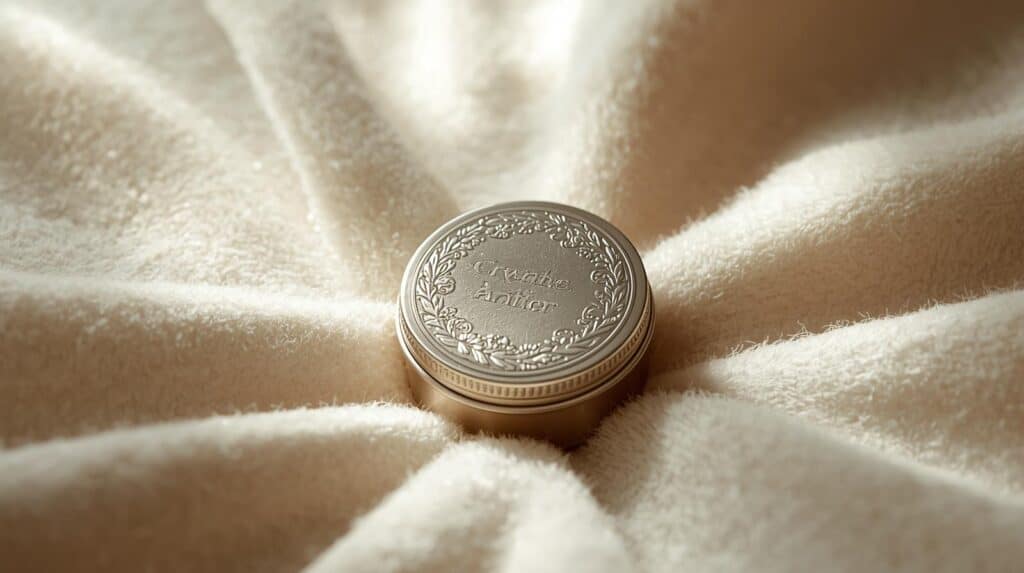
Solid perfumes are less common than sprays, but their compact format can offer several practical advantages.
A solid perfume may also fit your routine better if portability, controlled application, or discreet reapplication matters to you.
Benefits Of Solid Perfume
The main benefits of solid perfume come from its compact packaging, controlled application, and low-mess format.
One of their biggest practical advantages is that solid perfumes are travel-friendly and easy to pack.
If you like to keep fragrance in a bag or pocket or travel frequently, a solid perfume can be easier to carry than a full-size glass bottle.
Their solid format reduces the risk of leaks and is convenient when you want to avoid packing another liquid. Airline and security rules can vary, so check the requirements for your airport and destination before travelling.
Other benefits can include sleek packaging, a smooth balm texture, controlled application, and easy reapplication throughout the day.
Mess-Free
Glass perfume bottles can leak, crack, or break in a bag, which is one reason some people prefer a solid format for travel.
Liquid perfumes can be messy if a cap loosens, an atomizer leaks, or a glass bottle breaks.
A solid perfume is less likely to leak than a liquid fragrance, although very warm temperatures can soften or melt the base.
Its waxy or balm-like texture is less likely to leak during normal use, although heat can soften the formula.
However, you may want to avoid leaving solid perfumes in extremely hot or steamy areas.
For example, avoid leaving solid perfume in a hot car, direct sun, or another high-temperature space.
With normal storage, solid perfumes are generally low-mess and easy to carry.
Solid perfume is often similar to a balm in texture, so it can be dabbed onto the skin without the overspray or dripping associated with liquid fragrance.
Easy To Use
Solid perfumes are simple to use, and most importantly, they are quick to reapply.
Spraying perfume in a crowded room can expose everyone nearby to the fragrance, which may be uncomfortable for people who are sensitive to strong scents.
If you are sensitive to airborne fragrance, the lack of a spray cloud can also make application feel less intrusive.
Solid perfume can be easier to apply discreetly because there is no airborne spray, although the fragrance can still be noticeable to people nearby.
Application is straightforward and does not require a separate tool.
To apply it, use a clean fingertip to warm a small amount of perfume, then gently dab it onto the skin. Start lightly because you can always add more.
Compact
Solid perfumes are usually compact, with many formulas packaged in small tins, sticks, or slim compacts.
That small format makes them easy to fit into a handbag, pocket, desk drawer, or travel pouch.
The packaging of solid perfume is what helps it become travel-friendly.
As a result, solid perfumes are usually lightweight and compact, making them easy to store in a handbag, desk drawer, toiletry pouch, or carry-on.
A full-size spray perfume bottle is usually bulkier and may be more fragile, especially when it is made from heavy glass.
If easy transport and quick touch-ups are priorities, a solid formula is worth considering.
Control
Spray perfume can sometimes be easy to overapply, especially if you are used to a fragrance and stop noticing it as strongly on yourself.
With any fragrance, it can take a little trial and error to find the amount that feels comfortable for you and the people around you.
With a spray, it can be easy to apply more than intended, especially when the scent becomes less noticeable to you after wearing it for a while.
However, a solid perfume will allow you to control how much of it you apply.
Solid perfume is applied directly to the skin, which gives you more control over exactly where and how much product you use.
That controlled application can make a solid formula appealing if you prefer small, targeted dabs instead of an all-over spray.
Texture
Solid perfumes have a balm-like or waxy texture that softens as it warms against the skin.
Many solid perfumes use a base of waxes, oils, butters, petrolatum, or similar emollient ingredients, although formulas vary by brand.
Some solid perfumes also contain carrier oils such as jojoba, which help create the balm texture and spread the fragrance over the skin.
The fragrance itself may come from fragrance compounds, essential oils, or a blend of aromatic materials, depending on the product.
That type of base gives solid perfume a creamy, spreadable texture that behaves differently from a liquid spray.
Longevity
Traditional perfumes and solid perfumes can both offer longevity.
However, spray perfumes are more likely to linger on your clothes.
All perfumes can vary in longevity depending on the formula or manufacturer.
Solid perfume releases fragrance gradually as the balm warms on the skin, but wear time varies widely. Some solids need more frequent touch-ups than concentrated sprays.
Start with a small amount and build gradually so the scent stays comfortable for you and the people around you.
However, solid perfumes can also feel more subtle because the air around you isn’t getting spritzed like a traditional perfume.
How To Apply Solid Perfume
Solid perfume is simple to apply once you know how much product your formula releases.
For most pots or tins, all you need is a clean fingertip. Stick formulas can usually be applied directly.
The warmth of your fingertip helps soften the balm, making it easier to pick up and spread in a thin layer.
Check the brand’s application and storage instructions, since texture, fragrance concentration, and recommended use can vary.
If the label does not give much detail, start with a very small amount and build gradually.
First, you’ll want to open up your solid perfume and gently tap your fingertip into the compact.
Next, let your fingertip warm the surface for a moment and pick up a small amount. Dabbing or lightly swiping can both work, depending on the texture and the brand’s directions.
Then dab the perfume onto clean, intact skin, ideally on areas where you want the fragrance to sit close to the body.
For a visual tutorial, take a look at this video from Lush.
Where To Apply Solid Perfume
Solid perfume can be applied to several common fragrance points on the body.
You can apply solid perfume to many of the same skin areas where you would wear traditional perfume, as long as the skin is not irritated or broken.
Pulse points such as the wrists and neck are popular places to apply solid perfume because they are easy to reach and keep the fragrance close to you.
Warm skin can help the fragrance become more noticeable, but pulse points do not guarantee longer wear. Longevity still depends mostly on the formula, skin, environment, and amount applied.
Some popular places to apply solid perfume are on the wrists, neck, behind the ears, and even behind the knees.
Some balm-based perfumes contain emollient ingredients, but solid perfume should still be used primarily as fragrance unless the label says it is suitable for other uses.
Before applying solid perfume to cuticles, facial hair, or other areas beyond standard fragrance points, check the product directions. Fragrance ingredients may irritate sensitive skin, and not every formula is designed for hair or grooming use.
How Often Can You Apply Solid Perfume?
You can reapply solid perfume during the day when the scent begins to fade.
How often you need to reapply depends on the fragrance and how it wears on your skin.
When the brand provides application guidance, follow it, especially if the formula is highly fragranced or designed for targeted use.
There is no universal number of times you need to reapply. Some people touch up once, while others reapply more often depending on the fragrance strength and how long it lasts on their skin.
Otherwise, reapply only when you feel the fragrance has faded enough to need a small touch-up.
Wear time can change with temperature, skin, fragrance notes, and how much product you applied in the first place.
Formula strength, fragrance notes, temperature, and your skin can all affect wear time. If the scent fades, add a small amount rather than layering on several heavy applications at once.
Should You Apply Solid Perfume In Summer Or Winter?
Solid perfumes can be worn year-round.
The main seasonal consideration is storage rather than performance, since high heat can soften waxes and balms.
For example, you can use solid perfumes in the summer, but you’ll want to ensure they aren’t left anywhere too hot.
Solid perfume bases often contain waxes, oils, butters, petrolatum, or similar ingredients.
If you leave a solid perfume in a hot environment, it may soften, sweat, or melt depending on its wax and oil content.
Warmer temperatures can make the balm softer and easier to pick up, but too much heat can make it unstable or messy.
Avoid leaving solid perfume in a hot car or direct sunlight because high temperatures can soften or melt the base.
Solid Perfume Vs Spray
The main differences between solid perfume and spray perfume come down to texture, projection, packaging, portability, and formula base.
First, their textures are noticeably different.
Sprays are liquid and disperse fragrance over a wider area, so they can scent skin, clothing, and the surrounding air more noticeably.
Solid perfumes use a balm-like base that softens with warmth and stays closer to the skin after application.
They also differ in packaging, travel convenience, ingredients, and how easy they are to reapply discreetly.
For example, they’re formulated with different ingredients, have varying costs, and can even impact how you decide to travel.
Packaging
Solid and spray perfumes are usually packaged very differently.
Traditional perfumes often come in decorative glass bottles designed to be displayed as well as used.
These bottles are often made of glass, and they can feel quite heavy depending on the design.
Spray perfumes will also have a pump that will help dispense the liquid perfume.
Solid perfumes are usually smaller and commonly packaged in a tin, stick, pot, or slim compact.
Pot and tin formulas can be picked up with a clean fingertip, while stick versions can usually be applied directly.
Intensity
Solid perfumes often have a smaller scent cloud than spray perfumes because they are applied in a concentrated area rather than dispersed through the air.
However, a traditional perfume may feel more intense because it can quickly latch onto fabrics and last longer than on the skin.
It can also depend on how potent the spray’s formula is and its notes.
Solid perfumes can last well on the skin, but their projection is often softer than a spray. Actual longevity varies by fragrance concentration and formula.
Because the scent stays closer to the body, you may notice it most when you move or bring the fragranced area closer to your nose.
Ingredients
Another important difference between solid and spray perfumes is the type of base used to carry the fragrance.
The ingredient lists can be quite different because solid perfume needs a waxy or balm-like base, while many sprays rely on alcohol, water, or other liquid carriers.
They can still share similar fragrance notes or scent profiles even when the carrier base is different.
Spray perfumes are often formulated with alcohol.
Alcohol and fragrance ingredients can irritate sensitive skin in some people, although many people tolerate spray perfumes without a problem.
If you have eczema, fragrance allergies, or very reactive skin, check the ingredient list carefully and consider patch testing. Solid perfume is not automatically hypoallergenic simply because it contains less or no alcohol.
Solid perfumes contain creamy or waxy ingredients like petroleum.
Solid perfumes may contain carrier oils such as jojoba, which contribute to slip and texture, but the product should still be treated primarily as fragrance rather than skincare.
Decor
One advantage of many traditional perfume bottles is that decorative packaging can also serve as part of a vanity display.
Many people love to collect perfumes, and brands create beautiful bottles.
Collectors may enjoy displaying distinctive bottles, especially when packaging design is part of the appeal.
Solid perfumes are usually smaller and visually understated compared with decorative spray bottles.
You’re most likely to keep your solid perfume in a purse or pocket.
They can be displayed on your vanity, but they don’t make as big a statement as sprays.
Travel-Friendly
For travel, solid perfume often has practical advantages over a full-size spray bottle.
Solid perfumes are convenient for travel because they are compact and less prone to leaking than liquid fragrance.
They are typically small and lightweight, making them easy to keep in a handbag, carry-on, or toiletry pouch.
Spray perfumes can take up more space and may require more care when packed in glass bottles.
Their bottles can be larger or heavier, and liquid fragrance is subject to airport security rules that vary by location and itinerary.
However, you can get a roll-on perfume or a travel-friendly perfume case.
Texture
We mentioned earlier that these perfumes have contrasting textures.
Solid perfumes share many similarities with a balm.
They are typically creamy and easy to apply. Some formulas contain emollient ingredients, but their main purpose is still fragrance rather than skincare.
In addition, solid perfumes will sit closer to the skin than spray perfumes.
Spray perfumes are in a liquid form.
They can scent skin or clothing and also create a noticeable fragrance cloud in the surrounding air.
Because many sprays contain alcohol and fragrance compounds, they may feel drying or irritating on sensitive skin. Avoid spraying onto irritated, freshly shaved, or broken skin.
Cost
Solid perfumes can sometimes cost less than full-size spray perfumes, but price varies widely by brand, size, and fragrance concentration.

However, many factors can determine costs, like packaging, ingredients, notes, and more.
Also, the brand name can significantly impact the cost of a product.
Is A Solid Perfume Right For You?
Solid perfume can be a good fit if you are often on the go and prefer a compact fragrance that is easy to reapply discreetly.
It’s a fantastic product to have on hand if you need a pick-me-up.
Solid perfumes are travel-friendly because they take up little space and are generally less likely to leak than liquid perfume.
They are also useful if you prefer a more subdued fragrance that stays closer to the body.
Because solid perfumes are applied directly to the skin, the fragrance tends to stay closer to the body and becomes noticeable as the balm warms naturally.
It is less likely to fill a room the way a strong spray can, although projection varies from one formula to another.
They are also convenient to reapply without spraying fragrance into the surrounding air.
Whenever the scent begins to fade, a small dab of solid perfume can refresh the fragrance without requiring a full spray application.
Wrap Up
Solid perfumes are compact, straightforward to use, and easy to reapply in small amounts.
Use a clean fingertip to warm a small amount, then dab it onto pulse points or other label-approved fragrance areas.
The texture is usually creamy or waxy, while scent strength and wear time depend on the individual formula.
If portability, controlled application, and a closer-to-the-skin scent profile appeal to you, solid perfume can be a practical alternative to a spray.
Related Articles
Can You Use Deodorant On Feet?
How Long Does Perfume Last On Skin And Clothes? (+ How To Make It Last Longer)