Black Hair Turning Brown – What’s Causing It?
It can be challenging to maintain your hair color regardless of its shade.
In addition, natural hair can look lighter or warmer over time because of sun exposure, weathering, mineral buildup, and changes in new growth.
For example, if you have gorgeous black strands, you may notice that they’ve faded to a brown hue.
If you’ve always wanted brown hair or you color your hair frequently, it may not be that big of a deal that your hair color is changing.
However, what happens when you want to keep your black strands looking fresh and saturated?
Whether you color your hair or not, it can still be prone to fading.
However, this process can be more visible or accelerated if you dye your strands.
Color treatments can change the hair’s shade and may also affect feel or porosity, especially when lightener or permanent oxidative dye is involved.
However, other environmental factors can fade your hair color even if you don’t dye it.
This can be frustrating, especially since you don’t know why your black hair is fading, and it can be challenging to find a solution.
Why is your black hair turning brown?
Black hair can look browner because of color fading, UV exposure, mineral buildup, oxidation, or warmer natural undertones becoming more visible. The most likely cause depends on whether your hair is dyed or naturally black.
We’ll go over all these reasons and more, so you can figure out how to maintain your black locks for longer between salon visits.
Can Natural Black Hair Color Fade?
When we talk about hair color fading, it’s mainly about dying or coloring.
Even without dye, the hair shaft can become lighter-looking through photobleaching and surface weathering.
So virgin hair can develop warmer or lighter-looking areas, especially on sections that get the most sun exposure.
Lemon juice is sometimes used as a DIY lightening method, but the combination of acidity and UV exposure can be drying and unpredictable, so it is not a gentle way to brighten hair.
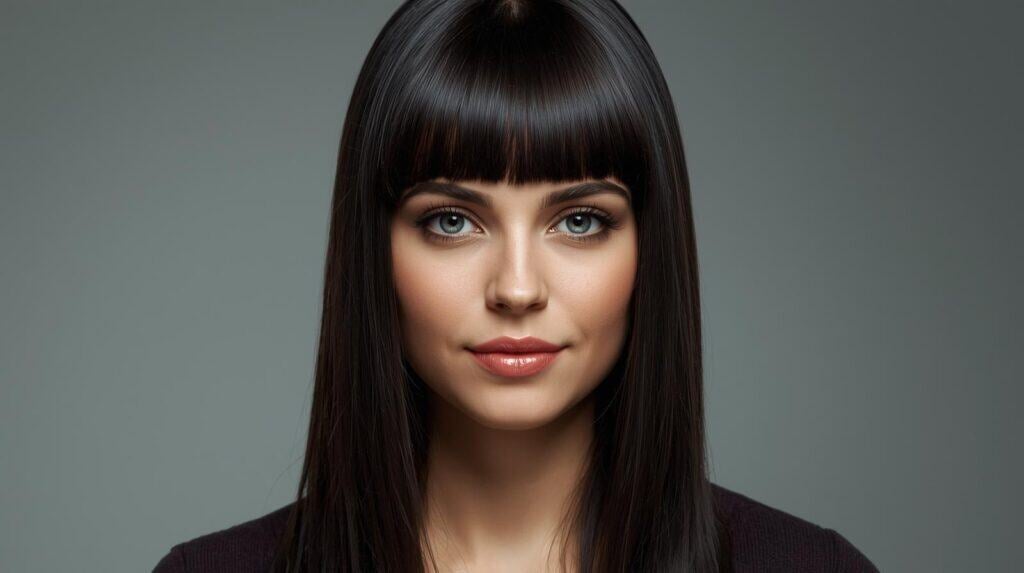
But, even without citrus, the sun can alter your hair color.
Repeated UV exposure can break down melanin and color molecules in the hair shaft, making dark hair look lighter, warmer, or less saturated over time.
So both dyed and natural hair can fade in shade or tone.
Why Is My Black Hair Turning Brown?
Are you wondering why your black strands are turning brown?
Unfortunately, there are multiple reasons why your hair can fade.
For example, you may find out that you’re not preserving your hair dye effectively or spending much time outside.
Genetics can influence your natural pigment level and undertone, but it does not usually explain why the same already-grown hair shaft suddenly fades from black to brown.
While some uncontrollable factors may cause hair color to fade, you can still learn to prevent, fix, and care for your black strands in the future.
Whether you have naturally black hair or dyed it, a few things can cause your color to lighten.
Color and Chemical Treatments
Any chemical treatment, such as coloring, can significantly impact your strands.
Hair dye can already tend to fade within a few weeks.
However, you can establish a proper hair care routine with your stylist to preserve your hue for a little longer.
Permanent color usually lasts longer than semi-permanent color, but the tone can still fade or shift with washing, UV exposure, heat, and porosity.
If your hair is natural, ordinary shampoo and conditioner will not normally strip away your genetically determined pigment the way they can fade artificial dye. Strong cleansing, heat, and weathering can still make the hair look duller or warmer.
Bleach, high-lift color, and some oxidative treatments can intentionally lighten hair. Regular cosmetic products do not become harmful simply because they contain synthetic ingredients.
The Sun
We briefly mentioned how the sun could also impact your hair color.
Would you sit out in the sun without protection? You would most likely apply sunscreen to shield your skin from those harsh rays.
However, what can you do about your hair?
UV exposure can weather the hair fiber and can also burn exposed scalp skin.
The sun can fade artificial color and gradually photobleach natural pigment, although the amount of visible change varies by hair type, exposure, and existing color.
UV radiation can degrade melanin within the already-grown hair shaft, which can make dark strands look lighter or warmer.
So, if you have naturally dark hair, sitting outside for an extended period of time can lighten your strands.
Hard Water
Do you live in an area where there is hard water?
Hard water can leave mineral deposits on hair and may worsen dryness or irritation for some people, but it does not directly cause eczema in everyone.
However, it can also have a harsh impact on your strands if the minerals build up on your hair over time.
Mineral buildup from hard water can make hair look dull, rough, or discolored, particularly on porous or color-treated hair.
For example, you may notice your strands can feel rough, dry, or brittle.
Mineral deposits can leave a coating that makes hair feel rougher and less shiny, which can change how the color appears even without permanently changing the natural pigment.
Overall, hard water can have many impacts on the skin and hair.
Genetics
Genetics mainly determine your baseline pigment and undertone. If your new growth is naturally becoming lighter with age, genetics can play a role, but they do not usually “fade” an existing black hair shaft.
Unfortunately, there is not much you can do to change your genetic makeup, but there are other ways to preserve your hair.
Our genes tell us how much melanin we produce. In addition, melanin is what gives our skin and hair pigment.
Changes in melanin production affect newly produced hair more than hair that has already grown out. Age-related pigment changes can therefore show up first at the roots rather than as uniform fading down the shaft.
If the change is mostly in new growth, your natural genetics and age may be part of the explanation. If the lengths are turning browner, sun, dye fading, heat, oxidation, and buildup are more likely causes.
How To Fix Faded Black Hair
How can you remedy hair that’s faded into a brown hue?
If you want to preserve your black strands, you can start by establishing a high-quality hair routine.
Choose products that cleanse without leaving your hair unusually dry or rough. A product does not need to be “natural” to be gentle or color-friendly.
In addition, you may find it beneficial to invest in a color-depositing product to keep your strands saturated.
Conditioning the lengths and protecting them from excess heat, friction, and UV exposure can help them look shinier and less weathered while new hair grows from the scalp.
Lastly, if you’re ever in doubt about saving your hair color, consult with an experienced and licensed stylist.
Invest In A High-Quality Shampoo And Conditioner
A good shampoo and conditioner (like this set from RedKen on Amazon) can take your hair a long way.
These are products you will most likely use often in your routine, so it’s crucial to find what fits your hair’s needs.
However, finding something that will also preserve your color can be challenging.
Start with a shampoo and conditioner suited to your scalp, hair texture, porosity, and whether the color is natural or dyed.
If your dyed hair fades quickly, a gentler cleanser or less frequent shampooing may help. Sulfates, parabens, and phthalates are not automatically damaging to hair simply because of their ingredient category.
What matters most is how strongly the formula cleanses and how your hair responds, not whether the ingredients are natural or synthetic.
Next, you’ll want to search for products that fit your hair type, texture, and porosity levels.
Use A Color-Depositing Mask
One easy way to maintain black hair at home is by investing in a color-depositing mask (like this one from Four Reasons on Amazon).
Color-depositing masks add temporary pigment that gradually washes out. Longevity varies widely with the formula, porosity, starting shade, and wash frequency, so a fixed 4-to-6-week result is not guaranteed.
Many formulas combine conditioning ingredients with temporary pigment, so they can improve softness while refreshing tone.
Follow the brand’s exact timing instructions rather than assuming every color-depositing mask should stay on for 30 minutes.
This can refresh faded black or blue-black color between salon visits, although porous sections may grab more pigment and look darker than the rest.
You can also opt for a regular deep conditioning mask to use weekly to ensure your strands stay hydrated.
Try A Leave-In Conditioner Or Sun-Protection Product For Hair
Leave-in conditioners, including options like this one from BioSilk, can add slip, reduce friction, and help dry or color-treated hair feel smoother.
It’s crucial to keep your hair healthy and resilient while restoring your color.
It may also be an excellent time for a trim to make way for smooth strands.
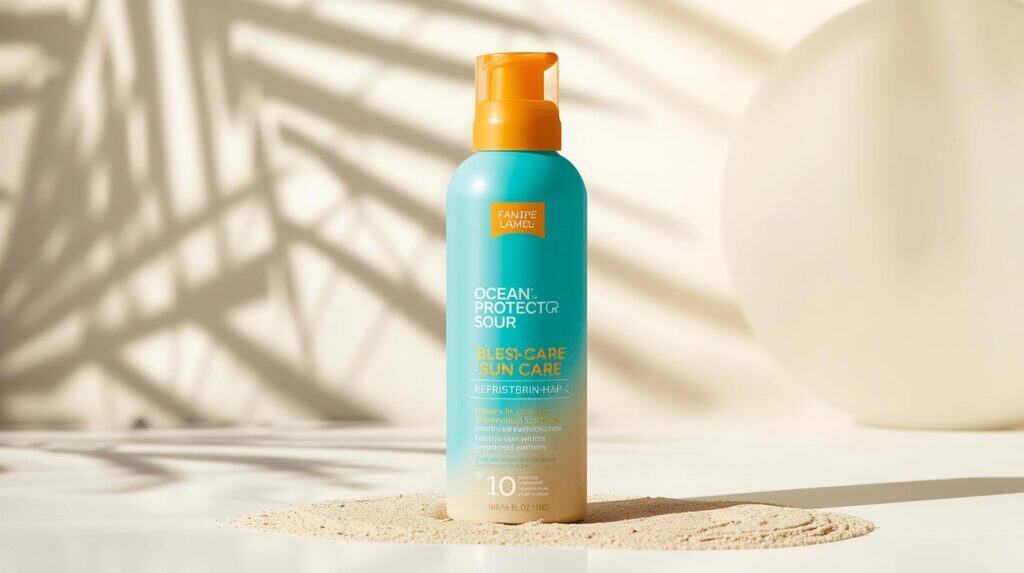
You can also reduce UV exposure if sunlight is contributing to fading.
Some hair products are marketed with UV filters or antioxidant ingredients, although hats, scarves, and shade provide more predictable physical protection from direct sun.
Do not rely on a hair mist to protect exposed scalp skin unless it is specifically labeled as a sunscreen. For the scalp, use a hat or an appropriate broad-spectrum sunscreen on exposed areas.
Both of these products can help restore your hair’s shine.
Consult A Hairstylist
Finally, you can always see a hairstylist.
Trying to preserve color at home can be challenging, especially if you have a limited amount of hair theory.
Some stylists spend years mastering color theory to ensure your hair color can always look its best.
A hairstylist can analyse the current state of your hair and offer an effective solution.
In addition, they will be able to track your hair journey and make adjustments every step of the way. This will be incredibly helpful for black hair that wants to stay vivid.
Black hair can quickly fade or turn a different color, like brown, so it will be helpful to have an expert to remedy your strands.
How To Prevent Black Hair From Turning Brown
What steps can you take to prevent your black hair from turning brown in the future?
First, it’s crucial to understand that your hair may always be prone to fading and that it can be inevitable.
However, you can slow down the fading process.
Thankfully, you can take a few steps to prevent your hair from fading down the road.
These will be great to implement, especially if you’re looking to stop a saturated color like black from fading or turning into another shade.
Invest In A Shower Filter
If mineral buildup is a real problem, it is worth identifying whether you have hard water before buying a filter.
Standard shower filters can reduce chlorine and some contaminants, but most do not truly soften hard water by removing calcium and magnesium.
Minerals can quickly build up on the strands and cause lacklustre hair.
If hardness is the issue, a true water-softening system or a chelating shampoo used occasionally may be more relevant than a basic shower filter.
Results depend on what is actually in your water and what the filter is designed to remove.
If mineral buildup is reduced, hair may feel less coated or dull, but this is not guaranteed for every household.
A shower filter can be useful in some water conditions, but it should not be treated as a universal fix for fading black hair.
Stay In The Shade
Another helpful tip that won’t cost extra money is staying in the shade.
Your hair can quickly get impacted by the sun, so it’s wise to avoid it if you want to maintain your hair color.
However, if you plan to stay outside, you can still shield your hair.
For example, you can wrap your hair in a scarf or wear a hat during prolonged sun exposure.
If you feel the need, you can also invest in a sun umbrella to ensure your hair stays out of the sun without needing to go inside.
The sun can degrade melanin and artificial color molecules in the hair shaft, so physical shade can help slow visible fading.
Keep Your Hair Routine Simple
A simple and effective hair routine is all you need to keep your color from fading.
Some essential products you can include in your routine are shampoo/conditioner, styling product for your hair, and a heat protectant.
Pay attention to how strongly your products cleanse, whether they leave buildup, and whether they make your scalp or hair feel irritated or unusually dry.
A simpler routine can make it easier to identify which products are helping or hurting your color and hair feel.
Less is more when it comes to your hair, so invest in effective products that won’t require you to maintain a ten-step hair routine.
Use A Heat Protectant
Another way to keep your black strands lasting for as long as possible is by investing in a heat protectant (one of our favourites is this one from Kenra).
A heat protectant can reduce some thermal damage during blow-drying or hot-tool styling, but it cannot make high heat completely harmless.
Some styling products are also marketed with protection against UV exposure, but check the actual label rather than assuming every heat protectant includes UV filters.
For prolonged sun exposure, a hat or scarf is a more dependable way to physically shield the hair, with UV-filtering hair products used as an optional extra.
This is a simple way to nourish your hair even when you’re outside.
No spray can guarantee that black hair will not fade in the sun, so combine cosmetic protection with shade when practical.
Shower With Cold Water
Very hot water can contribute to dryness and may accelerate fading of some artificial hair colors, especially when paired with frequent shampooing.
Permanent oxidative color and bleach alter the cuticle and cortex differently, while semi-permanent and direct dyes mainly deposit pigment closer to the surface.
Water exposure, shampooing, heat, and porosity all influence how quickly artificial pigment washes out. The idea that hot water simply “opens the cuticle” and cold water seals it is an oversimplification.
If you are trying to preserve dyed black hair, lukewarm water is a practical choice. Ice-cold rinses are not necessary.
Cold water cannot guarantee that pigment stays in the hair. Dyed color will still gradually fade with washing and time.
Nourish Your Scalp And Roots
Finally, you’ll want to nourish your scalp and roots.
New hair growth is influenced by overall health and nutrition, while the already-grown hair shaft is nonliving and mainly benefits from gentle handling and conditioning.
A balanced diet helps support normal hair production. Supplements are not automatically helpful unless you have a nutritional deficiency.
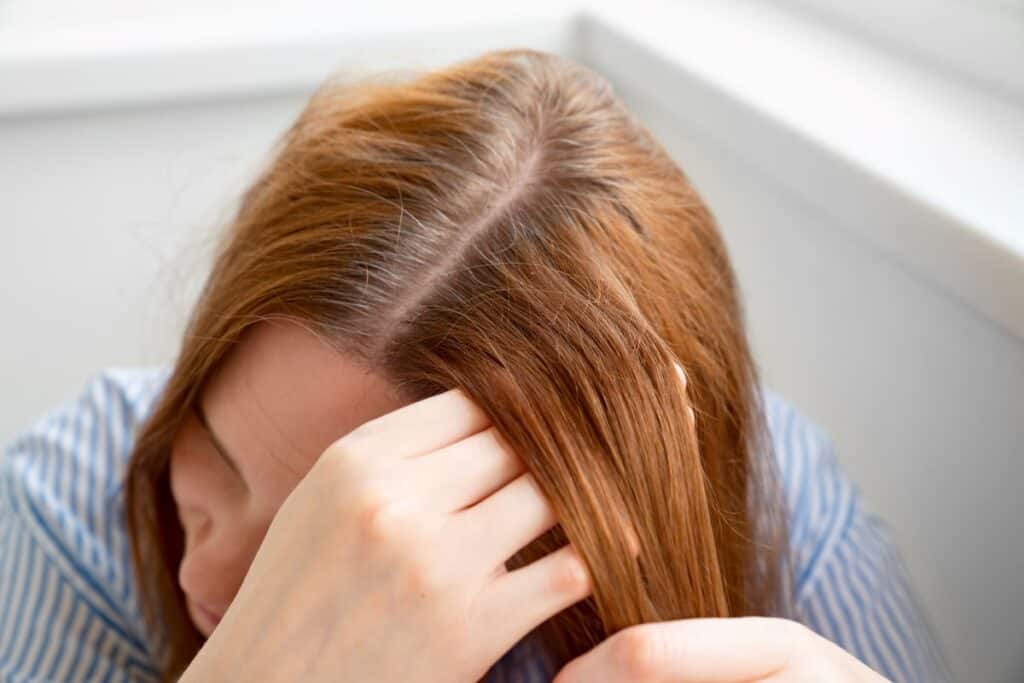
Sleep, nutrition, and general health can affect new growth, while cosmetic shine and resilience depend more on the condition of the hair fiber and your routine.
Also, it’s crucial to care for the scalp.
Heavy buildup can make the scalp feel greasy, itchy, or irritated and can make the hair look dull, but ordinary product buildup does not usually stop follicles from growing hair.
The Takeaway
Your black hair can fade regardless of whether it’s natural or dyed.
In addition, there are multiple reasons why your black hair can turn brown.
For example, artificial color fading, UV exposure, mineral buildup, heat, oxidation, and changes in new growth can all make black hair appear browner.
You may be able to slow fading or refresh the tone, but the right fix depends on whether the brown appearance comes from dye loss, sun exposure, buildup, or your natural pigment.
You’ll want to invest in a hair routine that fits your hair’s needs.
In addition, you may also want to develop healthy hair habits that can slow down the fading process.
Helpful steps can include gentler washing, moderate water temperature, limiting excessive heat and UV exposure, addressing mineral buildup when present, and refreshing artificial color when needed.
Also, you can stay in the shade, nourish your scalp, and have a consistent hair care routine.
A hairstylist can also help you with your own hair journey.
You can even see a color specialist if you’re looking to maintain a shade that’s saturated like black.
With the cause identified, you can choose a more targeted routine and avoid relying on fixes that do not match the real reason your black hair looks brown.
Which tips will you be implementing in your hair regimen to keep your hair color looking vivid?
How To Tell Why Black Hair Is Turning Brown
- Brown mainly on the ends or top layers: Sun exposure, heat, oxidation, and general weathering are more likely.
- Dyed black hair fading evenly: Shampooing, porosity, heat, and normal color washout are common causes.
- Dull or brassy-looking hair with a coated feel: Mineral or product buildup may be changing how the color reflects light.
- New growth is lighter than the lengths: Your natural pigment may simply be lighter or changing over time.
- Sudden color change with unusual shedding, breakage, or scalp symptoms: A hairstylist or dermatologist can help rule out damage, scalp disease, medication effects, or other causes.
Black Hair Turning Brown FAQs
Can Naturally Black Hair Turn Brown From The Sun?
Yes. Repeated UV exposure can photobleach melanin in the hair shaft, making exposed sections look warmer, reddish, or brown over time.
Does Hard Water Make Black Hair Brown?
Hard water does not usually remove natural melanin, but mineral buildup can make hair look dull, rough, or discolored. On dyed or porous hair, buildup can also make unwanted warm tones more noticeable.
Will Cold Water Stop Black Hair Dye From Fading?
No. Lukewarm water may be gentler than very hot water, but artificial color still fades gradually with washing. Shampoo frequency, formula, porosity, heat, and UV exposure matter more than an ice-cold rinse.
Can A Shower Filter Fix Hard-Water Hair?
Not every shower filter removes the calcium and magnesium that make water hard. If hardness is confirmed, a true softening system or occasional chelating treatment may be more effective than a basic chlorine filter.
Related Articles