
Peppermint Tea For Acne – Does It Work?
A cup of tea can be a relaxing part of your routine, but claims that herbal tea can directly improve acne need to be approached carefully.
Different herbal teas contain different plant compounds, but their effects depend on the specific herb, dose, and how they are used.
One of the most popular teas that people drink is peppermint.
Peppermint is commonly used for digestive comfort and its refreshing flavour, and it is also found in products intended to freshen breath.
But can peppermint tea actually help with acne, or is that claim ahead of the evidence?
Peppermint tea contains plant compounds, but it should not be treated as a major source of essential vitamins or nutrients.
Acne can have several contributing factors, including hormones, oil production, clogged pores, inflammation, bacteria, medications, and genetics, so not everyone responds to the same approach.
At this point, there is not enough evidence to say that drinking peppermint tea treats pimples.
Can you use peppermint tea for acne, and does it work?
There is currently not enough clinical evidence to show that drinking peppermint tea treats acne. Peppermint contains compounds studied for anti-inflammatory and antimicrobial activity, but that does not mean drinking the tea will clear breakouts.
Most claims about peppermint tea clearing acne are anecdotal rather than supported by acne-specific clinical trials.
If you already enjoy peppermint tea and tolerate it well, there is generally no need to avoid it solely because you have acne, but it should not replace proven acne care.
So where might peppermint tea fit into an acne-conscious routine, and what should you realistically expect?
What Is Peppermint?
Peppermint is more than just a toothpaste or candy cane flavour.
It’s a versatile herb that can provide flavour for multiple items.
In addition, peppermint is known for its strong, minty, and revitalising taste.
Also, peppermint has a high concentration of menthol.
According to Healthline, “Peppermint is an aromatic herb in the mint family that is a cross between watermint and spearmint.”
It’s also a caffeine-free alternative to drinking coffee.
Benefits Of Peppermint Tea
Peppermint has been studied for several potential effects, especially relating to digestion and its menthol content.
However, do any of these benefits help alleviate acne?
Some peppermint compounds have been studied in topical products, but there is no strong evidence that drinking peppermint tea creates a clearer or more youthful complexion.
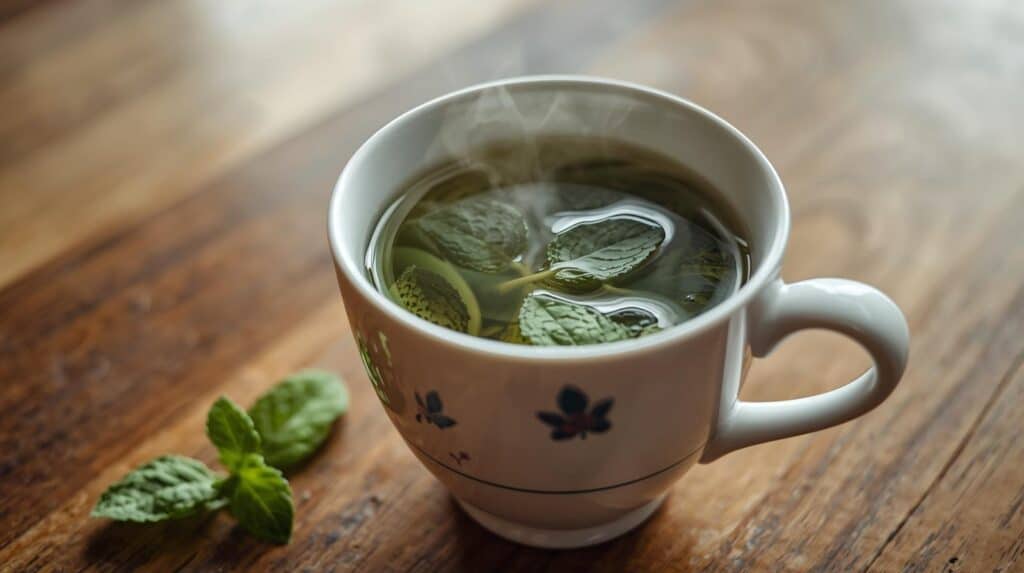
Any benefit for acne would be indirect and uncertain, not a substitute for an established acne treatment.
So, what are some significant benefits you can receive from peppermint tea?
Improve Digestion
Digestive health is connected with overall health, but the relationship between the gut and acne is still being studied.
Researchers are exploring links between the gut microbiome and acne, but it is too simplistic to say that gut health directly triggers every breakout.
Diet may influence acne for some people, but responses vary and no single food pattern explains every case.
Peppermint is commonly used for digestive comfort, although its effects vary and it can worsen reflux in some people.
Peppermint’s menthol content is one reason it is associated with digestive soothing, but tea should not be presented as a guaranteed treatment for cramps, bowel regularity, or systemic inflammation.
Even if peppermint has anti-inflammatory activity in laboratory settings, there is not enough evidence to conclude that drinking the tea reduces acne inflammation.
Potentially Anti-Bacterial
Peppermint extracts and essential oil have shown antimicrobial activity in laboratory research, but that is not the same as proving that peppermint tea treats acne-causing bacteria in the skin.
Acne is not simply a matter of having too much bacteria, so the goal is not to eliminate bacteria from the skin.
There is no good evidence that drinking peppermint tea reduces acne-related bacteria in the skin.
Overall, laboratory findings about peppermint should not be translated into a promise that drinking the tea will calm acne redness or breakouts.
Reduce Stress And Improve Sleep
Most people are unaware of how much sleep and stress can impact their skin.
If your body isn’t nourished or feels like it’s in survival mode, it can show through your skin.
If a warm, caffeine-free tea helps you relax as part of your evening routine, peppermint tea may be a pleasant option.
Peppermint tea is naturally caffeine-free, so it can be a convenient evening drink for people who tolerate it well.
Some people find the flavour and warmth relaxing, although peppermint tea has not been proven to work as a sleep treatment.
However, there is still mixed evidence regarding whether peppermint improves sleep.
Good sleep and stress management are worthwhile for overall wellbeing, but improving them does not guarantee that acne will clear.
So, peppermint tea may be worth a try.
Can Peppermint Tea Work For Acne?
There is not enough evidence to recommend peppermint tea as an acne treatment.
At most, it may fit into a relaxing routine, but an indirect acne benefit remains unproven.
If you have inflamed breakouts, evidence-based topical or oral acne treatments are more reliable options than relying on peppermint tea.
Although peppermint has shown antimicrobial activity in laboratory studies, that does not establish drinking peppermint tea as an antibacterial acne treatment.
If you are trying to judge whether a skincare routine is working, change one major variable at a time and give proven acne products enough time to work rather than waiting for tea to produce a measurable result.
It’s also crucial to keep in mind that there are various types of acne, like hormonal acne.
In addition, one treatment won’t be tailored for everyone.
How Much Peppermint Tea Should You Drink?
We briefly mentioned that it could take time to see if peppermint tea helps your acne.
There is no acne-specific dose of peppermint tea because it has not been established as an acne treatment.
It’s crucial to note that peppermint tea can produce some unwanted side effects for some individuals.
There is no standard therapeutic amount for acne. If you drink peppermint tea simply as a beverage, follow the product directions and pay attention to how your body responds.
According to Medical News Today, “A person can drink peppermint tea throughout the day…peppermint tea also contains zero calories.”
Can You Apply Peppermint Tea Topically?
Although some people apply cooled peppermint tea to the skin, DIY topical use is not well studied for acne.
For example, you can brew peppermint tea and let it cool.
Using it as a homemade toner or face mist is not necessary, and peppermint compounds can irritate sensitive or acne-inflamed skin.
If you are more sensitive, you may want to avoid using peppermint tea topically.
With homemade skincare, concentration, preservation, pH, and contamination are not controlled the way they are in professionally formulated products.
It will be wise to leave skincare formulation up to the chemists.
If you still choose to experiment with cooled peppermint tea on the skin, patch test first and stop immediately if you notice burning, itching, redness, or worsening irritation.
How To Brew Peppermint Tea
Surprisingly enough, peppermint tea is pretty easy to brew.
If you drink peppermint tea for enjoyment, what you add to it mainly affects the beverage’s taste and nutritional profile rather than turning it into an acne treatment.
For example, adding a large amount of sugar increases the drink’s sugar content, but there is no evidence that it specifically cancels out an acne-fighting effect from peppermint tea.
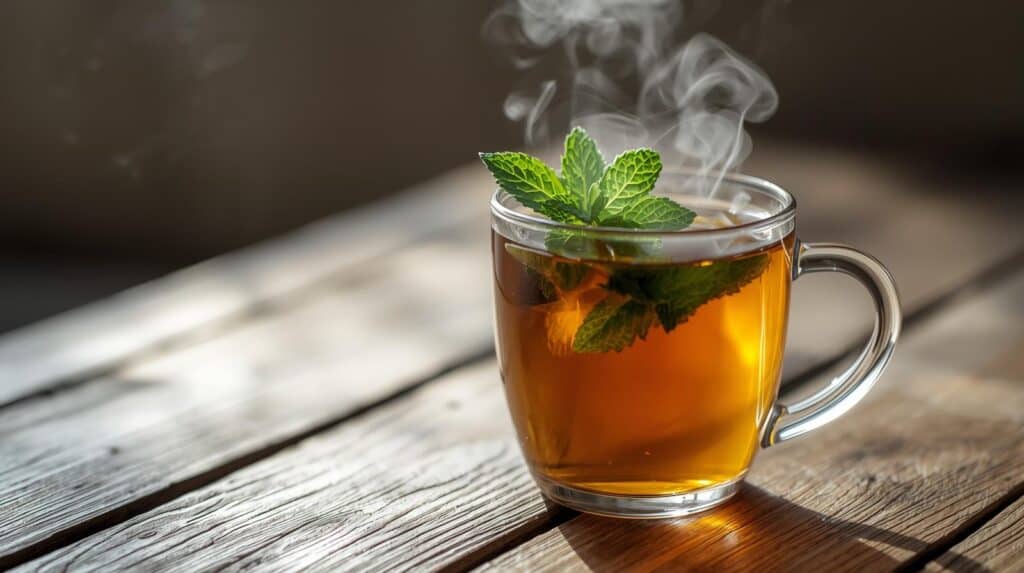
If acne is your concern, focus more on a consistent skincare routine and any diet patterns that you have personally noticed affect your skin.
1. Boil Water
First, you’ll want to boil your water. One of the easiest and fastest ways you can boil water is by investing in a kettle.
You can even opt for an electric kettle to speed up the process.
However, this method of boiling water is more convenient than waiting for the stove or using the microwave.
2. Steep Leaves
Next, it’s time to pour your water into a mug and over your peppermint leaves.
Then, you’ll want to leave the peppermint to steep for a few minutes or for as long as the directions require.
After that, you can remove the leaves, or sometimes you can keep them.
3. Drink
Now it’s time to finally enjoy your tea! You can sip on your peppermint tea throughout the day.
If you are simply drinking it, let it cool to a comfortable temperature. For acne care, a properly formulated leave-on product is a more predictable choice than a homemade tea toner.
Side Effects Of Peppermint Tea
Unfortunately, peppermint tea won’t be for everyone.
Peppermint tea can cause unwanted effects in some people, particularly digestive discomfort or worsening heartburn.
So, it’s wise to start slow if you plan to drink peppermint tea.
In addition, if you have previous health concerns or take certain medications, always consult with your doctor to ensure that you can drink peppermint tea safely.
Medication
If you take regular medication, it is sensible to ask a pharmacist or doctor whether peppermint products could interact with your specific medicines.
Do not assume an interaction exists for every medication, but check before using peppermint tea in unusually large amounts or for a medicinal purpose.
It’s always best to take this precaution, especially if you plan to use peppermint tea to treat another concern like acne.
Acid Reflux
While peppermint may help soothe stomach issues, it can also do the opposite for people prone to heartburn.
Medical News Today states, “Some people find that drinking peppermint tea can trigger or worsen symptoms of heartburn and gastroesophageal reflux disease (GERD).”
So if you deal with these issues above, it may be wise not to drink peppermint tea for acne.
Pregnancy Issues
If you’re pregnant, it’s crucial to talk to your doctor about whether peppermint tea is safe to drink during your pregnancy.
This is also smart to do if you plan on drinking any herbs for medicinal purposes.
Allergic Reaction
Lastly, if you’re allergic to peppermint, peppermint flavouring, or anything else in the mint family, you’ll want to avoid peppermint tea.
If you notice discomfort digesting or using peppermint tea topically, it’s best to stop and consult a physician.
Takeaway
Overall, peppermint tea has not been shown to treat acne directly or indirectly in a reliable, clinically proven way.
It may be a relaxing, caffeine-free drink, but claims that it reduces acne-related inflammation or bacteria are not established.
Peppermint tea isn’t for everyone, especially if it worsens reflux or causes irritation, and there is no evidence that different acne types respond predictably to it.
If you have a medical condition, are pregnant, or take medication, ask your doctor or pharmacist whether regular peppermint tea is appropriate for you.
There is no established amount of peppermint tea that has been shown to improve acne, so do not use a specific cup count as an acne-treatment dose.
For clearer skin, put more weight on proven acne care, sun protection, and professional guidance when breakouts are persistent, painful, or scarring.
Related Articles
Best Moisturisers For Fungal Acne
The Best The Ordinary Products For Fungal Acne
Best Non-Comedogenic Drugstore Foundations