
The Best The Ordinary Products For Fungal Acne
The Ordinary is known for relatively affordable, ingredient-focused skincare with a wide range of serums, cleansers, moisturisers, and exfoliating treatments.
The brand offers products for concerns such as dryness, excess oil, uneven tone, texture, and blemish-prone skin, although no single range can treat every skin condition.
In the past few years, The Ordinary has sold its products at multiple retailers worldwide.
Its pricing makes many formulas more accessible than some premium skincare lines.
One common skin concern is acne, but the condition often called fungal acne is actually different: it is usually Malassezia folliculitis, an inflammation or infection of hair follicles involving Malassezia yeast.
Malassezia yeast normally lives on the skin. Under certain conditions, it can overgrow within hair follicles and cause clusters of small, often itchy bumps. This is not the same process as acne vulgaris, which involves clogged follicles, sebum, dead skin, and inflammation.
Because Malassezia folliculitis can resemble regular acne, it is easy to use the wrong treatment unless the condition is identified correctly.
In general, acne can be challenging to deal with.
If a breakout is persistently itchy, made up of similarly sized bumps, or not improving with standard acne care, a dermatologist can help distinguish Malassezia folliculitis from acne vulgaris, bacterial folliculitis, and other lookalikes.
What are the best The Ordinary Products for fungal acne?
The Ordinary products below may support hydration, oil control, dark marks, or acne-related congestion, but they are not antifungal treatments for Malassezia folliculitis. Confirm the diagnosis first, because true Malassezia folliculitis is generally treated with antifungal therapy rather than ordinary acne serums.
Below, we explain which products may fit a supportive skincare routine, what they can realistically do, and which concerns still require antifungal treatment or medical guidance.
What Is Fungal Acne?
The term “fungal acne” is commonly used for Malassezia folliculitis. As explained in this Healthline overview, it affects hair follicles and can resemble an acne breakout.
Typical features include small, fairly uniform itchy papules or pustules, often on the forehead, hairline, chest, shoulders, or upper back. Unlike acne vulgaris, comedones such as blackheads are not a typical feature.
In addition, fungal acne can easily be mistaken for acne vulgaris.

Malassezia folliculitis responds differently from acne vulgaris because the underlying problem involves yeast rather than ordinary comedonal acne.
So, it’s crucial to know how to recognise fungal acne.
Risk factors can include heat, humidity, sweating, occlusive clothing or skincare, antibiotic use, oily skin, and immune suppression. These factors can encourage yeast overgrowth or follicular irritation.
Malassezia folliculitis is treatable, but the treatments that directly target it are antifungal medications or antifungal washes rather than general brightening, hydrating, or exfoliating serums.
Access to dermatology can be limited, but persistent, widespread, painful, or recurrent folliculitis is worth medical assessment because acne and Malassezia folliculitis can also occur at the same time.
The Ordinary can still provide relatively affordable supporting products for hydration, oil control, texture, and post-breakout discoloration, depending on your skin.
The Ordinary Products To Consider With Malassezia Folliculitis
| Rank | Product | Key Features |
|---|---|---|
| 1. | The Ordinary Niacinamide 10% + Zinc 1% | Supports oil control, barrier function, and uneven-looking texture |
| 2. | The Ordinary Squalane Cleanser | Removes makeup, sunscreen, oil, and surface debris |
| 3. | The Ordinary Hyaluronic Acid 2% + B5 | Hydrates and supports a comfortable skin barrier |
| 4. | The Ordinary Alpha Arbutin 2% + HA | Targets the appearance of dark spots and uneven tone |
| 5. | The Ordinary Salicylic Acid 2% Masque | Exfoliates and targets acne-related congestion and blackheads |
| 6. | The Ordinary 100% Plant-Derived Squalane | Reduces moisture loss and softens dry-feeling skin |
| 7. | The Ordinary Lactic Acid 5% + HA 2% | Surface exfoliation for texture; not an antifungal treatment |
1. The Ordinary Niacinamide 10% + Zinc 1%

Niacinamide is a well-established form of vitamin B3 used in many skincare formulas.
Topical niacinamide can support the skin barrier, help reduce visible oiliness, and improve the appearance of uneven texture and tone.
Niacinamide can be useful in a routine for oily or blemish-prone skin, but it is not an antifungal treatment for Malassezia folliculitis.
Niacinamide may help the overall barrier and appearance of redness, but it does not eradicate Malassezia yeast from the follicle.
If breakouts leave post-inflammatory discoloration, niacinamide may also support a more even-looking tone over time.
What makes The Ordinary’s niacinamide serum different is that it’s formulated with 1% zinc.
In this formula, niacinamide and zinc PCA are positioned to support visible oil control, hydration, and clearer-looking skin.
It may reduce the appearance of excess shine and visible pores, but it does not physically remove blackheads or treat Malassezia folliculitis.
This water-based serum can be used in a morning or evening routine if your skin tolerates it, but labels such as “fungal-acne safe” are not a guarantee that a product will suit every person with Malassezia folliculitis.
10% niacinamide can feel irritating to some users. The Ordinary currently directs this serum for morning and evening use, but starting once daily or every other day can be reasonable if your skin is sensitive.
2. The Ordinary Squalane Cleanser

Oil-like skincare ingredients are often discussed online in relation to Malassezia, but ingredient-list rules alone cannot diagnose or treat folliculitis.
Squalane is an emollient that can reduce moisture loss and soften skin. A rinse-off squalane cleanser may work well for many skin types, but no product can be guaranteed never to aggravate a particular person’s breakout.
However, it’s crucial to note that there is a difference between squalene and squalane, besides the one letter.
Squalene is a natural component of human sebum and is also found in other biological sources.
Squalane is the more stable, hydrogenated form used widely in cosmetics.
Squalane can be derived from plants, which is how The Ordinary formulates its squalane products.
As an emollient, squalane can help reduce water loss and soften the skin. That can support comfort if your routine feels drying, but it does not treat the yeast itself.
The Squalane Cleanser is designed to remove makeup, sunscreen, oil, and surface debris without being an antifungal treatment.
A second cleanse is optional. If the Squalane Cleanser removes your sunscreen or makeup effectively and your skin feels clean, you do not automatically need another cleanser.
3. The Ordinary Hyaluronic Acid 2% + B5

If your skin feels dehydrated, a humectant serum such as hyaluronic acid can add water-binding support without treating the folliculitis itself.
The Ordinary’s hyaluronic acid is also formulated with vitamin B5.
Dehydration can make skin feel tight or uncomfortable, but it does not reliably force every skin type to compensate by producing excess sebum.
This serum is designed to increase surface hydration with humectant ingredients. Individual tolerance still varies, so “non-clogging” claims are not absolute for every user.
You’ll find sodium hyaluronate, panthenol, and glycerin.
Citric acid in a formula may be used partly for pH adjustment and should not be assumed to be present at an exfoliating level that visibly shrinks pores.
Hyaluronic acid is a humectant that helps bind water at the skin surface, supporting a more hydrated and plump-looking finish.
HA may make a routine feel more comfortable when other products are drying, but it does not keep Malassezia folliculitis “at bay” or replace antifungal treatment.
Vitamin B5 also provides hydrating properties to the skin.
Hyaluronic acid can be used both day and night.
There is no special requirement to pair hyaluronic acid with vitamin C. It can be used whenever it fits your routine.
Regardless of your skin concerns, hyaluronic acid may fit nicely into your routine.
4. The Ordinary Alpha Arbutin 2% + HA

Hyaluronic acid is a popular skincare ingredient that serves multiple purposes, and it’s compatible with various skincare ingredients.
You will see it frequently in The Ordinary products, like the Alpha Arbutin 2% + HA serum.
Alpha arbutin is a brightening ingredient that may help with the appearance of post-inflammatory dark marks after a breakout has resolved.
If you are left with discolouration or dark spots, alpha arbutin is designed to help improve their appearance over time.
In addition, this serum has other ingredients that support alpha arbutin.
The formula also contains lactic acid, but in this product it should not be treated as the same kind of dedicated exfoliating step as The Ordinary’s standalone lactic-acid serum.
The primary purpose of this serum is alpha arbutin for uneven tone, with hyaluronic-acid-derived hydration support.
The hyaluronic-acid component helps support hydration.
The Ordinary currently directs Alpha Arbutin 2% + HA for morning and evening use, with daytime sun protection. It is not positioned as a strong exfoliating serum.
5. The Ordinary Salicylic Acid 2% Masque

Salicylic acid is a form of BHA (beta-hydroxy acid), which is a chemical exfoliant.
Salicylic acid is commonly used for acne-related congestion because it exfoliates within oily follicles and helps loosen dead skin and sebum.
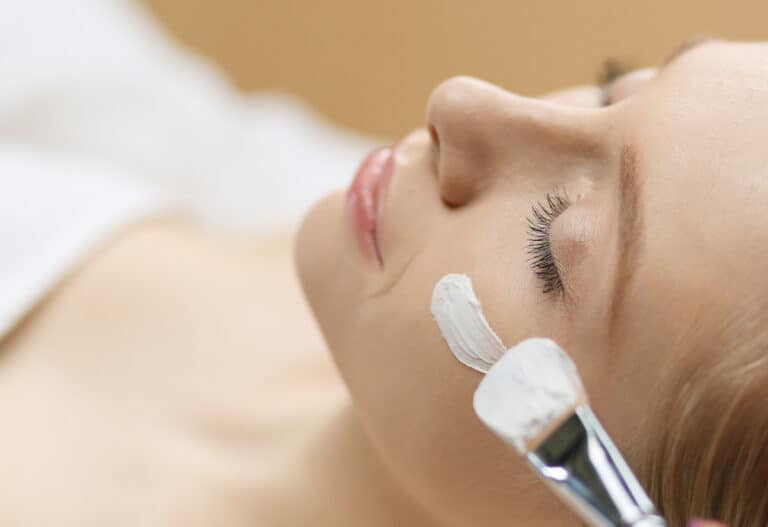
This mask is designed to exfoliate and target visible congestion and textural irregularities. It is better suited to acne-related clogged pores than to treating Malassezia itself.
It can target blackheads, but blackheads are not a typical feature of Malassezia folliculitis. Their presence may suggest acne vulgaris, which can coexist with folliculitis. This mask contains 2% salicylic acid.
The Ordinary currently directs the masque for use once or twice a week, ideally in the evening, on thoroughly clean, dry skin.
Leave it on for no more than 10 minutes, then rinse thoroughly. Do not use it on sensitive, peeling, or otherwise compromised skin.
Because salicylic acid is a BHA, it can also increase your sensitivity to the sun.
Use broad-spectrum sunscreen during the day because exfoliating acids can increase sun sensitivity and because UV exposure can worsen post-inflammatory discoloration.
If not, you can risk further redness and irritation.
6. The Ordinary 100% Plant-Derived Squalane

We touched earlier on squalane as a moisture-supportive emollient.
If you prefer a leave-on emollient rather than a rinse-off cleanser,
The Ordinary also offers 100% Plant-Derived Squalane, an oil-like emollient that reduces moisture loss and softens dry-feeling skin.
The brand describes this formula as plant-derived and non-comedogenic, but that does not guarantee that every acne-prone or folliculitis-prone person will respond the same way.
If your skin is oily or easily congested, start with only a few drops and monitor how your skin responds.
The Ordinary currently suggests a few drops once daily or as needed. It can be layered as an emollient step, but it is not an antifungal treatment.
7. The Ordinary Lactic Acid 5% + HA 2%

If your skin is already inflamed or irritated, adding frequent exfoliation can make the routine harder to tolerate, regardless of whether the bumps are acne or Malassezia folliculitis.
The Ordinary Lactic Acid 5% + HA is a lower-strength AHA option, but it can still sting, dry, or irritate sensitive skin.
This lactic acid serum contains 5%, making it milder than the brand’s 10% lactic-acid version.
Lactic acid is an AHA (alpha hydroxy acid) that exfoliates the skin surface and can improve the appearance of rough or uneven texture.
However, it can also increase sensitivity to the sun.
The Ordinary directs this serum for once-daily use, ideally in the evening, with sun protection while using it and for a week afterward.
The formula also includes a hyaluronic-acid-derived humectant to support hydration.
Lactic acid is best treated as a dedicated exfoliating step when used at an exfoliating concentration, rather than assuming every product that lists lactic acid performs the same role.
Avoid stacking several strong exfoliants in the same routine if your skin becomes irritated. Over-exfoliation can damage the barrier, but reducing acids does not directly treat Malassezia folliculitis.
What Actually Treats Malassezia Folliculitis?
Skincare can make the skin feel more comfortable, but true Malassezia folliculitis is generally treated with antifungal therapy. Dermatology references commonly list topical antifungals such as ketoconazole or econazole and, for some cases, prescription oral antifungals. Selenium sulfide washes may also be used. The exact treatment depends on severity, medical history, and whether the diagnosis is correct.
If your bumps are itchy, very uniform, concentrated on the chest, back, forehead, or hairline, or repeatedly return after ordinary acne treatment, consider having the condition assessed instead of continually adding acids and acne serums.
Fungal Acne And The Ordinary FAQs
Can The Ordinary Niacinamide Treat Fungal Acne?
No. Niacinamide can support oil control, barrier function, and the appearance of redness or discoloration, but it is not an antifungal medication and does not directly clear Malassezia from hair follicles.
Are Blackheads A Sign Of Fungal Acne?
Blackheads are more typical of acne vulgaris. Malassezia folliculitis usually causes small, similar-looking papules and pustules and is often itchy. Both conditions can occur at the same time.
Is Squalane Guaranteed To Be Fungal-Acne Safe?
No skincare ingredient is guaranteed to suit everyone. Squalane is a stable emollient that can reduce moisture loss, but it does not treat Malassezia folliculitis and individual skin response still matters.
Should You Exfoliate Fungal Acne?
Exfoliants such as salicylic or lactic acid can help separate concerns like acne-related congestion or rough texture, but they are not antifungals. If the skin is irritated, peeling, or inflamed, adding more acids can make discomfort worse.
When Should You See A Dermatologist?
Seek medical advice if the eruption is persistent, widespread, painful, recurrent, unusually itchy, or not responding to standard acne care. A clinician can distinguish Malassezia folliculitis from acne vulgaris, bacterial folliculitis, and other acne-like conditions and recommend appropriate antifungal treatment when needed.
Related Articles
Good Molecules Vs The Ordinary
I Dyed My Hair, And My Roots Are Too Light – What To Do
Hair Too Ashy After Toner – What To Do