
7 Best Lactic Acid Body Washes
You probably already have a go-to face wash, toner, and moisturiser, but body care often gets less attention.
If you deal with rough texture, dullness, or tiny bumps, choosing the right body wash can make your shower routine more useful without adding several extra steps.
That does not mean you need the strongest formula you can find. The goal is to match the cleanser to your skin and use it often enough to help without over-exfoliating.
Just like the skin on your face, the skin on your body accumulates dirt, sweat, and oil throughout the day.
When you hop into the shower, a well-chosen cleanser can remove daily buildup while also supporting the specific concerns you want to address.
There are plenty of options when it comes to body washes, and a lactic acid body wash can be a useful choice if you want gentle chemical exfoliation for rough or uneven-feeling skin.
Lactic acid appears in many skincare products because it exfoliates the skin’s surface while also being used in formulas designed for dryness and rough texture.
One of the well-known alpha hydroxy acids (AHAs), lactic acid helps loosen dead surface skin cells and can improve the look and feel of rough, dull, or uneven skin with consistent use.
How often you can use it depends on the acid concentration, the rest of the formula, and your skin’s tolerance. Daily use is not necessary for everyone.
So what are the best lactic acid body washes?
Lactic acid body washes can help exfoliate rough surface buildup and may improve the appearance of uneven texture. Depending on the formula, they can be useful for concerns such as keratosis pilaris, post-blemish marks, or dullness, but they are not a cure for acne or other skin conditions.
The best option depends on whether you want a simple acid cleanser, a stronger AHA treatment, or a scrub that combines chemical and physical exfoliation. Below, we break down what each pick is best suited for and where you may want to be cautious.
Lactic Acid Body Wash – Buyer’s Guide
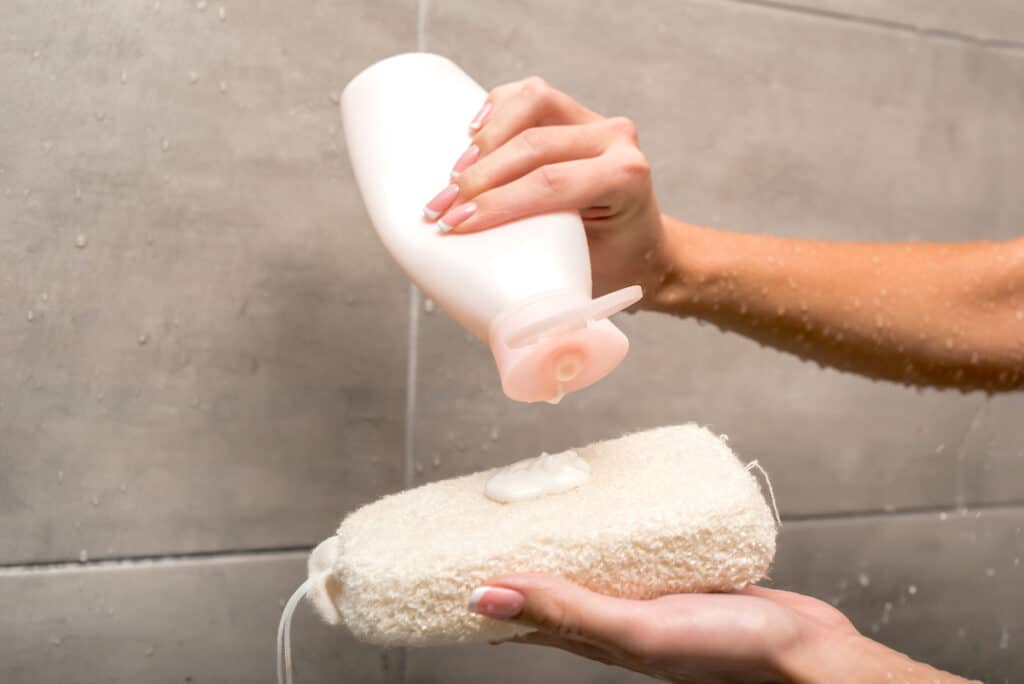
Scrub Vs Gel Vs Cream
Maybe you prefer the comfort of a cream wash, or perhaps you like the feel of a scrub. If your skin is dry or sensitive, be cautious about combining physical exfoliation with exfoliating acids, since too much exfoliation can increase irritation.
The point is, body washes aren’t one size fits all.
Choose the format that fits your skin type and routine. A creamier cleanser may feel more comfortable on dry skin, while a scrub can be better reserved for occasional use if you are already using acids elsewhere.
Combo With Other AHAs
Some formulas combine lactic acid with other exfoliating acids. That can broaden the exfoliating effect, but it can also increase the chance of dryness or stinging if your skin is sensitive.
Glycolic and mandelic acids are AHAs, while salicylic acid is a BHA. They are commonly used to target concerns such as rough texture, clogged pores, and uneven-looking skin, depending on the formula.
Environmentally Friendly
The public desire for cruelty-free, sustainable products is not going unnoticed by skincare companies.
If vegan, cruelty-free, fragrance-free, or sustainability claims matter to you, check the current brand and package information before buying. These claims can change with reformulations, and terms such as “natural” do not automatically mean gentler or safer for sensitive skin.
With those differences in mind, here are seven lactic-acid body cleansers and exfoliating washes to compare.
Best Lactic Acid Body Washes
| Rank | Product | Key Features |
|---|---|---|
| 1. | Boscia Papaya and Pomegranate Exfoliating Body Wash | Vegan, cruelty-free, sulfate-free |
| 2. | First Aid Beauty KP Bump Eraser Body Scrub | Cruelty-free, fragrance-free, pumice beads |
| 3. | CLNS Gentle Clarifying Cleanser | Ceramides, gentle, sea salt scrub |
| 4. | Misumi Acne Body Wash | AHAs, exfoliating, smoothing |
| 5. | Planty Exfoliating Body Scrub | Exfoliating, vegan, fragrance-free |
| 6. | Azani Bump Eraser Body Scrub | Reduces texture and enlarged pores |
| 7. | Platinum Skin Care Body Wash | AHAs, heals sun damage and dryness |
Quick Comparison
- Lower-strength acid option: CLNS Gentle Clarifying Cleanser, with 2% lactic acid.
- For rough KP-prone texture: First Aid Beauty KP Bump Eraser, with 10% AHA plus pumice.
- For blemish-prone body skin: Misumi Acne Body Wash, which includes salicylic acid alongside exfoliating acids.
- For experienced acid users: Platinum Skin Care Body Wash, with a listed 15% lactic and glycolic acid blend.
- For chemical plus physical exfoliation: Planty and Azani are scrub-style options rather than simple daily cleansers.
Percentages are only part of the picture. A rinse-off product’s pH, complete formula, how long it stays on the skin, and how often you use it all affect how strong it feels in practice.
1. Boscia Papaya And Pomegranate Exfoliating Body Wash
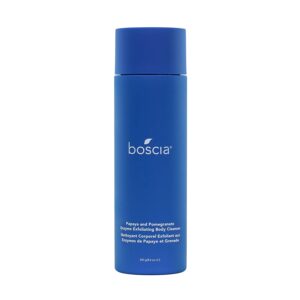
Boscia’s exfoliating body wash may appeal to dry or rough-feeling skin because it combines cleansing with multiple exfoliating ingredients.
A gel texture does not automatically mean a cleanser will be drying or moisturizing. The overall formula, surfactants, humectants, fragrance, and exfoliating ingredients matter more than texture alone.
If you have sensitive skin, check the ingredient list carefully and patch test first, especially because this formula contains exfoliating acids and fragrant plant oils.
The citrus-forward scent may make it especially appealing for a morning shower, although fragrance-sensitive skin may prefer a simpler formula.
It is scented with orange, grapefruit, rosemary, and citrus oils, giving it a bright fragrance that may be a plus for some users and a drawback for others.
The formula also includes fruit-derived enzymes, which add another source of surface exfoliation alongside the acids.
Papaya and pomegranate enzymes can help loosen surface buildup, which may leave rough or dull skin feeling smoother after regular use.
The key exfoliating combination here is lactic and mandelic acids.
If your skin has uneven tone or post-blemish marks, regular exfoliation may gradually improve their appearance, although deeper or persistent pigmentation may need more targeted care.
This AHA combination makes the wash more relevant for rough texture and dull-looking surface buildup than for deeper pigmentation or active skin conditions.
The lactic and mandelic acids can help smooth rough skin and improve the appearance of dullness or superficial discoloration over time, but a rinse-off wash cannot reverse years of sun damage.
Betaine and beet root extract are included alongside the exfoliating ingredients, which can help the formula feel less one-note than a cleanser focused only on acids.
If vegan or cruelty-free status is important to you, confirm the current product label or brand policy before purchasing, since formulas and certifications can change.
Ingredient preferences vary, so it is more useful to check the full ingredient list for your own sensitivities than to judge the formula by broad “free-from” claims alone.
Best for: someone who wants a fragranced, multi-exfoliant body wash and already knows their skin tolerates acids and aromatic plant oils.
2. First Aid Beauty KP Bump Eraser Body Scrub
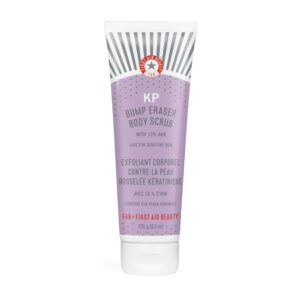
First Aid Beauty KP Bump Eraser is better thought of as an exfoliating body treatment than a basic everyday body wash.
Its main appeal is the combination of chemical exfoliation from AHAs and physical exfoliation from pumice.
If your skin is sensitive, the fragrance-free format may be useful, but the exfoliating strength still matters more than a “gentle” marketing label.
That makes it a more targeted pick for persistent roughness and keratosis pilaris than for someone who only wants a mild cleanser.
Because it is a scrub, use it as directed rather than automatically treating it like a daily shower gel.
This is a body scrub, so it’s extra exfoliating.
And we know what you might be thinking: aren’t body scrubs bad for the environment?
And the truth is, some may be.
But instead of using microplastics, this body scrub features pumice buffing beads, derived from volcanic rock.
Pumice is an extremely lightweight stone, and it can buff away dead skin without a ton of elbow grease.
Pumice also avoids plastic microbeads, which may matter if you prefer a mineral physical exfoliant.
This scrub also targets a skin issue that pesters people of all ages: keratosis pilaris. You may also know this condition as “strawberry skin” or “chicken skin”.
KP happens when keratin and dead skin build up around hair follicles, creating small, rough bumps. It is harmless, although it can be persistent.
First Aid Beauty formulated this scrub with KP in mind. It may help smooth the feel of rough bumps with consistent use, but KP often requires ongoing care rather than a one-time fix.
Do not let the “bump eraser” name suggest that stronger is always better.
This scrub contains 10% AHA from glycolic and lactic acids, which is a meaningful exfoliating concentration rather than an especially low one.
Because it combines 10% AHA with physical exfoliation, it may be too much for daily use on some skin types. Start less often and follow the product directions, especially if your skin is sensitive.
Glycolic and lactic acid can help loosen surface buildup and smooth rough texture, but they do not “unclog” pores in exactly the same way as an oil-soluble ingredient such as salicylic acid.
The combination of pumice and AHAs makes this a fairly intensive exfoliating step.
Best for: rough, bumpy body texture when you want both physical and chemical exfoliation and your skin tolerates a stronger approach.
3. CLNS Gentle Clarifying Cleanser
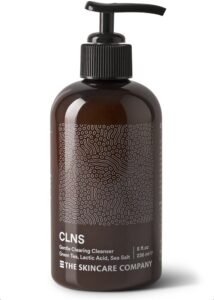
CLNS Gentle Clarifying Cleanser is the more minimalist option in this roundup if you want mild exfoliation without a scrub texture.
It is a non-foaming cleanser with a relatively simple exfoliating profile compared with the higher-strength scrubs on this list.
The formula combines lactic acid, sea salt, and green tea. Those ingredients can support surface exfoliation and cleansing, but they should not be expected to treat every underlying cause of breakouts or irritation.
As with any rinse-off exfoliant, results depend on your skin, contact time, frequency of use, and the rest of your routine.
The lower acid percentage may make it easier to introduce than some stronger options, although “gentle” is still personal.
If you plan to use it on the face as well as the body, follow the product directions and stop if you notice persistent stinging, dryness, or irritation.
A non-foaming cleanser may feel less stripping for some people, but foaming level alone does not determine how gentle a cleanser is. The full surfactant and moisturizing system matters.
Your skin barrier helps limit water loss and protects against environmental irritants and microbes. It does not replace sunscreen for UV protection.
It contains 2% lactic acid, 2% French grey sea salt, and organic sencha green tea. That makes it a lower-strength exfoliating option for someone who wants surface smoothing without jumping straight to a 10% or 15% acid formula.
The AHA and sea salt contribute to exfoliation, while sencha green tea adds an antioxidant ingredient to the formula. How comfortable it feels will still depend on your individual skin tolerance.
For body care, the more realistic goal is smoother-looking surface texture rather than treating visible signs of ageing with a rinse-off cleanser alone.
Best for: someone who wants a lower-percentage lactic acid cleanser and prefers a non-foaming texture over a scrub.
How long one bottle lasts will depend on how many pumps you use and how often you apply it, so consider cost per use rather than bottle price alone.
4. Misumi Acne Body Wash
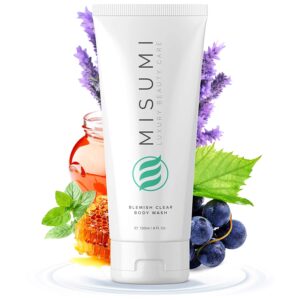
If body breakouts are your main concern, the Misumi option stands out because the formula is aimed more directly at blemish-prone areas.
Misumi’s Blemish Clear Body Wash was formulated with acne-prone and oily skin in mind.
This wash is marketed toward blemish-prone areas such as the back, shoulders, neck, and arms.
Ingredients such as salicylic acid may help reduce clogged pores and recurring breakouts, but no body wash can guarantee that acne will clear completely or never return.
Persistent or painful acne may need more than a cleanser, especially if it is leaving marks or scars.
A wash with pore-exfoliating ingredients may help reduce some clogged pores, but it cannot guarantee that recurring blemishes will disappear.
The formula also includes sugarcane, pineapple, and blueberry-derived ingredients, which are often used alongside the main exfoliating ingredients in skincare formulas.
These botanical ingredients may contribute to the overall formula, but they should not be described as repairing damaged tissue or restoring skin “good as new.”
Lavender oil is also present. Fragrant essential oils can be irritating for some people, so this may not be the best fit if your skin reacts easily to fragrance.
The exfoliating blend makes this wash more relevant for clogged pores, roughness, and uneven-looking texture than for concerns that require medical treatment.
Salicylic acid is oil-soluble and can help exfoliate inside clogged pores, which makes it a common ingredient in products for acne-prone skin.
Glycolic acid can exfoliate surface buildup, while salicylic acid is the more directly pore-focused ingredient in a blemish-oriented wash.
Best for: someone prioritising body breakouts and rough texture who also tolerates exfoliating acids and fragranced ingredients.
Lactic acid can help improve surface smoothness and hydration depending on the formula, but a rinse-off body wash should not be expected to noticeably boost collagen on its own.
5. Planty Exfoliating Body Scrub
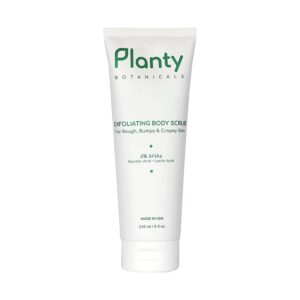
If you cannot decide between chemical and physical exfoliation, Planty combines both approaches in one body product.
That can be convenient, but it also means you should pay attention to how much total exfoliation your routine already contains.
Planty’s Exfoliating Body Scrub combines physical exfoliants with AHAs. That may help smooth rough texture, but any scrub can feel drying or irritating if used too aggressively.
It may be most relevant for rough texture, keratosis pilaris, and superficial post-blemish marks, provided your skin tolerates both acids and physical exfoliation.
Exfoliation may also help reduce surface buildup around areas prone to ingrown hairs or razor bumps, although active irritation should be allowed to settle before using a scrub.
Do not rely on an acid scrub to treat cellulite, stretch marks, or eczema. In particular, exfoliating acids can sting or worsen an active eczema flare.
If vegan and fragrance-free formulas matter to you, verify the current label. It is better viewed as an exfoliating body product than a cure-all.
With 6% lactic and glycolic acids, the formula may be milder than some higher-strength body exfoliants, but irritation is still possible.
Best for: someone who wants a mid-strength acid scrub and prefers one product that combines chemical and physical exfoliation.
6. Azani Bump Eraser Body Scrub
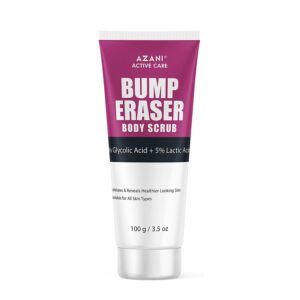
The name “bump eraser” is appealing, but no exfoliant literally erases texture or discoloration.
Azani’s scrub is better viewed as a product for rough patches and uneven-looking texture, not as a way to return skin to an “original” state.
Its usefulness comes down to whether you want another dual-action scrub and how well your skin tolerates its acid blend.
As with the other stronger exfoliants here, gradual use is more sensible than chasing an immediate result.
Azani combines exfoliating acids in a body scrub aimed at rough texture and uneven-looking skin. It should not be expected to reverse years of skin damage.
A listed pH of 4-4.5 does not guarantee that a scrub will be non-irritating, especially for sensitive or compromised skin.
Do not assume the formula is extra gentle simply because of its pH or marketing. Introduce it slowly if you are prone to dryness or irritation.
Lactic acid is often considered gentler than some smaller-molecule AHAs, but it can still cause dryness or irritation if overused.
The formula also includes glycolic acid and green tea, adding another exfoliating acid plus an antioxidant ingredient.
Those ingredients may support smoother-looking skin, but they cannot guarantee that acne will not flare or that redness will improve with every wash.
The ingredient list is fairly focused, which can make it easier to understand what role the product is meant to play in a body-care routine.
This wash provides cleansing plus exfoliation at the skin surface. It should not be described as deeply penetrating or as preventing all future skin problems.
Best for: rough body texture when you want a scrub with both lactic and glycolic acid, but do not expect it to address every cause of redness, acne, or enlarged-looking pores.
7. Platinum Skin Care Body Wash
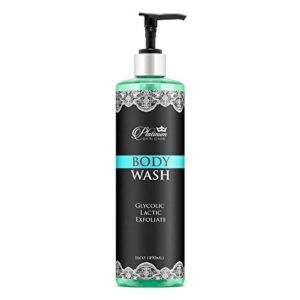
With 15% lactic and glycolic acids, the Platinum Skin Care wash is one of the stronger exfoliating options in this roundup.
Because this wash is a bit on the stronger end, we would recommend it to those who are experienced AHA users.
If your routine does not already include acids, a high-strength formula can be more likely to cause dryness, stinging, or irritation, so use it cautiously.
Rather than assuming it belongs in a daily routine, start less frequently and follow the product directions. Increase use only if your skin remains comfortable.
This body wash contains a relatively high concentration of exfoliating acids, so it is better suited to people who already know their skin tolerates AHAs.
AHAs may improve dullness, roughness, and some superficial discoloration, but a rinse-off cleanser cannot erase wrinkles, reverse sun damage, or treat every type of acne or skin lesion.
Glycolic, lactic, and malic acids exfoliate surface buildup and may leave skin feeling smoother, although visible change usually takes repeated use rather than one shower.
AHAs can be useful, but they are optional. If your skin becomes persistently tight, flaky, or irritated, reduce frequency or stop using the exfoliating product.
This grapefruit-scented body wash may feel more cosmetically appealing if you enjoy fragrance, but scent does not improve exfoliating performance and can be a drawback for fragrance-sensitive skin.
Research on leave-on AHAs has found effects beyond simple surface exfoliation at appropriate concentrations and pH, but a rinse-off body wash has much shorter contact time.
For this type of product, the most realistic benefits are smoother texture and improved surface appearance rather than dramatic collagen renewal.
If your main goal is visible wrinkle improvement, a leave-on treatment and daily sunscreen generally make more sense than relying on a rinse-off acid cleanser alone.
How To Use A Lactic Acid Body Wash
Start by using an exfoliating body wash less often than a plain cleanser, especially if the formula also contains glycolic acid, salicylic acid, enzymes, or scrub particles. Follow the product directions rather than assuming daily use is necessary.
On the same area of skin, avoid piling on several strong exfoliating steps at once. Using an acid wash, a gritty scrub, and a leave-on acid in the same routine can make irritation more likely without necessarily improving results.
After showering, apply a simple body moisturiser if your skin feels dry. If you notice persistent burning, redness, cracking, or peeling, stop the exfoliating product and let the skin recover before trying it again.
Do not use an exfoliating acid wash on freshly shaved, broken, sunburned, or actively irritated skin unless the product specifically directs otherwise. Those areas can sting more easily.
Lactic Acid Body Wash FAQs
Is there anything I need to do when I introduce AHAs into my skincare routine?
Use broad-spectrum sunscreen on exposed skin as part of your daytime routine.
This matters when you use alpha hydroxy acids, particularly on areas such as the shoulders, chest, arms, and legs that may be exposed to sunlight.
AHAs can increase sun sensitivity, so use broad-spectrum sunscreen on exposed skin and follow the product directions for frequency of use.
Can I use a lactic acid body wash every day?
Some mild formulas may be suitable for frequent use, while higher-percentage acid washes and acid scrubs may be better used less often. Let the formula, product directions, and your skin’s response determine frequency instead of assuming daily use is always better.
Can lactic acid body wash help keratosis pilaris?
Lactic acid can help loosen surface buildup and smooth the feel of rough skin, so it may be useful in a routine for keratosis pilaris. Results are usually gradual, and over-scrubbing can make already sensitive bumps feel more irritated.
Is a rinse-off lactic acid wash the same as a leave-on treatment?
No. A body wash stays on the skin for a much shorter time, so it is generally a more convenient exfoliating step rather than a direct substitute for every leave-on acid treatment. If you use both, introduce them carefully so you are not exfoliating the same area too aggressively.
Takeaway
The best lactic acid body wash is the one that matches your skin concern, exfoliation tolerance, and routine. A lower-strength cleanser can make sense for regular use, while 10% to 15% acid formulas and scrub combinations deserve a more cautious approach.
Whichever option you choose, give your skin time to respond. Smoother texture usually matters more than chasing an immediate tingle, and persistent irritation is a sign to scale back rather than exfoliate harder.
Related Articles
13 Best Setting Powders For Dry Skin Of 2025
Eyeliner On Lower Lid Only (What To Do + What To Avoid)