
Full Face Waxing (Pros And Cons)
Waxing removes hair from the root and can leave the face feeling smooth for longer than shaving.
Waxing is common on larger body areas such as the legs and arms, but it is also used for facial areas including the brows, upper lip, chin, and sideburns.
Facial waxing can provide longer-lasting hair removal than shaving because the hair is pulled from the root rather than cut at the skin surface.
A full-face wax requires more precision because facial skin is delicate and the hair grows in different directions around the brows, lip, cheeks, chin, and hairline.
Small mistakes can also be more visible on the face, so product choice, temperature, technique, and skin preparation matter.
Use wax specifically intended for facial hair and avoid waxing skin that is irritated, sunburned, broken, or unusually fragile.
What are the pros and cons of full-face waxing?
Full-face waxing can keep facial hair away longer than shaving and avoids the blunt stubble that follows a shave. The tradeoff is a higher chance of temporary redness, pain, ingrown hairs, breakouts, or skin lifting if the wax or technique is not suitable for your skin.
Technique differs across facial areas, so beginners should work in very small sections and avoid trying to duplicate aggressive salon techniques at home.
A professional full-face wax can be convenient if you want several facial areas treated in one appointment.
Results usually last longer than shaving, but whether the discomfort and irritation risk are worth it depends on your skin, hair growth, and preferred maintenance routine.
So, what else should you know about full-face waxing before dipping your spatula in the wax pot? Read on!
Can You Wax Your Face?
Facial waxing is a common salon service.
You’ll notice that salons and spas will provide numerous waxing services for the face, including eyebrows, upper lip, and sideburns.

Each facial area will have a different cost added to it.
You can also use facial wax at home, but at-home waxing does not provide the same assessment or technique as a licensed professional.
Waxing Vs Shaving Facial Hair
Why would you choose to wax your entire face rather than shave?
All facial hair removal methods can potentially cause some irritation.
However, waxing will pull the hair right out from the root, while shaving will cut the hair only at the surface.
Waxing usually lasts longer than shaving, but it does not automatically cause less irritation. Some people tolerate shaving better, while others prefer waxing.
Pros Of Full Face Waxing
The main advantages are longer-lasting hair removal, a smooth finish, and precise shaping in areas such as the brows.
Waxing also removes some surface dead skin cells, which can make the skin feel smoother, but that exfoliating effect is also why over-waxing can cause skin lifting or irritation.
Other benefits include receiving a precise application, long-lasting results, and more.
Smooth Results
We know that waxing offers a smoother and cleaner finish.
It does so by removing hair at the root, so you don’t have to worry about any stubble in the coming days, unlike shaving.
It may also offer a slight exfoliating benefit.
Waxing can quickly leave a hairless complexion that is easier to maintain than shaving.
Long-Lasting
One appeal of waxing is that you may only need to repeat it every few weeks rather than shaving frequently.
Facial waxing often lasts around 2 to 4 weeks, although regrowth speed varies by area and individual hair cycle.
Spacing sessions gives the skin time to recover before the next wax.
Some people notice finer or sparser-looking regrowth after repeated waxing, but this is not guaranteed.
Precise Application
Waxing can give you a crisp and clean finish.
The wax can be applied in a strip to create a clean line. This precise application will help achieve a smooth, seamless result.
It comes in handy, especially for smaller areas like the eyebrows.
You can control where you apply the wax and how much.
Creates Symmetry
Waxing can help create more symmetrical-looking brows or cleaner hairline edges, but it does not change your underlying facial structure.
For example, maybe one eyebrow has a different shape from the other.
You can map out your brow shape and remove only the hairs outside that outline. Avoid waxing too close to the eyelid or repeatedly correcting the same spot.
Some people choose to clean up their hairline to achieve a clean, even appearance.
Cons Of Full Face Waxing
Facial waxing is not a good fit for everyone, especially when the skin is already irritated or sensitized.
All beauty services have their cons, and waxing can be highly intimidating.
In addition, waxing is often painful and uncomfortable, though the experience can vary by person.
Some people find the sensation easier to tolerate with experience, but pain still varies from session to session.
So, what are some cons of waxing?
Ingrown Hairs
Various hair-removal methods can put you at risk of ingrown hairs.
Multiple factors can determine the success of your wax, including technique, product, and hair length.
Sometimes, if the hair is too long, it will break rather than be pulled from the root.
Gentle exfoliation after the skin has recovered may help reduce the chance of ingrown hairs, but no routine can prevent them completely.
Skin Irritation
Another con of waxing is skin irritation.
Temporary redness is common, while pimples, follicle irritation, contact dermatitis, or skin lifting can occur in some people.
Retinoids, exfoliating acids, scrubs, recent peels, and other irritating treatments can make facial skin more vulnerable to waxing. Ask your prescriber or waxing professional how long you should pause them before and after waxing rather than following one universal interval.

If you have eczema, rosacea, active acne, a damaged skin barrier, sunburn, or a history of skin lifting with wax, professional guidance is safer than experimenting with a different wax formula at home.
Pain
The most common con or side effect of waxing is pain. Some waxes will produce more pain than others.
There are other things to consider, like some people have a higher pain tolerance than others, or are used to waxing for years.
If pain is a major concern, ask the waxing professional what they recommend. Do not use numbing creams or take medication solely for waxing unless the product or medicine is appropriate for you and used according to its directions.
More Complicated Than Shaving
Individuals who are new to waxing may find the process more complicated than shaving.
Instead of a razor and shaving cream, you’ll need many more tools to wax at home.
For example, you’ll need wax, sticks, a wax warmer, and pre- and post-wax products.
Buying a full at-home setup can cost more upfront, so compare that expense with professional appointments before deciding which approach makes sense for you.
How Often Should You Wax Your Face?
How frequently can you wax your face?
It can depend heavily on the area you’re waxing, like the inner ears, eyebrows, chin, etc.
A common interval is around 2 to 4 weeks, but repeat waxing only after the skin has fully recovered and enough hair has grown back for the wax to grip.
Some individuals can wait up to four weeks, depending on how fast their hair grows.
How Long Does The Hair Need To Be For Waxing?
Another reason to wait for the hair to grow is that it needs to be a specific length for waxing.
Hair that is too short may not grip well, while very long hair can be more uncomfortable. Around 1/4 inch is a common target, but facial hair can sometimes be waxed slightly shorter depending on the product and technique.
This will ensure there is enough hair for the wax to grab onto, but not so much that it breaks instead of being pulled at the root.
How To Wax The Face At Home
If you choose to wax your face at home, prioritize skin safety over trying to make the entire face perfectly hair-free in one session.
First, ensure you have all the tools required for the pre-wax, during-wax, and post-wax phases.
Start with clean, dry, intact skin and use only products intended for facial waxing.
It may take some practice to achieve the ideal wax routine.
Pre-Wax
The first phase of waxing is the pre-wax.
Good preparation mainly means checking skin condition, avoiding sensitizing products, choosing an appropriate wax, and following the manufacturer’s directions.

Avoid waxing immediately after shaving, exfoliating, peeling, or using products that have left the skin irritated.
This is where you will also add any pre-waxing products before the wax.
Avoid Chemical Exfoliants And Retinoids
To prepare for waxing, avoid certain skincare products in your routine.
For example, chemical exfoliants and retinoids can exfoliate the skin’s surface layer and can cause an adverse reaction when paired with wax.
Combining these products can increase the risk of irritation across the face.
Avoid Shaving
Avoid shaving the area immediately before waxing because the hair may become too short for the wax to grip.
Shaving does not alter the follicle, but it does cut the hair at the skin surface and resets the time needed for regrowth.
If a few facial hairs are unusually long, trim them carefully with a guarded facial trimmer rather than scissors close to the skin.
Invest In Pre-Wax Products For Your Skin Type
You’ll want to invest in the right pre-wax products.
Pre-wax products vary by wax system. Some hard-wax techniques use a very small amount of oil, while other waxes require completely oil-free skin.
Do not assume that more oil creates a safer barrier. Too much can interfere with wax grip, so follow the instructions for the exact wax you are using.
For most home users, clean, dry skin and correct product directions matter more than adding multiple prep products.
Choose The Right Wax
You’ll also want to choose the right wax.
The most popular types of wax are hard and soft wax.
Hard wax is often chosen for smaller, sensitive areas because it is generally designed to grip hair with less adherence to skin than strip wax. It can still cause irritation or skin lifting if overheated or used incorrectly.
Test Wax Temperature
Achieving the right wax temperature can be challenging without a wax warmer.
It’s helpful to invest in one for the best results.
Follow the wax manufacturer’s temperature guidance and test a small amount on a less sensitive area of your inner wrist before bringing it near the face. Never rely on touch alone if the warmer provides a temperature setting or gauge.
Temperature testing reduces burn risk, but it does not eliminate it. If the wax feels hot rather than comfortably warm, do not apply it to your face.
Apply Wax In The Direction Of Hair Growth
Mastering your waxing technique can take time and practice.
Work slowly and stop if you cannot clearly see the hair direction or control the wax.
Small sections, correct temperature, good skin tension, and limited repeat passes are more important than trying to achieve a completely flawless result.
It’s crucial always to test the wax’s temperature to avoid facial burns.
Likewise, you’ll need to apply the wax in a specific direction for the best results.
It’s time to apply the wax after your skin is prepped.
It’s crucial to apply the wax in the direction of your hair growth.
This helps coat the hair in the direction it naturally lies so the wax can grip it more evenly.
It will help achieve a seamless and smooth result.
Pull In The Opposite Direction Of Hair Growth
Each wax will have a different set time before it’s ready for removal.
However, it is generally good to wait a few seconds before pulling the wax.
When it’s time to pull off the wax, you’ll want to do so in the opposite direction of the hair growth.
This technique can improve removal, but some hairs may still break or remain because facial hair grows at different angles and stages.
Work In Sections
Finally, always work in small sections.
This can ensure you don’t accidentally wax off too much of your sideburns, eyebrows, or hairline.
It can also help you create precise wax lines all across the face.
Post-Wax
After waxing, keep the routine simple and focus on reducing friction and irritation.
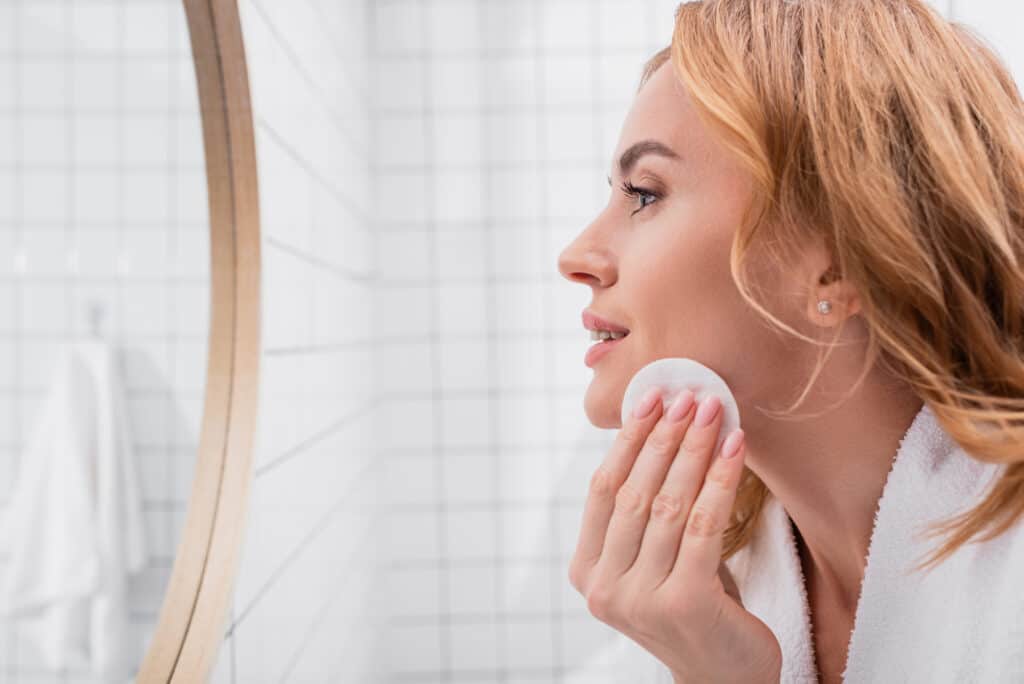
A bland, fragrance-free moisturizer can be enough if the skin feels dry or tight.
For the rest of the day, avoid rubbing, strong exfoliants, retinoids, scrubs, and other products that sting the freshly waxed skin.
If wax residue remains, use a small amount of a compatible post-wax oil or remover, then follow with a gentle moisturizer if needed.
Apply Post-Wax Oil To Remove Residue
Has your skin ever felt sticky after a wax?
This is most likely due to leftover wax on the skin that didn’t get removed.
A post-wax oil can help dissolve compatible wax residue. Use only a small amount and stop if it stings or irritates freshly waxed skin.
Use A Soothing Cream
What can you do if your face is particularly dry or sensitive?
You can wash off the post-wax oil or apply a soothing cream on top.
A simple fragrance-free cream can reduce the dry or tight feeling that sometimes follows waxing.
A moisturizer may improve comfort, but it cannot guarantee that irritation or breakouts will not occur.
At-Home Full Face Wax Routine
If you still want to wax at home, the routine should stay conservative and follow your wax kit instructions.
Consider treating one small facial area first instead of waxing the entire face during your first attempt.
Prep The Skin
First, prep the skin.
Pause potentially sensitizing skincare as advised by your prescriber or waxing professional, and use only the prep method recommended for your wax formula.
Some systems use a tiny amount of prep oil while others require oil-free skin, so do not add a barrier product unless the instructions call for it.
Preparing the skin correctly helps reduce avoidable irritation and poor wax adhesion.
Apply The Wax
Next, you’ll want to apply the wax. Again, you can work in small sections around the face to maintain your control over the wax.
For many wax systems, apply in the direction of hair growth and remove according to the product instructions while keeping the skin taut.
Remove
When it’s time to remove the wax, pull it in the opposite direction from how you applied it.
Keep the removal motion low and parallel to the skin rather than pulling straight upward, which can increase discomfort and skin trauma.
Apply Post-Wax Products
Stop once you have treated the planned sections. Do not keep chasing every remaining hair with repeated wax passes.
Also, avoid waxing over the same area twice to prevent irritation.
Once waxing is done, remove residue gently and apply a simple soothing moisturizer if your skin tolerates it.
A post-wax oil can remove compatible wax residue, while a bland cream can help with temporary dryness or tightness.
Here’s a tutorial from Hard Wax Solutions on YouTube.
Waxing Nose Or Ears
Waxing around the nose or ears requires extra caution and is not a good area for a beginner to experiment with at home.
Do not place hot wax deep inside the nostril or ear canal. If unwanted hair extends from these areas, limit grooming to the visible outer hair or have a trained professional handle it.
For inner-nose or ear hair, trimming is generally safer than trying to wax deep inside the opening.
Takeaway
Full-face waxing can be a useful hair-removal option if your skin tolerates it and you prefer longer-lasting results than shaving.
Waxing removes hair from the root and may produce finer-looking regrowth for some people over time, although this is not guaranteed.
However, it can make you prone to ingrown hairs or skin irritation.
Whether it is better than shaving, threading, tweezing, or dermaplaning depends on your skin sensitivity, hair type, maintenance preferences, and budget.
If you are new to facial waxing or use prescription retinoids, start with professional advice before attempting a full-face wax at home.
When To Skip A Full-Face Wax
Postpone facial waxing if you have sunburn, open cuts, an active cold sore, a significant acne flare, eczema or rosacea irritation, or skin that is already peeling or raw. Recent chemical peels, laser treatments, prescription retinoids, isotretinoin, and other treatments that make skin fragile can also change whether waxing is appropriate.
If you use prescription tretinoin or another strong retinoid, ask the prescriber or a qualified waxing professional how to handle waxing. Do not assume that stopping it for a day or two makes waxing automatically safe.
Full-Face Waxing FAQs
Does Facial Waxing Make Hair Grow Back Thicker?
No. Waxing does not make the follicle produce thicker hair. Regrowth may feel different because the hair is returning after being removed from the root, but it does not become thicker simply because you waxed it.
Can You Wax Your Face While Using Tretinoin?
Tretinoin can make the skin more vulnerable to irritation and skin lifting. Ask your prescriber or waxing professional before waxing rather than following a fixed pause period on your own.
How Long Does Facial Waxing Last?
Many people get around two to four weeks before noticeable regrowth, but the interval varies by facial area, hair cycle, and individual growth rate.
Can You Wear Makeup Right After A Face Wax?
If the skin is red, warm, or irritated, give it time to settle before applying makeup. Freshly waxed skin is more reactive, so keeping the area clean and minimizing friction for the rest of the day is a safer approach.
Related Articles
When Can You Shower After Waxing?
Best Numbing Creams For Waxing