
Best The Ordinary Products For Rosacea
Building a skincare routine can feel especially complicated when you have rosacea-prone skin, because products that feel gentle to someone else may still sting, burn, or trigger flushing for you.
For example, rosacea is a chronic inflammatory skin condition that can cause flushing, persistent redness or discoloration, visible blood vessels, acne-like bumps, burning, stinging, eye symptoms, or skin thickening.
Rosacea can show up through different combinations of signs and symptoms, so treatment is usually tailored to the features you actually have rather than one universal routine.
Rosacea has no cure, but flare-ups and symptoms can often be controlled with trigger management, gentle skincare, sun protection, prescription medication, and sometimes laser or light-based treatment.
Rosacea care can also become expensive when you are trying different cleansers, moisturizers, sunscreens, and treatment products to find formulas your skin actually tolerates.
The Ordinary is appealing because many of its products are relatively affordable, but price and simple packaging do not automatically make every formula a good match for rosacea.
What are the best The Ordinary products for rosacea?
The most practical The Ordinary options in this list are the Squalane Cleanser, a simple moisturizer, and a hydrating serum if your skin tolerates them. Azelaic Acid Suspension 10% may also suit some people, but evidence for treating papulopustular rosacea is strongest for prescription azelaic acid formulations. The old Mineral UV Filters sunscreen is a legacy product, so choose a current broad-spectrum SPF 30+ that does not sting or trigger your skin.
Rosacea-prone skin is often easily irritated. The AAD recommends looking for fragrance-free products and watching for common irritants such as alcohol, camphor, fragrance, glycolic acid, lactic acid, menthol, sodium lauryl sulfate, and urea. Your personal triggers still matter most, because not every ingredient bothers every person.
Do not assume that every The Ordinary formula is automatically rosacea-safe. The brand sells exfoliating acids, retinoids, and other active products that may be too irritating during a flare.
Below, we separate the products that mainly support cleansing, hydration, and the skin barrier from the one active ingredient in this roundup with a stronger connection to rosacea treatment.
What Is Rosacea?
Rosacea is a chronic condition whose exact cause is not fully understood. Genetics, immune and inflammatory pathways, microorganisms, and environmental factors may all play a role, while heat, sunlight, alcohol, spicy food, stress, and other triggers can provoke flare-ups in some people.
It is a long-term condition. Gentle skincare can make the skin feel more comfortable and support treatment, but persistent redness, acne-like lesions, eye symptoms, or skin thickening may need prescription or procedural care.
It’s often confused with other conditions.
For example, people can confuse rosacea and eczema because they produce similar symptoms, like redness or dry skin.
Sun exposure is one of the most common rosacea flare triggers, which is why daily broad-spectrum sunscreen is such an important part of rosacea care.
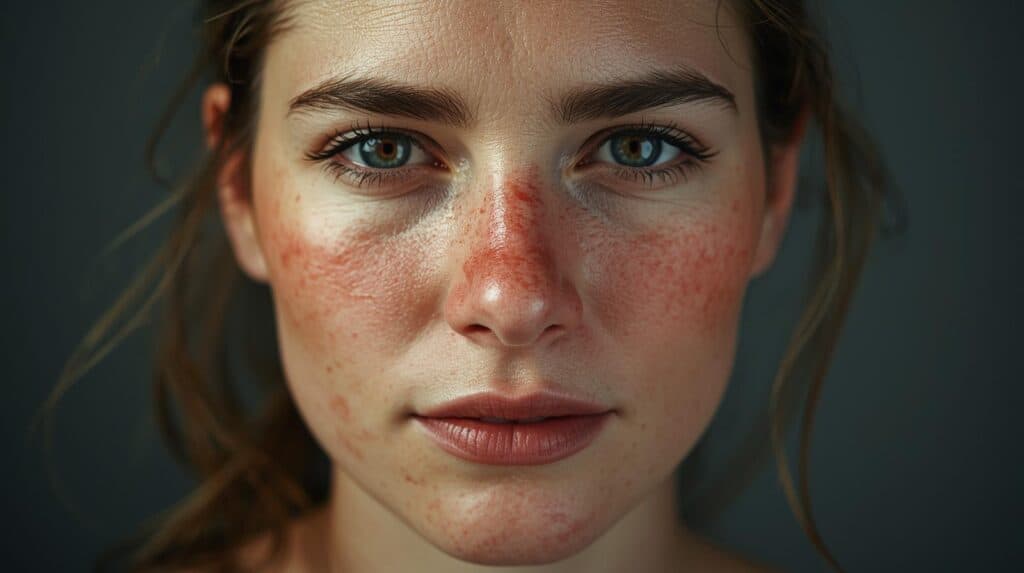
Rosacea can involve inflammatory papules and pustules, persistent facial color, visible blood vessels, eye symptoms, and, in some people, thickening skin.
Triggers are individual. Common ones include sunlight, overheating, alcohol, spicy foods, stress, wind, and irritating skincare, but you do not need to eliminate foods that have never triggered your own symptoms.
Modern rosacea care increasingly focuses on the specific signs and symptoms, or phenotypes, a person has. So what features can point toward rosacea?
Signs & Symptoms Of Rosacea
As mentioned earlier, rosacea is commonly misdiagnosed or often confused with other skin conditions.
Redness, dryness, bumps, and sensitivity can overlap with eczema, acne, contact dermatitis, seborrheic dermatitis, and other conditions, which is why redness alone is not enough to diagnose rosacea.
Rosacea becomes more likely when redness or discoloration is persistent or recurrent and appears alongside features such as flushing, visible vessels, acne-like bumps, burning, stinging, or eye symptoms.
The American Academy of Dermatology describes rosacea through signs such as flushing, persistent red, violet, or brown color, acne-like breakouts, visible blood vessels, eye changes, burning or stinging, dryness, and skin thickening. The older four-subtype system has increasingly been replaced in clinical guidance by a phenotype-based approach.
Different rosacea features may respond to different treatments, which is why one product rarely addresses every symptom.
Your routine may need to change depending on whether your main issue is persistent redness, acne-like bumps, dryness and stinging, visible vessels, eye symptoms, or thickening skin.
Some signs and symptoms include facial redness and visible blood vessels, acne-like blemishes, watery and bloodshot eyes, and skin thickening.
Burning and stinging can occur with rosacea even when the skin is not visibly very dry, and some people find that ordinary skincare or even water can sting during a flare.
Many people with rosacea also report skin sensitivity, easy flushing, burning, or stinging, although the pattern varies considerably from person to person.
On darker skin tones, rosacea may appear more brown, violet, dusky, or hyperpigmented rather than bright red, which can make diagnosis more difficult.
What Are The Best Ingredients To Treat Rosacea?
Rosacea treatment is individualized and may combine gentle skincare, trigger management, medication, and procedures.
Trigger management can help, but it should be personal rather than overly restrictive. If alcohol, spicy food, hot drinks, overheating, or another factor repeatedly causes a flare for you, reducing that trigger may be useful.
Depending on the symptoms, treatment can include topical prescription medication, oral medication, or both.
Laser or light-based procedures may also be used for concerns such as persistent visible blood vessels or background redness in selected patients.
However, all of these methods should be discussed with your dermatologist, who can point you in the right direction.
A gentle home skincare routine can support rosacea management, but cosmetic skincare should not be confused with prescription treatment.
Not all skincare products will react well with rosacea.
Useful routine categories include a mild cleanser, moisturizer, and broad-spectrum SPF 30+ sunscreen. Selected actives may help specific symptoms if your skin tolerates them.
Some severe cases of rosacea may require prescription skincare.
Azelaic acid has clinical evidence for papulopustular rosacea at prescription strengths, while hyaluronic acid and barrier-supporting moisturizers can help with hydration and comfort. Zinc oxide is one sunscreen filter the AAD suggests trying if other sunscreens irritate your skin.
However, skincare can have a hefty price tag.
Azelaic acid has anti-inflammatory and antimicrobial activity and is used medically for acne-like rosacea lesions.
It can also help normalize keratinization and improve uneven tone, but it may sting or irritate very reactive skin.
For papules and pustules, azelaic acid is more relevant than a basic hydrating serum, but the concentration, formulation, tolerability, and whether the product is prescription or cosmetic all matter.
Zinc oxide is one mineral UV filter, while hyaluronic acid is a humectant that can support surface hydration. Neither is a stand-alone rosacea treatment.
The Ordinary has several affordable products that can fit a simple, barrier-conscious routine, although the brand does not market these five products as a complete medical rosacea treatment plan.
What Are The Best The Ordinary Products For Rosacea?
For a basic rosacea-friendly routine, the most useful product roles are usually gentle cleansing, moisturization, barrier support, and daily sun protection.
The Ordinary has a large range, but rosacea-prone skin usually benefits from a shorter routine rather than trying multiple actives at once.
If you are not sure whether you actually have rosacea, do not self-diagnose based on redness alone. These products may support a gentle routine, but individual tolerance varies and eye symptoms, persistent bumps, or skin thickening deserve professional assessment.
| Rank | Product | Benefits |
|---|---|---|
| 1. | The Ordinary Hyaluronic Acid 2% + B5 | Keeps skin hydrated, antibacterial, vitamin B5 |
| 2. | The Ordinary Azelaic Acid Suspension 10% | Brighter complexion, even texture |
| 3. | The Ordinary Mineral UV Filters SPF | SPF 15 or 30, zinc oxide, titanium oxide |
| 4. | The Ordinary Natural Moisturizing Factors + HA | Hydrating, soothing, barrier repair |
| 5. | The Ordinary Squalane Cleanser | Antioxidants, moisturizing |
1. The Ordinary Hyaluronic Acid 2% + B5 (With Ceramides)
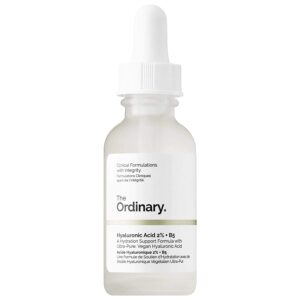
The Ordinary now sells an updated Hyaluronic Acid 2% + B5 formula with ceramides. Because the preserved Amazon listing may show older or newer packaging depending on stock, check the current ingredient list before buying.
It may be useful if rosacea-prone skin feels dehydrated or tight, provided the serum itself does not sting or irritate you.
Hyaluronic acid is also naturally present in the body, including the skin, where it plays a role in water binding.
Hyaluronic acid acts as a humectant, helping attract and hold water at the skin surface.
For this product, the most relevant benefit is hydration and barrier support, not treating rosacea inflammation or bacteria.
The current serum combines multiple forms of hyaluronic acid, pro-vitamin B5, and ceramides to support hydration and the moisture barrier.
Best for: dehydrated, tight-feeling skin that tolerates humectant serums. Keep in mind: if even bland serums sting during a flare, you may be better off simplifying to cleanser, moisturizer, and sunscreen until your skin settles.
2. The Ordinary Azelaic Acid Suspension 10%
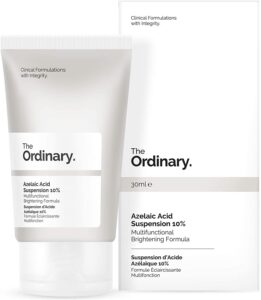
Azelaic acid is one of the more relevant ingredients in this roundup because prescription-strength azelaic acid is an established treatment for papulopustular rosacea.
Azelaic acid can be useful for acne-like bumps and uneven tone, but rosacea-prone skin may still sting when it is introduced, especially if the barrier is already irritated.
Clinical research supports 15% azelaic acid gel for mild-to-moderate papulopustular rosacea. That evidence should not be treated as proof that every 10% cosmetic suspension performs identically to the prescription-strength formulation.
The Ordinary’s 10% suspension is a cosmetic product that may help with blemish-prone texture and uneven tone, but it should not be treated as equivalent to prescription rosacea medication.
The Ordinary Azelaic Acid Suspension 10% remains a current product and can be used in the morning or evening according to the brand.
The silicone-rich suspension has a cream-like texture. Some rosacea-prone users tolerate azelaic acid well, while others experience temporary stinging or burning.
Best for: someone who wants to try an azelaic-acid cosmetic and whose skin is not actively irritated. Keep in mind: start slowly, avoid stacking it with several irritating actives, and stop if burning or redness keeps getting worse.
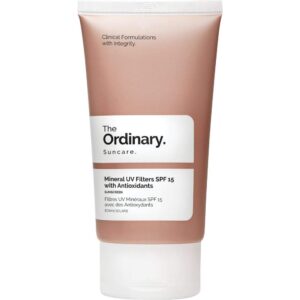
3. The Ordinary Mineral UV Filters SPF – Legacy Product
Sunlight is one of the most common rosacea flare triggers, so sunscreen is a core step in a rosacea-friendly routine.
The AAD recommends a broad-spectrum, water-resistant SPF 30 or higher. If sunscreen tends to sting, mineral filters such as zinc oxide or titanium dioxide are worth trying.
Sunscreen does not make your other skincare products work, but reducing UV exposure can help limit one of rosacea’s most common flare triggers.
The preserved product in this article, Mineral UV Filters SPF 15/30, used zinc oxide and titanium dioxide, but it is an older The Ordinary formula and is no longer the brand’s current sunscreen offering.
The Ordinary’s current sunscreen line includes UV Filters SPF 45 Serum, a fragrance-free sunscreen that uses organic UV filters rather than the old mineral formula.
The AAD recommends broad-spectrum SPF 30+ and notes that people with rosacea who find sunscreen irritating may prefer formulas containing zinc oxide, titanium dioxide, or both, along with silicone and no fragrance.
Mineral filters can be better tolerated by some people with reactive skin, but no sunscreen is universally irritation-proof. Texture, other ingredients, eye-area tolerance, and how consistently you will apply enough product all matter.
The Ordinary Mineral UV Filters SPF 15 and SPF 30 are legacy products. The affiliate link is preserved here, but check the listing carefully because old stock is not the same as a current brand recommendation.
Best approach: do not seek out discontinued stock just because it was mineral. Choose a current broad-spectrum SPF 30+ formula that your skin tolerates well enough to use every day.
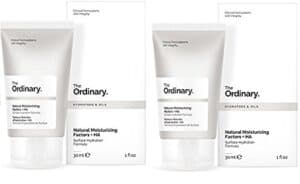
4. The Ordinary Natural Moisturising Factors + HA
A gentle moisturizer is a core part of rosacea skincare because it can reduce dryness, tightness, and irritation while supporting the skin barrier.
Ingredients such as glycerin, fatty acids, amino acids, ceramides, and other barrier-supporting components can help improve hydration and comfort.
The AAD notes that moisturizing can reduce dryness and irritation and that a rosacea-friendly moisturizer or barrier-repair cream may also improve comfort while using medical treatment.
A moisturizer does not need to be expensive to be useful, but the ingredient list still matters when your skin is highly reactive.
Natural Moisturizing Factors + HA remains a current The Ordinary moisturizer designed to support surface hydration and the skin barrier.
The current formula includes glycerin, amino acids, sodium PCA, hyaluronic acid, fatty acids, phospholipids, ceramides, urea, and other moisturizing components. One important caveat is that the AAD lists urea among ingredients that can irritate some people with rosacea, so this product is not automatically a safe choice for everyone.
Best for: rosacea-prone skin that wants a straightforward cream and already tolerates the formula. Keep in mind: if it stings, burns, or repeatedly worsens flushing, stop using it rather than assuming your skin needs time to adapt.
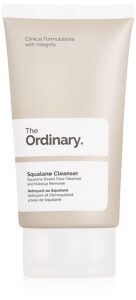
5. The Ordinary Squalane Cleanser
Rosacea-prone skin often does best with a mild, non-soap cleanser that removes sunscreen, makeup, oil, and debris without aggressive scrubbing.
The AAD recommends gentle cleansing with the fingertips and lukewarm water, followed by patting rather than rubbing the skin dry.
Squalane is the hydrogenated, more oxidation-resistant form of squalene. Cosmetic squalane can be produced from plant sources, and The Ordinary describes the squalane in this cleanser as plant-derived.
The hydrogenation step makes squalane more chemically stable than squalene, which is useful in cosmetic formulations.
Squalane is mainly useful here as an emollient that helps the cleanser feel less stripping.
The Ordinary Squalane Cleanser remains current and is designed to dissolve makeup and daily impurities while supporting a soft, non-stripped feel.
It can work as a first cleanse for makeup or sunscreen, or as your only cleanser if one gentle cleanse removes everything you need it to.
Best for: dry, sensitive, or easily stripped skin that needs a low-friction cleanse. The benefit is the gentle cleansing format, not squalane acting as a medical rosacea treatment.
How To Incorporate These Products In Your Skincare Routine
If these products suit your skin, keep the routine simple and introduce one change at a time.
The goal is not to use every product in this list. A rosacea-friendly routine is often easier to troubleshoot when you add only one new product at a time.
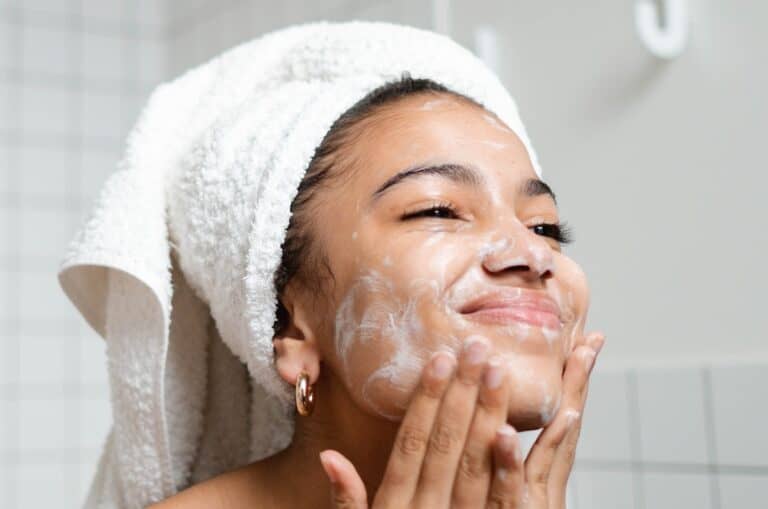
First, cleanse with the Squalane Cleanser.
Massage the cleanser gently with your fingertips, rinse with lukewarm water, and pat dry rather than scrubbing or rubbing the skin.
Next is the hyaluronic acid serum.
The current brand directions place this hyaluronic acid serum after cleansing and before heavier creams. If damp skin makes your rosacea sting, apply it to dry skin instead of forcing the damp-skin method.
Hyaluronic acid is primarily a hydration step; it does not need to increase the penetration of your other active ingredients to be useful.
Now it’s time for azelaic acid. You can use this product day or night, but it will depend on other products in your routine.
If you use retinoids, exfoliating acids, prescription rosacea medication, or other potentially irritating actives, simplify rather than stacking everything at once. The Ordinary also advises against combining this azelaic acid suspension with several strong active categories in the same routine.
After any tolerated serum or treatment, apply your moisturizer to support comfort and reduce dryness.
The NMF moisturizer can provide the cream step that helps reduce water loss and support barrier comfort.
If your skin is very reactive, a simple moisturizer can be more useful than adding another active. The best choice is one that does not sting, burn, or leave you noticeably more flushed.
Finally, if it’s morning, apply SPF.
Sunscreen should be the final skincare step in the morning. For rosacea, the main benefit is reducing UV exposure that can trigger flushing and worsen persistent color.
What Ingredients To Avoid For Rosacea
If your skin is reactive, it helps to know which ingredients the AAD flags as common rosacea irritants, while still paying attention to your own history with each product.
They are not guaranteed to irritate every person, but they are reasonable ingredients to watch if your face burns, stings, or flushes after skincare.
The AAD advises people with rosacea to avoid products containing alcohol, camphor, fragrance, glycolic acid, lactic acid, menthol, sodium lauryl sulfate, and urea because these ingredients can irritate rosacea-prone skin.
The AAD also suggests fragrance-free products, creams rather than lotions or gels when possible, and avoiding astringents and toners if they irritate your skin.
How To Keep Your Skin Safe If You Have Rosacea
The Ordinary offers affordable formulas, but affordability does not make every product appropriate for rosacea.
However, if you still feel hesitant about adding The Ordinary products to your routine, there are a few things you can do to keep your skin safe.
The goal is to lower the chance of triggering extra irritation or a flare.
Patch Test
Before using a new The Ordinary product across your face, patch test it according to the brand’s directions.
Follow the brand’s patch-test directions for the exact formula. For many The Ordinary products, that means applying a small amount to a clean area of the upper forearm and keeping the area dry.
A patch test can reveal obvious irritation before full-face use, but it cannot guarantee that rosacea-prone facial skin will tolerate the product the same way.
If you notice redness, burning, itching, blistering, or irritation, do not use the product. Even after a successful patch test, introduce only one new product at a time.
Talk To A Dermatologist
Consider a dermatologist if you are not sure whether your symptoms are rosacea, if your current routine keeps burning, or if redness, bumps, eye symptoms, or skin thickening are persistent.
A dermatologist can confirm whether the redness is actually rosacea, identify which features need treatment, and tell you whether cosmetic products are enough or prescription therapy would be more appropriate.
Wear SPF Daily
If there is one category that matters most for rosacea, it is a broad-spectrum SPF 30+ sunscreen that you will actually tolerate and reapply. The old The Ordinary mineral SPF in this article is no longer the brand’s current option.
For rosacea-prone skin, daily sunscreen is especially important because UV exposure is a common flare trigger.
Sunscreen reduces UV exposure, which helps limit sun damage and can reduce a common rosacea trigger.
Takeaway
The most useful products depend on what your skin needs right now: gentle cleansing, hydration, barrier support, sun protection, or a carefully introduced active.
If you are building a budget-conscious rosacea-friendly routine, the current products in this list are best viewed as supportive skincare rather than a replacement for medical treatment:
- Hyaluronic Acid 2% + B5
- Azelaic Acid Suspension 10%
- Mineral UV Filters SPF – legacy/discontinued product; choose a current SPF 30+ sunscreen instead
- Natural Moisturising Factors + HA
- Squalane Cleanser
Azelaic acid has evidence for inflammatory rosacea lesions at prescription strengths, while The Ordinary’s 10% cosmetic suspension is better viewed as an over-the-counter option for blemish-prone texture and uneven tone if your skin tolerates it.
Meanwhile, hyaluronic acid, ceramides, glycerin, squalane, and a well-tolerated sunscreen can support hydration, cleansing, barrier comfort, and UV protection.
For an easy routine, start with cleansing.
Then add only the serums or treatment products your skin tolerates and follow with moisturizer.
Finally, in the morning, finish with a broad-spectrum SPF 30+ and reapply as directed when you remain exposed to UV.
The Ordinary has several products that may fit a rosacea-friendly routine, but it is more accurate to match products to hydration, cleansing, barrier support, or cosmetic redness concerns than to say the brand treats rosacea itself.
Some The Ordinary formulas fit a simple routine well, while stronger exfoliating acids, retinoids, and multi-active routines can be a poor match for skin that is already flushing, burning, or stinging.
Rosacea often takes some trial and error to manage because the same product or trigger can affect two people very differently.
It is a long-term inflammatory condition influenced by multiple biological and environmental factors, with individual triggers that vary from person to person.
Rosacea management may include trigger avoidance, prescription topical or oral medication, and laser or light procedures in addition to gentle skincare.
If symptoms are persistent, painful, affecting your eyes, or not improving with a gentle routine, consult a dermatologist rather than continuing to add more cosmetic actives.
If you’d like to know even more about how best to take care of rosacea, here’s a helpful video from the Well+Good channel on YouTube featuring dermatologist Dr Mona Gohara.
Related Articles
The Best The Ordinary Products For Fungal Acne
Best Moisturisers Without Hyaluronic Acid
Mixing Foundation With Moisturiser (What To Know)