
Mixing Foundation With Moisturizer (What To Know)
Finding the right foundation shade is hard enough. It’s frustrating when a bottle that looked promising in the shop turns out to be too heavy or slightly too dark at home.
Sometimes the colour is close, but the texture looks cakey, heavy, or catches on dry patches.
Before buying another bottle, it’s worth checking whether a small adjustment makes the one you have easier to wear.
Mixing foundation with moisturiser can soften coverage and change the finish, especially when you want a lighter everyday base.
There are limits, though. Moisturiser won’t reliably correct the wrong undertone, stop a foundation from changing colour as it wears, or preserve the formula’s original long-wear claims.
Think of it as a way to sheer out makeup you already like, rather than rescue every unsuitable formula.
What does mixing foundation with moisturiser do?
Mixing a little moisturiser into liquid foundation can give it sheerer coverage and a softer, sometimes dewier finish. Start with a small amount, blend only enough for one application, and keep sunscreen separate. The results depend on how the two formulas behave together.
If your foundation feels a little too heavy or full-coverage for everyday wear, this is a simple adjustment to try before giving up on it.
Here’s how to choose a sensible starting ratio, test whether the formulas actually mix well, and avoid common problems such as streaks, pilling, slipping makeup, and unreliable SPF.
Why Mix Foundation With Moisturiser?
There are a few practical reasons to mix foundation with moisturiser, especially when the shade is already close and you mainly want to change the coverage or finish.
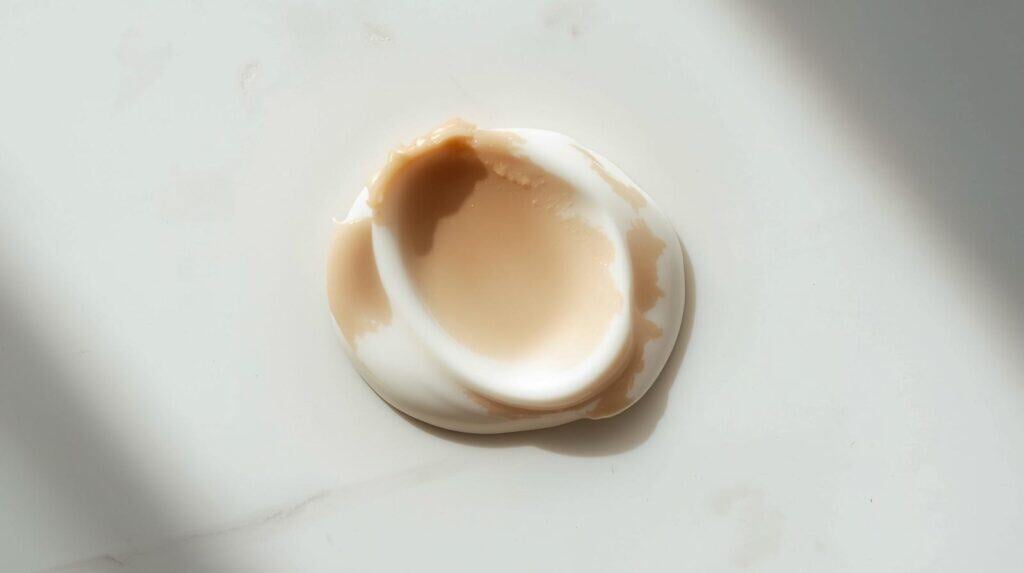
There are a few ways that moisturiser can enhance your foundation:
Add Hydration
A moisturiser, such as this moisturising cream from CeraVe can make a foundation mixture feel more comfortable on dry skin. Start with a tiny amount of a rich cream, as too much can make makeup slip.
This can be especially useful for dry or dehydrated-looking skin, where a full layer of matte foundation may emphasize texture.
Some foundations can feel tight on dry skin, while others simply make existing flakes more visible.
If your base catches on patches, that doesn’t automatically mean it is drying your skin out. Skin preparation, the amount applied, and the finish can all affect the result.
Avoid blaming an entire ingredient category. Fragrance may irritate sensitive skin, but parabens are preservatives, and not all ingredients called alcohols behave alike. Choose products your skin already tolerates.
A little moisturiser may improve how the makeup feels. If your foundation causes stinging, itching, or redness, stop using it rather than trying to dilute the problem away.
However, you can also find hydrating foundations (like this one from Neutrogena).
If you like your foundation’s colour and coverage, start with roughly four parts foundation to one part moisturiser. This is a trial ratio, not a fixed rule; even a little moisturiser can change the finish and coverage.
To Make Your Complexion Dewier
If you prefer a dewy finish to a matte one, moisturiser may help soften the look of your base.
If your foundation makes your skin look flat or overly matte, a little moisturiser can soften the finish and add a more natural-looking sheen.
For a more noticeable change, try two parts foundation to one part moisturiser. Test a small amount first, since a rich cream can make some foundations slide around.
You can also adjust the mixture to suit how your skin behaves that day, rather than using the same ratio year-round.
For oily or acne-prone skin, start with a lightweight moisturiser you already use comfortably. An oil-free or non-comedogenic label can be a useful starting point, but it doesn’t guarantee a product will suit everyone.
If your skin is naturally dry, choose a moisturiser with humectants or emollients that you already know your skin tolerates.
Check the mixture after it sets. A finish that looks fresh at first may become too shiny around your nose or forehead later.
The trade-off is less coverage and potentially less staying power. A softer finish is useful only if it still wears the way you want it to.
To Soften A Slightly Dark Shade
Does your usual foundation look a little too dark when your skin tone changes through the year?
Moisturiser can make a small shade mismatch less obvious by reducing coverage. More of your own skin shows through, so the colour may look less intense.
It does not reliably change the foundation’s undertone or prevent it from turning darker or orange during wear.
Start with four parts foundation to one part moisturiser and mix a small fresh portion on a clean palette or the back of a freshly washed hand.
Apply a thin swatch along your jawline and let it dry before checking it in daylight against your neck.
Don’t expect a predictable one- or two-shade change. Sheering out a formula is different from adding a purpose-made foundation lightener.
If the mixture still looks too dark, pink, or orange once it has settled, adding more moisturiser is unlikely to give you a convincing match.
For a bigger mismatch, a better-matched foundation is the more dependable option. You shouldn’t need to coat your neck in makeup to disguise the difference.
To Get Lighter Coverage
Sometimes you simply want lighter, more skin-like coverage than your foundation normally gives.

For errands, warm weather, or days when you want freckles and natural skin texture to show through, you may prefer a wash of colour to full coverage.
For a tinted moisturiser effect, start with equal parts foundation and moisturiser. If that mixes smoothly and you want less coverage, try one part foundation to two parts moisturiser.
Expect a sheerer base, with a finish that depends on the moisturiser. A gel and a rich cream won’t necessarily give the same result.
This can soften the look of uneven tone, but blemishes and darker marks may still show. Dab concealer only where you want extra coverage.
Keep SPF separate from your mixing experiment. Don’t blend sunscreen or an SPF moisturiser into foundation and assume the labelled protection still applies. The same caution applies when diluting foundation that contains SPF.
Apply sunscreen as its own layer before makeup, following its directions. The American Academy of Dermatology recommends broad-spectrum, water-resistant SPF 30 or higher, with reapplication every two hours outdoors and after swimming or sweating.
How To Mix Foundation With Moisturiser
Use a small, fresh portion of liquid foundation and a moisturiser without SPF that your skin already tolerates. Start with clean hands and tools, then test the blend on a small area before applying it all over.
Mix In Your Hands
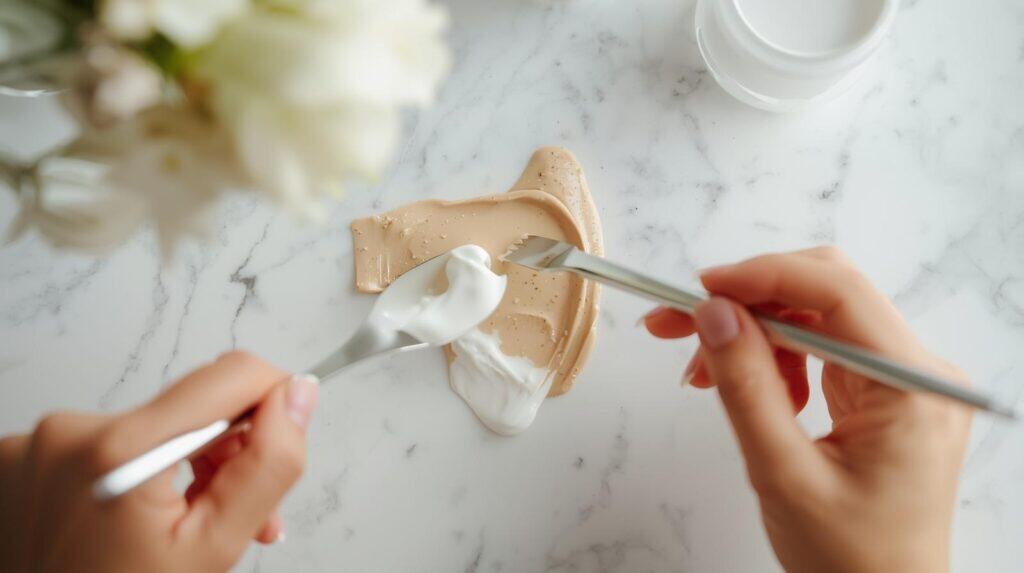
The back of a freshly washed hand or a clean makeup palette makes a convenient mixing surface. Either lets you see whether the products combine evenly before they reach your face.
Dispense your foundation first, add a small dab of moisturiser, and combine with a clean fingertip or spatula until the colour and texture look uniform.
You don’t need to heat the mixture or rub it between your palms. If it becomes grainy, separates into droplets, or won’t blend smoothly, apply the products in separate layers instead.
Use A Makeup Blender
If you prefer using a makeup sponge or applicator brush to apply your foundation, you can still do so after mixing the two products in your hands.
Once the mixture is smooth, pick up a small amount with your clean applicator and press or stipple it onto your skin in a thin layer.
If using a damp sponge, squeeze out excess water first. A dripping-wet sponge can make an already sheer mixture harder to control.
Start in the centre of your face and blend outward. Add more only where needed, rather than making a large batch that may go to waste.
Use Your Fingers
If you prefer not to use a foundation brush or makeup sponge, clean fingertips work well for many sheer foundation mixtures.
A compatible mixture may spread easily with clean fingertips. Dot a little onto your cheeks, forehead, and chin.
Work in small sections and use a light touch, especially where foundation tends to settle around the nose.
Gently press and blend the edges instead of repeatedly rubbing over the same area, particularly over sunscreen.
Using fingers also gives you control over how much product you pick up, though some will still remain on your hands.
Check around your hairline and jaw in good light. If a patch looks streaky, tap it gently before adding more product.
Use The Right Proportions
Treat these proportions as starting points, not guaranteed recipes. Measure parts by similar-sized dabs, since pump sizes vary:
- For a small texture adjustment, start with four parts foundation to one part moisturiser.
- For a potentially dewier finish, try two parts foundation to one part moisturiser, checking for excess shine or slipping.
- To soften a slightly dark shade, start with four parts foundation to one part moisturiser.
This reduces coverage; it does not reliably correct undertones or lighten a set number of shades. - For lighter coverage, try equal parts first. For a sheerer tint, test one part foundation to two parts moisturiser.
A thick cream can change the texture more noticeably than the same amount of a lightweight lotion.
If your foundation contains hydrating ingredients, you may not need to add as much moisturiser to begin with.
Change one thing at a time. Try less moisturiser before swapping both products, so you can tell what helped.
If the blend is too sheer, add a little more foundation to the fresh mixture. On your face, spot-conceal rather than repeatedly layering a slippery base.
Try it out a few times and keep a record of what works for you.
Note both the ratio and how it wears after a few hours. A mixture that looks good immediately may crease or transfer later.
For a visual tutorial, check out this video from Melissa Van Dijk on YouTube.
Things To Consider When Mixing Foundation With Moisturiser
Moisturise First
Prepare your skin before applying makeup. If your usual routine includes moisturiser, apply it in a layer that feels comfortable rather than greasy.
Adding a small dab to foundation isn’t a reliable substitute for your normal skincare. But you don’t need to keep piling on cream if your skin already feels comfortable.
Allow skincare and sunscreen to settle before applying the mixture. If your makeup rolls into little bits, try fewer layers or less product next time, while keeping sunscreen at its directed amount.
Consider Ingredients
Before mixing, check product directions and use formulas you know your skin tolerates. A simple facial moisturiser is a more sensible starting point than an exfoliating treatment or prescription cream.
You can’t reliably predict compatibility from the first ingredient alone. The practical check is whether a tiny fresh sample blends smoothly and wears evenly.
A silicone-containing foundation is not automatically incompatible with a water-based moisturiser. Many formulas contain both water and silicones.
Likewise, the presence of oils doesn’t automatically rule out a pairing. The complete formula matters more than a simple “water versus silicone” label.
Read ingredient lists for known sensitivities, but don’t treat them as a recipe for predicting how two finished products will behave together.
Test a small amount on one area before a full application. Watch for separation, pilling, an uneven finish, or discomfort.
Mix only what you need that day. Don’t add moisturiser to the foundation bottle or store leftovers; a homemade blend has not been tested for stability or preservation.
Coverage
One of the biggest changes to expect is less coverage as the proportion of moisturiser increases.
As a general rule, the more moisturiser you add, the sheerer the foundation becomes, although the exact result depends on both formulas.
Some mixtures layer well, but extra coats can also become slippery. If you need fuller coverage, use less moisturiser or keep the products separate.
For long days, hot weather, or occasions when transfer resistance matters, wear foundation as directed. Mixing changes the formula, so its original long-wear or water-resistance claims may no longer hold.
Can You Mix Powder Foundation With Moisturiser?
Liquid foundation is usually the easiest texture to portion and mix. Powder needs a little more caution.
The ratios above are intended as starting points for liquid foundation. They won’t necessarily work for a powder, stick, or mousse.
You can experiment with a tiny amount of loose powder foundation, but don’t expect it to turn into a ready-made liquid formula.
Cream and mousse foundations may also change texture when mixed, so test a small portion separately.
The full formula matters more than whether the packaging says “mineral”.
Both loose and pressed powders can contain pigments, mineral ingredients, and other components that affect how they spread. Pressed formulas also use binders to hold the powder together.
If trying loose powder, tap a small amount onto a clean palette and gradually work it into a dab of moisturiser. Stop if it stays gritty or patchy.
Don’t add moisturiser directly to a pressed powder compact. It can leave the surface difficult to use and introduces moisture into the product.
For predictable application, let your moisturiser settle and apply powder foundation on top as directed. This also avoids wasting powder on an unsuccessful mix.
With cream or mousse foundation, start with less moisturiser than you think you need. Added cream can flatten an airy texture or make a base too slippery.
Coverage varies across all these formats. A cream or mousse isn’t automatically more pigmented than a liquid, so judge the particular product you have.
Is It a Good Idea to Mix Foundation with Moisturiser?
It can be worth trying when you want sheerer coverage, a softer finish, and do not need maximum staying power.
It’s most useful when you already like your foundation’s shade but want a softer look for some days.
If dry patches are the main issue, try improving skin preparation and applying less foundation first. Mixing is an option, not a necessary step.
If the undertone is wrong or the foundation keeps changing colour, choose a better match rather than adding more cream.
For oily skin or an all-day event, layering moisturiser underneath your usual foundation may be easier to control.
It can give an existing foundation a lighter feel without buying another base. If you prefer a ready-made option, there are products sold as tinted moisturisers or BB and CC creams.
A homemade blend can give a similar sheer look, but it isn’t equivalent to a formulated tinted moisturiser, BB cream, or CC cream. In particular, it does not inherit their tested SPF or wear performance.
Trying a small portion can help you decide whether an existing bottle still works for you without committing to another purchase.
Use products within their shelf life, and stop if the mixture irritates your skin. Diluting a product does not make an unsuitable or expired formula suitable to use.
The main drawbacks are reduced coverage, unpredictable texture, and possibly shorter wear. If you keep getting separation, there’s no need to force the pairing.
Final Thoughts
Mixing foundation with moisturiser is a useful way to adjust coverage when the two formulas work well together.
Start with a small fresh portion, use less moisturiser than you think you need, and check the finish once it has dried.
Keep the blend for days when a sheer finish suits you. For fuller coverage or dependable wear, use your foundation as directed over prepared skin.
Remember that moisturiser can soften a small shade mismatch, but it won’t reliably correct undertones or stop colour changes.
Keep sunscreen separate, and never rely on the SPF number of a product you have diluted.
If the mixture pills, separates, or feels uncomfortable, return to applying your products separately.
Use the suggested ratios as a guide and judge the result on your own skin after it has had time to set. A comfortable, even finish is more useful than following a fixed recipe.
Related Articles
Best Moisturizers Without Hyaluronic Acid
Wax-Based Foundation – Is It Right For You?