
Why Does My Skin Feel Tight?
If your skin feels tight after washing, even smiling can feel uncomfortable. Moisturiser may bring some relief, while makeup can catch on the dry patches left behind.
A tight feeling is not a sign that your face is extra clean. It can point to dryness or irritation, especially if it comes with stinging, flaking, or itching.
You may see dry skin described as xerosis, its medical name. Tightness can accompany dryness, but the sensation alone does not tell you whether dryness, irritation, or a skin condition is responsible.
Your skin’s outer layer needs water and lipids to stay comfortable and flexible. When it loses moisture or becomes irritated, it may feel less supple.
Skin can feel oily and tight at the same time. Surface oil and water content are different, so a shiny forehead does not rule out dryness or irritation. You do not need to remove every trace of oil to make your skin comfortable.
Why does your skin feel tight?
Skin often feels tight because of dryness or irritation from cleansing, hot water, dry weather, or skincare products. Start with gentle cleansing and a fragrance-free moisturiser, and pause irritating cosmetic products. Persistent tightness, a rash, or painful cracking needs closer attention.
Below, we’ll look at the common triggers, how to simplify your routine, and when moisturising alone may not be enough.
Why Skin Feels Tight
The timing gives you a useful starting point. Tightness straight after washing makes your cleansing routine worth reviewing. If it follows a leave-on product, note which one; if it builds throughout the day, consider dry surroundings and whether your moisturiser is enough.
Any skin type can experience discomfort. Having an oily T-zone does not rule out dry cheeks or irritation from a cleanser.
The skin barrier helps limit water loss and keep irritants out. Cleansing and skincare can affect it, but a tight sensation cannot tell you your skin’s pH or exactly what has changed.
Frequent washing, especially with a cleanser that leaves you feeling stripped, can contribute to dryness.
Hot water and long showers may make the problem worse. You do not need a squeaky-clean finish to remove everyday dirt and oil.
Repeated makeup removal, cleansing brushes, and rough towel-drying can add friction to an already uncomfortable routine.
If tightness started after adding a scrub, peel, or acne product, consider that change before buying several new hydrating products.
Some soap-based or strongly cleansing formulas may be too drying for your skin, particularly when used often.
However, “sulfate-free” does not automatically mean gentle, and a foaming cleanser is not automatically harsh. The whole formula, contact time, and your skin’s response matter.
Cold weather, low humidity, indoor heating, and air conditioning can also contribute to dryness.
You may notice that a lightweight moisturiser that felt sufficient in summer no longer keeps your skin comfortable in winter.
Changing the texture or frequency of your moisturiser may help, but persistent symptoms should not simply be blamed on the season.
Skin also tends to become drier with age. Changes in its oils and ability to retain moisture can make your usual routine feel less comfortable.
As DermNet’s dry-skin guidance explains, environmental exposure, skin conditions, and some medicines can all contribute. Tightness does not have one universal cause.
Acne treatments, including retinoids, can cause dryness or irritation. If a prescribed treatment seems involved, ask your prescriber or pharmacist how to adjust your routine rather than changing the medication yourself.
Signs That Can Accompany Tight-Feeling Skin
Dry or irritated skin may feel pulled or uncomfortable when you smile or move your face. It may also feel rough to the touch.
A shiny forehead alongside tight cheeks does not mean you need to strip away more oil. Treat the uncomfortable areas gently instead of repeatedly cleansing the whole face.
More pronounced dryness can come with itching, peeling, or small cracks. These symptoms may also occur with dermatitis, so they are not proof of simple dehydration.
Inflammation can look pink or red on lighter skin, while changes may appear darker, purple, or grey on darker skin tones. Soreness and texture changes matter even when redness is subtle.
Flakes may collect around the nose, mouth, or other dry areas. Avoid picking them off, which can leave the surface more irritated.
Makeup may cling to these patches or emphasise uneven texture, particularly with matte or powder-heavy finishes.
Give moisturiser time to settle before makeup, and avoid repeatedly buffing products over sore skin. Makeup that stings is a reason to stop using it on that area.
How To Relieve Tight-Feeling Skin
For mild tightness without a significant rash or other concerning symptoms, start by simplifying your routine.
Review what changed recently: cleanser, water temperature, exfoliation frequency, or a new leave-on product. Pause non-essential products that sting or seem to trigger symptoms. When adding products back, introduce one at a time so you can judge the response.
If your current wash leaves you tight, a non-foaming cleanser may be worth considering, particularly for dry skin. Choose it for a gentler cleansing step, rather than expecting a wash alone to resolve ongoing irritation.
Look for a gentle, fragrance-free cleanser that rinses away without leaving your skin sore or stripped. A single “free-from” claim is less useful than how the finished formula feels on your skin.
Cream, lotion, gel, and foaming cleansers can all vary in strength. Use your fingertips and follow the directions for amount and rinsing. Repeated cleansing passes to chase a squeaky-clean feeling can leave skin less comfortable.
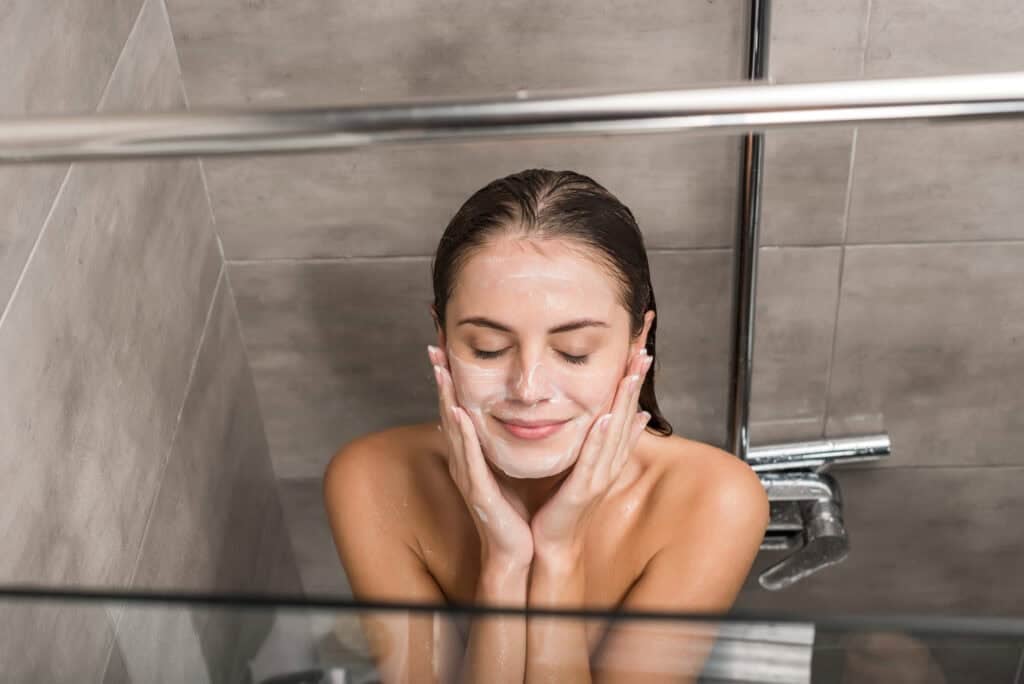
You can wash your face in the shower if the water is comfortably lukewarm. Keep showers brief, around five to ten minutes, and avoid leaving your face under hot running water.
Use lukewarm water, rinse gently, and pat with a soft towel. Avoid the hottest tap setting and rubbing the skin dry.
Flakiness may tempt you to reach for a scrub, but removing more surface cells can worsen discomfort on already irritated skin.
Pause cosmetic exfoliating acids, scrubs, and cleansing brushes while your skin is sore or stinging. Once comfortable, reintroduce products gradually rather than restarting everything together.
Apply a fragrance-free moisturiser while the skin is still slightly damp after washing. Reapply when dry areas need it, using a texture your skin tolerates.
Oily skin can still benefit from moisturiser. A lighter, non-comedogenic formula may feel more comfortable than a rich layer across the whole face, with extra care just on dry patches.
For very dry patches, an occlusive product such as Vaseline can help reduce moisture loss. It can feel greasy, so targeted use may be more comfortable than covering your whole face. Heavy occlusive layers can aggravate breakouts in some people; skip them on areas where they make your skin worse.
Petroleum jelly reduces water loss; it does not add water itself. A thin layer over a tolerated moisturiser on a dry patch may be enough. Avoid sealing in exfoliating acids or retinoids on irritated skin.
Products To Avoid With Skin Tightness
The goal is to reduce irritation, not to build a permanent list of forbidden ingredients. Pause non-essential products that sting or seem linked to the problem.
Alcohol-heavy astringents may feel drying, but not all alcohols are alike. Cetyl, stearyl, and cetearyl alcohol are fatty alcohols used in moisturising formulas and should not be confused with ethanol or denatured alcohol.
Exfoliating acids can be uncomfortable on irritated skin. Salicylic acid is a BHA; glycolic and lactic acids are AHAs. Consider pausing cosmetic acid products until tightness and stinging settle.
Retinoids can cause dryness and peeling, particularly when first introduced. They are not simply harsh scrubs, and irritation is not proof they are working better. Discuss prescribed retinoids with your clinician before changing treatment.
Fragrance and essential oils can also be troublesome for reactive skin. Look for “fragrance-free” rather than relying on “natural” or “unscented”; an unscented formula can still contain ingredients used to mask odour.
Do not try to correct a suspected pH problem with lemon juice, baking soda, or a strong toner. If a cleanser repeatedly leaves your face uncomfortable, choose a milder formula instead.
Choosing Products For Tight-Feeling Skin
You do not need a separate product for every hydrating ingredient. For persistently dry areas, a fragrance-free cream may be more useful than another watery serum. A lighter lotion may feel better on oilier areas, so you do not have to use the same amount everywhere.
Start with moisturisers suited to your skin, then consider hydrating serums only if needed. Serums are optional, and adding several products at once makes it harder to identify what helps or irritates.
Ceramides are lipids naturally found in the skin barrier. A moisturiser containing them can help support that barrier, but the ingredient alone does not guarantee that a formula will suit you.
Hyaluronic acid is a humectant used in many serums and moisturisers. It can help with surface hydration, but a serum may not replace moisturiser, and no formula is ideal for every skin type.
Glycerin is another common humectant. You do not need to add a glycerin serum if your moisturiser already provides comfortable hydration.
Humectants help hold water in the outer skin layer; emollients soften the surface; occlusives reduce water loss. DermNet’s moisturiser guide explains these complementary roles. Many creams combine more than one.
An occlusive such as petrolatum may help very dry patches, but a thick layer is not necessary for everyone. If a product causes ongoing stinging, a rash, or more discomfort, stop using it rather than adding another layer.
A Simple Routine For Tight-Feeling Skin
Morning: cleanse gently if needed, apply moisturiser, and finish with a broad-spectrum SPF 30 or higher sunscreen. Choose products you already tolerate rather than adding several new formulas while your skin is irritated.
Evening: gently remove makeup and sunscreen with a cleanser suited to the products you wear, then moisturise. Do not keep washing once they are removed. Leave optional peels, scrubs, and other irritating cosmetic treatments out until your skin feels comfortable again.
The American Academy of Dermatology’s dry-skin advice recommends gentle washing and applying moisturiser after washing. Dry skin may feel better after moisturising, but lasting improvement depends on the cause. Notice whether washing feels more comfortable and whether flaking or stinging is easing, rather than expecting a fixed recovery deadline.
When To Get Medical Advice
Contact a clinician if tightness persists despite gentle care, keeps returning, disrupts sleep, or comes with a significant rash, bleeding cracks, or pain. If symptoms began after a new cosmetic product, stop using it and keep its packaging or ingredient list. If even a simple moisturiser repeatedly burns, mention that too.
NHS guidance on contact dermatitis notes that irritant reactions can cause dryness, burning, and stinging. Seek prompt medical advice for rapidly worsening symptoms, discharge, increasing pain, or feeling unwell, which can suggest infection.
Conclusion
A tight face often benefits from less aggressive cleansing, fewer irritating products, and a moisturiser that suits your skin.
Start with the likely trigger instead of chasing every hydrating ingredient. Comfort after washing is a more useful goal than a stripped, squeaky-clean feeling.
If tightness keeps returning or comes with a rash, pain, or cracking, get the cause assessed. A richer cream can help dryness, but it cannot treat every reason your skin feels uncomfortable.
Related Articles
How To Tighten Loose Belly Skin At Home – Including Home Remedies
How To Tighten Skin On Thighs Naturally
Best Skin Tightening Oils For Stomachs