
Bath Bomb Vs. Bubble Bath
A warm bath can be a simple part of a self-care routine, and products such as bubble bath, bath bombs, oils, or bath salts mainly change how the soak looks, smells, and feels.
Two of the most popular options are bubble baths and bath bombs, but they work in very different ways.
Bubble bath is designed to create lasting foam, while a bath bomb fizzes as it dissolves and may release colour, fragrance, oils, or other add-ins into the water.
Choosing between them comes down to the experience you want, the ingredients your skin tolerates, how much cleanup you want afterward, and whether you prefer lots of bubbles or a fizzy, colourful soak.
If you want a tub full of foam, bubble bath is the obvious choice. If you enjoy fizz, colour, scent, and a single-use treat, a bath bomb may be more appealing.
Neither is automatically better for your skin, so check the formula carefully, especially if you have dry, sensitive, or eczema-prone skin or know that fragrance tends to bother you.
Below, we compare how each product works, what to expect from it, and the practical differences that can help you choose.
What is the difference between a bath bomb and a bubble bath?
Bath bombs fizz and dissolve, often adding colour, fragrance, oils, or other extras to the water. Bubble bath uses surfactants to create lasting foam, especially when poured under running water. The better choice depends on the experience you want, your skin tolerance, and whether you prefer single-use fizz or reusable foam.
Below, we compare what bath bombs and bubble baths actually do, their main advantages and drawbacks, and how to choose between them.
What Is A Bath Bomb?
Bath bombs are popular as a single-use bath-time treat because they can add colour, scent, fizz, and visual interest to the water.

Most bath bombs are made with sodium bicarbonate, also known as baking soda, and an acid such as citric acid. When they meet water, they react and release carbon dioxide gas, creating the familiar fizz.
Formulas vary widely. Some include oils, butters, salts, colourants, fragrance, or botanical ingredients, while others keep the ingredient list relatively simple.
Because fragrance, dyes, essential oils, and other add-ins can irritate some skin types, a product that feels comfortable for one person may not suit another. If your skin is sensitive, choose a simpler formula and stop using it if you notice stinging, itching, redness, or a worsening rash.
Once the bath bomb hits the water, that acid-and-bicarbonate reaction creates small carbon dioxide bubbles while the rest of the formula disperses through the tub.
Colourants, glitter, dried botanicals, and other add-ins can create a dramatic visual effect, although heavily pigmented, glittery, or oily formulas may also leave more residue to rinse from the tub.
Many bath bombs also include fragrance or essential oils for scent. These are not necessary for the fizz and may be irritating if you are sensitive to fragranced products.
Benefits Of Using A Bath Bomb
The main appeal of a bath bomb is the sensory experience: a single product can add fizz, colour, scent, and sometimes emollient ingredients to the water.
Because bath bombs are usually single-use, you can keep different scents, colours, and formulas on hand and choose one based on the type of bath you want.
They are available in a wide variety of colours, scents, and formulas, so you can choose one based on the type of bath experience you want.
Marbled colours, foaming effects, and fragrance can make bath bombs more visually interesting than a plain soak.
The bath bomb disperses throughout the water as it breaks down, creating colour, scent, and fizz throughout the tub.
Fragrance can also shape the experience, whether you prefer a fresh scent in the morning or something softer at night. The scent itself is a personal preference rather than a guarantee of an energising or sleep-inducing effect.
Some bath bombs already contain essential oils, body butters, or bath salts. If yours does, adding even more scented or oily products may increase residue, slipperiness, or the chance of irritation.
Bath bombs are also easy to use: place one in a filled or filling bath and follow the product directions while it dissolves.
What Is A Bubble Bath?
Bubble bath, on the other hand, is a reusable liquid or gel product designed mainly to create long-lasting foam.
Bubble bath is usually a liquid or gel formula containing surfactants, the cleansing ingredients that help water spread and trap air to form foam.
When the product is agitated by running water, those surfactants create light, airy bubbles that can build into a thick layer of foam.
Unlike a bath bomb, bubble bath does not rely on a fizzing acid-and-bicarbonate reaction. Its foam comes from surfactants plus water and air.
Many formulas are also scented, although fragrance-free options may be a better fit for very sensitive or eczema-prone skin.
Benefits Of Using A Bubble Bath
Bubble bath is easy to use, reusable across many baths, and designed specifically to create plenty of foam.
Its biggest advantage is simple: a measured amount can create lots of foamy bubbles when used as directed under running water.
For the most foam, add the product under running water and follow the amount recommended on the label. Using extra product does not always mean better bubbles and may leave more cleanser or fragrance on the skin.
Because bubble bath comes in a bottle and is measured out as needed, one container can usually be used for multiple baths, unlike a typical single-use bath bomb.
There are fragranced, fragrance-free, moisturising, and sensitive-skin formulas, so the ingredient list matters more than the product category alone.
A layer of foam may slightly slow heat loss at the water’s surface, but it will not keep a bath hot indefinitely. Starting water temperature, room temperature, tub material, and soak length matter much more.
For comfort, keep bath water warm rather than very hot, especially if your skin is dry, reactive, or prone to eczema.
Some bubble baths include emollients or humectants that can make skin feel softer. Others may feel drying or irritating, particularly if they use stronger surfactants or heavy fragrance, so choose according to your skin rather than assuming every bubble bath is moisturising.
What A Warm Bath May Help With
A warm bath can be a pleasant way to relax, unwind, and feel more comfortable, but the bath bomb or bubble bath itself is mainly there for scent, foam, fizz, colour, or skin feel.
A warm bath before bed may help some people wind down as part of a consistent nighttime routine. You do not need fragrance, bubbles, or a bath bomb to get that relaxing effect.
The quiet time, warmth, and familiar routine can also make a bath feel calming, although individual responses vary.
Warm water may temporarily make tight or tired muscles feel more comfortable, which is one reason many people enjoy bathing after exercise or a long day.
Keep the water comfortably warm rather than extremely hot. Very hot water can leave some people feeling light-headed and can also worsen dryness or irritation.
You may notice temporary changes in how warm or flushed your skin feels during a hot bath, but a bath should not be treated as a way to improve circulation or cardiovascular health.
If you have a heart condition, problems with blood pressure, fainting episodes, or another condition affected by heat, ask a healthcare professional whether hot baths are appropriate for you.
Steam from a warm bath may make the air feel more comfortable to breathe for some people, but it does not meaningfully “oxygenate the blood” or replace medical treatment for breathing problems.
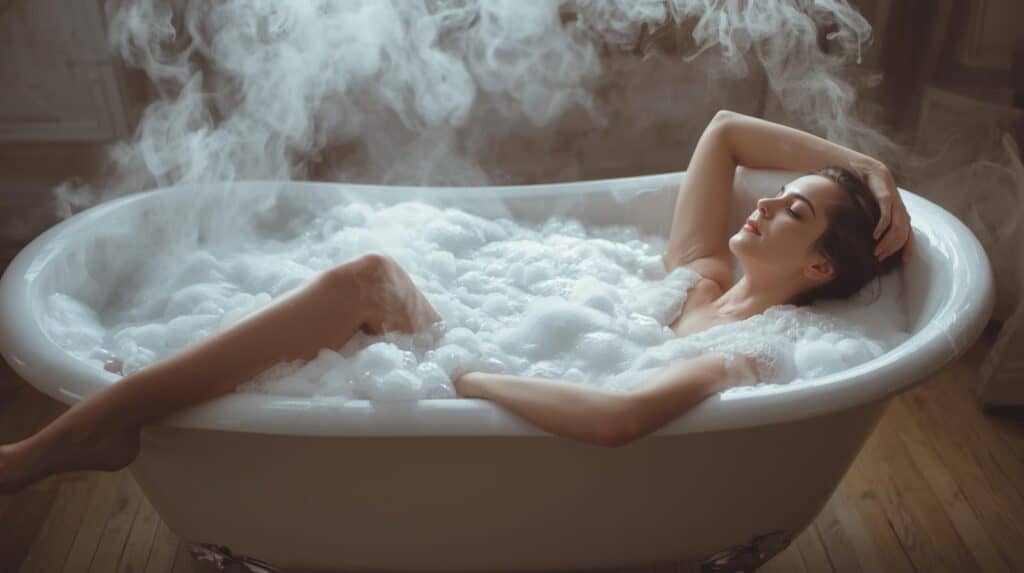
Bathing can be compatible with eczema or psoriasis care, but the details matter. Short, lukewarm baths and bland fragrance-free products are generally gentler than long, hot, heavily scented soaks.
For eczema-prone skin in particular, bathing can add water to the outer skin layer, but that water evaporates quickly, so applying a fragrance-free cream or ointment shortly after bathing can help reduce moisture loss.
If a bath bomb or bubble bath causes burning, itching, redness, or a flare, rinse the product off and stop using it. A plain lukewarm bath may be a better choice while the skin is irritated.
A warm bath may also feel soothing when you have a cold, especially if body aches are making you uncomfortable.
Warm, humid air may temporarily make a stuffy nose feel easier to manage, but a bath does not treat the infection itself. Avoid water that is so hot that it makes you dizzy or uncomfortable.
Bubble bath can help clean the skin’s surface because its surfactants lift oil and debris, but that does not make it a detox treatment.
Warm water also does not literally open and close pores. It can loosen surface oil and residue, while the cleanser helps wash them away.
For everyday skin care, the goal is gentle cleansing without over-stripping. If your skin feels tight, itchy, stings, or becomes drier after bathing, use less product, shorten the soak, lower the water temperature, or switch to a milder fragrance-free formula.
When To Use A Bath Bomb Or Bubble Bath
You can use a bath bomb and bubble bath together if both products are designed for bathing and your skin tolerates them, but layering products also increases the total amount of fragrance, surfactants, oils, dyes, and other ingredients in the water.
If you combine them, start with modest amounts and remember that oils, butters, or conditioners from a bath bomb can make the tub slippery.
Choose bubble bath when your main goal is lots of foam and a product you can measure out over several baths.
If fragrance is part of the appeal, choose a scent you enjoy. If you have sensitive skin, a fragrance-free formula may be the more comfortable option.
For a bedtime soak, focus on comfortable warm water, a calm routine, and a sensible soak time rather than expecting a particular scent or bath product to cause sleep.
Choose a bath bomb when you want fizz, colour, scent, or a single-use treat. If skin comfort is the priority, look for a simple formula with fewer potential irritants.
Whichever product you choose, follow the label, rinse the tub afterward if it leaves colour, glitter, or oil behind, and moisturise after bathing if your skin tends to feel dry.
Conclusion
A bath can be an enjoyable part of a self-care routine, and bath bombs and bubble baths simply create different versions of the same basic warm-water soak.
Bath bombs are best known for fizz, colour, fragrance, and single-use variety, while bubble bath is designed to create longer-lasting foam from a reusable bottle or pouch.
Neither option is automatically better for the skin. Check the ingredient list, use warm rather than very hot water, and choose fragrance-free or simpler formulas if your skin is dry, sensitive, eczema-prone, or easily irritated.
Related Articles
How To Use Tea Tree Oil In The Bath (+ Our Favorite Products)
How To Use A Bath Bomb – Everything You Need To Know