
Makeup After Microneedling – Complete Guide
So you’ve just gotten some microneedling done, and now you’re wondering about the recovery process.
The first couple of days may include redness, warmth, mild swelling, dryness, or tenderness, and the skin can remain more reactive even after it starts looking calmer.
It’s soon after the procedure, and you wake up, getting ready to rock the day ahead of you.
If you’re used to putting on makeup before you leave the house, you may be wondering how that changes after a microneedling procedure.
In fact, you may be wondering about a lot of things that can affect your skin after your microneedling.
Will you need to change your routine?
Can you wear makeup while you’re still healing?
If you’re anything like us, makeup adds a real boost to our confidence when we leave the house, so these are important questions.
So, when can you wear makeup after microneedling?
Do not rush makeup after microneedling. Follow the timing given by the clinician who performed your treatment. Many providers recommend avoiding makeup for at least the first 24 hours, and sometimes 48 hours or longer if the skin is still red, tender, swollen, peeling, or irritated. Wait until the surface has calmed and your provider says makeup is appropriate.
Microneedling commonly causes temporary redness and tenderness, so keeping the routine simple while the skin recovers can reduce unnecessary irritation.
You do not need bed rest after a routine treatment, but gentle aftercare and avoiding unnecessary irritation can help the skin recover comfortably.
There’s a lot to know about caring for your skin after a microneedling procedure.
So keep reading to make sure you know the do’s and don’ts of keeping you and your skin happy and healthy while healing.
What Does Microneedling Do?
Professional microneedling uses a device with fine needles to create controlled micro-injuries in the skin at a depth selected for the treatment area and concern.
The controlled injury triggers a wound-healing response that can stimulate collagen remodeling over time. Depending on the treatment plan, microneedling may improve the appearance of certain acne scars, fine lines, and uneven texture.
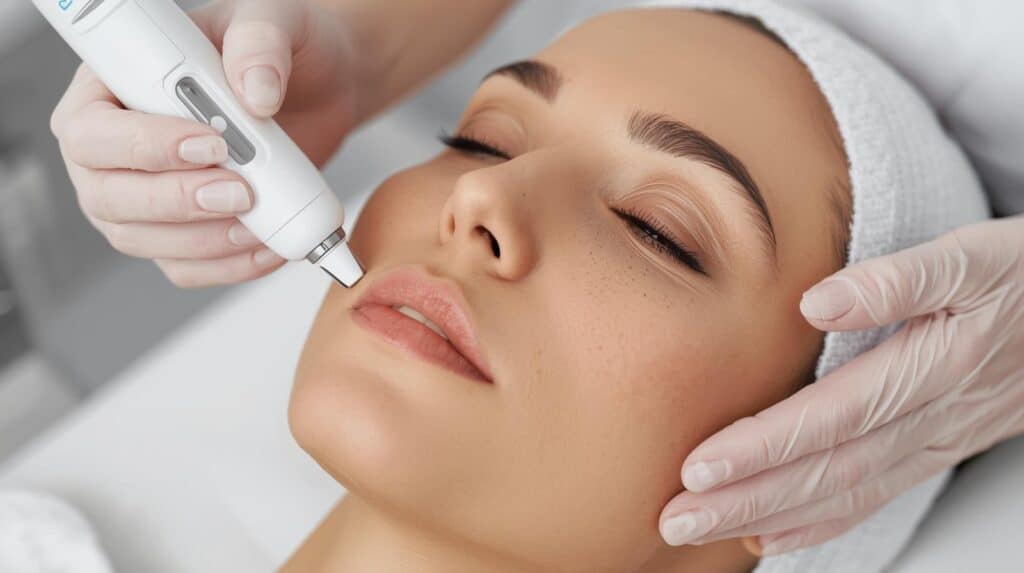
It is generally considered a minimally invasive outpatient procedure, so most people go home the same day.
At-home rollers and stamping devices are also sold to consumers, but they are not equivalent to professional microneedling and can carry risks including irritation, infection, scarring, and pigmentation changes if used incorrectly.
Why Wait To Wear Makeup After Microneedling?
Even if your skin feels fine soon after the procedure, the surface may still be more permeable and reactive than usual. Follow your provider’s instructions on when to resume makeup rather than relying on a universal hour count.
Microneedling creates many controlled microchannels in the treated skin as part of the procedure.
Immediately afterward, the skin barrier is temporarily disrupted and deserves careful aftercare until the surface has recovered.
Applying makeup too soon may increase irritation and introduce bacteria or other contaminants to freshly treated skin, especially if brushes, sponges, or products are not clean.
Best Makeup After Microneedling
If you have waited the amount of time recommended by your provider but the skin is still painful, hot, very red, swollen, or unusually tender,
delay makeup and contact the clinic if the symptoms are concerning. Once you are cleared to resume makeup, prioritize clean applicators and products that your skin already tolerates rather than assuming an expensive product is automatically safer.
Remember that your skin is more sensitive and vulnerable right now.
A simple, fragrance-free, non-irritating formula may be easier to tolerate than a heavily fragranced or highly active cosmetic. Avoid introducing several unfamiliar products at once while the skin is recovering.
How To Restart Makeup After Microneedling
- Wait for the minimum period recommended by your treatment provider and longer if the skin is still hot, red, peeling, swollen, or sore.
- Wash your hands before applying anything to the treated area.
- Use freshly cleaned brushes or sponges. Do not use an applicator that has been sitting damp or dirty.
- Start with products your skin already tolerates rather than testing a new foundation, primer, or active cosmetic during recovery.
- Remove makeup gently at the end of the day without scrubbing, picking, or using an exfoliating cleanser.
Microneedling Do’s And Don’ts
Don’ts:
- Don’t apply makeup until your clinician says it is appropriate and the treated skin has calmed. Many providers advise at least 24 hours, with a longer wait if redness, swelling, peeling, or tenderness persists.
- Pause potentially irritating actives such as vitamin C, retinoids, strong acids, and exfoliating acne treatments until your provider says they can be restarted.
- Don’t use scrubs, peels, or exfoliating acids on freshly treated skin. The concern is irritation and barrier disruption, not that every exfoliant literally creates tiny scrapes.
- Avoid fragranced, strongly exfoliating, or otherwise irritating products. “Chemical” does not automatically mean harsh, so focus on how the formula behaves on healing skin.
- Do not stop prescribed medicines or avoid medically necessary pain relief on your own. If your clinician gave you specific instructions about aspirin, ibuprofen, anticoagulants, or supplements that affect bleeding, follow those instructions and ask before making changes.
- Avoid heavy exercise, saunas, hot yoga, and intense sweating for the period recommended by your provider, often at least the first day, because heat and sweat can increase irritation.
- Do not apply extreme cold or direct ice to freshly treated skin unless your clinician specifically recommends it. A cool compress may be used in some aftercare plans.
- Minimize direct sun exposure while the skin is recovering and follow your provider’s sunscreen instructions. Continue diligent sun protection afterward because UV exposure can worsen redness and post-inflammatory pigmentation.
- Follow any clinic-specific advice about alcohol. Coffee does not need to be universally avoided after microneedling, but staying normally hydrated is sensible.
Do’s:
- Do follow your provider’s sun-protection instructions. Once sunscreen is appropriate for your freshly treated skin, choose a gentle broad-spectrum formula you tolerate.
- Do maintain your normal hydration. Drinking extra water does not replace topical aftercare, but avoiding dehydration supports general recovery.
- Do keep the first day relatively gentle if the skin feels hot or tender, and avoid unnecessary rubbing or touching.
- Do wash your hands before touching your face.
- Do cleanse only when and how your provider recommends, using lukewarm water and a gentle cleanser rather than a harsh soap.
- Do clean all your makeup applicators before use.
- Do follow your aftercare instructions from your physician/dermatologist.
- Do let yourself feel confident and strut your stuff after you’ve healed!
When To Contact Your Microneedling Provider
Some redness, sensitivity, dryness, or mild swelling can be expected after professional microneedling. Contact your provider if symptoms are severe, getting worse instead of better, or include pus, spreading redness, marked swelling, blistering, fever, or increasing pain.
If you are unsure whether your skin has recovered enough for makeup, sunscreen, exercise, or active skincare, your treating clinician is the best source because they know the device, needle depth, and products used during your procedure.
Microneedling At Home
At-home devices may look like a convenient alternative to professional treatment, but they do not provide the same control over needle depth, sterility, or treatment planning.
If your goal is to treat acne scars, significant texture changes, or pigmentation, professional assessment is the safer route because those concerns may require tailored treatment or may not be appropriate for needling at all.
At-home rollers are better thought of as cosmetic tools rather than a substitute for professional microneedling. The main priorities are understanding the risks, keeping the device clean, avoiding inflamed or infected skin, and not trying to recreate professional needle depths at home.
But, before we get into that, please make sure you always consult with a physician before attempting any at-home microneedling processes.
Microneedling isn’t for everyone, and everybody has their own unique set of needs and responses to different treatments.
The Tools For At-Home Microneedling
There are many at-home rolling and stamping devices marketed for skin care, but their safety and quality vary.
Do not increase needle depth simply because you feel comfortable. Deeper needling raises the risk of bleeding, infection, scarring, and pigment changes and is better left to trained professionals.
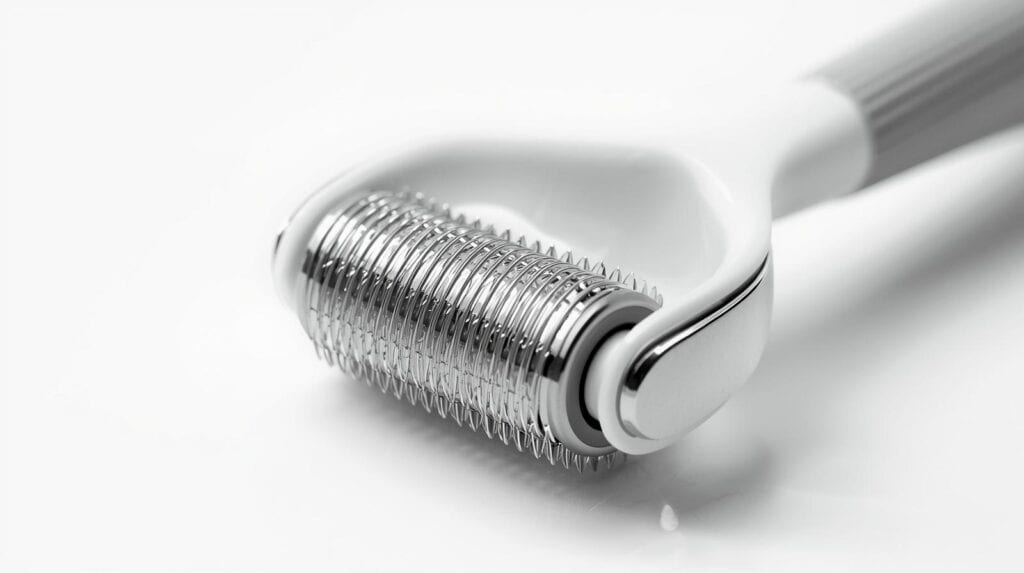
These tools are called derma rollers and look like something you’d find drawn out in a medieval notebook.
Consumer rollers are generally designed for more superficial use than professional devices, but they can still irritate or injure skin if used incorrectly.
Avoid experimenting with progressively deeper needles at home. If you are considering a needling device, ask a dermatologist which, if any, needle length is appropriate for your skin and concern.
Follow the manufacturer’s device-cleaning and disinfection directions exactly. Household disinfection is not the same as medical sterilization, so a home roller should never be assumed to be sterile simply because it was placed in alcohol.
While this tool does not penetrate as deeply as others, it still carries its own risks.
Using A Derma Roller
Okay, so you’ve got your derma roller, and you’ve washed your hands and face – now what?
Do not roll over a random serum simply to improve glide. Freshly needled skin can absorb ingredients differently, and products that are normally comfortable may sting or irritate when used with needling.
Larger needle lengths should not be treated as a routine DIY step. Professional microneedling uses controlled skin preparation, single-use or sterile components, and protocols that cannot be reproduced safely with casual home disinfection.
Do not add a numbing cream to an at-home needling routine unless a clinician specifically advises it. Numbing products have their own dosing and absorption risks, and reduced sensation can make it easier to over-treat the skin.
If you use a consumer roller at all, follow the exact directions supplied with that device rather than using a universal number of passes. Repeated passes over the same area can increase irritation.
Never press harder to chase a stronger sensation or visible pinpoint bleeding at home.
Do not assume that once- or twice-weekly needling is appropriate for every device or skin type. Frequency should depend on needle length, skin response, and professional guidance.
Avoid increasing frequency to every other day simply because the needle is short. Repeated irritation can damage the barrier and worsen redness or pigmentation.
For a visual tutorial with more in-depth information, take a look at the video below from skinBEAUTIFUL RX on YouTube.
At Home Aftercare
At-home rolling still calls for cautious aftercare, but it should not be assumed to have the same treatment depth, sterility, or recovery profile as professional microneedling.
Use gentle skin care afterward and stop if the skin becomes unusually painful, swollen, blistered, or persistently inflamed.
Letting the skin rest without harsh products or direct sunlight is still important, and you will probably still experience some redness or swelling.
Never be afraid to consult with your doctor or dermatologist if something doesn’t feel or look right or if you develop any fever or rash.
Keep the routine simple and moisturize with products your skin already tolerates once they are appropriate for your aftercare plan.
You can document your journey with pictures as you go week to week.
Professional microneedling results develop gradually as the skin remodels, and the timeline varies by treatment depth, concern, and number of sessions. Do not expect a home roller to produce the same result on the same schedule.
Final Thoughts On Microneedling
Professional microneedling can be used to improve selected concerns such as acne scars, fine lines, and uneven texture in appropriate candidates.
Results vary, and several sessions may be needed depending on the concern and treatment plan.
Just as with any procedure, aftercare is extremely important and must be taken seriously.
Listen to your doctors and follow instructions.
If you are considering a derma roller at home, approach it cautiously and avoid deeper or more aggressive techniques that belong in a professional setting.
For many people, a simple non-invasive skin-care routine may be a better at-home option than repeatedly creating micro-injuries in the skin.
The most important factor is choosing an approach that matches your skin condition, treatment goals, and risk tolerance.
If microneedling is appropriate for you, realistic expectations and good aftercare matter just as much as the procedure itself.
If you are interested in microneedling, a consultation with a qualified clinician can help determine whether it fits your skin type and concern.
Always do some research and listen to your beautiful body on what’s best for you.
Makeup After Microneedling FAQs
Can I Wear Makeup 24 Hours After Microneedling?
Some providers allow makeup after 24 hours, while others recommend waiting longer. Use the timing given by the clinician who performed your treatment, and wait longer if the skin is still red, sore, swollen, peeling, or irritated.
What Makeup Is Best After Microneedling?
Once your provider says makeup is safe, choose simple products that your skin already tolerates and apply them with clean hands and clean tools. Avoid fragranced or strongly active cosmetics if your skin is still sensitive.
Can I Wear Tinted Sunscreen Instead Of Foundation?
A tinted sunscreen may provide light coverage once sunscreen is appropriate for your post-procedure skin, but it should still be introduced according to your provider’s aftercare instructions.
Can Makeup Cause Breakouts After Microneedling?
Freshly treated skin can be more reactive, and contaminated applicators or irritating formulas may contribute to breakouts or follicle irritation. Waiting until the skin has settled and keeping tools clean can reduce the risk.
Related Articles
I Drank Coffee Before Microblading – Should You Worry?
Types Of Facials And How To Choose – Complete Guide