
Toner – Before Or After Clay Mask?
Clay masks can be a useful occasional step when you want to absorb excess surface oil, reduce shine, or give congested-feeling skin a temporary reset.
Once you start adding multiple products, the bigger question is not simply which one goes first, but whether both products belong in the same routine at all.
Toner is another optional skincare step, and the right place for it depends heavily on whether the formula is mainly hydrating, soothing, oil-controlling, or exfoliating.
Modern toners are usually used to deliver hydrating, soothing, or exfoliating ingredients. Healthy skin regulates its own pH, so toner is not generally required simply to “rebalance” the skin after cleansing.
However, what if you want to use both products in your skincare routine at once?
Depending on the toner and clay mask formulas, you may be able to use both comfortably in the same routine, or it may be better to separate them to reduce dryness, stinging, or over-exfoliation.
Do you use toner before or after a clay mask?
In most routines, cleanse first, apply the clay mask, rinse it off, then use a gentle hydrating or soothing toner if you want one. You usually do not need toner before the mask or both before and after. If the toner or mask contains exfoliating acids or other potentially irritating actives, use only one active step or separate them into different routines unless you already know your skin tolerates the combination.
The simplest way to decide is to look at what each product is trying to do, not just the words “toner” and “clay mask” on the labels.
For example, if both your toner and clay mask contain a BHA such as salicylic acid, using both in one routine may add irritation without adding much extra benefit.
Toner And Clay Mask Order At A Glance
- Hydrating or soothing toner: use it after rinsing off the clay mask, then apply moisturiser.
- Exfoliating toner: consider using it on a different day if the mask already contains AHAs, BHAs, or other irritating actives.
- Before the mask: toner is usually unnecessary because the mask is applied to freshly cleansed skin and the toner may simply be rinsed away.
- Before and after: usually unnecessary and can add extra product without extra benefit.
- If your skin feels tight, hot, itchy, or stingy: skip extra actives and follow the mask with a simple moisturiser instead.
First, Identify What Kind Of Toner You Have
| Toner Type | Examples | Best Approach With A Clay Mask |
| Hydrating | Glycerin, hyaluronic acid, panthenol | Usually fine after the mask |
| Soothing | Centella, oat, aloe, beta-glucan | Usually fine after the mask if your skin tolerates it |
| Exfoliating | Salicylic acid, glycolic acid, lactic acid | Often better separated from an exfoliating clay mask |
| Astringent or strongly fragranced | High levels of volatile alcohol, witch hazel, fragrance | Use cautiously if the clay mask already leaves skin tight or irritated |
A product does not have to fit neatly into one category, so read the full ingredient list and directions. A toner can be hydrating and exfoliating at the same time, which may change how often you want to pair it with a clay mask.
Should You Use Toner Before Or After a Clay Mask?
Toners
A toner is a leave-on skincare product that can deliver ingredients such as humectants, soothing agents, antioxidants, or exfoliating acids. It is not a substitute for cleansing and is not essential in every routine.
Toners are typically used after cleansing and before moisturisers. They are also different from micellar water, which is primarily used as a cleansing or makeup-removal step.
The term “toner” now covers many different formulas, so two products in the same category can behave very differently.
That is why toner should be chosen for a specific purpose rather than added automatically because you think every routine needs one.
Older cleansers could be more alkaline or stripping, which helped popularize the idea that toner was needed afterward. Modern cleansers are often formulated closer to the skin’s preferred pH range.
Today, many cleansers are designed to remove sunscreen, makeup, oil, and debris without leaving the skin excessively tight or dry.

Toners can still be useful when their ingredients fill a clear role in your routine.
For example, toners can be formulated with exfoliating acids like BHAs, the most popular being Salicylic Acid.
BHA toners can help keep pores clearer and reduce the appearance of blackheads for some people. They can also be useful in acne-prone routines, but they do not permanently shrink pore size.
If you’re looking for an exfoliating option, this brightening toner is one product to compare, but check the current ingredient list and avoid stacking it with another strong exfoliating step if your skin is sensitive.
Other toners are primarily hydrating or soothing and may contain humectants such as hyaluronic acid, glycerin, or botanical extracts.
Clay Masks
Clay masks also vary widely in formula. Some are mainly oil-absorbing, while others combine clay with exfoliating acids, fragrance, botanical extracts, or moisturising ingredients.
Some clay masks are formulated with BHAs or AHAs, which makes them more active than a simple kaolin- or bentonite-based mask.
Others are balanced with humectants, emollients, or soothing ingredients to reduce the tight feel that clay can sometimes cause.
Your skin type, current barrier condition, and the rest of your routine should guide which clay mask suits you best.
Clay masks can absorb surface oil and help lift some residue from the skin, which is why they often leave an immediately matte feel. They do not “detox” the body or literally draw toxins out through the skin.
If you use toner in the same routine, choose one that does not unnecessarily duplicate strong exfoliating or irritating ingredients in the mask.
Clay masks are commonly used at home, but processing time varies by formula. Follow the product directions instead of waiting for every mask to become fully dry or crack on the skin, since over-drying can feel tight or irritating.
This clay mask is one option designed to absorb excess oil and temporarily make pores look less noticeable.
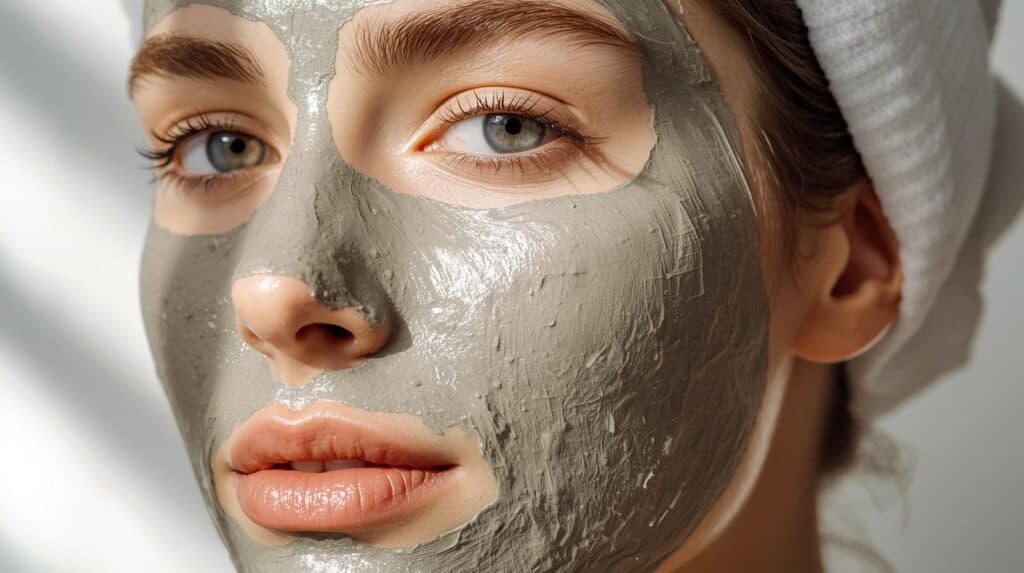
The easiest way to pair the two is to decide whether your toner is hydrating and soothing or exfoliating and active.
A Simple Clay Mask Routine
- Cleanse: remove sunscreen, makeup, oil, and surface debris with your usual gentle cleanser.
- Apply the clay mask: use it exactly as directed and avoid extending the processing time just because the mask has not cracked or fully dried.
- Rinse thoroughly: use lukewarm water and avoid aggressive scrubbing while removing the mask.
- Apply toner only if useful: choose a hydrating or soothing toner if you want one, or skip toner entirely if the skin already feels sensitive.
- Moisturise: finish with a moisturiser that supports skin comfort and reduces the dry or tight feeling clay can leave behind.
- Use sunscreen in daytime: this is especially important if your routine includes exfoliating acids.
Adjust The Routine To Your Skin Type
- Oily or combination skin: a clay mask may help reduce surface shine temporarily, but you still need moisturiser afterward if the skin feels tight.
- Dry skin: use clay less aggressively, avoid letting the mask over-dry, and favour a hydrating toner rather than an exfoliating one in the same routine.
- Sensitive or reactive skin: keep the routine simple and avoid combining multiple acids, fragranced products, or strongly astringent steps around the mask.
- Acne-prone skin: clay may reduce oil temporarily, while salicylic acid can help with clogged pores, but using several active products together can still cause irritation.
How To Structure Your Skincare Routine
So when should you use your toner? In most cases, if you use one at all, apply it after rinsing off the mask and before moisturiser.
Because a well-formulated cleanser does not usually require a separate pH-correcting step, toner before the mask is rarely necessary and may simply be rinsed away when you remove the mask.
If you have an exfoliating toner and an exfoliating clay mask, consider using only one in that routine, especially if your skin is new to acids, dry, sensitive, or already irritated.
For example, if both your toner and mask contain salicylic acid, layering them may increase dryness, stinging, or irritation without adding much extra benefit.
If your toner is hydrating, soothing, and non-exfoliating, using it after the mask can be a comfortable optional step before moisturiser.
Applying it afterward also prevents you from simply rinsing the leave-on toner away with the mask.
Overall, the correct order depends less on the product category and more on the ingredient lists, directions, and how your skin tolerates them.
Check the ingredient lists and directions for both products, and pay attention to your own tolerance when deciding whether they belong in the same routine.
If the products overlap too much, use the toner on a different day or skip it in the mask routine.
If they are compatible, use the toner after the clay mask, then follow with moisturiser. For daytime routines, finish with sunscreen.
Skincare does not need to be complicated. Keep the routine simple, introduce new actives gradually, and prioritise consistency over stacking as many products as possible.
When To Simplify Or Stop The Routine
Stinging, burning, marked redness, persistent itching, swelling, or a tight feeling that lasts well after rinsing are signs to stop layering more active products. Rinse the skin, use a simple moisturiser, and avoid repeating the same combination until the skin has recovered.
If you develop significant swelling, blistering, severe pain, or a persistent rash, seek appropriate medical advice rather than trying to correct the reaction with more skincare.
Clay Mask And Toner FAQs
Can You Use Toner Before A Clay Mask?
You can, but it is usually unnecessary. A clay mask is generally applied after cleansing, and a leave-on toner used beforehand may simply be covered by the mask and rinsed away afterward.
Should You Use Toner After A Clay Mask?
A gentle hydrating or soothing toner can be used after the mask if your skin feels comfortable. If the mask was exfoliating or your skin feels tight or irritated, skipping toner and going straight to moisturiser may be better.
Can You Use Salicylic Acid Toner After A Clay Mask?
It depends on the mask and your tolerance. If the clay mask already contains exfoliating acids, or your skin is dry or sensitive, separating the salicylic acid toner into another routine is the more conservative approach.
Do You Need To Moisturise After A Clay Mask?
Moisturiser is usually a useful final step because clay can leave the skin feeling temporarily tight or dry. Choose a formula that suits your skin type rather than trying to counter dryness with more exfoliating products.
How Often Should You Use A Clay Mask?
There is no universal schedule. Follow the product directions and adjust based on how your skin feels. If you notice increasing dryness, sensitivity, flaking, or stinging, reduce frequency rather than pushing through the irritation.
Final Takeaway
For most people, the easiest order is cleanser, clay mask, optional gentle toner, then moisturiser. Toner before the mask is rarely necessary, and using an exfoliating toner after an already-active clay mask can be more than your skin needs.
Related Articles
What Is The Microblading Ghosting Phase? – And What To Expect
Microblading Scars – What To Know