
Ginger Soap Benefits
Ginger is a versatile plant ingredient used in food, traditional remedies, and a growing range of skincare products.
The ginger rhizome has a long history of traditional use, and compounds such as gingerols and shogaols have also been studied for antioxidant and anti-inflammatory activity.
Ginger-derived ingredients have also found their way into the beauty and skincare world, especially in cleansers, body products, and botanical formulas.
Because ginger extracts contain compounds with antioxidant and anti-inflammatory potential, ginger now appears in skincare products such as soaps. However, evidence for topical ginger in humans is still limited, especially for rinse-off products.
Whether you are interested in making soap at home or buying a pre-made ginger soap, pay attention to the entire formula rather than assuming ginger alone determines how gentle or effective the cleanser will be.
Ginger can appear in cosmetics as extracts, oils, powders, or fragrance components. The concentration, formulation, and amount of time the product remains on the skin all affect what you can realistically expect from it.
What are the benefits of using a ginger soap?
Ginger contains antioxidant and anti-inflammatory compounds that are interesting from a skincare perspective, but a ginger soap should primarily be viewed as a cleanser. There is not strong clinical evidence that ginger soap fades scars, treats pigmentation, boosts circulation in a meaningful way, or cures inflammatory skin conditions.
A well-formulated soap may leave skin feeling clean and smooth, but skin does not need a soap to “detox,” and brightening claims depend on the complete formula rather than ginger alone.
Below, we’ll look at what ginger soap can realistically do, which claims deserve more caution, and how to use ginger-based skincare without unnecessarily irritating your skin.
What Is Ginger Soap?
Ginger soap is a cleansing product formulated with a ginger-derived ingredient such as ginger extract, ginger oil, or ginger powder. Ginger is not necessarily the main ingredient, so check the ingredient list rather than relying on the product name.
Ginger cleansers can be homemade or store-bought and come in both liquid and solid forms. The cleansing base, fragrance level, and ginger ingredient matter more than whether the product is a bar or liquid.
Ginger contains several biologically active compounds, but evidence for eating ginger should not automatically be applied to ginger soap or other topical products.
Ginger is a rhizome with a long history of culinary and traditional medicinal use, and ginger-derived ingredients are also used in cosmetics.
Laboratory and early clinical research has explored ginger’s anti-inflammatory and antioxidant properties, although evidence for topical ginger remains much less established than many beauty claims suggest.
Oral ginger has been studied for concerns such as nausea, but those findings do not mean a ginger soap provides the same health effects.
Likewise, claims about pain relief or immune effects from consumed ginger should not be used to promise benefits from a rinse-off cleanser.
For skincare, the most practical question is whether the finished soap cleanses comfortably without leaving your skin tight, itchy, or irritated.
Here is a ginger soap tutorial from The Soap Craft PH on YouTube. If you are making true soap from scratch, remember that lye is caustic before saponification, so use proper eye and skin protection, good ventilation, an accurate scale, and a tested recipe rather than improvising ingredient ratios.
Ginger Benefits In Skincare
Ginger contains compounds that have shown anti-inflammatory and antioxidant activity in laboratory and preclinical research.
That does not guarantee a ginger soap will calm irritation. Soap bases, fragrance, essential oils, and the ginger ingredient itself can all irritate sensitive skin in some users.
Ginger-derived compounds have also shown antioxidant activity. In a rinse-off soap, however, contact time is short, so it is more realistic to treat this as a supporting formulation feature than as proven protection from environmental damage.
A ginger soap may leave the skin looking fresh and clean after washing, particularly if the formula removes sweat, sunscreen, and excess oil without leaving the skin stripped or tight.
Warm water, massage, and rubbing can temporarily make skin look flushed, but there is not good evidence that ginger soap meaningfully improves circulation for cosmetic results.
A ginger soap should not be expected to reduce cellulite. Cellulite involves the structure of fat and connective tissue beneath the skin, which a rinse-off cleanser cannot change.
Some people enjoy ginger-scented bath products for the sensory experience, but a bath does not “detox” the body and fragrance should not be confused with a treatment effect.
Warm bath water may feel soothing to tired muscles or joints, but there is not enough evidence to claim that the scent or ginger in soap treats joint pain.
A warm bath may feel comforting when you are unwell, but ginger soap should not be treated as a medical treatment for illness.
Claims that ginger soap fades dark marks, hypopigmented scars, or acne scars are not well supported. A rinse-off cleanser is also less likely to affect pigmentation than a well-studied leave-on treatment.
Hypopigmentation, where an area is lighter than surrounding skin, has many possible causes and should not be treated with ginger soap based on this claim. Persistent or unexplained pigment loss is worth discussing with a dermatologist.
There is not strong clinical evidence that washing with ginger soap meaningfully stimulates collagen production or increases skin elasticity.
If your goal is fine lines or wrinkles, daily sunscreen and evidence-based leave-on ingredients such as retinoids have much stronger support than a ginger cleanser.
Other Ingredients Used With Ginger Soap
Ginger can be one interesting botanical ingredient in a cleanser, but the complete formula determines how it performs on your skin.
Several other botanical ingredients are often paired with ginger in soaps. “Natural” does not automatically mean gentler, so consider potential irritation as well as the marketing benefits.
If you plan to use the soap on the face as well as the body, check whether the formula is mild enough for facial skin. A traditional high-pH soap bar may feel more drying than a gentle facial cleanser.
Turmeric
Turmeric is a plant-derived ingredient often paired with ginger in skincare products because both are marketed for antioxidant and soothing support.
Like ginger, turmeric comes from a rhizome and has a long history of culinary and traditional use, but oral-health research should not be directly transferred to rinse-off skincare claims.
Turmeric contains curcuminoids with antioxidant and anti-inflammatory activity, although cosmetic benefits depend on formulation, concentration, and the quality of available human evidence.
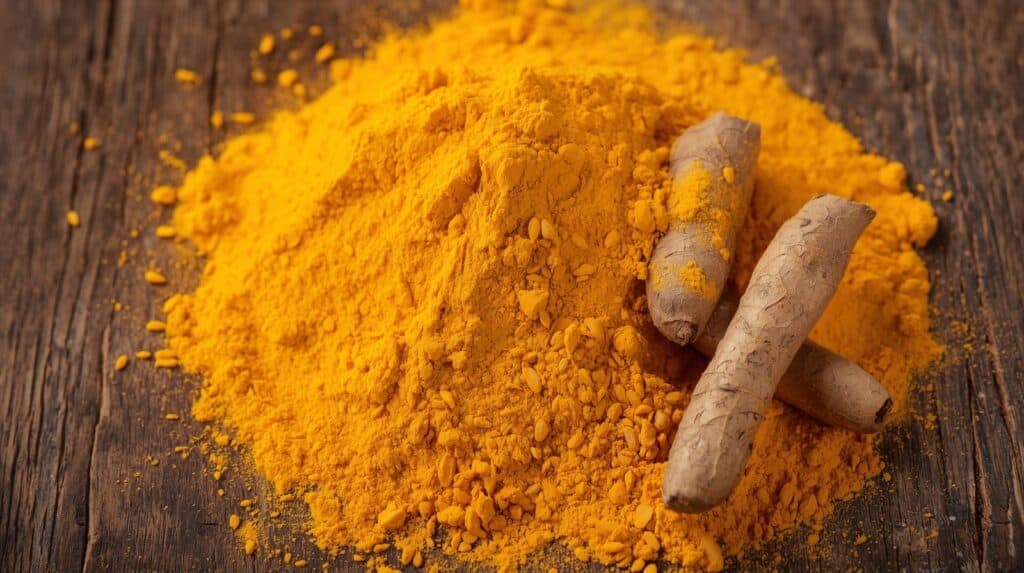
Do not rely on turmeric soap to treat acne or erase acne marks. If acne or post-inflammatory hyperpigmentation is your main concern, choose treatments with stronger clinical evidence.
A ginger-and-turmeric soap can be an appealing botanical cleanser, but it does not literally clear clogged pores or guarantee brighter skin.
Whether it leaves your skin comfortable and smooth depends more on the finished cleanser and your skin type than on the number of botanicals included.
Citrus Extract
Citrus extracts such as lemon sometimes appear in scented or brightening-themed soaps, but they deserve extra caution in DIY skincare.
Raw lemon juice should not be used as a DIY treatment for discoloration. Citrus juice can irritate the skin, and some citrus compounds can trigger a phototoxic reaction when exposed to UVA light.
If you want to address dark spots or post-acne marks, sunscreen plus a proven leave-on ingredient is generally a more predictable approach than citrus-based DIY remedies.
A commercially formulated lemon-and-ginger soap may be fine if your skin tolerates it, but stop using it if you develop stinging, persistent redness, itching, or dryness.
Lemon and Honey
It is better to skip DIY lemon-and-ginger face masks and spot treatments. Raw citrus can irritate skin and may cause a phototoxic reaction after sun exposure.
Honey is primarily a humectant and has been studied for antimicrobial and wound-related uses, but household honey should not be expected to exfoliate away pigmentation or erase scars.
If you like botanical skincare, a properly formulated commercial product is more predictable than mixing raw ginger and lemon directly on facial skin.
Sugar and Olive Oil
A sugar-and-oil body scrub can mechanically remove loose surface flakes, but adding ginger does not make it medically beneficial. Keep coarse scrubs away from inflamed acne, eczema, cuts, freshly shaved skin, and other irritated areas.
Rubbing a scrub over skin may cause temporary flushing, but that should not be confused with a lasting circulation or skin-health benefit.
When To Use Ginger Soap In Your Routine
In skincare, ginger is best treated as a supporting botanical ingredient rather than a treatment category on its own.
Ginger extract can be included in a formulated soap, but raw ginger should not be treated as a proven leave-on skin treatment.
If your goal is to fade post-acne discoloration, choose a treatment designed for pigmentation rather than applying raw ginger.
Do not place a fresh ginger slice on a dark mark and leave the juice to dry. Raw plant material can irritate or sensitize skin, and there is not good clinical evidence that this method fades pigmentation.
For discoloration, daily sun protection and ingredients such as retinoids, azelaic acid, niacinamide, or other dermatologist-recommended options have better support depending on the type of mark.
Ginger can work well as part of a soap fragrance or botanical formula, but it should not be expected to treat every skin concern.
Adding more botanicals does not necessarily improve results and can increase the chance of irritation, especially in DIY masks and scrubs.
When ginger is combined with other ingredients, judge the product as a complete formula rather than assuming that more botanicals automatically make a cleanser more effective or gentler.
For most users, the realistic benefit of ginger soap is straightforward cleansing with a botanical ingredient profile.
Ginger-derived cosmetic ingredients can be well tolerated in properly formulated products, but they are not side-effect-free. Botanical extracts, essential oils, fragrance components, and the soap base itself can cause irritation or allergic contact dermatitis in susceptible users.
If you are planning to incorporate ginger soap into your routine, patch-test the finished product rather than raw ginger, especially if you have reactive skin, eczema-prone skin, or a history of fragrance allergy.
Ginger soap may work as a daily body cleanser if your skin remains comfortable. For the face, a gentle facial cleanser may be a better option if a traditional soap bar leaves you tight, dry, or stinging after rinsing.
Whether it feels drying depends on the surfactants, soap pH, added fragrance, oils, and your own skin, not simply on the presence of ginger.
A suitable cleanser should leave the skin feeling clean without persistent tightness, burning, or itching. Stop using the product if irritation develops.
Conclusion
Ginger is an interesting botanical ingredient with a long history of traditional use and research into antioxidant and anti-inflammatory activity.
Some health effects of consumed ginger, such as its use for certain types of nausea, have been studied separately from topical cosmetics. Those findings should not be transferred to soap.
Cosmetically, ginger extract may contribute antioxidant or soothing support in a well-formulated product, but the clinical evidence for ginger soap itself remains limited and rinse-off contact time is short.
Claims that ginger soap fades discoloration, stimulates collagen, treats scars, or smooths wrinkles go beyond what the current evidence supports.
If you want to add ginger soap to your bath or skincare routine, focus on whether the finished cleanser suits your skin rather than choosing it for unsupported detox, scar-fading, collagen, or circulation claims.
If you enjoy ginger soap, use it primarily for gentle cleansing and judge it by how your skin responds. Choose another cleanser if it causes persistent dryness, burning, itching, or redness, and use targeted, evidence-based products for acne, pigmentation, scars, or signs of aging.
Related Articles