
Can You Mix Blue And Purple Shampoo?
If you have freshly dyed brown or blonde hair, you may be looking for ways to keep the colour looking balanced between salon visits.
That may mean using less heat, washing less aggressively, and choosing products that help slow fading without adding unnecessary dryness to lightened hair.
Even with careful maintenance, yellow or orange brassiness can become more noticeable as color fades. A pigment-depositing toning shampoo can help neutralise those unwanted warm tones between color appointments.
Among the most common at-home toning products are blue and purple shampoos, which deposit temporary pigment to soften different types of brassiness.
For a hair color beginner, choosing the right toning shade can be confusing because blue and purple target different kinds of brassiness.
Blue and purple toning shampoos are popular because they are easy to add to a maintenance routine, but they are most useful when the pigment matches the unwanted tone you actually see.
If your hair shows both orange and yellow tones, it makes sense to wonder whether mixing blue and purple shampoo can address both at once.
So, can you mix blue and purple shampoo?
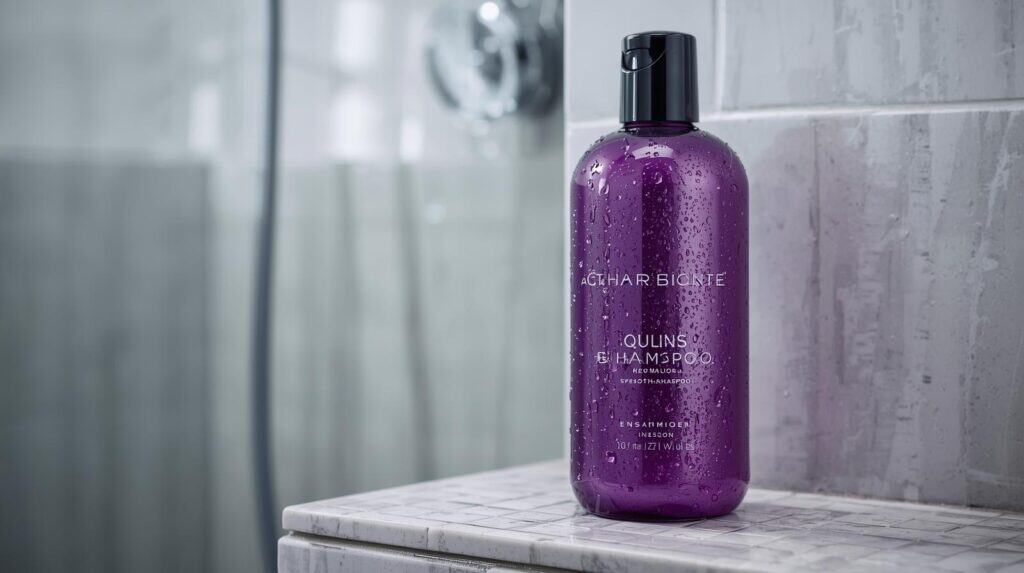
Yes, you can use blue and purple shampoo in the same hair routine, and some formulas can be mixed in your palm. However, mixing is not always necessary or predictable. Blue is best for orange tones, while purple is best for yellow tones, so choose your approach based on the brassiness you actually see.
Below, we’ll explain when blue shampoo makes sense, when purple shampoo is the better choice, how to use both safely, and what to watch for if your hair is very light or porous.
Blue Toning Shampoo
If you’ve lightened brunette hair or lifted your hair to a darker blonde, you may notice orange or coppery brassiness becoming more visible as the color fades.
If that sounds familiar, a blue toning shampoo may help because the deposited blue pigment can visually neutralise orange or coppery tones.
When hair is lightened, underlying warm pigments can become exposed, and those tones vary depending on your natural color and how light the hair has been lifted.
Hair can certainly look cool or ashy after colouring, but the underlying pigment revealed during lightening is often warm. Toning products rely on opposite colours on the colour wheel to make that brassiness look more neutral.
As artificial color fades, those warm underlying tones may become more noticeable, especially on highlighted or lightened hair.
Orange sits opposite blue on the color wheel, which is why blue-toning shampoo is generally the better match for orange or copper brassiness. It deposits temporary pigment rather than permanently changing your hair color.
Purple Toning Shampoo
If your hair is platinum, silver, highlighted, or light blonde, the brassiness you notice may lean more yellow than orange.
In that case, your strands may develop a warmer yellow cast between color appointments.
Natural blonde, grey, or white hair can also develop yellow-looking tones from product buildup, minerals, environmental exposure, or natural colour variation.
When yellow is the main tone you want to soften, a purple shampoo is usually the more targeted option.
Purple is opposite yellow on the color wheel, so a purple toning shampoo can help reduce the appearance of yellow brassiness.
Depending on the starting shade and how much pigment the hair picks up, the result may look more neutral, beige, silver, or ashy. Very porous or heavily lightened hair can grab pigment quickly, so follow the product’s timing directions and start conservatively.
Why Mix Shampoos?
Lightened hair is often multidimensional. Highlights, lowlights, roots, mids, and ends can sit at different levels and show different amounts of warmth.
Those different sections can fade at different rates, which is why one head of hair may show both yellow and orange brassiness at the same time.
If that happens, you may benefit from both blue and purple pigments, but how you use them should depend on where those tones appear, how light those sections are, and how porous your hair is.
Because each toning shampoo targets a different warm tone, mixing them can sound like an easy two-in-one solution, but it can also make the final pigment strength harder to predict.
You can physically mix blue and purple shampoo, but that does not mean every combination will give a better result. The pigment strength, shampoo base, and recommended processing time can vary from one formula to another.
If you want to try mixing, use products with compatible directions and combine only a small amount in your palm for that wash rather than altering either bottle. A small test section can also show how quickly your hair picks up the mixed pigment.
For most people, using the colour that directly matches the visible brassiness is simpler and easier to control: blue for orange, purple for yellow.
Mixing the two creates a blue-violet pigment blend, which may help when your brassiness sits between yellow and orange. However, an uneven ratio or a very strong formula can over-tone pale sections or leave porous areas with a temporary blue or violet cast.
If you would rather avoid experimenting with ratios, you can still use both shampoos in the same overall routine by targeting different sections or alternating them as needed.
How To Use Both Blue And Purple Shampoos
If your hair has clearly defined areas that look more orange or yellow, such as separate colour-blocked sections or highlights lifted to different levels,
You can use both shampoos in the same washing session by applying the appropriate shade only where it is needed, rather than coating the entire head with both pigments.
Apply blue shampoo to orange-toned sections and purple shampoo to yellow-toned sections, following each product’s directions for timing. Rinse thoroughly, and avoid leaving either formula on longer simply to chase a cooler result.
If you have blended highlights or the yellow and orange tones are dispersed throughout the hair, alternating products from wash to wash can be easier to control than section-by-section application.
In this case, you can alternate blue and purple toning shampoo based on which type of brassiness looks more noticeable at each wash.
There is usually no need to shampoo twice in a row with two toning cleansers. Repeated cleansing can leave lightened or porous hair feeling dry, while excess pigment can make pale sections look dull or temporarily blue-violet.
How often you wash depends on your scalp, hair type, styling routine, and colour service. With toning shampoo, the main goal is to avoid using more pigment or cleansing than your hair actually needs.
Toning shampoos vary widely in strength and conditioning ingredients, so there is no universal once-a-week rule. Start with the frequency listed on your product, watch how your hair responds, and reduce use if your strands begin to feel dry or take on too much blue or violet pigment.
A practical approach is to start with one toning shampoo when brassiness appears, then reassess your colour in natural light before deciding whether the other shade is needed at a later wash.
This gives you more control and helps you avoid over-toning lighter sections. If your hair is bleached, very porous, or fragile, a strand test can show how quickly it picks up pigment before you apply the shampoo more broadly.
You do not necessarily have to choose only purple or only blue shampoo for your entire routine.
Keeping both colours on hand can make sense if your hair genuinely develops both yellow and orange brassiness. If your unwanted warmth consistently leans one direction, one targeted shampoo may be all you need.
If you’re looking for separate purple and blue options from the same brand, you can compare this brand’s purple and blue shampoos. Follow the directions on each formula rather than assuming they need the same processing time.
Related Questions
Can I follow up a toning shampoo with a toning conditioner?
Yes, if the product directions allow it. You can use a matching toning conditioner after toning shampoo, or use a purple conditioner after blue shampoo (or vice versa) when your hair shows a mix of yellow and orange warmth and needs additional conditioning.
A toning conditioner deposits pigment while also conditioning the hair. Its pigment strength varies by formula, so it is not automatically weaker than every toning shampoo.
For hair that feels dry after toning shampoo, a pigmented conditioner may be a more comfortable way to maintain tone. As with shampoo, follow the label, rinse thoroughly, and use extra caution with processing time on very pale, porous, or heavily lightened hair.
Related Articles
Can Purple Shampoo Cause Hair Loss?
Best Alternatives To Acrylic Nails
Nail Hardener Vs. Nail Strengthener