
7 Best Alternatives To Acrylic Nails
Long nails in different shapes and finishes have remained popular for decades, from simple overlays to dramatic extension sets.
Styles such as coffin, almond, square, and stiletto nails continue to appear across salon portfolios and social media, often with detailed art, chrome, charms, or decals.
Some people can grow long natural nails, while others experience splitting or breakage before reaching the length or shape they want. Extensions can create that look without waiting for natural growth.
Acrylic enhancements remain one of the best-known ways to add substantial length and structure, but they are not the only option.
Acrylic nails can create long, structured extensions that support many colors and designs and may wear for several weeks with maintenance.
They also come with tradeoffs, especially around prep, maintenance, removal, odor, and the risk of irritation or allergy.
Acrylic nail systems use liquid monomers and powder polymers that harden into the enhancement. These ingredients are not automatically “bad,” but uncured product, skin contact, fumes, and repeated exposure can irritate some users or contribute to allergic contact dermatitis.
Natural-nail damage can also happen when the nail is overfiled, enhancements are peeled off, or removal is too aggressive.
So, what are the best alternatives to acrylic nails?
Alternatives to acrylic nails include gel or PolyGel extensions, silk or fiberglass wraps, press-on nails, dip powder, nail stickers, and simply growing the natural nail. None is universally safer or better, so the right choice depends on the length, wear time, removal method, maintenance, and allergy or damage risk you are comfortable with.
Below, we compare seven common acrylic alternatives, including where each one works well and what limitations to consider.
What Are Acrylic Nails
Before we dive in, let’s make sure we are all on the same page about what exactly acrylic nails are.
Acrylic nails are fake nails that are applied at a salon using a liquid monomer and a powder polymer, which a nail technician mixes, bonds, and forms over your natural nail.
The mixture then hardens and creates a very strong and long acrylic layer that the technician shapes to look like a nail.

The technician uses her skills to create coffin, almond, square, or round shapes that look natural, albeit unnaturally long.
She then applies your choice of color and/or designs to complete your manicure.
One reason acrylics remain popular is that they can create a very rigid, durable enhancement when applied with proper structure.
They can add substantial length, but long acrylics can still crack, lift, or break under impact, especially during manual work.
Acrylic enhancements may remain on the nail through several infills, but maintenance timing varies with nail growth, lifting, balance, and salon technique. Do not keep a lifting or damaged enhancement in place simply to reach a fixed wear time.
Otherwise, there will be a gap between your cuticles and the acrylic edge where you have new growth.
Downsides Of Acrylic Nails
While acrylics can add awesome length and strength to your nail, they do have some downsides.
Professional application and removal add ongoing cost, and prices vary widely by salon, location, length, nail art, and maintenance needs.
Acrylic prep usually involves lightly removing surface shine and oils so the enhancement can adhere. Aggressive filing is unnecessary and can thin the natural nail.
The acrylic forms a mechanical and chemical bond at the prepared nail surface; it does not need to “meld” through the nail plate.
Proper removal should not intentionally remove layers of natural nail. Damage happens when product is peeled, pried, or filed through into the nail plate.
Repeated overfiling and traumatic removal can leave nails thin, peeling, or tender until the damaged nail grows out.
Infection risk is more closely linked to lifting, trapped moisture, injury, contaminated tools, and poor hygiene than to a specific number of weeks.
If an enhancement lifts away from the nail, the gap can trap moisture and debris. A lifting enhancement should be repaired or removed rather than glued back down over a contaminated area.
The application process isn’t pleasant either.
Acrylic application produces a noticeable monomer odor, so good salon ventilation matters for both clients and technicians.
Acrylate and methacrylate ingredients used across acrylic and gel systems can trigger allergic contact dermatitis in susceptible people.
Natural nails do not need to be heavily filed for acrylic application. When filing is excessive, the nail plate can become thin and weak, but the enhancement does not normally stop new nail from growing at the matrix.
After repeated trauma, nails may become thin, soft, peeling, or brittle. Yellow, green, painful, swollen, or lifting nails can also signal staining, infection, or another problem that deserves evaluation.
And worst of all, sometimes acrylic nails don’t even look that good.
If your technician is inexperienced or the quality of the polymer isn’t great, you can get lumpy and bumpy-looking fake nails.
These risks make application quality, hygiene, ventilation, maintenance, and removal just as important as the enhancement material itself.
If acrylic does not suit your nails, budget, or maintenance preferences, several other systems are worth comparing.
Each alternative below solves a slightly different problem, from temporary event nails to structured salon extensions.
Let’s dive in!
Best Alternatives To Acrylic Nails
1. Gel Or PolyGel Nail Extensions
Gel and PolyGel extensions can create a structured extension similar in appearance to acrylic, although the chemistry and handling are different.
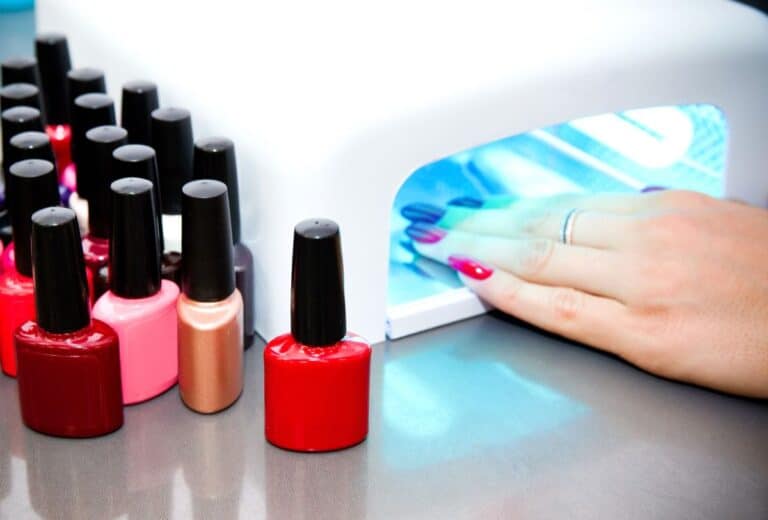
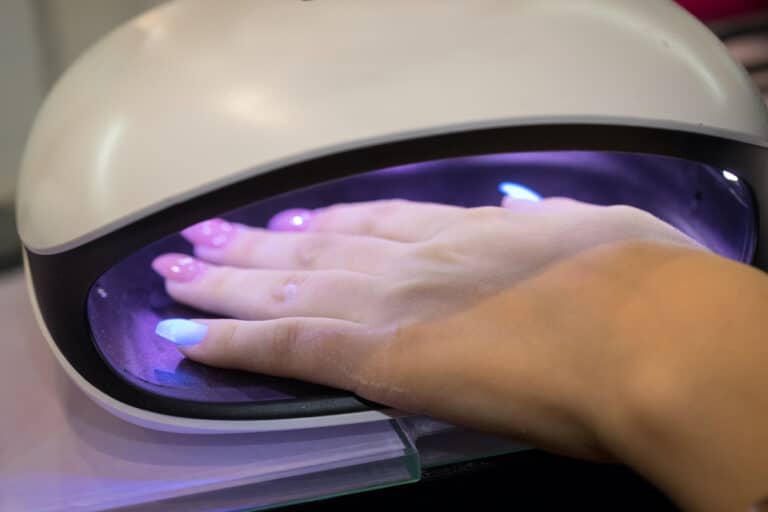
Gel extension systems use light-cured gel products. Many cure in LED or UV nail lamps, both of which use ultraviolet wavelengths, so the lamp should be compatible with the gel system.
They can add length and structure and are available in many shapes and sizes, from short overlays to long sculpted extensions.
A nail tech can also file them down and shape them as needed to achieve the result you want.
In that regard, they are similar to acrylics because they can be shaped almost any way you want.
Depending on the system, the extension may be sculpted from gel or bonded with a compatible light-cured gel adhesive.
This is not automatically safer than acrylic. Gel systems can also cause nail damage from prep or removal, and uncured acrylate ingredients can trigger skin irritation or allergy.
Most systems still require some nail preparation, but that should not mean aggressively thinning the natural nail plate.
And some gel nail extensions can be attached at the very tip of your nail to add length instead of covering your entire nailbed.
If reducing damage is a priority, focus on conservative prep, compatible curing, and gentle removal rather than assuming the gel material itself is damage-free.
Removal depends on the product. Some soft-gel extension systems soak off, while hard gel and some builder systems are file-off.
If the extension system is specifically labeled soak-off, surface filing followed by acetone can soften the product. Hard gel will not simply dissolve this way.
Softened soak-off gel should release with gentle pressure. If it still needs to be scraped or pried, continue the manufacturer-recommended removal process instead of forcing it off.
Gel extension wear varies with the system, length, nail growth, prep, and daily use. Do not wait for cracking or peeling before repairing significant lifting.
We love gel nail extensions as an alternative to acrylics; however, they are not without risks either.
If you don’t remove them properly, for example, if you peel them off when you notice them starting to lift, you can accidentally remove a layer of your natural nail.
So that’s something you want to be very mindful of.
Gel extensions can be salon-applied or sold in home kits. Home use requires careful product handling, keeping uncured gel off the skin, and using the lamp recommended for the system.
They can be a good fit if you prefer light-cured gel, but they are not universally superior to acrylic in strength, safety, cost, or maintenance.
Pros:
- Easily add length and strength
- Can provide multi-week wear depending on the system
- Can be gentle when prep and removal are conservative
- Endless options for colors and designs
Cons:
- Cost
- Has to be done at a salon or with a special kit
- Some damage can occur during removal
2. Silk Nails
Have you ever heard of silk nails? They are a little less popular than gels and acrylics, but they are also a good alternative.
Silk nail wraps use a thin fabric layer placed over the natural nail and sealed with resin, glue, or another compatible overlay product. They are often used to reinforce splits or add light structure.
They can be trimmed to the nail shape and usually create a thinner-looking reinforcement than a thick sculpted extension.
Silk wraps generally provide less rigid structure than acrylic or hard gel, so very long extensions or heavy manual use may not be their strongest use case.
Wear time varies with the resin, prep, nail condition, and water exposure, and wraps may need earlier repair if they lift.
Frequent wet work can shorten wear, so gloves may help if your hands are regularly in water.
However, if you’re usually careful with your hands, silk nails might be great for you.
A silk wrap can reinforce a weak or split nail while it is worn, but it does not biologically strengthen the nail plate. Damage risk still depends on prep, adhesive, and removal.
Pricing varies by salon and availability, so compare local costs rather than assuming wraps are always cheaper.
Although you still need to go to a salon to get them done, this will usually cost a lot less.
That is, as long as you can find a salon that does them.
Silk nail wraps are not as common, and not all salons offer them.
Pros:
- Natural-looking
- Can be relatively lightweight when prep and removal are conservative
- Adds strength and length
- Unlimited options for colors and designs
- Less expensive
Cons:
- Won’t last as long as acrylics
- Not all salons offer this
- Tedious and lengthy application process
3. Press-On Nails
Press-on nails are pre-shaped artificial nails sold in drugstores, beauty retailers, and online, usually with adhesive tabs or nail glue.
Many sets include multiple sizes so you can match each nail, although pack counts and designs vary.
Your job is to match them by size to your natural nails and stick them on.
Press-ons appeal to people who want a faster, lower-commitment option that can be applied at home.
Application can be quick once the nails are sized and prepped. Some sets use pre-applied adhesive tabs, while others require separate glue.
Others come with a bottle of glue that you have to apply yourself.
Another great thing about them is that they come in a wide range of colors and designs, even including gemstones and other materials like velvet.
They tend to follow current trends and seasonal events, allowing you to always have stylish long nails for every occasion.
Press-ons can be relatively gentle, but nail glue, aggressive prep, and forceful removal can still peel or dehydrate the natural nail surface.
Adhesive tabs often release more easily than strong nail glue, but removal method matters. Do not pry a firmly attached press-on from the nail plate.
Press-ons are usually more temporary than a professionally maintained enhancement, although modern glue-on sets can last longer than older adhesive-tab styles.
They are great for one-off events like prom, weddings, parties, or a special night out.
But if you’re looking for something that will last for a few weeks and survive your gym sessions, you’re not going to find that in press-on nails.
Wear time ranges from a short event to a week or longer depending on adhesive, prep, nail fit, water exposure, and daily activity.
Pre-designed sets offer less customization than a salon-sculpted extension, although many press-ons can still be filed shorter or reshaped slightly before application.
They come in a set that is already shaped and sized.
Some people might have trouble matching the fake nails to the natural shape and size of their nails.
Sometimes you can tell that someone is wearing press-ons based on the gaps between their fake nail and natural nail.
Despite these downsides, press-on nails are a great alternative for when you’re short on time and need to have fashionable nails for a special event.
Pros:
- Often lower cost than salon extensions
- Easy and quick to apply
- Come in a wide range of trendy colors and designs
- Damage risk depends on prep, adhesive, and removal
- Usually straightforward to remove when you follow the product directions
Cons:
- Wear time is less predictable than maintained salon enhancements
- Falls off easily – not suitable for food service or similar jobs
- Fit and shape options are limited to the available set, although minor filing is possible
- Design is largely predetermined unless you paint or decorate them yourself
4. Dip Powder
Dip powder manicures use an adhesive resin with finely milled acrylic powder and an activator. For hygiene, professional salons should avoid repeatedly dipping multiple clients into the same powder container.
This results in a long-lasting and surprisingly smooth-looking manicure.
Dip can create a rigid, durable coating, but wear varies and chips, lifting, and cracks can still happen.
This technique can be done at a salon or at home if you have a dip nail kit.

Dip removal usually involves reducing the sealed surface and soaking the product in acetone according to the system’s directions. Soak time varies with product thickness and formula.
Once fully softened, the product should lift with gentle pressure. Do not peel or scrape aggressively if it is still firmly attached.
Dip is not automatically less damaging than acrylic. Both can leave nails thin if prep is aggressive or removal strips away nail layers.
Dip powder is often used as an overlay, although tips can be added underneath when extra length is wanted.
Ideally, dip powder would be used on your natural nail to reinforce and strengthen it, while keeping the length the same as it was, similar to a regular gel manicure.
If you want to extend the length of your nail, you could get plastic tips and attach them to your nail with glue, then add the dip powder manicure on top to seal it all and create a seamless look.
If you do this, you will get a result similar to acrylic or gel extensions – longer nails that last.
Dip can provide substantial rigidity, but it is not universally gentler or equivalent to acrylic in every respect.
When it comes to cost, that depends on whether you get your nails done at a salon or at home, and whether you want to invest in the additional length by purchasing tips.
Pros:
- Durable and capable of multi-week wear
- Easy to do at home if you have the kit
- Can be relatively low-damage with careful use and removal
- Less expensive (especially if you do them at home)
- Fast drying
Cons:
- You are limited in color and design options
- Do not add length unless you attach tips to your nails
- Shared dip powder can raise hygiene concerns; single-use portions are preferable
5. Fiberglass Nails
If you’ve never heard about fiberglass nails, you’re not alone.
But they’ve actually been around for decades!
Although less common than acrylic or gel, fiberglass wraps are another way to reinforce or extend nails.
Similar to silk wraps, fiberglass uses a thin reinforcing material that is bonded to the nail and sealed with resin or another compatible overlay.
This causes the nail to harden.
Fiberglass is generally stiffer than silk, which can make it useful when more reinforcement is wanted, but durability still depends on the resin and application.
Wear time varies with nail length, prep, resin, repairs, and daily activity rather than following a guaranteed two-to-three-week schedule.
Just like silk, fiberglass is thinner than acrylics and is thus more natural-looking on the nail.
When your natural nail begins to grow out after a few weeks of wear, the gap between the fiberglass nail and your cuticle is less noticeable because the fiberglass nail is so thin.
Fiberglass can require less bulk than acrylic, but it is not automatically damage-free. Prep, adhesive, resin, and removal technique still matter.
Just like the other alternatives we discussed, fiberglass nails do not require you to file off a significant amount of your natural nail surface to bind the fake nail to it.
The wrap is bonded and sealed using the product system selected by the technician. Some systems are light-cured, while others use resin that sets without a nail lamp.
Removal depends on the resin or overlay used. Follow the product instructions rather than assuming every fiberglass system should be soaked and scrubbed off.
You have a lot of options with fiberglass nails.
They can be shaped any way you want by your nail technician, and the color options are limitless because your tech can apply any color and any design onto the hardened fiberglass surface.
Fiberglass itself may be less odorous than acrylic liquid, but the adhesive or resin can still contain sensitizing ingredients and may cause irritation or allergy in susceptible people.
If you have reacted to acrylic or gel products before, do not assume fiberglass is automatically safe. The resin chemistry matters, and a dermatologist may be needed to evaluate suspected acrylate allergy.
One of the downsides is that these nails can only be done at a salon and are more costly than some of the other options on this list.
Pros:
- Stronger than silk nails
- Unlimited shape, color, and design options
- Minimal damage
- Wear time varies with the resin and daily use
Cons:
- Has to be done professionally
- Cost
- Not as strong as acrylics
6. Nail Stickers
Nail stickers or wraps can add color and design without building a thick extension layer, making them a lower-commitment option.
They are sold in many colors, patterns, metallic finishes, and glitter effects.
Many are designed for at-home use and cost less than a full salon extension service.
Application usually involves sizing the wrap, pressing it onto a clean nail, and trimming or filing the excess according to the product directions.
Some semi-cured gel strips require a compatible nail lamp, while ordinary adhesive stickers do not.
Semi-cured gel strips may wear longer than basic stickers, but longevity varies with prep, fit, curing, and daily activity.
The ones that are not made out of gel polish are typically made from plastic, paper, or vinyl.
Wear time varies widely with the material, adhesive, prep, and water exposure.
Removal depends on the product. Some adhesive wraps peel or dissolve with an oil-based remover, while gel wraps may require acetone. Follow the manufacturer’s instructions.
They can be relatively gentle, but forceful peeling can still lift superficial layers of the natural nail.
Nail stickers are soft and malleable.
They do not add any length to your nail as typical acrylics do, so you would have to attach faux tips to your nails if you want to extend the length of your nail.

Nail stickers are generally designed as decorative coverings rather than structural adhesives for tips, so use a dedicated tip adhesive if the extension system requires one.
However, don’t expect it to last as long as acrylics or gels.
Nail stickers are not as strong and would become weaker from repeated hand washing and other day-to-day activities.
Pros:
- Millions of designs, textures, and effects available
- Fun
- Easy to apply
- Easy to remove
- Wear time varies by sticker or gel-wrap system
- Budget-friendly
Cons:
- Not as long-lasting as other alternatives
- Do not add any length on their own
- Add minimal strength and reinforcement
7. Growing Out Your Natural Nails
Natural nails can be grown longer if your genetics, nail condition, and lifestyle allow it, although not everyone can comfortably maintain extreme length.
You can shape natural nails within the length and strength they can support and use polish, stickers, or other surface decoration.
Growing natural nails can reduce recurring enhancement costs, although regular care products and occasional manicures still add expense.
Healthy nails continue to grow from the matrix, but length retention depends on preventing breakage rather than making the nail grow endlessly stronger.
You can still go to the salon, if you want, to apply a pretty color or design using gel or dip powder polish.
Or you can color them at home using regular nail polish or nail stickers.
To grow out your nails, you have to make sure they are strong.
If you have soft, brittle nails that break easily, you may want to turn your attention to the following.
- Diet – A balanced diet that meets your protein, iron, zinc, and other nutrient needs supports normal nail growth. If you suspect a deficiency, a clinician can help assess it.
- Supplements – Biotin deficiency is uncommon, and evidence that high-dose biotin improves otherwise healthy nails is limited. Biotin can also interfere with some laboratory tests, so do not assume a “hair, skin, and nails” supplement is necessary just because your nails break easily.
- Reducing damage – Avoid repeated overfiling, peeling enhancements off, cutting healthy cuticles, and using the nails as tools. Salon visits are not inherently damaging when technique and hygiene are good.
- Moisturising – Cuticle oil, hand cream, and gloves for frequent wet work can reduce dryness and help brittle nails bend rather than split as easily.
We hope this guide helps you find an alternative to acrylics that works for you and your lifestyle!
How To Choose An Acrylic Nail Alternative
- For maximum salon-built length: Gel, PolyGel, acrylic, and some fiberglass systems can all create extensions. The best fit depends on the technician, product chemistry, and how much rigidity you want.
- For temporary event nails: Press-ons are usually the quickest option and can be easier to remove when adhesive tabs are used.
- For reinforcing a split or weak nail: Silk or fiberglass wraps can add surface support without building a thick sculpted extension.
- For color with minimal added bulk: Nail stickers, gel wraps, regular polish, or gel polish may suit you better than a full extension system.
- If you have reacted to gel or acrylic before: Do not assume another enhancement is automatically allergy-safe. Acrylic, gel, dip, adhesives, and wrap resins can contain related acrylate or methacrylate ingredients.
Artificial Nail Safety Tips
- Do not peel enhancements off: Peeling can remove surface layers of the nail plate and leave nails thin and tender.
- Keep uncured gel off your skin: Uncured acrylate and methacrylate ingredients can irritate skin and may contribute to allergic contact dermatitis.
- Use compatible gel lamps: Under-curing can leave more reactive material in a gel system, so follow the manufacturer’s lamp and cure-time instructions.
- Do not cut healthy cuticles: The cuticle helps protect the nail from infection. Keep salon tools clean and properly disinfected between clients.
- Address lifting early: Do not glue down a visibly lifted enhancement over trapped moisture or debris. Have it repaired or removed.
- Seek care for persistent symptoms: Pain, swelling, pus, green or black discoloration, significant nail lifting, blistering, or a spreading itchy rash needs more than a cosmetic fix.
Acrylic Nail Alternative FAQs
What Is The Least Damaging Acrylic Alternative?
There is no single damage-free winner. Press-ons with adhesive tabs and simple nail stickers usually require the least filing, while salon systems can also be gentle when prep and removal are conservative. The biggest avoidable risks are overfiling, peeling, and forceful removal.
Are Gel Nails Safer Than Acrylic?
Not automatically. Gel avoids the strong odor of liquid acrylic monomer, but both systems can damage nails through prep or removal and both can involve acrylate or methacrylate allergy risk. Gel also requires correct light curing.
Is Dip Powder Better For Your Nails Than Acrylic?
Dip powder is not inherently healthier. It can be durable, but the natural nail can still be thinned by aggressive buffing or damaged during acetone removal. In salons, single-use powder portions are also preferable to communal dipping.
Does Biotin Make Nails Stronger?
Biotin deficiency can affect nails, but deficiency is uncommon and evidence for high-dose biotin in otherwise healthy people is limited. Supplements can also interfere with some blood tests, so routine high-dose use is not automatically a good idea.
Related Articles
Can You Paint Over Acrylic Nails?
How To Wear Black Lip Liner With Red Lipstick
Eyeliner As Lip Liner – Does It Work?