
Can You Paint Over Acrylic Nails?
If you love your acrylic nail extensions but not the current colour, repainting them can be an easy way to refresh the set without removing the acrylic underneath.
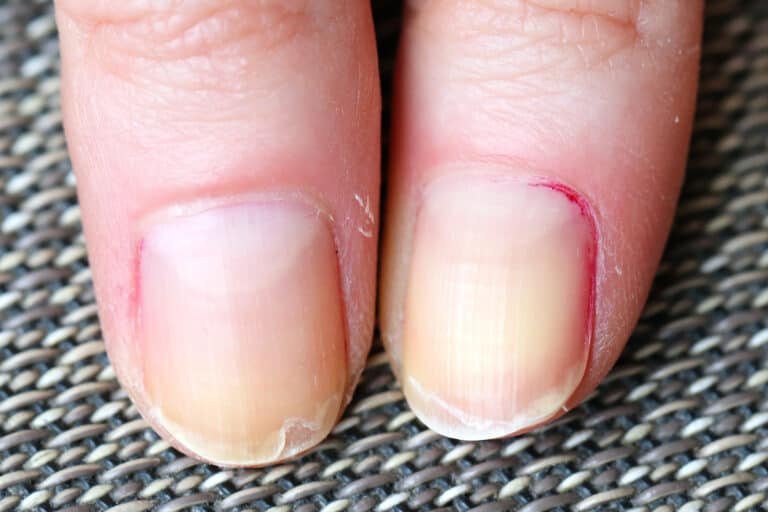
If your acrylics have grown out and there is an obvious gap between the product and your cuticle, repainting can hide the colour difference temporarily, but it does not correct the grown-out structure.
Or you may simply want a different colour before your next maintenance appointment.
Whatever the situation, you can usually paint over intact acrylic nails to update the colour or design. If the acrylic has lifted, cracked, separated from the natural nail, or grown out enough to affect the balance of the enhancement, it is better to have it repaired or filled first.
So, can you paint over acrylic nails?
Yes. Regular nail polish and compatible gel polish can both be applied over acrylic nails when the enhancement is intact. The key is to prepare the surface gently, use products that work with your existing set, and avoid covering lifting, cracks, or other signs that the acrylic needs maintenance.
Below, we explain how regular and gel polish behave over acrylic, how to remove old colour without unnecessarily thinning the enhancement, and when repainting should wait until after a fill or repair.
Can You Use Regular Nail Polish Over Acrylic Nails?
Many salon acrylic sets are finished with regular or gel polish after the acrylic structure has been shaped and cured.
Acrylic can be created in clear, neutral, or coloured shades, but many salon sets are still finished with regular or gel polish to create the final colour and design.
That colour layer can usually be changed later as long as the acrylic underneath remains intact.
Nail art, decals, chrome, or embellishments can also be added over the finished enhancement when the surface is prepared appropriately.
This means regular nail polish can generally be used over fully cured acrylic, provided the enhancement itself is in good condition and free from lifting or cracks.

The polish itself should not damage properly cured acrylic, although strong solvents, scraping, and aggressive filing can affect the surface of the enhancement.
Regular nail polish may chip sooner or later depending on your prep, top coat, nail length, and daily wear. A compatible top coat can help protect the colour and extend wear.
Can You Use Gel Nail Polish Over Acrylic Nails?
Gel polish can also be applied over acrylic. The enhancement should be intact, properly prepared, and compatible with the gel system you are using.
Gel polish can add a durable colour coating, but it cannot reinforce poor acrylic structure, replace proper apex placement, or correct a set that already needs a fill.
However, there are a few things you have to keep in mind if you plan on putting gel polish over your acrylics:
- Any previous polish will need to be carefully removed (read below for tips on how to do that)
- The surface of your acrylic nail will have to be gently buffed so that the gel can stick to it
- Use the base coat and top coat required by your specific gel system
- Cure each layer with the lamp recommended for that gel system, which may be a UV or LED lamp
The important points are gentle surface preparation, compatible products, thin coats, and complete curing.
As long as the set is in good condition and you follow the gel manufacturer’s preparation and curing directions, you can add a new colour without unnecessarily thinning or over-filing the acrylic.
Can You Remove Old Nail Polish From Acrylic Nails?
If you want to remove the previous colour while keeping the acrylic underneath, the safest method depends on whether the coating is regular polish or cured gel.
The removal method depends on the type of polish sitting on top of the acrylic.
Removing Regular Nail Polish From Acrylics
If your old nail polish is standard air-dry polish rather than gel, it is usually straightforward to remove without disturbing the acrylic structure.
Start with a remover that is appropriate for preserving the acrylic underneath.
Most nail polish removers contain acetone, but you can also buy non-acetone removers.
If you want to preserve the acrylic underneath, a non-acetone nail polish remover is usually the gentler place to start for ordinary polish.
Acetone can soften acrylic, especially with prolonged contact or soaking, so it can dull, thin, or compromise the enhancement while you are trying to remove the colour.
Non-acetone removers are widely available and are usually labelled clearly on the bottle.
Check the ingredient list or front label if you are unsure whether a remover contains acetone.
Once you have the correct nail polish remover, follow the steps below to remove your old nail polish from your acrylic nails:
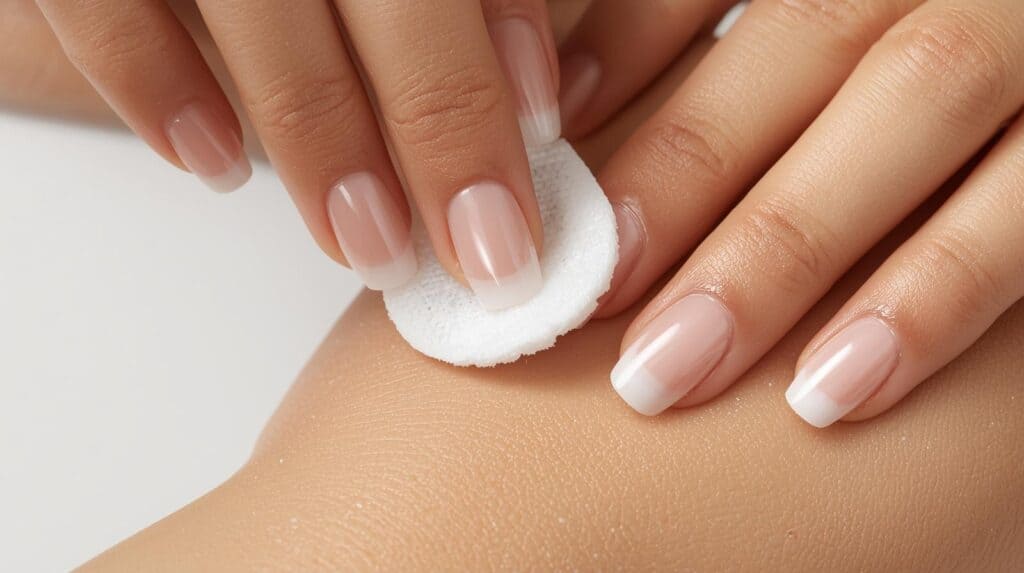
- Soak a cotton pad with the non-acetone polish remover.
- Gently hold the soaked cotton pad against the nail for several seconds so the remover can soften the polish before you begin wiping.
- Wipe the softened colour gently toward the free edge rather than scraping at the surface.
- You may need to repeat this process a few times because non-acetone removers often work more slowly than acetone.
- Repeat the process for all nails. Use a new cotton pad when you feel like it’s needed.
- Wash your hands with soap and water to remove any remaining nail polish remover from your nails. Dry your hands.
Once the colour is removed, check that the acrylic surface is intact, smooth, and free from lifting before applying a fresh coat.
Removing Gel Nail Polish From Acrylics
If your old coating is cured gel polish, removal is more involved because you need to remove the gel without filing too deeply into the acrylic underneath.
Many soak-off gel polishes are removed with acetone, but acetone also softens acrylic, which makes long soaking a poor choice when you are trying to keep the acrylic set intact.
Acetone is also one of the solvents commonly used to break down acrylic during full removal, which is why prolonged soaking is not ideal when you want to keep the enhancement.
The aim is to remove the gel colour while preserving as much sound acrylic structure as possible.
Nail technicians typically remove the gel carefully by filing the colour layer down while preserving the acrylic structure underneath. If you are not confident with filing, professional removal is the safer option.
The two most practical approaches are controlled filing or professional removal.
Filing It Off
At a salon, gel colour over acrylic is often removed by controlled filing.
A trained technician may use an electric file with an appropriate bit to remove colour efficiently while monitoring the remaining product thickness.
For trained nail professionals, controlled filing is an efficient way to remove gel colour from an acrylic enhancement without soaking the entire set in acetone.
Professionals are trained to control pressure, speed, bit choice, and placement so they remove the colour without unnecessarily thinning the acrylic or filing into the natural nail.
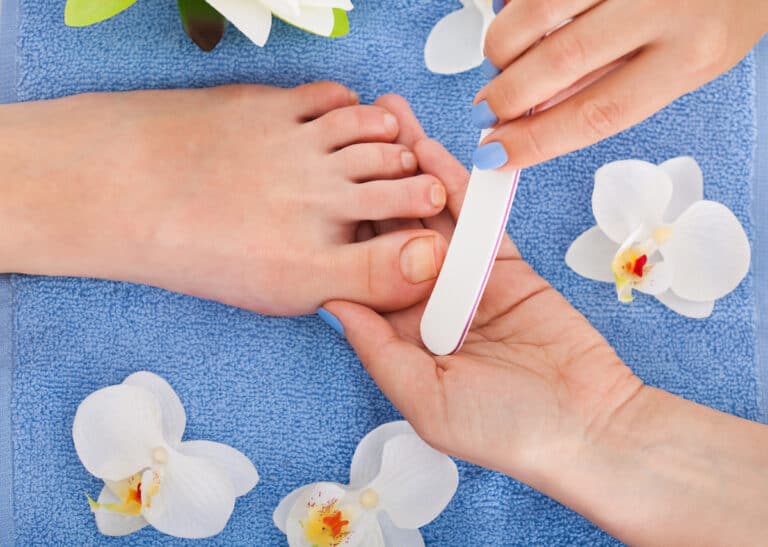
Electric files such as this one on Amazon can remove product quickly, but they can also thin acrylic or injure the surrounding skin if used without training. For at-home colour changes, a gentle hand file or a professional appointment is usually easier to control.
Too much pressure, speed, or repeated filing in one spot can thin the acrylic, create uncomfortable heat, or injure the surrounding skin and natural nail underneath.
Non-Acetone Nail Polish Remover
Non-acetone nail polish remover works well for many regular polishes, but it is generally not effective enough to remove fully cured gel polish.
Trying to soak cured gel with a non-acetone remover can take a long time and may still leave most of the coating in place.
If your goal is to preserve the acrylic, avoid assuming that a long soak in a gentle remover will remove cured gel. Controlled filing or professional removal is more predictable.
You can lightly break the shine of the top coat with a hand file if needed, taking care not to file deeply into the acrylic underneath.
A non-acetone remover such as this one from Mineral Fusion can still be useful for ordinary polish or residue, but it should not be relied on to dissolve a cured gel layer.
If the colour is gel, remove it gradually with controlled filing or have a nail technician remove it, rather than repeatedly scraping at softened product.
The goal is to remove the colour while leaving enough acrylic structure intact for a safe refill or repaint.
Just Painting Over It
You can also sometimes paint over an existing gel colour instead of removing it first.
Yes, you can sometimes paint over existing colour, especially for a temporary colour change, as long as the old coating is smooth, fully cured, and not lifting or peeling.
If you do not remove the old colour first, clean the surface well and make sure you are not covering cracks, lifting, moisture, or discolouration that should be checked before adding more product.
You can use either regular nail polish or another compatible gel polish, depending on the finish and wear time you want.
The old surface should be smooth, fully cured, and free from lifting before more colour is added.
If you layer new gel polish over old gel polish on top of acrylic, the manicure can become noticeably thicker and bulkier.
If you only want a temporary colour change, regular nail polish may add less bulk and is easier to remove later.
With regular nail polish, one or two thin coats can refresh the colour. Dark or textured colours underneath may need an opaque shade for even coverage.
It is a quick cosmetic change for an intact set, but it does not correct grown-out structure, lifting, cracks, or imbalance.
If you do decide to use another gel polish, just make sure to follow all the usual steps of applying gel polish, which include:
- Buffing the surface (in this case, the old gel polish) that you will paint over
- Using a base coat
- Curing with the lamp and exposure time specified for your gel system
- Applying thin coats of gel polish and curing each coat as directed
- Using a top coat and curing that as well
This option can refresh the colour and add a durable finish, but extra gel layers do not replace a needed acrylic fill or repair. Too many layers can also make the set bulky and harder to remove cleanly later.
How Long Does Regular Polish Last On Acrylic Nails?
Regular nail polish wear time varies with surface prep, top coat, nail length, daily wear, and how oily or contaminated the surface was before painting.
On a properly prepared acrylic surface, regular polish can often wear well because the enhancement does not flex as much as some natural nails.
That stable surface can help reduce one source of chipping, although edge wear and daily use still affect longevity.
Some people get several days or longer from regular polish over acrylic, but there is no single wear time that applies to every manicure or brand.
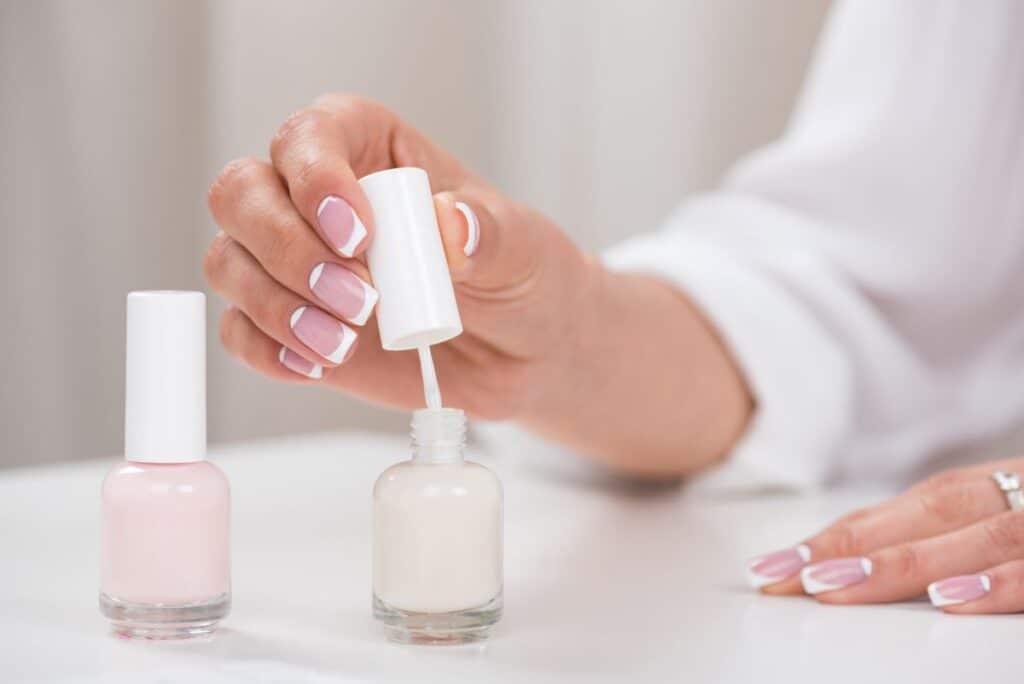
Adding a top coat can help protect the colour from everyday wear and may extend the manicure.
If you want a longer-wearing finish, gel polish may be worth considering, but actual wear depends on the gel system, compatible lamp, application quality, nail growth, and how the acrylic set is maintained.
Up Next: Can You Paint Your Nails With Acrylic Paint?
Related Articles
Can You Paint Your Nails With Acrylic Paint?
I Dyed My Hair, And My Roots Are Too Light – What To Do
Does Shea Butter Lighten Skin?