
Strongest Nail Shapes
When you’re choosing a nail shape, durability depends on more than the outline alone. Nail length, natural thickness, flexibility, daily wear, and how an enhancement is built all affect how easily a nail bends, chips, cracks, or breaks.
Some dramatic shapes, such as stiletto and coffin nails, usually need more length and tapering, which can make them more vulnerable to impact than shorter, more rounded shapes.
Whether you’re working with your natural nails or wearing acrylic enhancements, keeping the nail reasonably short and avoiding weak sidewalls or sharp stress points can make a bigger difference than choosing one “strongest” shape.
If you have an active lifestyle or work with your hands, a shorter shape with smooth edges is often the most practical choice because it is less likely to catch on clothing, tools, or other surfaces.
So what are the strongest nail shapes?
There is no single strongest shape for every person. For natural nails, short round, squoval, and gently squared shapes tend to be durable because they keep leverage low. For acrylics, strength depends heavily on length, apex placement, sidewalls, and application, though rounded shapes can be less prone to corner breakage.
If you’re comparing common nail shapes, the most useful question is which ones create less leverage and fewer snag-prone edges at the length you actually wear.
We’re taking a practical look at nail shape, length, structure, and maintenance so you can choose a shape that fits both your style and your day-to-day routine.
Natural Vs Acrylic Nail Strength
The goal is not to avoid every dramatic shape. It is to understand which designs create more leverage, sharper corners, or narrower stress points, and how to reduce the chance of breaks.
Why can natural nails and acrylic nails behave differently when the same shape is used?
The main reasons are structure, material, and length.
Natural nails grow with their own thickness, curvature, flexibility, and sidewall structure. You can file the free edge, but you cannot build a new apex into the natural nail the way you can with an enhancement.
That means durability is usually improved by keeping natural nails at a manageable length, smoothing snags, and choosing a shape that does not leave fragile corners or an extremely narrow tip.
If you are dealing with soft and bendy nails, shortening the free edge can reduce leverage, while regular moisturising and gentle care may improve flexibility and reduce splitting.
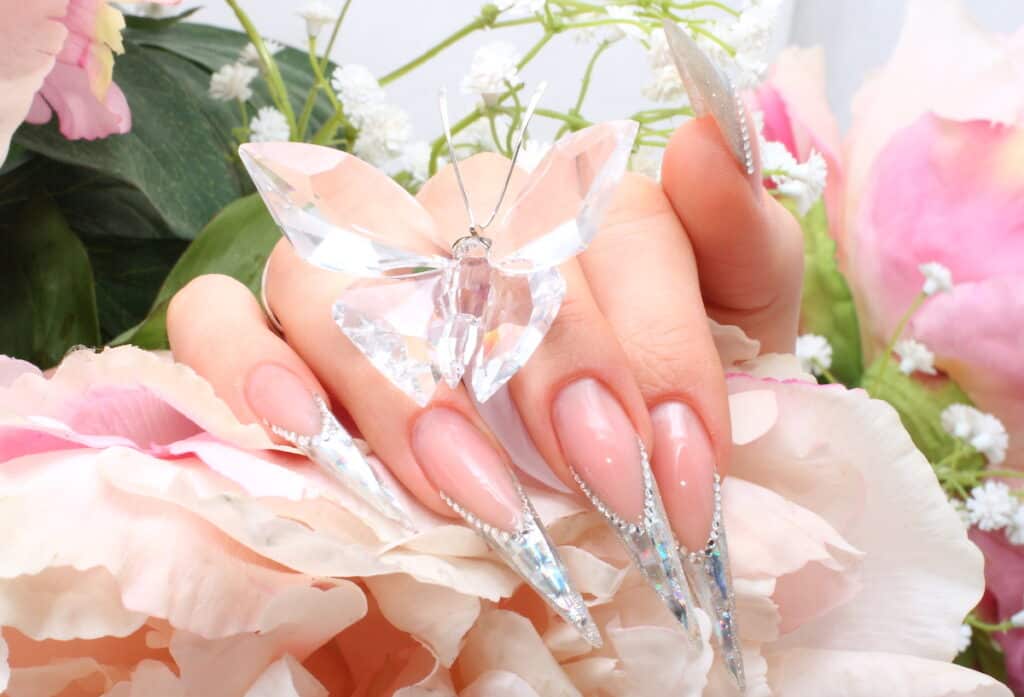
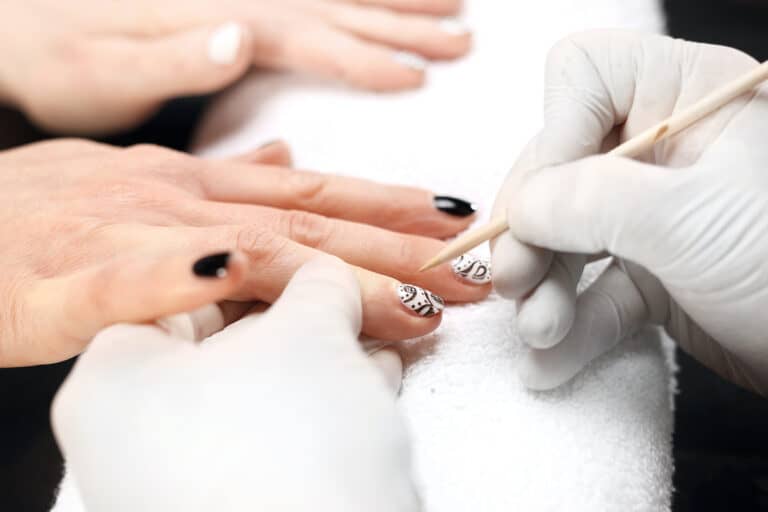
With acrylic nails, the nail technician can control the thickness and architecture of the enhancement.
A properly built enhancement usually has a stress area or apex positioned to support the length and balance of the nail. The exact placement varies with the shape, length, natural nail, and enhancement system.
This extra structure can allow acrylic nails to support lengths and shapes that would be difficult to maintain on many natural nails.
That does not make acrylics unbreakable. Excess length, poor balance, over-filing, lifting, or repeated impact can still lead to cracks, breaks, or trauma to the natural nail underneath.
Sharp corners can be more likely to catch, chip, or split, while very narrow tips can concentrate force into a smaller amount of material.
For that reason, rounded or softly tapered shapes are often practical for durability, but a well-built square enhancement can also wear well when the length and structure suit the client.
Strongest Nail Shape For Natural Nails
For natural nails, the most durable choice is usually a short shape with smooth edges and minimal taper rather than one universally superior outline.
Round and squoval shapes are especially practical because they remove sharp corners while keeping most of the nail’s width.
A short square shape can also be sturdy, particularly if your nail plate naturally grows fairly straight, but the corners may snag more easily for some people.
In other words, there is no architecture rule that proves a square fingernail is universally stronger than every curved shape.
What matters more is how much nail extends past the fingertip, how thin or flexible the free edge is, where the nail naturally flexes, and how often it is exposed to impact, repeated wet-dry cycles, or chemicals.
If you prefer a softer look, a squoval or round shape is a useful compromise between style and everyday durability.
These shapes smooth away corners that can catch while avoiding the extreme taper seen in almond, coffin, and stiletto nails.
That makes them a sensible starting point if your natural nails split or chip easily.
Length matters just as much as shape. A shorter nail has less leverage when it bumps into a surface, so it is generally less likely to bend or break than a much longer nail of the same thickness.
Keeping only a modest free edge can therefore improve durability, regardless of whether you choose square, squoval, or round.
How long a natural manicure lasts varies with nail growth, product choice, daily activities, and how well the free edge is maintained.
If you notice repeated splitting at the same length, filing the nail a little shorter and softening sharp corners may help reduce leverage and snags.
Natural Nail Shapes: Practical Durability Guide
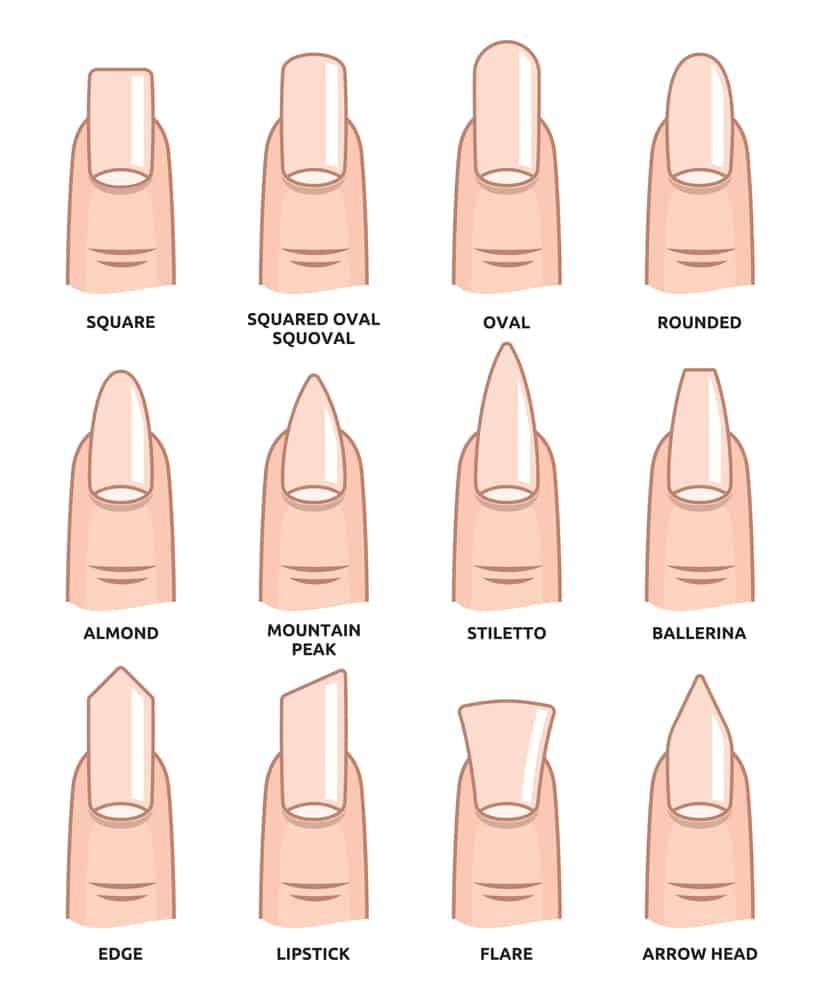
If the shapes are kept at similar, practical lengths, this is a rough durability guide rather than a universal scientific ranking:
- Round
- Squoval
- Short square
- Oval
- Almond
- Ballerina or coffin
- Stiletto
For natural nails, length and taper usually matter more than the name of the shape. Longer nails create more leverage, while dramatically narrowed tips leave less material to absorb everyday impact.
The width, flexibility, and natural C-curve of your nail also affect how a shape wears.
Oval and almond shapes preserve more width than coffin or stiletto shapes, but any long natural nail can be vulnerable to bending or breaking if it is thin or repeatedly knocked.
Your own results may vary with your nail thickness, C-curve, flexibility, length, and daily habits.
Experiment with shapes that suit your natural growth pattern, and shorten or soften the shape if you notice repeated snags, splits, or sidewall cracks.
Strongest Nail Shape For Acrylic Nails
Acrylic nails can support more length than many natural nails because the enhancement is built with added structure, but the finished shape still needs to be balanced correctly.
A skilled nail technician can adjust the apex, sidewalls, thickness, free edge, and overall balance to support the chosen length and shape.
Square acrylics are not automatically weak, but their corners can be more prone to catching than a rounded edge, especially at longer lengths.
For clients who prioritise durability, round, oval, or squoval acrylics are often practical because they avoid sharp corners and extreme tapering.
Oval nails keep a broad base while softening the tip, which can make them a forgiving choice for everyday wear.
Even a well-built acrylic can break, lift, or crack, so good structure reduces risk rather than making a nail “virtually indestructible.”
Almond is another popular option. It has a narrower tip than oval, so very long almond nails may have more leverage, but a properly built enhancement can still be durable.
If strength is the priority, keep the length realistic for your lifestyle and ask your nail technician to balance the structure for that specific shape.
Acrylic Nail Shapes: Practical Durability Guide
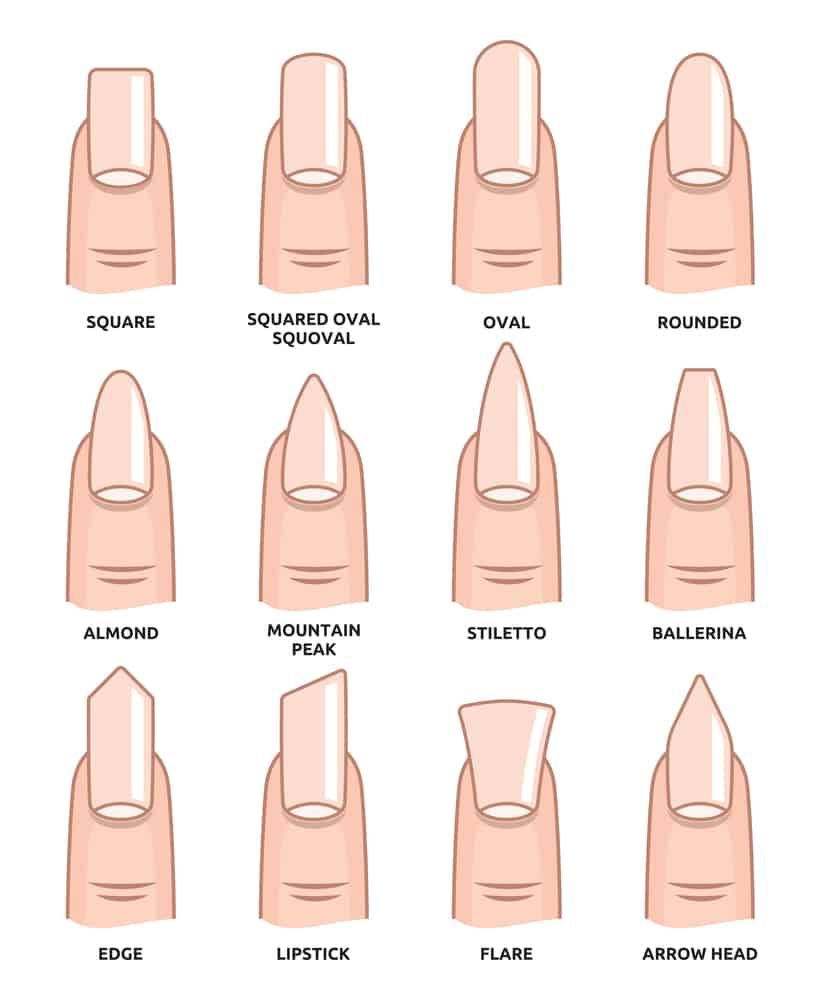
At comparable lengths and with sound application, this list is only a rough practical guide from more forgiving to more impact-prone. Technique, apex placement, sidewall integrity, and lifestyle can easily change the order:
- Round
- Oval
- Squoval
- Almond
- Square
- Ballerina or coffin
- Stiletto
With acrylic nails, the quality of the build, apex placement, sidewall integrity, thickness distribution, and length are usually more important than the shape name alone.
You can often wear longer shapes with acrylic than with natural nails, but extra length still creates leverage and increases the consequences of catching or bending the enhancement.
How To Make Your Nails Stronger
No matter which shape you choose, good nail care can reduce brittleness, splitting, snagging, and avoidable breakage.
Healthy, well-maintained nails are easier to keep at your preferred length, but no topical product can make the nail plate permanently “unbreakable” or change the structure of nail that has already grown out.
If you wear acrylic nails, protecting the natural nail from over-filing, picking, and traumatic removal is especially important.
Fortunately, there are several practical ways to support healthier nails.
Most involve reducing repeated water or chemical exposure, moisturising regularly, keeping length manageable, protecting the free edge from trauma, and addressing nutritional or medical issues when they are actually present.
Here are some useful habits for reducing brittleness and breakage:
Nutritious Diet
Nails are made largely of keratin, and normal nail growth depends on adequate protein, iron, zinc, vitamins, minerals, and overall nutrition.
A varied diet supports general health as well as normal hair, skin, and nail growth.
Rather than focusing on one “nail vitamin,” aim to meet your nutritional needs through a balanced diet unless a healthcare professional identifies a deficiency or another reason supplementation may help.
B vitamins include thiamine (B1), riboflavin (B2), niacin (B3), pantothenic acid (B5), pyridoxine (B6), biotin (B7), folate (B9), and cobalamin (B12). They are important for normal body functions, but taking extra amounts does not automatically make already healthy nails stronger.
Biotin is commonly marketed for nails, but evidence for routine high-dose supplementation in otherwise healthy people is limited. It may be more relevant when a true deficiency or a specific brittle-nail problem has been identified.
Foods that provide B vitamins and other useful nutrients include:
- Salmon
- Leafy greens
- Eggs
- Organ meats (such as liver)
- Beef
- Clams, mussels, and oysters
- Beans
- Nuts and seeds (especially sunflower seeds)
Including a variety of these foods can support normal nutrition, but nail changes take time because the nail plate grows slowly.
If your diet is restricted or you suspect a deficiency, a doctor or registered dietitian can help determine whether testing or supplementation makes sense.
That is more reliable than assuming brittle nails are caused by one missing vitamin.
Supplements
For most healthy adults, it is preferable to meet nutrient needs through food when possible.
Supplements can be useful when a deficiency or another medical reason is identified, but more is not always better.
Before starting a high-dose biotin, B-complex, iron, zinc, or other supplement, discuss it with a healthcare professional if you take medication, have a medical condition, are pregnant, or have blood tests scheduled.
Biotin supplements can interfere with some laboratory tests, and evidence for collagen or other “hair, skin, and nail” supplements is mixed. They should not be treated as a guaranteed nail-strengthening shortcut or a substitute for investigating persistent nail changes.
If a supplement is recommended for a documented deficiency, follow the dose and duration advised by your healthcare professional.
Supplements also vary in quality, so avoid assuming that a product marketed for nails has been proven to strengthen them.
Limit Exposure To Harsh Chemicals
Frequent exposure to water, detergents, solvents, and cleaning products can dry the nail plate and surrounding skin.
Repeated wet-dry cycles, strong detergents, solvents, and very hot water can contribute to brittleness, splitting, and peeling.
Dry, brittle nails are more likely to snag and break.
When practical, wear gloves for dishes, cleaning, and other wet work, and moisturise your hands and nails afterwards.
Gloves are also useful when your work exposes your hands to products that irritate or dry the skin.
If you develop persistent redness, pain, swelling, or nail separation after chemical exposure, stop using the suspected product and seek medical advice if symptoms are significant or do not improve.
With nail cosmetics, focus less on whether a product is “cheap” and more on using reputable products as directed, avoiding repeated skin contact with uncured enhancement products, and stopping formulas that irritate your skin or nails.
Improper preparation, over-filing, picking, lifting, or forceful removal can be more damaging than the price of the product itself.
Acetone can temporarily dry the nail plate and surrounding skin, but it is also an effective remover for certain nail products. Use only as long as needed, avoid unnecessary soaking, and moisturise afterwards.
Use Nail Strengthening Products
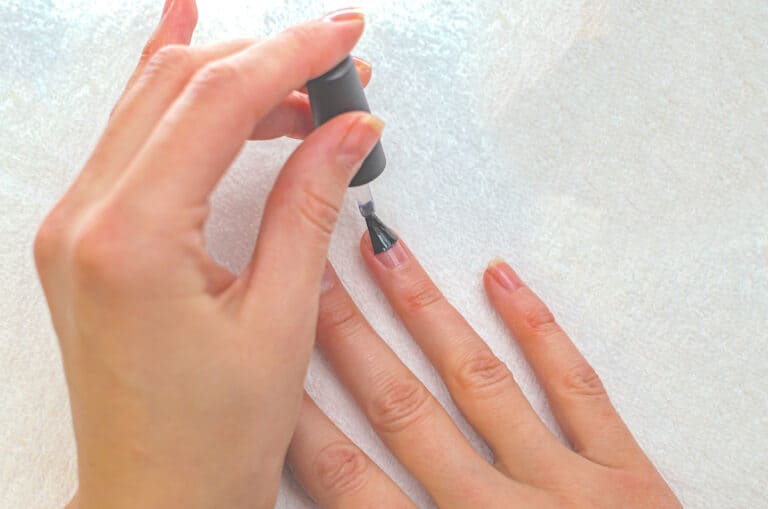
Nail strengtheners and hardeners can be useful for some brittle or flexible nails, but results depend on the formula, how often it is used, and the reason your nails are breaking.
Some products form a protective film that can temporarily make the nail feel firmer and reduce surface wear or minor splitting.
That may help the free edge resist minor snags while it grows out.
However, a topical coating does not deliver dietary protein or minerals through the nail plate to permanently change how the nail is produced at the matrix.
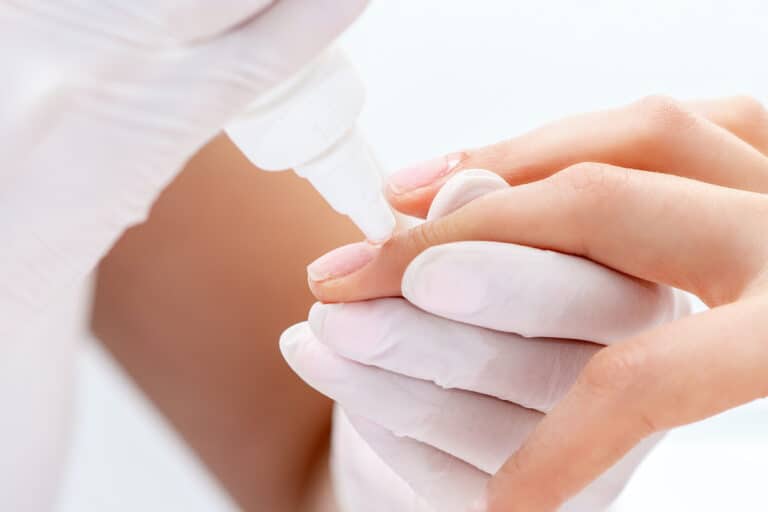
For example, this nail strengthening system is designed to be worn as a protective nail treatment.
Follow the manufacturer’s directions and stop if the product causes irritation, excessive peeling, or worsening brittleness.
More frequent use is not always better, particularly with hardening formulas that can make some nails feel overly rigid and more likely to snap rather than flex.
A protective coating can provide immediate cosmetic reinforcement, but long-term nail quality still depends on growth, moisture balance, trauma, and underlying health.
Keep expectations realistic and choose a product based on how your own nails respond.
If one type of hardener makes your nails more brittle, switch to gentler conditioning and moisture-focused care instead.
Hydrate Your Nails
Keeping the nails and surrounding skin moisturised can improve flexibility and reduce the dry, brittle feel that makes the free edge more prone to peeling and splitting.
Repeated water exposure and strong cleansers can remove surface lipids and leave the nail plate feeling drier.
Regular hand cream, petrolatum, or cuticle oil can help reduce moisture loss from the nail and surrounding skin.
Consider applying a cuticle oil or fragrance-free moisturiser to the nail plate and cuticle area after washing and before bed.
This can support the flexibility and comfort of the nail and surrounding skin, although it will not change the genetic thickness of the nail plate.
Some cuticle oils, like this one, combine plant oils and fragrance. If you have sensitive skin, check the ingredient list and discontinue use if irritation develops.
Consistent moisturising can make dry nails and cuticles feel smoother and more flexible, but changes in newly grown nail still take time.
If you enjoy cuticle oil, making it part of a regular hand-care routine can be an easy way to remember daily moisturising.
Take A Break From Fake Nails
Your nails do not need to “breathe,” so taking a break from glue-on, acrylic, gel, or other enhancements is not automatically required for every wearer.
However, a break can be useful if your natural nails have become thin, sore, peeling, or damaged from over-filing, picking, lifting, or forceful removal.
Nail extensions are not necessarily damaging when they are applied, maintained, and removed correctly, but repeated over-filing, picking, lifting, or forceful removal can thin the nail plate.
Removal is a common trouble spot. Peeling or prying enhancements off can remove superficial nail layers and leave the nail thinner, rougher, and more flexible until that damaged portion grows out.
If your nails are damaged, keeping them short, moisturised, and protected from further trauma while the affected portion grows out is more useful than following an arbitrary break schedule.
Recovery takes time because damaged nail has to grow forward. A single week may improve comfort, but it will not replace the damaged nail plate.
Talk To A Doctor
If your nails remain unusually brittle, painful, discoloured, thickened, lifting, pitted, or distorted despite gentle care, consider speaking with a doctor or dermatologist.
Nail changes can have many causes, including repeated trauma, fungal infection, inflammatory skin conditions, nutritional deficiencies, medication effects, and some medical conditions such as thyroid disease.
A sudden change in several nails, swelling or pain around the nail, pus or drainage, or a persistent change that does not grow out is worth professional assessment.
Treating the underlying cause, when one is present, is more effective than relying on supplements or cosmetic strengtheners alone.
Final Thoughts
Next time your nail tech asks how you want your nails shaped, consider length, lifestyle, natural nail structure, and the quality of the enhancement build along with the look you want.
You do not need to choose the most conservative shape every time.
You can wear whatever shape you like, but shorter and less tapered shapes are generally easier to protect during everyday activities because they create less leverage and fewer narrow stress points.
For example, if you know you’re going rock climbing next week, a short round or squoval shape is likely to be more practical than a long stiletto.
The most useful takeaway is that shape, length, natural nail condition, enhancement structure, and maintenance all work together. No single outline guarantees a break-proof manicure.
Natural nails and acrylic enhancements also behave differently, so adjust the shape and length to the material you are wearing and the condition of your nails.
That approach gives you more useful guidance than relying on a universal strongest-to-weakest ranking.
Related Articles
Why Are My Nails Soft And Bendy?
How To Shorten Acrylic Nails At Home
Best Long And Short Coffin Press-On Nails