
Can You Put An Acrylic Nail On A Missing Fingernail Or Toenail?
Nails can be a form of expression, so losing one can make your usual manicure or pedicure feel incomplete.
It’s understandable to want a quick cosmetic fix, especially before an event.
But a missing fingernail or toenail needs different care from a healthy nail that is simply short.
Acrylic is a popular nail enhancement used to create extra length and intricate designs.
It is normally applied over a natural nail plate, the hard part of the nail you can see.
The exposed skin underneath a lost nail is the nail bed. It is not a substitute surface for a salon enhancement.
If you’re missing a nail, the first question is whether the area is healthy and healed enough for any cosmetic service.
Acrylic forms a hard coating from a mixture of liquid monomer and powder polymer. It creates a cosmetic extension but does not restore a lost natural nail.
Can you put an acrylic nail on a missing fingernail or toenail?
Do not apply conventional acrylic directly to an exposed nail bed or bare skin. If part of the nail has regrown, that alone does not make an enhancement suitable. The injury must be healed, and the remaining nail must be healthy and securely attached before a professional considers cosmetic work.
If the nail has recently torn off, is painful or is bleeding, get medical advice before booking a nail appointment.
Below, we’ll explain the difference between covering a short nail and covering a missing one, plus how to protect the area while it recovers.
Can You Apply Acrylic To A Missing Fingernail?
Our hands do a lot of everyday work, from typing to opening packages.
A missing nail can leave the fingertip feeling tender and make ordinary tasks awkward.
It’s normal to feel self-conscious if a nail is missing.
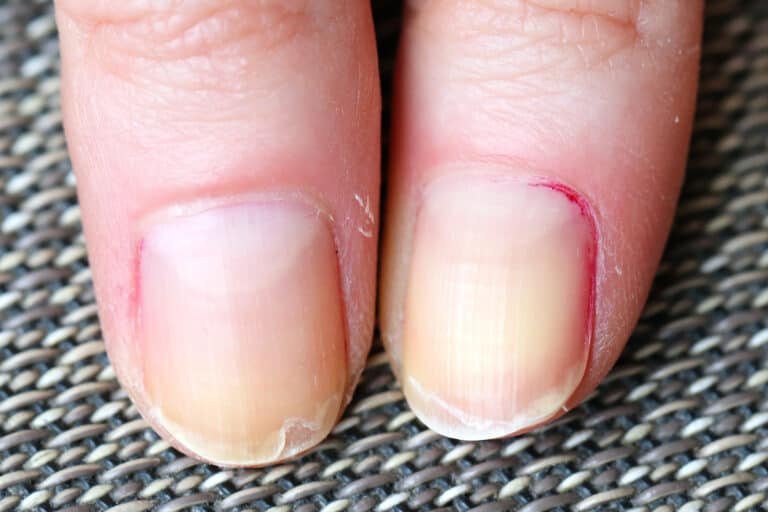
If the nail plate is completely absent, an acrylic extension is not an appropriate cover for the exposed nail bed.
The concern goes beyond whether acrylic will stay on. Nail products can irritate skin, and an extension can catch or pull on the area.
With partial regrowth, there is no universal amount of visible nail that makes acrylic suitable. A small strip of new nail may still be fragile or poorly attached.
The American Academy of Dermatology (AAD) warns that covering damaged nails can worsen existing problems. Let healing take priority over matching the rest of your manicure.
Can You Apply Acrylic To A Missing Toenail?
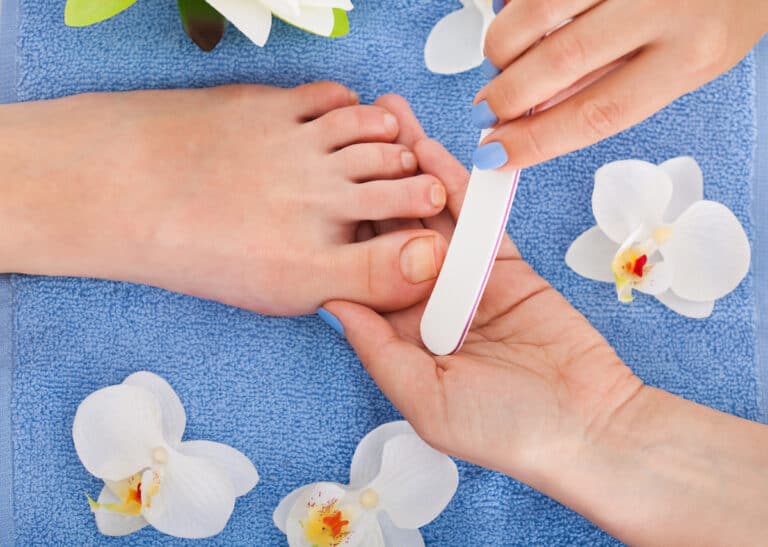
Avoid conventional acrylic on a missing toenail, especially while the nail bed is exposed or healing.
Shoes add another consideration: a bulky enhancement may press against the toe or catch inside footwear.
Choose footwear that does not squeeze the injured area. The NHS recommends avoiding shoes that pinch the toes when caring for nail problems.
For a persistently missing or damaged toenail, a podiatrist can assess the cause and discuss whether any specialist cosmetic option is appropriate once the skin has healed.
Can You Attach An Acrylic Nail To Bare Skin?
No. Conventional acrylic products should be kept off bare skin and an exposed nail bed.
The FDA’s nail-product guidance specifically advises avoiding skin contact with methacrylate monomers to reduce the chance of an allergic reaction.
A press-on nail, nail glue or adhesive tab is not a suitable workaround for an open or healing nail bed. These products also need to be used on the surface specified by their manufacturer.
How To Approach Acrylic Application After Losing A Fingernail
This is a professional assessment process after healing, not a tutorial for building acrylic over a fresh injury.
Mixing and sculpting acrylic requires skill, but good technique cannot make damaged tissue a suitable base.
If cosmetic work is appropriate later, here is what to discuss with your nail technician.
1. Check Healing Before Nail Prep
Start with the condition of the nail and surrounding skin. An open wound, pain, drainage or a lifting nail calls for medical assessment rather than salon prep.
Tell the technician why the nail was lost, whether it has been treated and whether a clinician has given any restrictions.
Filing, primer and cuticle work should never be used to prepare exposed or injured tissue for acrylic.
2. Discuss The Acrylic Products
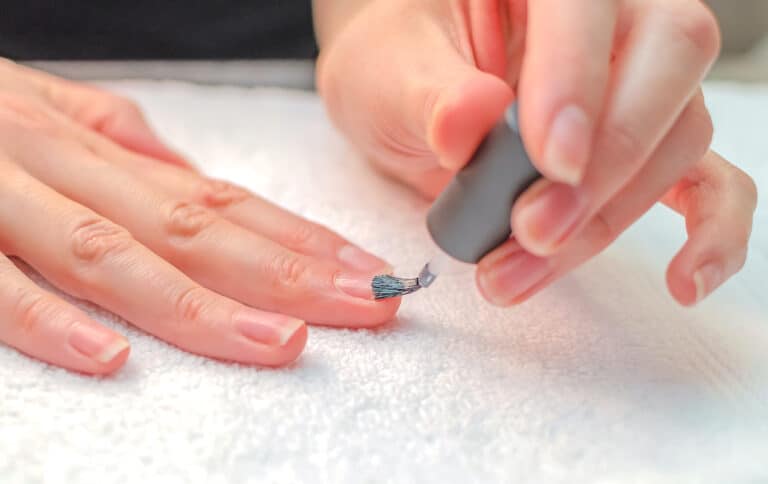
For suitable, healthy nails, the technician uses a compatible liquid-and-powder system according to its instructions.
Mention any previous reaction to acrylic, gel or nail glue before the appointment. Changing the brand does not necessarily avoid the ingredient responsible.
3. Understand What A Nail Form Does
Nail forms provide temporary support for sculpting an extension. They do not replace the natural nail plate or treat a nail-bed injury.
These nail forms are an example of the shaping guides used for acrylic extensions. Their flexibility does not make them a protective dressing for missing nails.
If there is no suitable healthy nail to work with, adding a form does not solve the underlying problem.
4. Choose A Modest Shape And Length
If an enhancement is appropriate after recovery, discuss a short, practical shape rather than a long extension.
Tell the technician about activities that put pressure on your fingertips, such as manual work or playing an instrument.
The application should not hurt. Speak up about burning, pulling or tenderness so the service can be stopped and assessed.
5. Plan Finishing And Removal
Ask how the product will be maintained and removed before agreeing to the service.
If you notice lifting, discomfort or a skin reaction afterwards, arrange an assessment instead of covering the problem with another layer.
How Long Will Your Acrylic Nail Last?
On healthy natural nails, acrylic maintenance commonly involves fills about every 2 to 3 weeks. That is an appointment interval, not a guarantee of wear.
You cannot apply that timetable to a missing or recovering nail.
Attachment, nail condition, product choice and everyday wear all matter. Simply making the extension longer does not improve its hold.
There is no useful wear-time recommendation for acrylic placed on exposed skin because that is not an appropriate application.
Risks Of Applying Acrylic To Missing Nails
Covering a missing nail can hide the area you need to monitor during recovery.
The main concerns are irritation, allergy, infection and further mechanical damage.
These risks do not mean every nail injury will develop complications, but they are good reasons to avoid a cosmetic cover while the area heals.
Removal also needs thought: an enhancement that catches or is pulled off can damage the remaining natural nail.
Infection
An injured nail bed needs appropriate wound care. A salon product does not make the area sterile or provide an approved wound dressing.
Get medical advice for increasing pain, redness or swelling, pus or fever. Do not hide these changes under polish or acrylic.
Cleaning the area first does not make it safe to cover an open wound with a cosmetic enhancement.
Removal Can Be Harmful
A nail drill is not the only way to remove acrylic. Depending on the product, professional removal may involve careful filing, acetone or both.
Aggressive filing can thin or injure the remaining nail. Removers may also irritate the surrounding skin.
If the nail bed is exposed or sore, ask a clinician how to proceed before soaking it in remover or having product drilled away.
If you apply acrylic, you should avoid peeling or ripping it off.
Skin Contact And Poor Attachment
The nail plate and the skin beneath it are different surfaces. Trying to compensate for missing nail with more product or glue can expose skin to chemicals.
DermNet describes nail-cosmetic reactions that can include redness, swelling, blistering and itchy skin. Nail adhesives can also cause reactions.
An unstable extension may catch on clothing or pull on the remaining nail. Gluing it back down can conceal the damage.
Does Acrylic Help A Missing Nail Grow Back?
Acrylic does not speed up nail regrowth. Recovery depends on the original injury or condition and the health of the nail’s growth area, called the matrix.
MedlinePlus gives about 4 to 6 months for a fingernail to regrow and about 12 months for a toenail. The NHS notes that toenails can take up to 18 months. These are estimates, not deadlines.
Regrowth may be uneven, and some damage can be lasting. After certain nail-removal procedures, regrowth is deliberately prevented, as explained by the Royal Orthopaedic Hospital. Ask your treating clinician what to expect in your case.
Should You Apply Acrylic To Missing Nails?
For a completely missing nail or a nail that is still healing, leave acrylic off.
A cosmetic enhancement can wait until the skin and natural nail are suitable for the service.
If the nail remains absent after healing, ask a dermatologist or podiatrist about your options instead of trying a standard salon application on skin.
When To See A Nail Tech
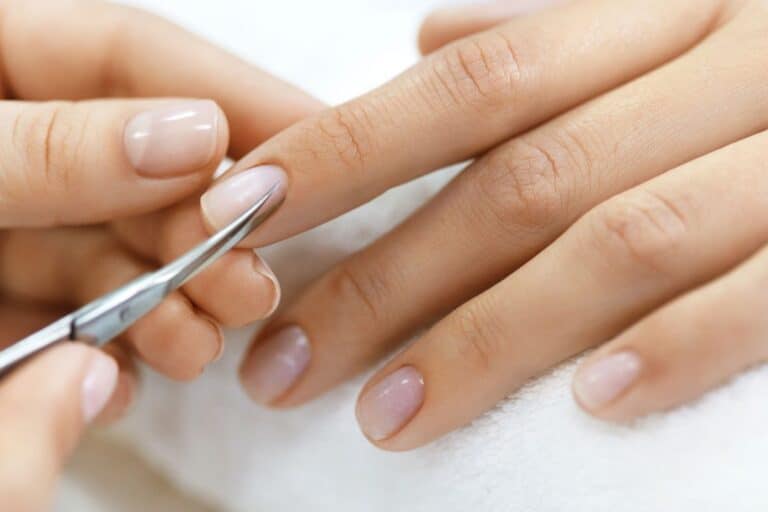
A nail technician can help with cosmetic choices after the medical issue has been addressed and the area has recovered.
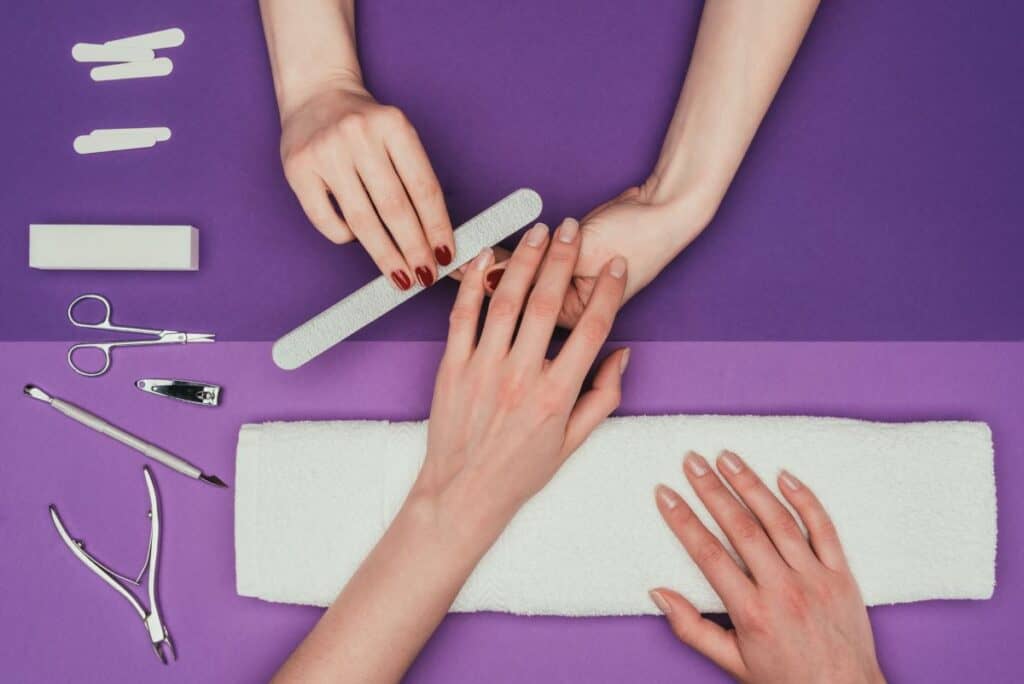
They can assess whether a healthy nail is suitable for their service, but they should not be relied on to diagnose infection or determine why a nail fell off.
If there is uncertainty about healing or attachment, see a clinician first.
How To Care For Missing Nails
A simple protective routine is more useful during recovery than trying to recreate the missing nail.
The advice below is for basic care after a minor injury has been assessed. If your nail was surgically removed or repaired, follow your own clinician’s dressing instructions.
Consult With A Doctor
Arrange prompt assessment if a nail has been torn off, the injury is particularly painful, bleeding does not stop or you cannot bend the finger or toe. Unexplained nail loss also needs a medical review.
A clinician can check for a nail-bed injury, infection or another cause and decide whether treatment is needed. Antibiotics are not automatically necessary for every missing nail.
Use A Clean, Non-Stick Dressing
Protect the healing area from rubbing and catching with an appropriate dressing.
For minor nail wounds, the AAD recommends gentle cleaning, petroleum jelly and a covering. A non-stick pad can make dressing changes more comfortable.
Change a routine dressing daily, or sooner if it gets wet or dirty, unless your clinician has given a different schedule.
Keep adhesive on the surrounding healthy skin rather than on the raw nail bed, and avoid wrapping the finger or toe tightly.
Clean Gently And Avoid Picking
Use mild soap and water for gentle cleaning when your care instructions allow it. Avoid scrubbing the exposed area.
Do not pick at regrowth or pull off a nail fragment that is still attached. Keep tools and nail-prep chemicals away from the wound.
Check the area during dressing changes. If it is becoming more painful or inflamed, seek care rather than adding stronger cleansing products.
Takeaway
So, can you apply acrylic over a missing nail?
Conventional acrylic belongs on a suitable natural nail, not an exposed nail bed.
Partial regrowth alone is not enough to decide that a nail is ready for an enhancement.
The same basic rule applies to fingers and toes: healing comes first.
If acrylic is already attached and the area is painful or injured, get advice before attempting removal.
Once the nail has recovered, a qualified technician can help you choose a manageable cosmetic service.
For an event while you are healing, a neat protective dressing is a more practical choice than glue or acrylic on the missing nail.
You can keep the other nails tidy without covering the injured area.
Speak to a doctor about pain, unexplained nail loss or concerns about regrowth.
In the meantime, follow your care instructions, change dressings as directed and protect the area from knocks.
The video below from The Doctors on YouTube discusses missing-toenail care. Follow the instructions from the clinician treating your own injury if they differ from general advice.
Related Articles