
Benefits Of Trimming Hair – Are They True?
Haircuts can feel intimidating because even a small change in length or shape can make a noticeable difference.
Can you think of a time when you had a bad haircut?
It’s normal to feel nervous about getting your haircut, but a thoughtful trim can make your hair easier to manage and refresh the shape of your style.
If you are making a bigger change, it helps to visit a trusted, experienced hairstylist who is familiar with your hair type and the look you want.
A haircut should work with your hair texture, density, routine, and personal style, rather than following a one-size-fits-all rule.
Regular trims can remove worn or split ends, maintain a haircut’s shape, and make styling feel more predictable.
What are the benefits of trimming hair?
Trimming does not make hair grow faster or thicker from the scalp. What it can do is remove split or weathered ends, improve the shape of a haircut, reduce roughness at the ends, and help hair look fuller and more polished.
If you love a particular haircut, your stylist may recommend a maintenance schedule based on how quickly the shape grows out.
Maintenance trims can help preserve the silhouette of your cut and remove split or frayed ends before they become more noticeable.
Haircuts are not required on one universal schedule, but trimming when your ends feel rough, thin, or difficult to style can keep your hair looking more polished.
Even a small trim can make a familiar hairstyle feel refreshed without requiring a dramatic change.
If you are considering a trim, the most useful question is what you want it to accomplish: remove damaged ends, maintain your current shape, add movement, or make daily styling easier.
How Often To Trim Hair
How often you trim your hair depends on your haircut, hair condition, styling habits, growth rate, and personal preference.
Short, highly structured cuts may need maintenance around every 4-6 weeks, while longer or lower-maintenance styles can often go considerably longer.
If you are growing your hair out and the ends are in good condition, you may be comfortable going several months between trims.
Your hairstylist can suggest a schedule based on how quickly your particular cut loses its shape and how your ends are holding up.
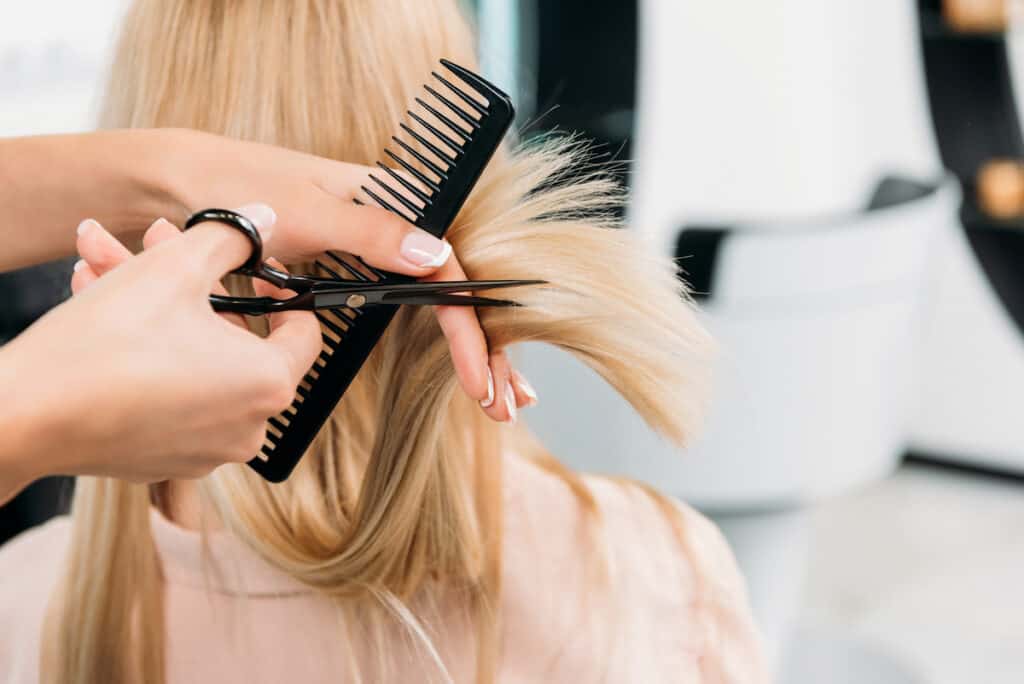
How often you get a trim depends on your hair type and texture, how much heat or chemical processing you use, what style you are maintaining, and how your ends feel.
For example, a pixie cut or precise bob may need more frequent shaping than long hair that is being grown out.
Curly hair does not have one required trimming schedule either. Some people trim every couple of months, while others wait longer depending on shape, shrinkage, and end condition.
Everyone’s hair is different, and some individuals may need a cut sooner than others.
Does Cutting Hair Make It Grow Thicker?
One of the most commonly asked questions is whether or not cutting your hair makes it grow thicker.
Cutting your hair can make the ends look denser and more even, especially when wispy or broken ends are removed.
Cutting your hair won’t change how it grows or your natural texture.
However, trimming split, frayed, or heavily weathered ends can make the overall shape look fuller and neater.
Some cuts can also create more visible volume or movement by changing the shape and weight distribution of the hair.
So, does cutting your hair make it grow thicker?
Not biologically. Cutting the hair shaft does not change follicle size or growth rate, but it can create the appearance of fuller, healthier-looking ends.
A trim can remove split ends, severe fraying, and uneven or damaged-looking length, which may make the hair easier to detangle and style.
Regular trims can support length retention by removing damaged ends before breakage becomes more noticeable, but they do not make the hair grow faster.
Benefits Of Trimming Hair
Trimming can provide several practical benefits, especially when your ends are split, rough, or losing their shape.
Haircuts have more to offer than myths like making it grow faster or thicker.
Instead, a good trim can refresh the shape of your haircut, remove visibly damaged ends, and improve manageability.
For example, trimming can reduce rough, snag-prone ends, maintain the shape of a haircut, and help curls or layers sit more cleanly.
You may also find that styling feels easier after a trim because the ends are more even and less prone to catching.
If your ends are splitting, thinning out, or making your haircut difficult to style, that is often a better reason to book a trim than following a rigid calendar.
A haircut can also feel like a fresh start and give you a confidence boost if you enjoy the new shape.
Say Goodbye To Tangles And Knots
Split ends, tangles, and knots can make hair harder to manage, especially when the ends are very dry or weathered.
Severe tangling can contribute to breakage and, in some cases, matting if it is left unaddressed.
Matting can be difficult to untangle, and in some situations, you may need to cut off the hair.
Split ends can make the ends look thinner and rougher and can contribute to further fraying and breakage.
Trimming away the most damaged ends can reduce snagging and make detangling easier, although regular conditioning and gentle handling matter too.
A trim cannot prevent every knot or tangle, but it can remove worn ends that are more likely to catch on each other.
After a trim, you may notice fewer rough ends and less snagging, particularly if split ends were contributing to the problem.
That can make brushing and styling more comfortable, especially through the last few inches of the hair.
Style Your Hair With Ease
With rough or split ends removed, styling may feel easier and the finished shape can look cleaner.
Smoother ends are also less likely to catch on a brush or other styling tool.
A haircut that is well-shaped for your texture may also fall into place with less effort.
For some people, that can shorten styling time, especially when maintaining a structured cut.
Styling your hair can be a daunting task, especially if you have to work overtime to get it to look right.
A well-designed haircut does some of the shaping work for you because layers, perimeter lines, and weight distribution influence how the hair falls.
That can be especially helpful if you prefer a lower-maintenance styling routine.
Prolong The Longevity Of Your Cut
Have you ever had a great haircut but were long overdue for a trim?
As hair grows, the original shape of the cut gradually softens and can begin to look overgrown.
It may not look as put-together as a fresh cut; this may be a sign that it’s time for a refresh!
If you want to keep a specific haircut looking consistent, maintenance trims are the easiest way to preserve the shape.
Small trims can keep your favorite haircut looking intentional without taking off much length at each appointment.
Your stylist can recommend the best time to come in for a trim if you’re looking to prolong the longevity of your favorite haircut.
Revive Curls
Curly hair benefits from a trim when the ends are split, stretched, uneven, or disrupting the shape, just like other hair textures.
Curly hair is often cut with techniques that account for shrinkage, curl pattern, density, and how the curls are normally worn.
You may have noticed how lovely your curls are when trimmed correctly.
Damage from heat, lightening, or chemical services can also make curls look frizzier, looser, or less defined at the ends.
A well-planned trim can remove the most compromised ends and help the remaining curls sit in a more defined shape.
You can look for a stylist who specializes in curly hair, especially if you want to preserve length while reshaping the curls.
Overall, a trim can help curls maintain their intended shape and reduce wispy or damaged ends.
Eliminate Chemical & Heat Damage
It can take a long time to grow out heat or chemical damage because the altered portion of the hair remains until it is cut off.
Coloring, bleaching, relaxing, and frequent high-heat styling can all increase dryness, porosity, and breakage when the hair is overprocessed.
Careful technique and appropriate products can reduce the risk, but any chemical or high-heat service can still stress the hair.
Trimming can gradually remove older, more damaged ends as healthier new growth comes in.
Chemical treatments and repeated heat can alter how the hair feels and behaves, particularly through the most processed sections.
Trimming does not repair damaged hair, but it can remove portions that are badly split, thin, or breaking.
If you are growing out damaged color or breakage, regular small trims can help you transition without cutting off all of the length at once.
The ends are the oldest part of the hair and often show the most wear, so trimming them can create a more even, polished result.
Length Retention
Trimming can support length retention when it removes ends that would otherwise keep splitting or breaking.
It does not make the follicles grow faster, but keeping the ends in better condition can help you hold onto more of the length you grow.
The type of haircut you choose can also determine how much length you keep while removing damaged ends.
For example, long layers can add shape and movement while preserving much of the overall perimeter length.
These cuts are designed to give your hair body and movement without having to go super short.
There is no single haircut that is automatically best for length retention, but a stylist can remove damaged areas while preserving as much healthy length as possible.
Layers also need a trim! Most people don’t consider that layers can also have split ends or damage, even if they aren’t as long as the ends of your hair.
Keeping layers tidy can also prevent the shape from looking uneven or flat as the haircut grows out.
Hair Trimming Myths
Most of us have heard numerous hair-cutting myths.
The most popular is that trimming your hair can make it grow quicker or thicker.
Trimming can support length retention and create a fuller-looking perimeter, but it does not change how quickly or densely hair grows from the scalp.
Your natural growth pattern, strand diameter, curl pattern, density, and other characteristics are primarily determined by genetics and biology, not by trimming the ends.
You can alter the illusion of your hair.
For example, a blunt trim can make fine or wispy ends look fuller by creating a stronger perimeter line.
But a haircut cannot change the number of follicles on your scalp or permanently alter your natural strand thickness.
Everyone’s hair is different, so the most useful trimming schedule is one based on your cut, texture, condition, and goals.
A stylist can tailor a cut and maintenance plan to those characteristics.
Your Hair Grows Faster
A trim can help you retain length, but it cannot stimulate faster growth from the follicles.
You can still grow your hair long while trimming occasionally if those trims are small and focused on damaged ends.
If you are concerned about slow growth or unusual shedding, focus on scalp health and overall health rather than expecting a haircut to change your growth rate.
Gentle scalp massage can feel relaxing, but there is not strong evidence that ordinary massage or shampoo combs reliably make hair grow faster.
Hair oils and heat protectants can help with manageability or reduce some styling damage, but they do not speed up follicle growth either.
Everyone’s hair can grow at different rates, which also impacts how often you cut it.
Hair growth rate is influenced by factors such as genetics, age, hormones, nutrition, health conditions, and some medications.
Your Hair Gets Thicker
We briefly touched on earlier how a trim affects the thickness of your hair.
A trim cannot change how hair grows from the scalp, but it can make the ends appear fuller and more even.
The type of haircut you get can transform your look completely.
Blunt bobs and other strong perimeter cuts can make fine ends look denser, while layers may add movement and volume depending on your density and texture.
How To Get The Best Hair Trim
Are you feeling motivated for your next chop?
How can you ensure that you get the best hair trim possible?
Think about your lifestyle, styling habits, hair type, current condition, and the shape you want.
These factors can help make going to the salon a breeze.
Also, find a hairstylist who has experience with your hair type or desired look.
You should feel comfortable communicating with your stylist and be able to explain how much length you want to keep.
Find A Stylist
Hairdressers can specialize in many fields within the hair industry.
For example, some stylists only specialize in curly hair or color corrections.
A stylist with experience in your hair type or service can often make more tailored choices about shape, shrinkage, layering, and maintenance.
Also, a hairdresser can help you with every step of your hair journey, no matter how many haircuts you might want to try.
They can also suggest how often to come in for a trim based on your haircut and the condition of your ends.
However, if you insist on cutting your hair yourself, here’s a great tutorial from stylist Brad Mondo on YouTube explaining how to do it without ruining your hair.
Analyze Your Facial Features
Your facial features can be one consideration, but personal preference matters more than following strict face-shape rules.
The goal is to choose a shape that makes you feel comfortable and works with how you like to style your hair.
You can use your face shape and favorite features as inspiration when deciding where you want layers, bangs, or length to fall.
For example, long face-framing layers can create softness around the jawline, but there is no single haircut that every person with a particular face shape needs.
Consult with your stylist to see how you can accentuate your favorite features, or take a look at this video below from Brad Mondo on YouTube.
Consider Your Hair Type
Your hair type, texture, and density can impact your trim.
For example, you would cut curly hair differently from how you cut straight hair.
So, if you’ve had bad luck with trims in the past, find a stylist who will consider your hair type.
Lifestyle
Most people don’t realize how important their lifestyle is in getting a haircut.
If you’re constantly on the go and don’t have time to do your hair, you may not want to get an intricate cut.
So, if you like low-maintenance hair, you can opt for a haircut that’s easy to maintain.
Likewise, if hairstyling is an essential part of your daily routine, you can opt for something that needs time to style.
Takeaway
Trimming is most useful for maintaining shape and removing split, frayed, or visibly damaged ends.
It can help with split ends, curl shape, haircut maintenance, styling ease, and gradual removal of heat or chemical damage.
There is no universal schedule, but structured short cuts may need maintenance every few weeks, while longer styles can often go several months between trims.
Your haircut, hair condition, texture, styling habits, and goals are better guides than a fixed trimming calendar.
One of the most common myths is that trimming makes hair grow faster or thicker.
That is not how hair growth works because trimming affects the hair shaft, not the follicle beneath the scalp.
What trimming can do is create fuller-looking ends and help you retain length by removing sections that are prone to splitting or breaking.
Haircuts are personal, so even a small trim should fit your style, routine, and length goals.
If you want a trim, choose a stylist who understands your hair type and is willing to discuss exactly how much you want removed.
You can also consider your facial features, hair type, current condition, and lifestyle when deciding on the best shape.
Overall, regular trims can keep your haircut looking intentional and your ends feeling smoother, without pretending that scissors can change how your follicles grow.
Related Articles