Is Volumizing Powder Bad For Hair?
Volumising powder can be a handy styling product when your roots need lift, grip, or a more matte finish.
Like any styling product, though, it works best when you choose a formula that suits your hair and use only as much as you need.
Between hairsprays, styling mists, serums, and texture products, it can be difficult to know which formulas belong in your routine.
Volumising powder is one of the less familiar options, so it makes sense to understand how it works before applying it to your roots.
A common concern is whether the dry, grippy texture of the powder can damage your hair or irritate your scalp.
So, is volumising powder bad for your hair?
Volumising powder is not automatically bad for your hair. Used sparingly, it can add lift, texture, and grip without causing lasting damage. Problems are more likely when you overapply it, repeatedly layer it without washing, rub the hair aggressively, or use it on an already irritated scalp.
Below, we’ll break down what volumising powder does, the ingredients you may see, how to apply it, and when it is time to wash it out.
The key is to treat it as a styling product, not as a substitute for regular cleansing or scalp care.
What Is Volumising Powder?
Volumising powder is also commonly sold as texturising, root-lifting, or mattifying powder.
These names can describe similar products, but the formulas are not necessarily identical. Some focus more on oil absorption, while others prioritise grip, hold, or texture.
That means it is worth checking the ingredient list and directions rather than assuming every powder will give the same feel or finish.
In general, you can expect a styling powder to add some combination of volume, texture, grip, and a matte finish, depending on the formula.
Most come in a small shaker or pump bottle so you can target a limited amount of product directly at the roots.
On your fingers, many formulas feel very fine, dry, and slightly tacky. That grip is what helps individual strands feel less slippery and appear fuller at the roots.
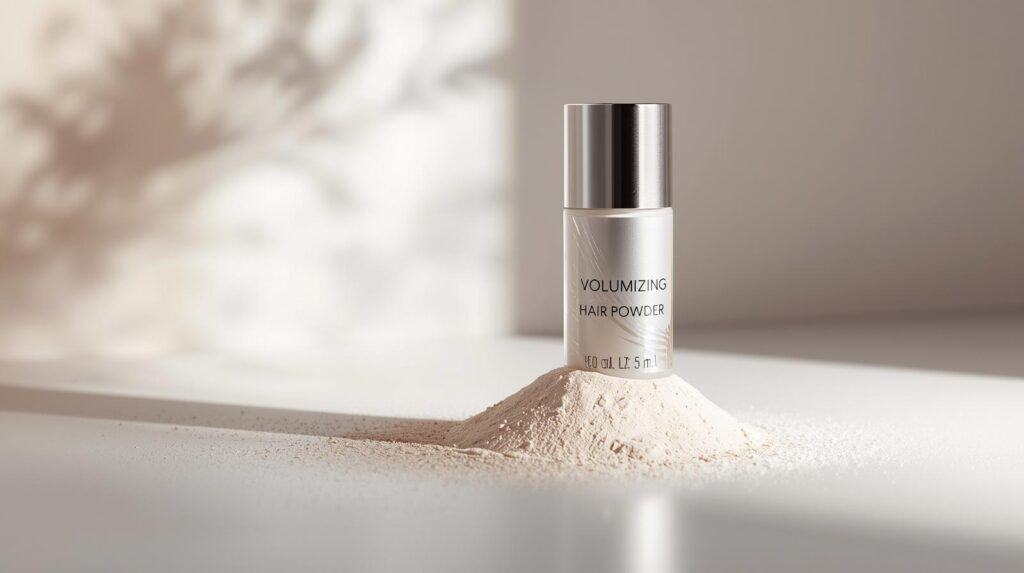
Ingredients such as silica silylate can contribute absorbency, texture, and flow to the powder. Despite the similar name, silica is not the same ingredient as silicone.
Silicones are a broad family of conditioning ingredients that can add slip or smoothness, while a volumising powder is designed to create grip and separation.
The Main Ingredients In Volumising Powder
Volumising powders do not all use the exact same ingredients, but several types of ingredients appear frequently in these formulas.
Here are a few common examples and what they generally contribute to the finished product.
Silica Silylate
Silica silylate is a fine silica-based ingredient that can help absorb oil, improve texture, and keep powdered ingredients from clumping.
In a styling powder, it can help the product spread more evenly and create the dry, grippy finish that gives roots extra lift.
As with any fine powder, avoid deliberately inhaling it and stop using the product if your scalp becomes irritated.
Tapioca Starch
Tapioca starch is a plant-derived starch that can help absorb oil and add body to powdered hair products.
By reducing some surface oil at the roots, it can make hair feel less slippery and help create the appearance of extra volume.
It usually rinses away with shampoo, although heavy application can take more thorough cleansing to remove.
VP/VA Copolymer
VP/VA copolymer is a film-forming styling ingredient commonly used to add hold and help hair maintain a chosen shape.
Rather than acting like a traditional dry-shampoo starch, its main role is to give the hair structure and styling hold.
That extra grip can make roots feel more substantial and help teased or lifted styles last longer.
As with the rest of the formula, use only the amount needed for your style and avoid piling product onto an irritated scalp.
If a product causes itching, burning, redness, or persistent discomfort, wash it out and discontinue use.
Sodium Benzoate
Sodium benzoate is a preservative used in many cosmetic and personal-care formulas to help limit microbial growth and keep the product stable.
Its presence does not tell you whether a volumising powder will work well for your hair, but it can be part of the product’s preservation system.
Use the product as directed on the label rather than judging safety from the presence of a single ingredient in isolation.
If you know you react to a particular cosmetic ingredient, check the full ingredient list before applying the powder to your scalp.
What Do Volumising Powders Do To Your Hair?
Once you apply volumising powder, you may notice several immediate styling effects:
- Roots may look less oily or shiny
- Hair may have more grip and hold
- Styles can feel easier to shape
- The roots can appear fuller and more lifted.
The best approach is to use the smallest amount that gives you the desired result.
Apply a little at a time, work it in with your fingertips, and wait a moment before deciding whether you need more.
Short-Term Effects Of Use
If you overapply the product, especially on fine hair, you may notice some temporary cosmetic drawbacks:
- Hair feels clumpy or overly tacky
- Sections look separated or stringy
- Roots or lengths feel unusually dry
- Dark hair may develop a pale or ashy cast
- Too much powder may mix with oil and become visible
Anyone who has overused dry shampoo may recognise a similar coated or gritty feeling.
These effects are usually temporary and should improve once the product is thoroughly shampooed out.
Long-Term Effects Of Use
Regular heavy use can lead to product buildup, increased friction, dryness, or scalp discomfort, especially if you repeatedly add more powder without washing.
- Hair feels rougher or drier than usual
- Hair loses some softness and slip
- Roots feel coated with product buildup
- Frizz or tangling becomes more noticeable
The powder itself does not permanently alter the hair shaft, but its dry, high-grip finish can make strands more prone to friction if you handle or brush them aggressively.
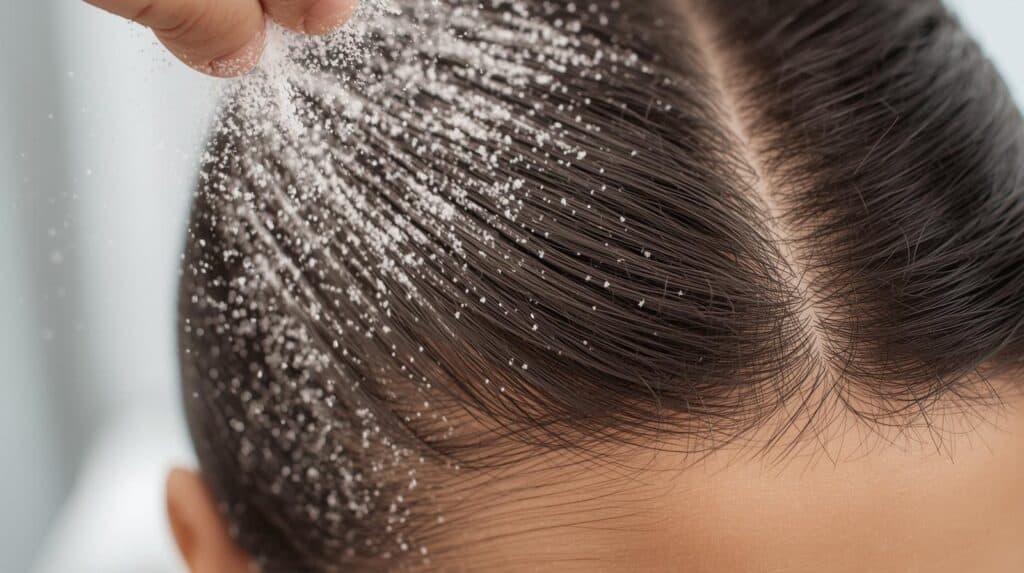
Give your hair and scalp a chance to reset between heavier applications, particularly if you notice dryness or buildup.
You do not need to avoid volumising powder entirely, but repeatedly layering it day after day without cleansing is more likely to cause an uncomfortable, coated feeling.
Why You Shouldn’t Use Volumising Powder Every Day
Volumising powder is primarily a styling product, so how often you use it should depend on your styling needs and how your scalp responds.
There is no universal rule that it can never be used daily, but frequent users should be especially careful about small amounts, regular cleansing, and signs of irritation or dryness.
The powder’s dry, grippy texture is useful when you want root lift, teasing, or extra hold.
For smoother styles, you may prefer a lighter mousse, root spray, or other product that leaves more slip in the hair.
Styling powder can coat the hair and scalp, which is why buildup becomes more noticeable when you keep applying it without washing.
This can be especially obvious if your scalp is oily or you use several styling products at the same time.
Oil, sweat, and powder can combine into residue that makes the roots feel heavier or grittier.
If your hair starts to feel clumpy, coated, itchy, or difficult to restyle, that is a good sign it is time to shampoo rather than add more powder.
The Best Application Method For Volumising Powder
- Decide Whether You Need It – Volumising powder is most useful when you want root lift, matte texture, or extra grip for an updo. If your goal is softness or shine, another styling product may be a better fit.
- Be Picky About Placement – Avoid dumping powder directly over your whole part line. Instead, lift small sections and apply a little at the roots underneath, where the product can create volume without being as visible. If you are using it to make sparse areas look fuller, keep the amount minimal and avoid broken or irritated skin.
- Use Fingers To Style – Gently work the powder through the roots with your fingertips. Avoid vigorous rubbing, which can create unnecessary friction and tangling.
- Wash It Out When Needed – There is no fixed three-day rule. Some people will want to shampoo the same day, while others may leave a small amount in until their next normal wash. Do not keep layering more product if the scalp already feels coated, itchy, or uncomfortable.
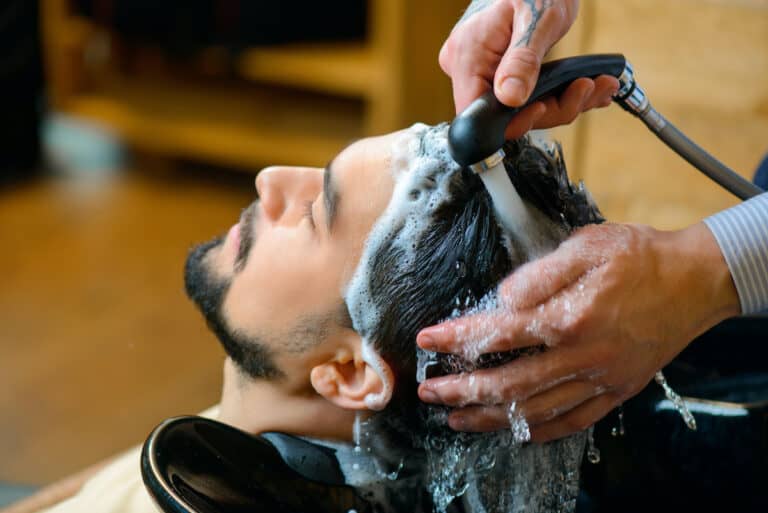
- Wash Thoroughly – Shampoo until the powder and any oily residue are gone. A second shampoo can help after heavy product use, but it is not mandatory every time. Follow with conditioner if your lengths feel dry.
- Add Moisture Where You Need It – If repeated styling has left the lengths feeling rough, use a conditioner or hydrating mask mainly through the mid-lengths and ends. Avoid loading the scalp with rich masks unless the product is specifically designed for scalp use.
Here is a tutorial from The Hair Lounge by Angelina Schofield on YouTube showing how a volumising powder can be worked into a hairstyle.
Related Articles
Does Dry Shampoo Cause Hair Loss?
Best Dry Shampoos For Sensitive Scalps
My Hair Is So Thin After Extensions – How To Get Your Volume Back