
Best Makeup For Orange Hair
Vivid orange hair is already a strong focal point, so makeup can either echo that warmth, create deliberate contrast, or stay neutral and let the hair lead the look.
Here, orange hair means a vivid fashion shade, from pumpkin and tangerine to copper-orange or neon orange, rather than naturally ginger or auburn hair.
The exact makeup that works best depends on whether your orange hair leans red-orange, yellow-orange, copper, pastel, or neon, as well as your skin undertone and how much contrast you want.
Even a small change in eyeliner, blush, lipstick, or brow color can shift the overall balance because vivid orange sits so prominently in the look.
As with most vivid hair colours, your orange hair might take some getting used to.
Your usual clothes and makeup may read differently next to the new hair color, so testing a few warm, cool, and neutral combinations is often more useful than following one fixed rule.
So, what are the best makeup looks for orange hair?
Blue, teal, navy, and blue-violet create contrast with orange hair; peach, copper, terracotta, and orange create a warmer monochromatic effect; red and gold keep the palette analogous; and brown, taupe, bronze, beige, or muted lips let the hair remain the focal point. Use these as starting points rather than strict rules.
Below, we’ll break down the easiest color combinations and show how to translate them into eye, lip, cheek, and brow looks that work with vivid orange hair.
Orange Hair Makeup At A Glance
- For high contrast: cobalt, navy, teal, turquoise, or blue-violet on the eyes.
- For a warm monochromatic look: peach, copper, rust, terracotta, or burnt orange.
- For an analogous palette: warm red, coral, gold, mustard, or yellow-orange.
- For an easy neutral look: taupe, brown, bronze, beige, champagne, black liner, and muted lips.
- For brows: usually keep them close to your natural brow shade or use a soft auburn/brown rather than matching vivid orange exactly.
What Colours Go Well With Orange Hair?
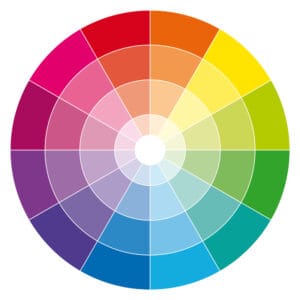
Color theory is a useful shortcut when you are deciding whether you want your makeup to contrast with orange hair or blend into the same warm family.
It explains how hues relate on the color wheel and why some combinations feel high-contrast while others look softer and more cohesive.
With orange hair or any vivid hair color, makeup shades can be chosen to either contrast with the hair or stay within the same warm family.
There is no single shade you have to avoid. The most useful things to compare are contrast, depth, saturation, hair undertone, and skin undertone.
These four color approaches give you an easy starting point for makeup with orange hair:
Complementary Colors
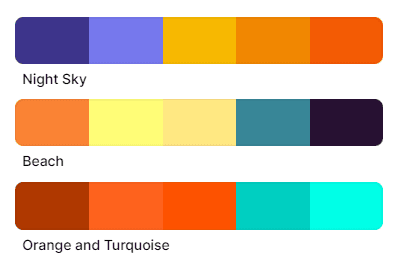
Complementary colours are colours that are opposite to each other on the colour wheel.
For example, the complementary colour of orange is blue.
The exact shade of blue depends on the shade of orange.
If your hair leans red-orange, blue-green, turquoise, or teal accents can create especially strong contrast.
If your hair leans more yellow-orange, cobalt, navy, or blue-violet can create a cooler counterpoint without visually mixing into green.
So one way to pick out a makeup theme for your orange hair is to go with a complementary colour.
For example, you could use a blue eyeshadow as a full lid color, a smoky outer-corner shade, or simply a small pop along the lash line.
This can create a high-contrast look that makes both the hair and eye makeup stand out.
Monochromatic Colors
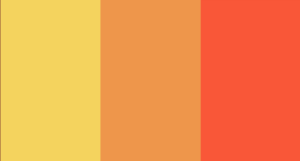
If you would rather keep the palette within the same color family, a monochromatic approach is another option.
A monochromatic makeup look uses related shades such as orange, peach, copper, rust, or terracotta to echo the hair without requiring an exact match.
Monochromatic colors are variations of the same basic hue with different depths, values, or saturation levels.
For example, if you have bright orange hair, a monochromatic colour would be another shade of orange that’s similar to the colour of your hair.
Monochromatic colours are the same colour but in different shades.
A monochromatic look feels cohesive because the hair, eyes, cheeks, and lips stay within related warm tones. Varying the depth and texture keeps the result from looking too flat.
You could pair soft peach blush, copper eyeshadow, orange eyeliner, or a deeper burnt-orange lipstick depending on which feature you want to emphasize.
This keeps the palette cohesive and lets you decide whether the hair, eyes, or lips should be the strongest orange element.
Analogous Colors
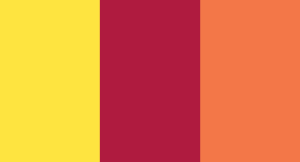
If you enjoy a colorful but harmonious palette, analogous colors add warmth without creating as much contrast as blue or teal.
Analogous colors are another useful way to plan the makeup.
Analogous colors sit next to one another on the color wheel and usually create a warmer, more blended effect.
So, if your hair is orange, you want to find the closest colours on each side of orange on the colour wheel to pick out your makeup look.
Colors next to orange include red, red-orange, yellow-orange, and yellow, with gold working as an easy metallic variation.
You could pair brick-red or warm red lipstick with gold eyeshadow, or use a red-to-gold eye look with a quieter lip.
You could also focus on putting the two analogous colours in one place, such as the eyes, and create an ombre eyeshadow look by combining red and yellow.
Neutral Colors
You do not need another vivid color to make orange hair look intentional. Neutral makeup is often the easiest option when you want the hair itself to remain the statement.
- Eyes: taupe, soft brown, espresso, bronze, beige, champagne, or black liner.
- Cheeks: muted peach, beige-rose, terracotta, or a neutral bronzer depending on your skin tone.
- Lips: nude, caramel, rosy beige, muted brown, soft peach, or a sheer gloss.
- Brows: stay close to your natural brow color unless you intentionally want a fashion-color effect.
How To Do Makeup For Orange Hair
To summarise, useful color families to try with orange hair include blue for contrast, orange and peach for a monochromatic look, and red or yellow for an analogous palette. Neutrals such as brown, taupe, beige, bronze, and black can also work with any of these combinations.
Match The Makeup To Your Shade Of Orange
- Red-orange hair: teal, turquoise, navy, bronze, brick red, and warm nude shades can work well.
- Yellow-orange or tangerine hair: cobalt, blue-violet, chocolate brown, peach, gold, and muted coral create clear separation from the hair.
- Deep burnt orange or copper-orange: espresso, olive, bronze, navy, burgundy, terracotta, and warm red can create a richer palette.
- Pastel orange: soft taupe, lavender-blue, dusty rose, muted peach, and brown liner keep the overall contrast gentler.
Your skin undertone still matters, so treat these as palette ideas rather than rules. If a shade normally flatters your complexion, orange hair does not automatically make it off-limits.
Once you know whether you want contrast, warmth, or neutrality, the next step is deciding where the strongest color should sit.
A few practical choices can make vivid orange hair easier to balance with the rest of your makeup:
Focus On One Area
Using several vivid colors at once creates a more editorial effect, while concentrating the strongest color in one area often feels easier to wear day to day.
If you want the hair to remain the main focal point, you can keep the strongest makeup color on either the eyes or lips and make the rest more subdued.
Two easy areas to emphasize are:
- The eyes
- The lips
Decide whether the eyes or lips should carry the strongest accent, or go intentionally maximalist if that suits your style.
Choosing one focal area does not mean the rest of the face has to be bare. It simply makes the color hierarchy clearer.
For example, blue eyeshadow can still be paired with lipstick, but a muted nude, peach, brown, or softly warm red will keep the eyes more dominant.
You can pair it with a neutral lipstick for balance, or choose a bolder lip if you want a more maximalist look.
Once you’ve picked the area of focus, it’s time to create your look.
Create The Base
If you wear complexion products, keep your usual skin-tone match and build the orange-hair color story with eyes, cheeks, lips, and brows instead.
That might include moisturizer, primer, concealer, foundation, or skin tint, depending on what you normally use.
Your foundation or concealer should still be chosen primarily around your skin tone and undertone rather than your hair color.
A close match usually gives the most natural result, although some people intentionally use brighter concealer or bronzing products for a particular makeup style.
This is also the stage to shape the brows and choose blush. Neutral brown, soft auburn, or a shade close to your natural brow hair usually looks more intentional than trying to match vivid orange hair exactly.
If you plan on wearing dark or bright eyeshadow colours (like the blue eyeshadow we discussed),
An eyeshadow primer can help improve grip, reduce creasing, and keep vivid pigments looking more even, especially on oily lids.
Create The Accent
Now focus on the accent area you chose and adjust the rest of the makeup to support it.
Here are several complete looks using the color relationships above:
Everyday Neutral Look:
- Use a taupe, beige, or soft brown eyeshadow through the lid and crease.
- Add brown or black liner close to the lashes and finish with mascara.
- Choose a peach, terracotta, or neutral blush that suits your skin undertone.
- Finish with a nude, muted peach, caramel, rose-brown, or clear gloss so the hair remains the strongest color in the look.
Blue Eyeshadow Look:
For a high-contrast look, blue on the eyes creates a clear complementary relationship with vivid orange hair.
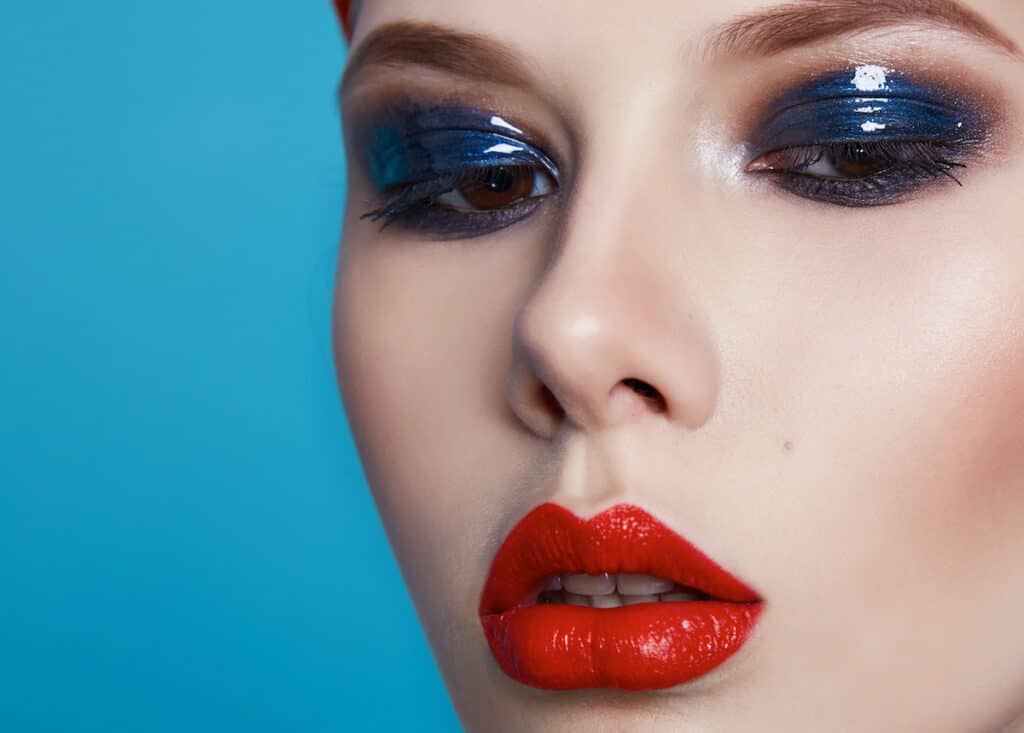
- Select a blue-toned eyeshadow that contrasts with your orange hair. Teal, cobalt, navy, or blue-violet can all work depending on the shade of orange.
- Using an eyeshadow brush, put the blue eyeshadow over your lid up to the crease.
- Use a lighter blue, grey, or neutral transition shade to soften the edge through the crease.
- Add a neutral or softly reflective highlight to the inner corner or brow bone if you like that finish.
- Use black or dark blue eyeliner to line your top lash line. You can do a cat eye look if you’d like by drawing the line slightly further than your lash line towards your temple.
- Use black or blue mascara.
- Pair the eyes with a nude or muted lip color for balance, or choose a stronger lip if you prefer a bolder combination.
Here’s an excellent tutorial for a blue eyeshadow look from Denitslava Makeup.
Blue Eyeliner Look:
For a simpler version of the look above, you can put the focus on blue eyeliner rather than a full blue eyeshadow:
- Start with a neutral eyeshadow in brown or beige.
- Swipe a bright blue liquid liner above your upper lash line. Keep it close to the lashes or extend it into a wing depending on your preferred shape.
- Wear blue or black mascara.
- Use a neutral or softly warm lip color if you want the liner to remain the main accent.
Here’s a great blue eyeliner tutorial from An Kook on YouTube.
Orange Eyeliner Look:
Orange eyeliner creates a monochromatic effect with orange hair and can be as subtle or graphic as you want.
- Swipe a neutral beige or brown eyeshadow over your eyelid and buff it into the crease.
- Add a neutral highlight to the brow bone or inner corner if you want extra contrast.
- Take a bright orange liquid liner and line the upper lash line. Keep it thin for a softer effect or extend it into a wing for a more graphic look.
- Wear black mascara.
- Keep the rest of your makeup neutral, such as a clear gloss or nude lip, if you want the liner to stay the focal point.
Here’s a great orange cat eyeliner tutorial from Nicole PV on YouTube.
Orange Lip Look:
For this look, the lips become the focal point with an orange-toned lipstick that echoes the hair without needing to match it exactly.
- Keep your eye makeup neutral: beige or brown eyeshadow with brown or black eyeliner and mascara.
- Use a dark orange lip liner to line your lips.
- Swipe orange lipstick over your lips.
- Add a peach, terracotta, or neutral blush depending on how warm you want the overall look to feel.
Here’s a great full look tutorial from Lamia Dagher on YouTube.
Red And Yellow Eye Look:
This eyeshadow look uses an analogous red-yellow-orange palette for a warm, high-impact effect that works well when you want the eye makeup to feel deliberately colorful.
- Use a bright yellow eyeshadow to cover the eyelid and inner corner of the eye.
- Use a bright red eyeshadow to blend from the middle of the lid toward the outer lid, and buff some of the eyeshadow up over the crease.
The goal is for your outer eyelid to be red and blend into the yellow on the inner eyelid. - Use a thick black eyeliner to line the upper lash line.
- Use black mascara.
- Finish with a neutral, peach, red, or warm nude lipstick depending on how much contrast you want.
Here’s a great tutorial from An Kook on YouTube.
Makeup For Orange Hair FAQs
What Lipstick Looks Good With Orange Hair?
Warm nude, peach, terracotta, brick red, warm red, caramel, and burnt orange can all work. For stronger contrast, keep the lips neutral when the eyes are blue or teal, or choose a bold red-orange lip for a deliberately saturated look.
What Eyeshadow Color Works Best With Orange Hair?
Blue and teal create the strongest complementary contrast. Brown, bronze, taupe, and champagne are easier everyday choices, while copper, gold, red, and peach create a warmer, more blended palette.
Should Your Eyebrows Match Orange Hair?
They do not have to. Keeping brows close to their natural brown, blonde, black, or auburn shade often gives the face more structure and keeps vivid orange from taking over every feature. A softly warmed brow can work if you want a more coordinated effect.
Can You Wear Red Lipstick With Orange Hair?
Yes. Warm reds, brick reds, and red-orange shades create an analogous look, while cooler reds create more contrast. The best choice depends on your skin undertone and whether you want the lips or hair to dominate.
Is Blue Makeup Too Much With Orange Hair?
Not necessarily. Blue is the complementary color to orange, so the combination is naturally high-contrast. You can make it wearable with a thin blue liner or small accent, or go fully editorial with a saturated blue eye.
Final Takeaway
Orange hair gives you several easy makeup directions: blue for contrast, warm oranges and peaches for harmony, red and gold for an analogous palette, or neutrals when you want the hair to stay center stage.
The most useful approach is to pick one color story, adjust the intensity to your specific shade of orange, and keep your complexion and brow choices grounded in what already works with your skin tone and natural features.
Related Articles
What Colour Covers Orange Hair – And How To Fix It
Unnatural Hair Colours For Warm Skin Tones (What To Consider)