
Unnatural Hair Colors For Warm Skin Tones (What To Consider Before You Decide)
Rose gold, peach, red-orange, red-based magenta, and olive green are useful starting points when choosing unnatural hair colours for warm skin tones. Teal can also look striking if you want a cooler contrast.
Sometimes you see a gorgeous pastel pink on someone else, love the result, and then find that the same colour looks very different against your own complexion.
One reason is that people have different skin undertones, which can change how a hair colour appears next to the face.
These undertones can be subtle, and certain shades may make them appear more noticeable. That does not make a colour objectively right or wrong, but it can affect the overall contrast and balance of a look.
One helpful distinction: skin depth and undertone are different. Fair, medium, and deep complexions can all have warm undertones.
If your skin has a warm undertone, you may notice golden, peach, or yellow tones in your complexion.
Hair colours with similar warmth can create a harmonious effect, while cooler shades can create a more noticeable contrast.
The aim is to find a shade you enjoy wearing, whether that means a soft peach that blends with your colouring or a vivid blue that stands out against it.
So, what unnatural hair colours look good on warm skin tones?
Almost any vivid hair colour can work with warm undertones. Warm-leaning shades such as peach, rose gold, copper, red-orange, olive, and yellow-green often create harmony, while cooler shades can be used deliberately for contrast. The exact depth, saturation, and your starting hair colour matter just as much as the colour family.
Below, we will go through popular vivid hair-colour families and explain which versions tend to complement warm undertones, which create stronger contrast, and what to consider before committing to a shade.
Make Sure You Have A Warm Skin Tone
Before choosing a shade, look for a few clues about your undertone. No mirror, vein, or jewellery test can confirm it on its own, and you do not need a perfect label to find a colour you love.
Look In The Mirror
Warm undertones often appear golden, peachy, or yellow, although they can look different across every skin depth.
A useful starting point is to stand in indirect natural light and look at your bare skin without a strong colour cast from indoor lighting.
Remove makeup and move away from strongly coloured walls or clothing that could reflect colour onto your face.
Compare your face with your neck and chest. Temporary redness on your cheeks does not necessarily mean your overall undertone is cool.
If you notice more pink, rosy, or bluish tones, you may lean cooler. If you see a mixture, you may be neutral or somewhere between categories.
Look At Your Veins
Another commonly used clue is the appearance of the veins on the inside of your wrist, although this test is not definitive on its own.
Veins that look more green are often associated with warm undertones, while blue or purple-looking veins are often associated with cooler undertones. Lighting and skin depth can make this hard to judge, so use it as one clue rather than a rule.
What If I See Both?
Some people have hints of both undertones in their skin.
If your veins look both greenish and bluish, the result may simply be inconclusive. A mixture of warm and cool characteristics across your complexion can suggest neutral undertones.
Neutral undertones can be especially flexible because both warm and cool hair colours may work well, depending on their depth and saturation.
Olive colouring can also sit alongside warm, cool, or neutral undertones. If the usual categories do not seem to fit, compare actual hair swatches rather than forcing a label.
If you are still unsure, think about whether you tend to prefer gold or silver jewellery against your skin. This is another informal clue rather than a diagnostic test.
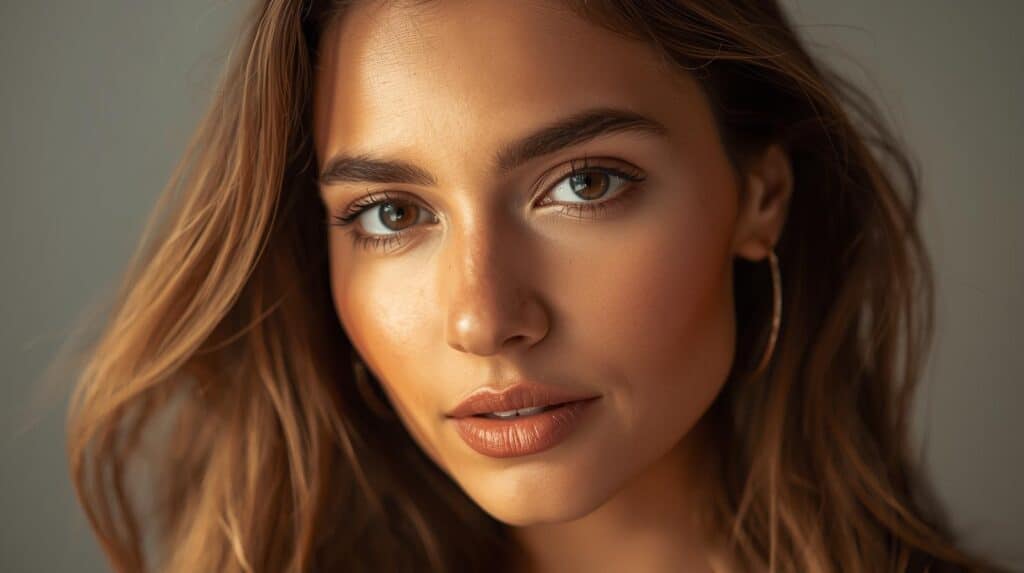
If silver tends to flatter you, you may lean cooler.
If gold tends to flatter you, you may lean warmer.
If warm shades tend to give you the effect you like, use the options below as a starting point. A swatch beside your face is more useful than any single undertone test.
What Colours Look Best On Warm Skin Tones
As a starting point, warm undertones often pair easily with warm or golden versions of a hair colour.
That said, colour harmony is not a strict rule. A cooler shade can look striking if you want more contrast.
Some colour families are trickier. Blue, for example, is inherently cool, but different blues can lean greener, greyer, brighter, or deeper, which changes how they interact with warm skin.
Most hair-colour families include warmer-leaning and cooler-leaning versions, although not every hue becomes truly warm. What matters is the undertone, depth, and saturation of the final shade.
So yes, you can absolutely wear blue hair with a warm complexion. Blue-green shades such as teal may feel more harmonious, while cleaner or icy blues create a bolder contrast.
The same idea applies to other unnatural colours. Peachy and golden pinks often blend easily with warm undertones, while lavender-pinks and blue-pinks create more contrast.
You can also experiment with green, red, purple, yellow, and orange. Rather than asking whether a colour is allowed, compare several versions of the shade next to your face and choose the effect you prefer.
Let’s explore each colour group to figure out which specific colours would look great with your skin.
Best Pink Hair Colour For Warm Skin Tones
Pink hair colours range from soft pastels to intense neons, and small changes in undertone can make the result look very different.
For a gentle change, compare peach-pink and rose gold. For a bolder result, look at coral-pink or saturated magenta.
Here is how the main pink families differ, plus what to watch for when choosing your shade:
Regular Pink
A balanced pink hair colour can work across many undertones, especially when it is neither strongly blue-based nor strongly orange-based.
On warm skin, a medium or slightly peachy pink is often an easy place to start.
Hot Pink
Hot pink can lean warm or cool depending on how much red, blue, or magenta is in the formula.
Warm complexions often pair especially well with hot pinks that lean red or coral rather than blue-violet.
Dusty Pink
Dusty pink is a muted pink that can lean mauve and cool or peachy and warm. The shade name alone does not tell you which version you are getting.
On a warm complexion, a very grey or mauve dusty pink may create strong contrast and can make golden tones in the skin appear more noticeable.
If you prefer a more harmonious result, choose a dusty pink with a touch of peach or rose rather than a heavily greyed lavender-pink.
Top Choice: Rose Gold Pink
Rose gold pink is one of the easiest pink families to pair with warm undertones.
Its mix of pink, peach, and golden tones can echo the warmth already present in the complexion.
A peach-heavy rose gold gives a warmer effect; a pink-heavy version creates a little more contrast.
Choose pale rose gold for a delicate tint or a richer copper-pink if you want the colour to have more depth around your face.
Pale rose gold usually needs a light base to show clearly. On darker hair, a colour-depositing product may give only a subtle tint rather than the pastel result in a reference photo.
Best Purple Hair Colour For Warm Skin Tones
Purple hair colours are generally considered to be on the cool side, but some actually have a lot of warm tones in them and can work really well on warm skin tones.
Cool purples are not off-limits, but they create more contrast than red-based purples.
Here are the most popular purple hair colours and how they’d look on warm skin tones:
Plum Purple
Plum purple is usually a dark hair colour that looks brown or black in some lighting, but has pops of purple under bright lights.
Plum can lean red or blue depending on the formula. Red-plum shades usually sit more naturally beside warm undertones, while blue-plum shades look cooler and more dramatic.
Lavender Purple
Another popular trend for purple hair colours is pale dusty lavender.
Because lavender often contains blue and grey tones, it creates a noticeably cooler contrast against warm skin.
A very pale lavender usually needs an evenly lightened base. Remaining warmth in the hair can make the finished shade look less clear or more muted.
You can certainly wear it if that contrast is what you want. For a softer effect, choose a lavender with more pink or orchid in it.
Maroon
Maroon and burgundy are related but not identical: maroon usually leans brown-red, while burgundy often leans red-violet. Choose a redder version if you want to echo warm undertones.
Maroons are usually on the darker side, so it might not work for you if you want a pastel purple.
Maroon is worth considering if you want a deep red effect with less violet than many plum shades. Compare swatches, since colour names vary between brands.
Top Choice: Magenta Purple
Magenta sits between pink and purple and usually has a noticeable blue-red character. On warm skin, redder magentas tend to feel more harmonious than violet-heavy versions.
If you want a bright, high-contrast purple-pink, magenta can be a strong option without going as cool as an icy lavender.
Best Blue Hair Colour For Warm Skin Tones
Blue hair can look striking with warm undertones, especially when you want deliberate contrast rather than a close match to your complexion.
Many blue shades create strong contrast with warm complexions. Here is how a few popular blue families tend to behave:
Classic Blue
Imagine the primary colour blue.
This is what we are referring to when we talk about classic blue.
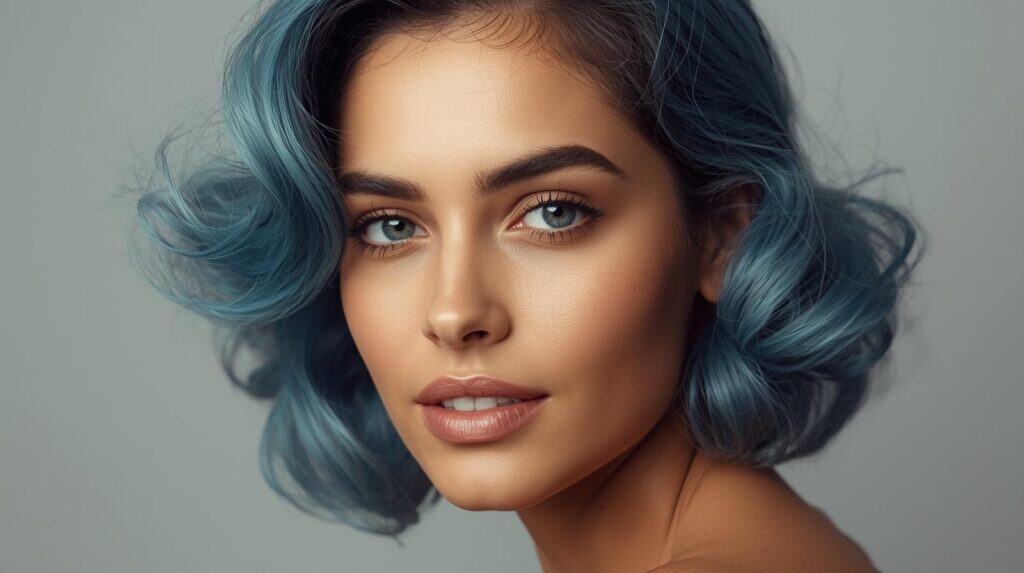
This colour is distinctly cool and can create a vivid contrast against golden or peach undertones.
That contrast may make the warmth in your skin look more pronounced. If you like bold contrast, this can be intentional; if you want harmony, a greener blue may be easier to wear.
Silver Blue
Silver blue combines a smoky grey base with cool blue tones.
Its pale finish generally demands more lightening and upkeep than a deep blue, so consider your hair’s condition before choosing it.
Its icy quality can look striking against warm skin, but it is a cooler option rather than a naturally harmonious one.
For a softer transition, consider a blue with more green or turquoise in it.
Top Choice: Teal
Teal is a popular choice for warm undertones because the added green can soften the starkness of a pure blue.
Teal sits between blue and green. A teal that leans greener or slightly yellow-green often feels warmer than a blue-heavy teal.
That makes teal a useful middle ground if you want blue hair without an especially icy effect.
The best thing about teal is that it’s versatile: you can wear it as a soft pastel, a saturated medium teal, or a deep blue-green.
Pastel teal needs a much lighter base than a deep blue-green. Blue pigments can also look greener over yellow-blonde hair, so test the colour on a hidden strand before applying it all over.
Best Green Hair Colour For Warm Skin Tones
Green is made from blue and yellow, so it can fall on either side of the spectrum, depending on which colour is more prevalent.
Some greens lean blue and cool, while others lean yellow or olive and feel warmer. Warm complexions often pair easily with the latter.
Here are the popular green hair colours and how they would look on warm skin tones:
Green
A balanced green colour sits between yellow-green and blue-green. Check the swatch rather than assuming every shade labelled green has the same undertone.
A balanced medium green can work across many undertones, especially if you adjust the depth to suit your complexion.
Green comes in everything from pale mint to deep forest shades. Choose medium green for visible colour or a deeper green for a more subdued result; neither will look equally vivid on every starting hair colour.
Emerald Green
Emerald green is a deep green tone akin to the colour of emeralds.
Emerald often leans slightly blue, so it creates a cooler, jewel-toned contrast against warm skin.
If you want emerald with less contrast, look for a version with a touch more yellow or pair it with warmer roots or highlights.
Neon Green
Neon green often contains a strong yellow component, which can echo golden undertones in warm skin.
It is a very high-impact shade, so consider whether you want all-over colour, face-framing pieces, or a smaller accent first.
Ask about both the fresh colour and its likely fade. Brightness may soften with washing, but leftover green pigment can still linger; fading does not guarantee an easy return to blonde.
Top Choice: Olive Green
Olive green is a muted, yellow-based green that often pairs naturally with warm undertones.
Its earthy warmth can create a more blended look than emerald or blue-green.
Olive is a useful option for an earthy, muted look. If it blends too closely with your colouring, compare a deeper olive or a clearer green for more definition.
Best Red Hair Colour For Warm Skin Tones
Red hair colours range from orange-based scarlet to violet-based wine shades. That difference matters more than the word “red” on the box.
Some reds lean blue or berry-cool, while others lean orange or copper-warm. Both can work, but they create different effects against warm skin.
Here are some of the most popular “unnatural” red hair colours:
Firetruck Red
Firetruck red is a bright and loud red colour, commonly associated with firetrucks and the primary colour red.
Depending on the formula, primary red can look neutral or slightly warm and is generally versatile across undertones.
Choose this if you want a clear, saturated red. If you prefer a more orange-gold effect, compare it with copper or red-orange before deciding.
Burgundy
Burgundy is a dark and deep red that resembles the colour of red wine.
On dark hair, burgundy may appear as a subtle wine-coloured sheen rather than a bright red. How visible it becomes depends on the base and dye formula.
Burgundy often contains violet or blue-red tones, so it usually looks cooler than copper or red-orange.
On warm skin, that can create a rich contrast. If you want a warmer burgundy, look for shades described as auburn-burgundy, mahogany, or red-brown.
Copper
Although copper can occur naturally, a highly saturated copper offers a useful middle ground between a natural-looking shade and vivid orange.
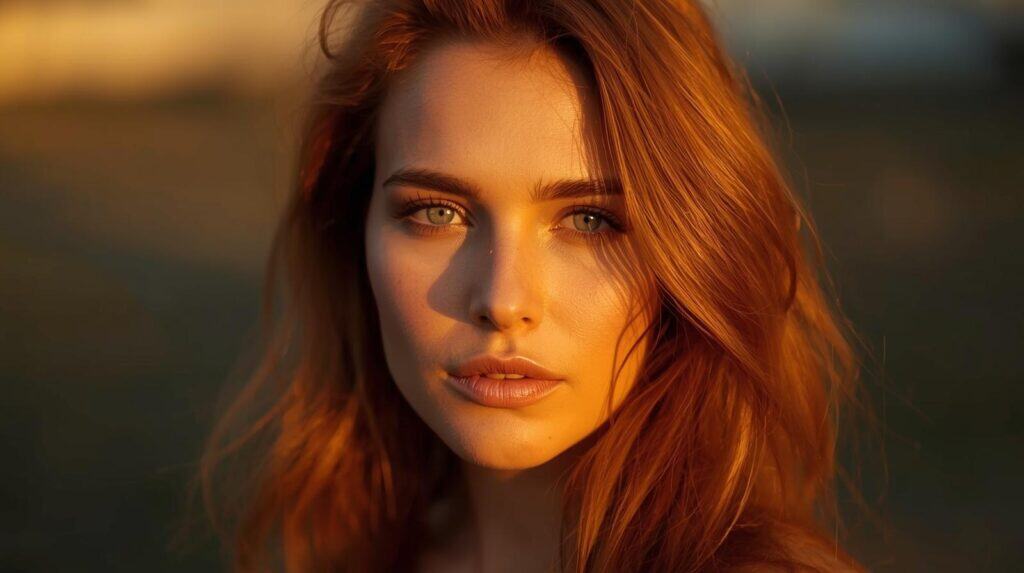
Its orange-gold character often pairs naturally with warm undertones.
Copper can echo peach and golden tones in the complexion, creating a cohesive result.
If you’re looking for a more natural-looking red, this is a great option.
Berry
Berry red is sort of a mix of red and pink. Think of the colour of raspberries.
It’s a pretty colour, but it pulls more cool than warm.
If you prefer warmth-on-warmth, choose a berry shade with more red and less violet. If you like contrast, the cooler berry version can still work.
Top Choice: Red-Orange
Red-orange is one of the most naturally harmonious vivid reds for warm skin tones, especially if you want a bright statement shade.
A red-heavy version looks closer to scarlet, while an orange-heavy version gives a fiery tangerine effect. Compare both beside your face to see which balance you prefer.
It is our starting pick for a bright, warm red, but choose copper instead if you want a softer result.
Best Yellow And Orange Hair Colours For Warm Skin Tones
Yellow and orange hair colours often sit comfortably beside warm undertones, but the exact shade still matters.
Golden yellow, marigold, apricot, and tangerine usually read warmer. Acid or green-yellow shades create more contrast and can look more editorial.
If you want yellow hair, compare swatches near your face because a pale buttery yellow and a fluorescent yellow can behave very differently against the same complexion.
The same goes for orange hair. Peach and pastel orange create a softer look, while vivid orange and tangerine produce much stronger contrast.
What Else Matters Besides Skin Undertone?
Skin undertone is only one part of choosing a vivid hair colour. Your starting hair colour, the amount of lightening required, the depth of the final shade, and how much maintenance you want can all change the result.
Your Starting Hair Colour
Most pastel and very bright fashion colours show most clearly on pre-lightened hair. Deposit-only dyes do not lighten your base: on dark brown or black hair, even a saturated shade may show only a tint. Deep plum, burgundy, or red can be more practical than pastels if you want to minimise lightening.
Your base colour also affects the final hue. For example, Arctic Fox’s pastel colour guide explains that pastel blue over yellow-blonde hair can turn green. If your hair is already lightened, fragile, or unevenly coloured, ask a colourist what is realistically achievable before bleaching again.
Depth And Saturation
A colour can look completely different when it is pastel, medium, deep, muted, or neon. If a shade seems too stark next to your complexion, trying a deeper or softer version of the same colour may be enough to make it feel more balanced.
Test Before Committing
Hold hair swatches or clip-in pieces beside your face in indirect daylight, ideally comparing a warm and cool version of the same colour. Before dyeing, follow the product’s allergy-test instructions each time, as advised in the FDA’s hair-dye guidance. Separately, do a strand test to check the colour and condition of the hair. A strand test does not replace an allergy test.
Maintenance
Plan for fading, root growth, and eventual colour removal, not just the first result. Follow your dye’s aftercare instructions, use lukewarm rather than hot water, and wash according to your scalp’s needs. A matching colour-depositing product can refresh the shade, but test it first because porous ends may absorb more pigment.
Final Thoughts
Having a warm skin tone shouldn’t stop you from enjoying the wide variety of funky and fun hair colours.
For a shortlist, compare rose gold for softness, magenta for brightness, olive for a muted look, and teal for contrast.
If your goal is a harmonious result, start with a warmer-leaning version of the colour you want.
If your goal is contrast, you can deliberately choose a cooler shade instead. Neither approach is a requirement.
If you are undecided, try the colour in clip-ins or a wig before changing your own hair.
For a smaller commitment to lightening, consider a hidden panel or coloured ends. Face-framing pieces have more impact on how the colour looks beside your skin.
Before buying, check the exact shade, dye type, and required starting base. Permanent colour, semi-permanent dye, and colour-depositing conditioner are not interchangeable, even when their shade names sound similar.
Think of these recommendations as colour-harmony guidelines, not rigid rules.
The best choice brings together a colour you enjoy, a result your hair can realistically achieve, and upkeep you are happy to maintain.
Related Articles
Unnatural Hair Colours for Olive Skin (What To Know Before You Choose)
Ugliest Hair Colors (Color Gone Wrong)
Does Bentonite Clay Remove Hair Colour?