
Eyebrow Tinting Vs Microblading (Which Is Right For You?)
Remember the days when we’d pluck our eyebrows as thin as possible in the name of fashion?
You might look back on that trend differently now, especially if years of frequent tweezing left your brows looking thinner than you prefer.
Today, there are several cosmetic ways to make brows look darker, fuller, or more defined without changing the natural growth pattern.
You can use a brow pencil, powder, or gel for a temporary effect, or consider longer-lasting options such as professional tinting or cosmetic tattooing.
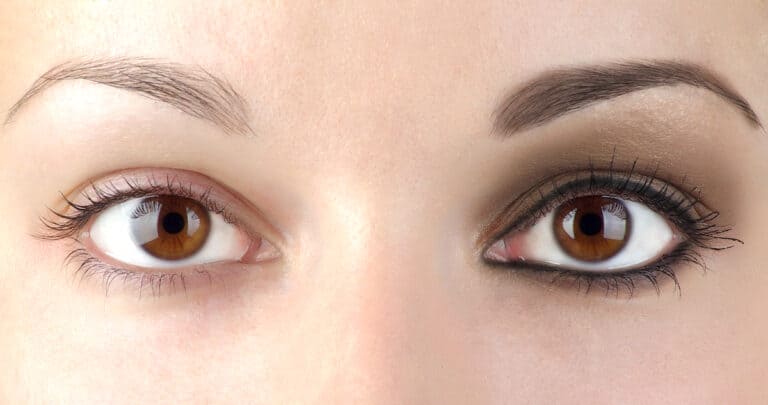
Among the most popular choices are eyebrow tinting and microblading, both of which allow you to simulate the look of thicker, fuller, darker brows.
Wondering what the differences are between eyebrow tinting and microblading, and which is right for you?
Eyebrow tinting and microblading solve different problems. Tinting colors existing brow hairs and may temporarily stain the skin, while microblading is a form of cosmetic tattooing that creates hair-like pigment strokes in the skin. Tinting is less invasive and shorter-lasting; microblading involves more healing, cost, and aftercare.
In this article, we’ll compare both options so you can decide which approach better matches your brows, budget, maintenance preferences, and comfort with a cosmetic tattoo procedure.
What We’ll Compare
Multiple differences set eyebrow tinting and microblading apart from one another.
Still, today we’ll break down the main reasons why you might choose one over the other to fill in your eyebrows or add some colour to light brows!
- Prep
- Treatment Process
- Healing Process
- What Results Look Like
- How Long Do Results Last
- Accessibility
Prep
Eyebrow Tinting
Before you go in for your eyebrow tinting appointment, the main thing that you need to keep in mind is that your brows have to be as clean as possible!
Fresh-faced would be best, but if you want to put on some makeup, be mindful of keeping it as far away from your brows as possible.
A clean brow area is helpful, but you do not necessarily need to avoid every skincare product on the rest of your face. Follow the tint manufacturer’s or salon’s prep instructions and keep heavy oils, makeup, and occlusive products off the brow area immediately before the service.
Your brow professional will usually cleanse the area again before applying the tint.
Heavy oils or balms can leave a film on the brow hairs, which may interfere with even application for some tint systems.
If you usually use an oil-based cleanser or makeup remover, simply make sure the brow hairs are thoroughly cleansed before tinting. A gentle facial cleanser can work without needing to switch to a harsh soap.
Any cleanser or skincare residue left on the hairs can affect how evenly a tint processes, so start with clean, dry brows.
A patch or allergy test should be performed exactly as the product directions specify, because hair-dye reactions can be serious. A negative test does not guarantee that a reaction cannot occur later.
Tell the professional about previous dye reactions, eczema, contact allergies, or unusually sensitive skin before treatment.
Microblading
The microblading prep process is more involved because microblading breaks the skin and deposits pigment, making it a cosmetic tattoo procedure rather than a surface color treatment.
Many artists ask clients to avoid intense exercise immediately before or after treatment, but follow the specific aftercare and prep instructions from the practitioner performing your procedure.
The bigger concern is keeping the freshly treated area clean, dry enough for proper healing, and free from unnecessary friction or irritation.
Avoid arriving with sunburned, irritated, or recently damaged skin. Your artist may also ask you to limit tanning before the appointment so pigment selection and skin condition are easier to assess.
Do not microblade over sunburned, infected, actively inflamed, or otherwise compromised skin. Ask your practitioner about self-tanner or recent tanning if either could affect color matching or healing.
As for the state of your eyebrows, let them go au natural!
Leaving your brows close to their usual growth pattern can give the artist more natural hair to work with when mapping the shape.
Avoid arriving with freshly waxed, irritated, or sensitized brow skin. Timing recommendations for waxing, tinting, peels, retinoids, and other treatments vary, so follow your artist’s written prep instructions.
Do not stop vitamins, supplements, or medications simply because you have a microblading appointment. Tell the practitioner what you take, especially anything that affects bleeding or healing, and ask your prescribing clinician before changing any medically necessary product.
Do not stop prescribed medication without medical advice. Some pain relievers and blood-thinning medicines can affect bleeding, but whether they should be changed is a question for the clinician who prescribed or recommended them.
Treatment Process
Eyebrow Tinting
When you come in, the first thing that your aesthetician will do is clean your eyebrow area.
They may use a gentle cleanser or another brow-safe prep product to remove makeup, oil, and residue. Cleansing reduces surface debris but does not make skin sterile.
The exact cleanser varies by salon. A mild formula may be more comfortable for sensitive skin, but it cannot guarantee that redness or an allergic reaction will not occur.
After cleansing, the professional may map the brow shape before tinting or shaping.
This is the time during your appointment to be vocal about what you’d like the final product to look like.
A trained brow professional can suggest proportions and shape based on your natural growth, facial features, and preferences, but there is no single universally “correct” brow for a face shape.
But that doesn’t mean they won’t take your personal preferences into account as well.
To avoid any accidental staining from the pigment, your stylist will apply a barrier cream on the surrounding area of your brow that you don’t want stained.
This could be petrolatum or another barrier product that helps limit accidental staining on the surrounding skin.
Once you’re all mapped out to your liking, your stylist will go ahead and apply the actual tint to your brows.
You should agree on the shade before application. Processing time depends on the exact tint formula, so the product directions should determine how long it remains on the brows.
Afterwards, they’ll be gently wiped clean to reveal your brand new eyebrows!
Microblading
Microblading is a form of cosmetic tattooing. A handheld blade creates fine openings in the skin and deposits pigment in hair-like strokes. The pigment usually fades over time, but it may not disappear completely and can sometimes change color as it fades.
Choose a trained, legally permitted practitioner who follows local licensing and infection-control requirements. If you have significant skin disease, a history of tattoo reactions, immune problems, or concerns about scarring, discuss the procedure with a dermatologist or clinician first.
Post consult, you’ll set an appointment for your actual microblading procedure.
After cleansing the area, the artist will usually map and measure a proposed brow shape before beginning the procedure.
Review the outline carefully and speak up about shape, thickness, arch, and tail placement before pigment is implanted.
Those who get microbladed brows done typically want the finished product to mimic the look of their natural brows as much as possible.
To do this, the pigment used needs to match the shade of your real eyebrow hairs.
The artist should discuss pigment color with you and explain how the healed shade may differ from the immediately applied color.
Though your technician may let you know what shape and shade they think will work, they also know that it’s you who will be enjoying the final product.
So don’t be afraid to stray from their opinion if that’s what’ll make you happiest.
Many practitioners use a topical anaesthetic when permitted and appropriate, but numbing protocols and products vary by location and provider.
A topical anaesthetic may reduce discomfort, but it does not make the procedure completely painless for everyone.
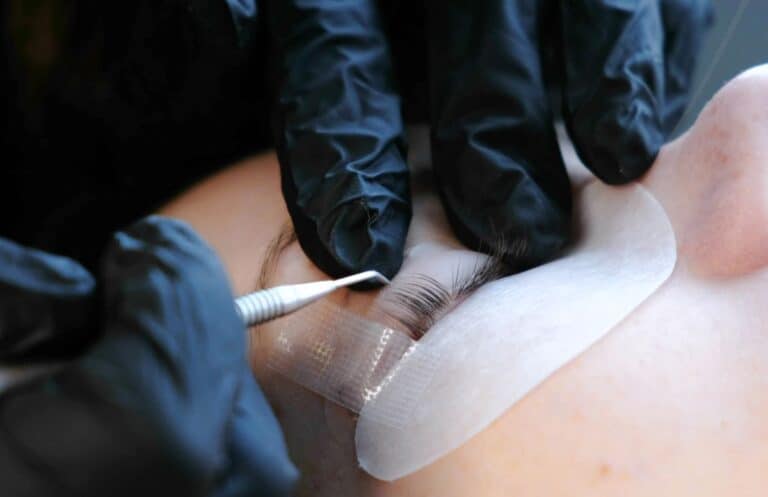
Once the numbing product has taken effect according to its directions, the practitioner uses a microblading hand tool with very fine needles or blades to create the strokes.
The tool creates controlled superficial incisions so pigment can be deposited in the intended stroke pattern.
The fine tip helps create hair-like strokes, but pain levels vary with skin sensitivity, technique, anaesthetic use, and the length of the appointment.
Pressure, scratching, or stinging sensations are common descriptions, but you should not feel pressured to tolerate severe pain.
If you feel intense pain, burning, dizziness, or another concerning symptom, tell the practitioner immediately and stop the procedure if needed.
Mild redness, tenderness, or swelling can occur after microblading, but the intensity and duration vary.
Increasing redness, warmth, pus, spreading swelling, fever, severe pain, or a persistent itchy rash can signal infection or allergy and should be evaluated by a healthcare professional rather than only by the artist.
Healing Process
Eyebrow Tinting
Eyebrow tinting does not break the skin, so there is no tattoo-style wound-healing period. Mild temporary staining or skin sensitivity can still occur.
Dye reactions can appear quickly or be delayed, so watch for redness, swelling, itching, blistering, or eye symptoms after the service.
A symptom-free first day does not completely rule out a delayed contact-allergy reaction.
Microblading
Because microblading is a cosmetic tattoo procedure, aftercare shares some principles with tattoo healing, although the eyebrow area and technique have their own instructions.
Immediately after the appointment, brows often look darker and sharper than the eventual healed result, and mild tenderness can occur during the first several days.
The color generally softens as surface pigment and initial inflammation settle.
Light flaking or small scabs can develop during healing, but timing varies and not everyone follows the same week-by-week pattern.
Do not judge whether healing is normal by how thin the microblading tool is. Follow the practitioner’s aftercare and watch for signs of infection rather than simply assuming all crusting is harmless.
Do not pick, scratch, or peel healing skin, because this can remove pigment and increase irritation or infection risk.
The brows can look darker, lighter, or temporarily patchy at different stages of healing, so wait until the skin has healed before judging the final color.
Do not use a fixed three-week rule for restarting brow makeup. Wait until the skin is fully healed and follow your practitioner’s instructions before applying makeup directly over the treated area.
As healing progresses, flaking should settle and the pigment usually looks softer than it did immediately after treatment.
Many artists assess healed results several weeks after treatment, but complete settling varies by skin, technique, aftercare, and pigment.
Once the skin is fully healed, the artist can judge whether any areas healed lighter or patchier and whether a touch-up is appropriate.
What Results Look Like
Eyebrow Tinting
Eyebrow tinting darkens existing brow hairs and can make lighter hairs more visible, which may create a fuller-looking result.
Tint can make individual hairs look darker and more defined, but it does not create new brow hairs or increase actual hair density.
How full the result looks depends mainly on how much brow hair you already have and whether the tint also leaves a temporary stain on the skin.
If you are considering eyebrow tinting, check the rules and product labeling where you live before using a dye near the eyes. In the United States, the FDA advises consumers not to tint eyebrows or eyelashes at home. The video below shows a technique, but it should not override local safety guidance or product instructions:
Microblading
Microblading offers more shape customization because pigment strokes can be placed in sparse areas rather than only coloring hairs that already exist.
That can make it useful for filling visible gaps or redefining parts of the brow, although the result still needs to suit the artist’s technique and your skin.
Microblading can create fine hair-like strokes, while tinting mainly darkens existing hairs. Which looks more natural depends on the starting brows, pigment choice, technique, and personal preference.
A well-executed microblading result can resemble individual hairs, while a tint may give a more uniformly darkened effect when it stains both hair and skin.
Some people find they need less brow makeup after tinting, while others still use pencil or gel for shape and hold.
Once fully healed, microbladed brows can still be enhanced with pencils, pens, gels, or pomades if you want a stronger makeup look.
If you’d like to see a quick run-through of the process, check out this video from Beauty Studio on YouTube:
How Long Results Last
Eyebrow Tinting
Eyebrow tint usually fades gradually over several weeks, but exact longevity varies with the dye, hair-growth cycle, washing, sun exposure, skincare, and whether the product stains the skin as well as the hair.
Some fading is unavoidable because brow hairs shed and are replaced naturally.
The formula and processing method matter, but aftercare can also influence how quickly skin staining and hair color appear to fade.
Here are some tips to help your tint last:
- Cleanse gently. Harsh rubbing can make the brow area look faded sooner, especially if the tint also stained the skin.
- Follow the tint instructions. Some formulas have specific aftercare recommendations, so use those rather than avoiding entire skincare categories indefinitely.
- Be cautious with strong exfoliants around freshly tinted skin. AHAs, BHAs, and retinoids can increase irritation and may make skin staining fade faster, but they do not need to be avoided permanently once the area is comfortable.
Microblading
Microblading is longer-lasting than tinting, but fading is highly variable. Results may remain visible for many months to a few years, and residual pigment can sometimes persist beyond the point when the brows look “faded.”
How long the result remains cosmetically acceptable is one factor to weigh against the cost, touch-ups, healing, and difficulty of removing unwanted pigment.
Skin type can influence fading, but it is only one factor. Technique, pigment, sun exposure, skincare, healing, immune response, and aftercare also matter.
Some artists report crisper or longer-retained strokes on drier skin, while oily skin may blur or fade faster in some cases. This is not a guarantee for every client.
Oily skin can affect healed stroke definition and retention, but sebum does not literally “push” implanted pigment out of the skin.
Once microblading is fully healed, routine cleansing is usually fine. During healing, follow the practitioner’s aftercare instead of applying oils or cleansers directly over the fresh procedure unless instructed.
Strong exfoliating acids and retinoids used near healed microblading may contribute to faster fading or irritation, so discuss long-term skincare placement with the artist or dermatologist.
Accessibility
Eyebrow Tinting
Eyebrow tinting can work on many hair colors and brow types, but age restrictions, permitted colorants, and professional-use rules vary by country and product.
It is non-invasive because it does not cut the skin, but dyes can still cause irritation, allergic reactions, or serious eye injury if an unsuitable product is used near the eyes.
Do not assume brow tinting is appropriate for children. In the United States, the FDA permits silver nitrate for professional eyebrow and eyelash coloring under specific restrictions, including that those products are not intended for people under 16. Other jurisdictions may have different rules.
If you already have plenty of brow hair and mainly want darker or more visible strands, tinting may suit that goal.
If you have very sparse or absent brow hair, tint has less existing hair to color, so the result may be limited.
Microblading
Because microblading is a cosmetic tattoo procedure, legal age and consent requirements vary by jurisdiction. Many providers restrict it to adults, so check local rules before booking.
Age suitability should be based on legal consent rules, medical considerations, and informed decision-making rather than assumptions about pain tolerance.
Look for a practitioner who follows local licensing rules, uses sterile single-use needles or blades, provides healed-work photos, and explains infection control, pigments, aftercare, and removal limitations.
Because microblading breaks the skin, infection and allergic-reaction risks are more significant than with a simple surface tint. Choose the practitioner based on hygiene and training rather than convenience alone.
If you have sparse brows from genetics, overplucking, or hair loss, microblading may create the appearance of more hairs. Unexplained or sudden brow loss should be medically evaluated before it is covered with cosmetic tattooing.
You can discuss a thinner or fuller shape with the artist, but results are limited by skin type, existing hair, facial structure, pigment behavior, and safe placement.
Conclusion
That was a whole lot of information we just went through, so let’s break it down:
| Eyebrow Tinting | Microblading | |
|---|---|---|
| Prep | Fresh face, no moisturizer, no oil-based products | No working out, no tan/sunburn, no vitamins or supplements, grow out natural brows |
| Treatment Process | Cleansing, mapping, barrier cream, eyebrow tint | Consult, mapping, pigment matching, numbing, microblading |
| Healing Process | No healing process | 1-month healing process |
| What Results Look Like | Bushy, thick, dark, voluminous | More natural look, more customizable |
| How Long Results Last | 3-8 weeks | 18-30 months |
| Accessibility | Good for all ages, those with many brow hairs | Better for adults, good for those with sparse hairs |
TLDR: eyebrow tinting colors existing hairs and is the less invasive, shorter-term option, while microblading is a cosmetic tattoo procedure that can create strokes in sparse areas and requires more healing, aftercare, and commitment. Age and product restrictions vary by jurisdiction.
All in all, the decision of which brow treatment you get is entirely up to you!
Safety Notes Before Choosing Tinting Or Microblading
- For tinting: Use only products specifically permitted and labeled for eyebrow use where you live. In the United States, the FDA advises consumers not to tint eyebrows or eyelashes at home and restricts professional silver-nitrate brow and lash dyes to specific conditions.
- For microblading: Treat it like a cosmetic tattoo. Sterile technique, single-use sharps, clean work surfaces, appropriate pigment handling, and clear aftercare matter.
- Do not stop medication on your own: If a practitioner asks you to stop a blood thinner, pain reliever, supplement, or prescription drug, confirm that change with the clinician who manages it.
- Postpone treatment over irritated skin: Active infection, sunburn, open skin, a significant rash, or uncontrolled dermatitis around the brows should be addressed before either service.
- Know the red flags: Spreading redness, pus, fever, severe swelling, eye pain, vision changes, or a persistent blistering or itchy rash after a brow procedure needs medical attention.
Eyebrow Tinting Vs Microblading FAQs
Is Microblading Better Than Tinting For Sparse Brows?
It can create visible strokes where little hair exists, while tinting can only color the hairs that are already there. However, microblading is more invasive, costs more, requires healing, and carries tattoo-related infection and allergy risks.
Is Microblading Better For Mature Skin?
Not automatically. Thin, delicate, oily, scarred, or medically treated skin may heal differently, and some artists may recommend another permanent-makeup technique instead. A qualified practitioner should assess the individual skin rather than using age alone.
Can An Eyebrow Tint Cause An Allergic Reaction?
Yes. Brow dyes can cause contact dermatitis and, because they are used close to the eyes, an inappropriate dye can cause serious eye injury. Follow product restrictions, patch-testing directions, and local regulations.
Does Microblading Completely Fade Away?
Not necessarily. It is often marketed as semi-permanent because it fades, but residual pigment may remain for years and can change tone over time. Removal or correction can be difficult, so choose shape and color conservatively.
Related Articles