
Can You Use Hair Dye On Eyebrows?
Eyes may be the window to the soul, but eyebrows do a lot of the framing. Their shape and colour can change how your whole face looks.
They can help frame your features and emphasize expression, which is why even a small change in brow colour can make a noticeable difference.
If your brows are naturally light, sparse-looking, or low-contrast, filling them in every morning can become repetitive.
Eyebrow tinting can make the hairs look darker and more defined for a period of time, which may simplify your daily makeup routine.
But professional appointments are not always convenient, which can make at-home options tempting.
So, can you use hair dye on your eyebrows?
The short answer is no. You should not use hair dye on eyebrows, lashes, or any other hair that is not on your head, because it can be dangerous for your eyes and skin.
In this post, we’ll explain why regular scalp hair dye is not appropriate for eyebrows and what to look for instead.
We’ll also cover safer brow-specific options and the precautions to take if you tint your brows at home.
Why You Shouldn’t Use Hair Dye On Eyebrows
Hair colour products can be permanent, demi-permanent, semi-permanent, or temporary, and their formulas vary widely.
- permanent
- demi-permanent
- temporary or semi-permanent
Many permanent and demi-permanent hair dyes use an oxidative colour system that includes dye precursors and a developer, often containing hydrogen peroxide.
These products are formulated and labelled for scalp hair, not for use close to the eyes. The skin around the eyes is delicate, and accidental eye exposure can cause significant irritation or injury.
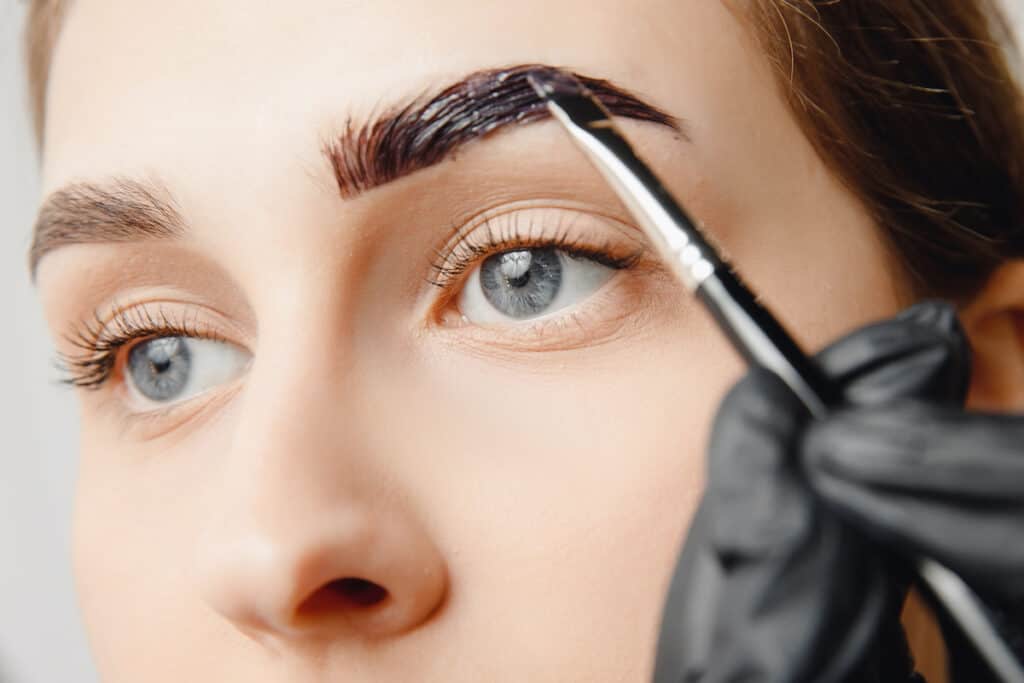
The skin around the eyes and eyelids is thin and sensitive, which makes it more vulnerable to irritation from products not designed for that area.
It still has a protective skin barrier, but it is thinner and more delicate than many other areas, so harsh or strongly sensitising ingredients can be more problematic there.
If irritation does occur around the eyes, swelling and discomfort can be especially noticeable because of the location.
Hydrogen peroxide and other hair-dye ingredients can cause stinging, redness, swelling, dryness, or dermatitis in susceptible people.
Developer can also lighten hair by oxidising pigment. That process is unnecessary unless a product is specifically designed and labelled for brow use.
Using a scalp-hair formula on eyebrow hairs can also leave the hairs dry or brittle, and accidental contact with the eye is the bigger concern.
The most important risk is getting dye or developer into the eye, where chemical exposure can cause serious injury.
The FDA warns consumers not to use hair dyes on the eyebrows or eyelashes because doing so can injure the eyes and, in severe cases, threaten vision.
What about demi-permanent or semi-permanent colour? Demi-permanent formulas commonly use low-level developer, while semi-permanent formulas usually deposit colour without the same oxidative lightening step.
However, that does not make a regular semi-permanent scalp hair dye appropriate for eyebrows. The key issue is whether the product is specifically labelled for brow use.
Some deposit-only colours can darken hair without lightening it, but you should still follow the manufacturer’s intended use instead of improvising near the eyes.
Ingredients differ from formula to formula, and even products without peroxide can contain dyes, preservatives, fragrances, or other substances capable of irritating sensitive skin.
Some oxidative hair dyes contain PPD (paraphenylenediamine) or related dye ingredients, but not every hair colour product contains PPD.
PPD is a known sensitiser, which is one reason hair-colour products include allergy-warning and patch-test instructions.
People who are sensitive to PPD or other dye ingredients can develop itching, redness, swelling, burning, or blistering. Reactions can range from mild to severe.
Allergic contact dermatitis can also appear after a delay, so a person may not notice a reaction immediately after exposure.
Bottom line: do not use ordinary scalp hair dye on your eyebrows. Choose a product that is specifically intended and labelled for eyebrow use.
There are safer, purpose-made options available, but they still need to be used exactly as directed.
What Dyes Are Safe For Eyebrows?
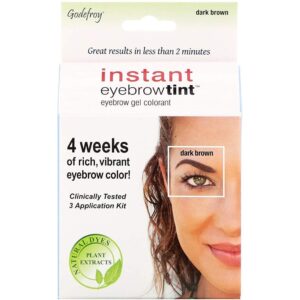
Look for products specifically designed and labelled for tinting eyebrows.
Do not assume every brow tint is peroxide-free or allergy-proof. Brow-tint formulas vary, so the ingredient list and product directions matter.
Look for an “eyebrow tint” or brow-colour kit from a reputable brand, and check whether the label permits at-home use.
For instance, this Godefroy Instant Eyebrow Tint is marketed specifically for brows. Check the current package ingredients and instructions before use, since formulas can change.
There are many eyebrow tints and temporary brow-colour products on the market, with different processing times and ingredient systems.
Read the label carefully, follow any allergy-test instructions, and avoid products that are not explicitly intended for use around the brows.
Even a product made for eyebrows can cause irritation or an allergic reaction, so follow its warnings and stop if you experience burning, swelling, or significant discomfort.
If you cannot find an eyebrow-specific product, do not automatically substitute beard or moustache dye unless that specific product’s label says it can be used on eyebrows.
Facial-hair dyes are still chemical colour products and can contain sensitising ingredients, so being designed for beard hair does not automatically make them eye-area safe.
For a lower-commitment option, consider tinted brow gels, brow mascaras, pencils, or temporary peel-off brow tints that are specifically formulated for the brow area.
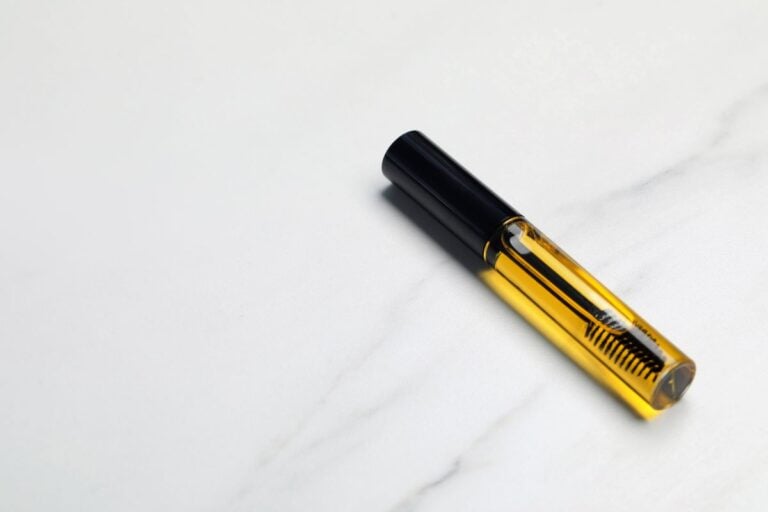
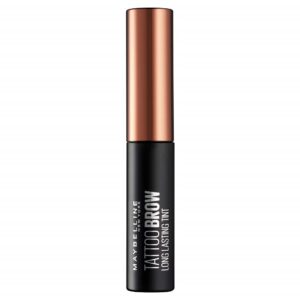
You could also consider tinted brow gels, such as Maybelline New York Brow Tattoo Tint.
Temporary brow products usually offer a shorter-lasting result than oxidative tinting, but they can be a practical choice if you want to avoid a longer-lasting chemical colour service.
How To Dye Your Eyebrows At Home
Once you have found a product specifically labelled for at-home eyebrow tinting, follow the package directions exactly.
The steps vary by product, so the label should take priority over any generic tutorial. A typical process may include:
- Start with a clean, dry brow area unless the instructions say otherwise.
- If the product directions permit it, apply a thin layer of petroleum jelly around, not on, the brow hairs to help reduce skin staining.
- Mix the product only as directed. Do not change the ratio or add ingredients that are not listed in the instructions.
- Brush the brows into place so you can see the shape you want to tint.
- Use the supplied applicator, or another tool only if the instructions allow it, to apply the tint carefully to the brow hairs.
- Wipe away product that goes outside the intended brow area before it processes.
- Leave the tint on only for the exact time stated on the package. Processing times vary significantly, and longer is not necessarily better.
- Remove the product exactly as directed, keeping it out of your eyes. If any tint gets into an eye, rinse immediately with plenty of clean water and seek medical advice if irritation persists.
Because formulas differ, always follow the specific product’s timing, allergy-testing, removal, and aftercare instructions.
A correctly used brow-specific tint can be convenient, but it is still important to treat it as a chemical cosmetic rather than a risk-free beauty step.
How Long Does Eyebrow Tint Last?
Eyebrow tint can last from a few days to several weeks, depending on the formula, how strongly it stains the hairs and skin, and how quickly your brows grow and shed.
Brow tints are not all chemically identical. Some use oxidative colour systems, while others stain or coat the hair temporarily.
They are still capable of causing irritation or allergy, so “made for brows” does not mean completely risk-free.
Longer-lasting formulas may remain visible for several weeks, while temporary gels and stain-type products can fade much sooner.
Most temporary and semi-permanent brow products gradually fade as you cleanse the area and as the brow hairs naturally shed.
How Can You Naturally Darken Your Eyebrows?
If you prefer to avoid chemical tinting, makeup is the most reliable way to make your brows appear darker without changing the hair itself.
Home remedies such as oils or plant pastes have not been shown to reliably darken eyebrow hair or make it grow thicker.
If you want a non-dye option, consider brow pencils, powders, tinted gels, or clear conditioning products instead.
- Olive Oil – Olive oil can condition dry brow hairs, but there is no good evidence that applying it makes eyebrows grow faster, thicker, or darker. It may also irritate or clog the skin for some people.
- Hibiscus – Hibiscus is sometimes used in DIY hair treatments, but there is no reliable evidence that an overnight hibiscus paste will make eyebrow hairs grow thicker or permanently darken them. Avoid getting homemade mixtures near the eyes.
- Castor Oil – Castor oil can coat and condition brow hairs, but evidence that it stimulates eyebrow growth is limited. It can also irritate the skin or eyes in some people, so avoid direct eye contact.

If you try any new cosmetic or oil around the brows, patch-test it first when appropriate and keep it away from the eyes.
Natural does not automatically mean non-irritating or allergy-free.
If your eyebrows have become noticeably thinner or patchy, especially suddenly, it is better to investigate the cause than rely on DIY growth remedies.
If you want an immediate colour change, brow makeup or a product specifically designed for eyebrow tinting is the more predictable option.
Some Final Thoughts
If you have considered using scalp hair dye on your eyebrows, the idea may seem convenient.
Using one product for your scalp hair and brows might sound efficient, but the eye area needs a product designed specifically for it.
Regular hair dye should not be used on eyebrows.
The main concerns are eye injury, skin irritation, allergic reactions, and damage from using a product outside its intended area.
Instead, choose a brow-specific tint or a temporary brow product and follow its instructions carefully.
Whatever method you choose, keep the product out of your eyes, follow allergy-testing guidance, and stop using it if you develop significant irritation.
Related Articles
Black Eyebrows With Brown Hair – Does It Work?
Surprising Benefits Of Oregano Oil For Hair