
How Soon Can You Repeat Keratin Treatment?
A salon keratin or smoothing treatment can leave hair looking smoother, shinier, and less frizzy, but the result, degree of straightening, and potential stress on the hair depend on the exact formula, your starting condition, and the heat used during the service.
It can be tempting to repeat the service as soon as frizz or texture starts returning, especially if you like the smoother finish.
However, repeating a smoothing service too soon can mean more chemical exposure and another round of high heat before you know whether the hair has tolerated the previous appointment well.
There is no single interval that makes every keratin treatment safe for every person, so timing should be based on the exact product directions, what was used previously, your stylist’s assessment, and the current condition of your hair and scalp.
So, how soon can you repeat the keratin treatment?
There is no universal 45-day or 3-month safety rule for repeating a keratin treatment. Around three months is a common practical interval for many long-lasting salon smoothing services, but some formulas are designed to last longer or shorter. Follow the manufacturer’s minimum interval, ask exactly which product was used, and wait longer if your hair feels dry, brittle, weak, or overprocessed.
The interval is only one part of the decision. A longer wait does not remove the exposure concerns from a product that contains or releases formaldehyde when heated, and it does not guarantee that already fragile hair is ready for more heat.
To decide when another treatment makes sense, consider your hair condition, previous bleach or chemical services, breakage, scalp sensitivity, heat history, and how much of the smoothing effect is still present.
Below, we’ll break down how treatment type and hair condition affect timing, what to ask your salon, and how to make the result last without overprocessing your hair.
The goal is to maintain the finish you like without treating a calendar date as proof that your hair is ready for another chemical and heat service.
How Often Should You Get A Keratin Treatment
For many long-lasting salon smoothing treatments, roughly three months between full services is a practical reference point rather than a safety guarantee or universal rule.
The right timing can be shorter or longer because formulas, processing methods, heat settings, previous colour or texture services, and hair condition vary considerably.
Before booking another keratin treatment, find out the exact product used at your last appointment and assess how your hair and scalp have responded since then.
Types Of Keratin Treatments
There are many different salon smoothing systems sold under the broad “keratin treatment” label.
Different salons use different brands and chemistries, so the service name alone does not tell you what exposure or re-treatment interval applies.
At-home smoothing kits also vary widely. Because professional smoothing products can involve strong chemicals and high heat, follow the label exactly and do not assume a product is suitable for home use simply because it is sold online.
The name keratin treatment can be misleading because salon smoothing services are not simply protein masks. They generally combine a smoothing formula with blow-drying and flat-ironing to change the way the hair behaves and reduce frizz.
Keratin is a protein naturally found in hair, but applying a keratin-containing product does not permanently rebuild structurally damaged hair from the inside out.
Depending on the formula, conditioning and film-forming ingredients can temporarily make the hair surface feel smoother and more manageable.
The cosmetic result can include less frizz, more shine, and easier styling, but smoother-looking hair is not the same as reversing existing structural damage.
Some services also relax curl or wave and create a straighter finish, while gentler formulas may mainly reduce frizz without dramatically changing the natural pattern.
The results of a keratin treatment can last from several weeks to several months, depending on the product, hair condition, washing routine, and aftercare.
Knowing what type of keratin treatment you’re getting is the key to figuring out how often you’ll be able to repeat it.
When comparing smoothing services, one important distinction is whether the product contains formaldehyde-related ingredients or can release formaldehyde when heated. Labels such as “formaldehyde-free” should not be treated as a complete safety category on their own.
- Products that contain or release formaldehyde
- Products marketed without formaldehyde or using other smoothing chemistries
Some hair-smoothing products contain formaldehyde, formalin, or methylene glycol, or can release formaldehyde gas during the high-heat portion of the service.
Formaldehyde is a known human carcinogen, and exposure can irritate the eyes, nose, throat, lungs, and skin. The concern is not only the hair itself but also what you and salon workers may breathe during application and heat processing.
If your previous service used a product that contains or releases formaldehyde, waiting a set number of months does not make repeated exposure risk-free. Ask the salon for the exact product name, ingredient information, and Safety Data Sheet, and consider an alternative that does not release formaldehyde when heated.
Products marketed as formaldehyde-free use a range of different smoothing chemistries, so their performance, processing temperatures, longevity, irritation potential, and re-treatment guidance are not all the same.
Some alternatives mainly reduce frizz, while others can create substantial straightening. Do not assume that “formaldehyde-free” automatically means gentle, damage-free, or appropriate to repeat frequently.
Instead of automatically repeating a formaldehyde-free treatment every two months, follow the specific manufacturer’s re-treatment interval and wait until your hair is in good enough condition for another round of processing and heat.
A knowledgeable stylist should be able to tell you exactly which formula was used, how it is activated, what heat is required, and when the manufacturer says it can be repeated. If that information is unclear, postponing the service is more sensible than guessing.
Hair Type
Your hair condition matters at least as much as whether it is fine, coarse, straight, wavy, curly, or coily, because previous chemical and heat damage can reduce how much additional processing the strand tolerates.
There is not a reliable rule that one texture “holds keratin” longer or that repeating a salon smoothing treatment causes a literal keratin buildup that automatically breaks hair. The more useful question is whether the strand is already dry, brittle, highly porous, bleached, relaxed, chemically straightened, or breaking.
- Coarse or very frizzy hair may keep a noticeable smoothing effect for a long time, but that does not mean it should be re-treated on a fixed schedule.
- If you have thick, coarse, curly, or coily hair, base the interval on the formula, the amount of curl change you want, and the condition of the hair rather than a mandatory four-month minimum.
- If you have fine, fragile, bleached, or thinning hair, more frequent treatment is not automatically better. These strands may be less tolerant of repeated high heat or chemical processing and may need a longer break or a different service altogether.
Also consider previous bleach, permanent colour, relaxers, perms, chemical straightening, frequent hot-tool use, and existing breakage. These can matter more than curl pattern alone when deciding whether to repeat a smoothing service.
Regardless of hair type, do not schedule another treatment just because a certain number of weeks has passed.
The best timing combines the manufacturer’s instructions with an honest assessment of your hair and scalp before the next appointment.
Signs Your Hair May Need More Time
Delay another smoothing service if you notice new breakage, unusual shedding, a rough or brittle feel, poor elasticity, scalp soreness, or hair that snaps during detangling. If the damage is significant or you are also experiencing scalp symptoms or unexplained hair loss, a dermatologist or other qualified healthcare professional can help rule out causes that are not simply cosmetic damage.
If your hair has recently been bleached, relaxed, permed, or heavily lightened, tell your stylist before booking. Combining multiple chemical services close together can increase the chance of dryness and breakage, so the safest interval may be longer than the calendar suggests.
Is It Bad To Repeat A Keratin Treatment Too Soon?
Repeating a keratin or smoothing treatment too often can increase chemical exposure, scalp or respiratory irritation, and cumulative heat stress on the hair fibre.
Formaldehyde is a known human carcinogen, and exposure risk depends on factors such as concentration, ventilation, heating, and how often you are around the fumes.
During exposure, some people experience watery or burning eyes, nose or throat irritation, coughing, wheezing, headache, nausea, or skin reactions.
If you experienced breathing problems, strong eye or throat irritation, chest symptoms, dizziness, or a significant skin reaction during a previous service, do not simply repeat it on a longer timetable. Discuss the reaction with a healthcare professional and tell any future stylist exactly what happened.
There are smoothing products that do not contain formaldehyde-related ingredients, but “formaldehyde-free” on its own is not a guarantee that every alternative has the same risk profile or that it can be repeated frequently.
Even with an alternative formula, repeating the service too often can be counterproductive if your hair is already dry, brittle, breaking, or heavily processed.
Because a keratin or smoothing treatment can also be expensive, extending the result through appropriate aftercare may reduce how often you feel tempted to repeat the full service.
Many smoothing services involve blow-drying and repeated flat-iron passes at high temperatures. Excessive heat can contribute to dryness, loss of elasticity, and breakage, especially on already compromised hair.
Conditioning ingredients can improve softness, slip, and shine, but they do not cancel out heat or chemical damage. That is another reason not to re-treat fragile hair simply because the smoothing effect has begun to fade.
Good aftercare can help you enjoy the cosmetic result for longer and reduce the urge to schedule another full treatment before your hair is ready.
How To Make Your Keratin Treatment Last Longer
Because there is no universal re-treatment interval, the most useful approach is to preserve the current result and minimise avoidable damage between appointments rather than chasing a perfectly smooth finish at all times.
Aftercare should always start with the instructions provided for the exact smoothing system used on your hair.
These general habits may also help the smoother finish last longer:
Go Sulfate-Free
If your treatment brand recommends it, choose a gentle, sulfate-free shampoo and conditioner. Some systems also advise avoiding sodium chloride, so check the specific aftercare sheet rather than relying on one rule for every formula.
Strong cleansing can make some smoothing results fade faster, but sulfate-free does not automatically mean gentler for every scalp or hair type. Use a cleanser that removes buildup without leaving your hair rough or your scalp irritated.
There are lots of sulfate-free shampoos on the market, including some you can find at drugstores and online.
You do not need an expensive cleanser simply because it is labelled sulfate-free. Choose one that fits the aftercare requirements and leaves your scalp clean without making the lengths feel excessively rough.
Wash as often as your scalp and hair actually need. A keratin treatment does not create a universal need to wash less often.
One sulfate-free shampoo and conditioner option is this one by VERB. Check it against the aftercare requirements for your specific smoothing treatment, since compatibility can vary by formula.
A smoothing treatment does not prevent oil, sweat, minerals, or styling-product buildup, so continue cleansing your scalp appropriately rather than stretching wash days solely to protect the treatment.
Avoid Heat Styling
A smoothing treatment may reduce how much hot-tool styling you feel you need, but treated hair is not protected from future heat damage.
Limiting unnecessary hot-tool use can help reduce additional heat damage, even if the exact effect of heat on treatment longevity varies by smoothing system.
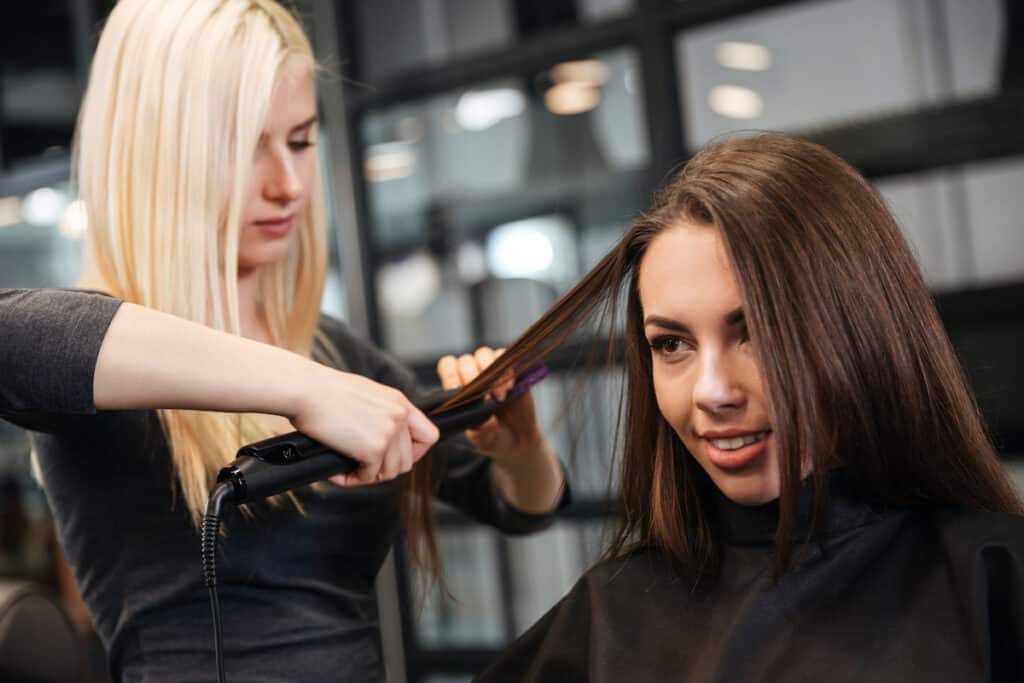
Repeated high heat can contribute to dryness, breakage, and roughness, which may make hair look frizzier even while some of the salon smoothing effect remains.
If you do use hot tools, keep the temperature appropriate for your hair condition and use them only as needed rather than assuming treated hair is protected from heat.
Avoid Chlorine
If you spend a lot of time in pools or hot tubs, frequent exposure can affect both the feel of the hair and the longevity of some smoothing results.
You do not have to avoid swimming, but reducing prolonged soaking and taking a few protective steps can help limit dryness and buildup.
Frequent pool exposure can be drying and may shorten the cosmetic life of some smoothing treatments.
Chlorinated water can leave hair feeling dry or rough, and colour-treated hair may also be more prone to unwanted colour changes depending on the water chemistry.
Swimming is still compatible with treated hair when you manage the exposure sensibly.
If you swim, consider wetting your hair with fresh water first, using a swim cap when practical, and rinsing promptly afterwards. Cleanse as needed with a gentle shampoo that is compatible with your treatment.
Use A Keratin Hair Mask
A keratin hair mask can be used between appointments if your hair responds well to it, but it should be treated as a conditioning or protein-containing product rather than a miniature salon smoothing treatment.
Protein-containing masks can temporarily improve feel, slip, manageability, and the appearance of roughness, but they do not permanently replace structural keratin lost from damaged hair.
If a protein-rich mask leaves your hair feeling stiff, rough, tangled, or unusually brittle, reduce how often you use it and switch back to a conditioning formula your hair tolerates better.
There is no universal once-weekly schedule. Follow the mask directions and adjust frequency according to your hair’s condition, especially if it is fine, bleached, low-porosity, or already prone to stiffness and breakage.
Choose a mask based on what your hair currently needs, whether that is softness, detangling, moisture, or occasional protein support.
Another option is this VIRTUE hair mask, which is marketed as a restorative conditioning treatment. As with any protein-containing mask, judge it by how your own hair responds rather than assuming more protein is always better.
Related Articles