
How Often Should You Straighten Your Hair?
A flat iron can give you a sleek, polished finish in minutes, but it also presses direct heat against the hair. That means how often you straighten, how hot the plates are, and how many passes you make all matter.
Used carefully, a straightener can smooth frizz and make the hair look shinier. Used too often or too hot, it can contribute to dryness, roughness, split ends, and breakage, especially on already fragile hair.
So the goal is not to avoid heat at all costs. It is to use the least heat and the fewest passes needed to get the result you want.
Repeated high-heat styling can gradually weaken the hair fibre, and the risk is higher if your hair is bleached, chemically treated, very fine, brittle, or already showing signs of damage.
So, how often should you straighten your hair?
There is no universal schedule that guarantees zero damage. As a practical starting point, avoid daily flat ironing and try to keep full straightening sessions to about once a week or less, especially if your hair is fine, bleached, colour-treated, or already dry. Use the lowest effective temperature, as few passes as possible, and a heat protectant.
If your style lasts several days, preserving it between washes can also help you avoid unnecessary touch-ups.
Below, we’ll cover how often to straighten, how to choose a safer temperature, what signs suggest you should cut back, and how to keep straightened hair looking smooth for longer.
Your Flat Iron And Temperature Matter
An older flat iron is not automatically unsafe, but worn plates, uneven heating, a damaged cord, or a temperature dial that no longer behaves predictably are good reasons to replace it.
Modern flat irons also come in different plate widths, materials, and temperature ranges, so it is worth choosing a tool that suits your hair rather than simply using the hottest setting available.
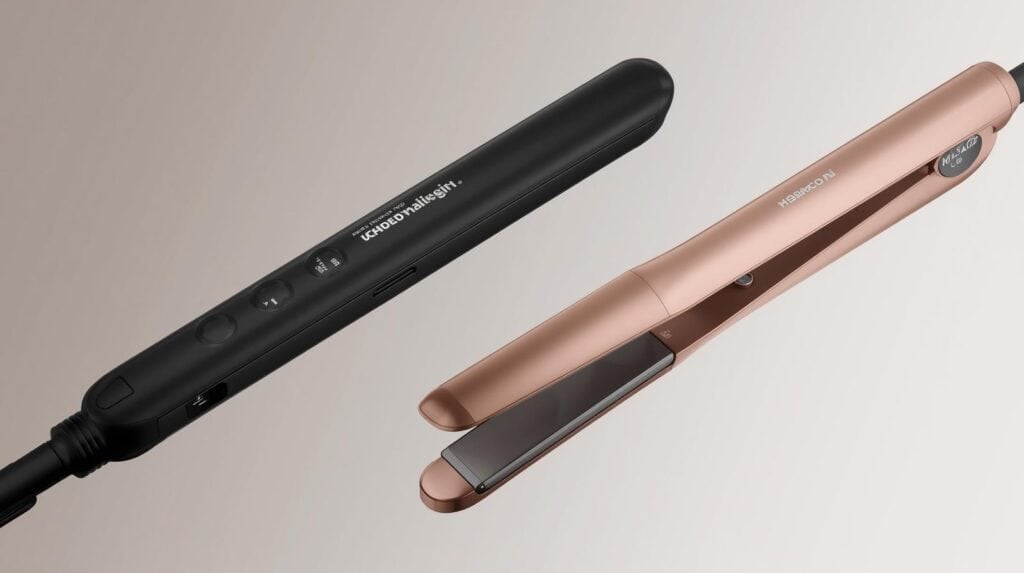
Using a flat iron with adjustable temperature and plate size that suits your hair can make styling more efficient and help you avoid unnecessary heat exposure.
Before styling, do a quick hair check. Is your hair healthy or already dry and brittle? Has it been bleached, relaxed, permed, or heavily coloured? Is it fine, dense, short, or long?
Those details can affect the plate size, temperature, and styling approach that makes sense for you. Heat tools are not one-size-fits-all.
If you have any of the following hair types, here are a few things to consider:
- Damaged Hair – If your hair is severely damaged, keep the temperature as low as you can while still getting the style you want, and consider skipping the flat iron altogether until the hair feels stronger.
A fixed cutoff such as 375°F is not guaranteed to be safe for compromised hair.
- Thick Hair – Wider plates can cover more hair at once and may reduce styling time on long or dense hair. Work in controlled sections so you do not compensate with excessive heat or repeated passes.
- Short Hair – A narrower plate can give you more control around the roots, nape, and bangs without forcing you to clamp large sections close to the scalp.
One feature is especially useful: an adjustable temperature control.
It lets you work upward from a lower setting instead of exposing every hair type to the tool’s maximum temperature.
And it lets you choose the lowest effective temperature for your hair instead of defaulting to the maximum setting. Very high heat, including settings around 450°F, can increase the risk of thermal damage, especially with frequent use.
When Is the Best Time To Straighten My Hair?
If you use a straightener regularly, preparation matters because direct high heat can damage hair that is damp, overloaded with product, or already fragile.
Here’s a practical checklist to reduce unnecessary heat stress before you use a flat iron:
- Dry Hair – Flat irons are designed for dry hair unless the manufacturer specifically states otherwise. Make sure the hair is fully dry before clamping it between heated plates, since trapped moisture can increase thermal stress.
- Low Buildup – Heavy layers of oil, dry shampoo, hairspray, or styling product can make flat-ironing feel sticky or require extra passes. You do not have to wash immediately before every straightening session, but avoid ironing over heavy buildup.
- Heat Protectant – A thermal protectant can help reduce some heat-related damage and improve slip, but it does not make high-temperature styling risk-free. Apply it as directed and avoid piling on more heat just because you used protection.
If your hair is dry, relatively free of buildup, and protected, use the lowest temperature and fewest passes needed for the result you want.
How Often Can You Straighten Your Hair Without Damaging It?
First things first, no two people have the exact same hair. A routine that works well for healthy, coarse hair may be too much for fine, bleached, or brittle strands.
If you want a simple rule of thumb, avoid making flat ironing a daily habit. Starting around once a week or less gives you more time between full heat sessions, and damaged hair may need considerably longer breaks.
There is no evidence-based 48-hour or three-day rule that guarantees safety. What matters is your total heat exposure, including temperature, number of passes, frequency, and any blow-drying or curling you do between sessions.
Flat irons can be especially stressful because the hair is clamped directly between heated plates. Damage risk increases with higher temperatures, slower passes, repeated passes, and frequent use.
If your hair starts looking dry, rough, frizzy, brittle, or less elastic, or you notice more short broken pieces, cut back on heat and give it more time between sessions.
Hair fibre does not truly heal itself, but reducing heat gives you time to condition the hair and avoid adding more damage.
Try to avoid stacking multiple high-heat tools on the same hair in one day when you can achieve the style with fewer heat steps.
If you need to blow-dry and flat-iron in the same routine, use moderate dryer heat, dry the hair fully, and keep the flat-iron temperature and number of passes as low as practical.
If you can preserve the style between washes, you may be able to reduce how often you reach for the flat iron.
Less frequent heat is especially useful for fine, bleached, brittle, or already-damaged hair.
Rather than following a rigid calendar rule, focus on minimizing repeat high-heat sessions and watch for signs of dryness or breakage.
If frequent straightening is drying out your hair, reduce both the frequency and temperature, and consider switching to lower-heat styling methods for a while.
If your style lasts until your next wash, you can avoid unnecessary touch-ups and reapply heat only when you actually restyle.
It may take some trial and error to find a routine that gives you the look you want without leaving your hair progressively drier, rougher, or more fragile.
Signs You May Be Straightening Too Often
Your hair usually gives you clues when your current heat routine is too aggressive. Pay attention to changes that appear over several styling sessions rather than judging only how smooth the hair looks immediately after ironing.
- More breakage or short snapped hairs, especially around the ends or hairline
- Persistent roughness or dryness that does not improve much after conditioning
- Split or frayed ends appearing faster than usual
- Loss of elasticity or curl pattern in naturally wavy, curly, or coily hair
- A burnt smell, visible scorching, or unusual brittleness, which are signs to stop using high heat and reassess your routine
If you notice these changes, lowering the temperature and spacing out sessions is more useful than simply adding more oil or conditioner before using the same amount of heat again.
How To Maintain Straightened Hair
If you can keep your straightened hair smooth for several days, you may be able to avoid extra touch-ups and reduce repeat heat exposure.
A few simple overnight and styling habits can help the finish last longer without reaching for the flat iron again the next morning.

How to keep your hair straight:
- Use dry shampoo only when you need it. It can absorb visible oil and help extend a style, but it does not stop the scalp from producing sebum. Overuse can also leave buildup, so follow the product directions and cleanse when needed.
- Try a silk or satin pillowcase if you want less friction against the hair overnight. It may help reduce roughness and preserve a smooth style, but it will not prevent all moisture, sweating, or frizz.
- See if you can master wrapping your hair. This involves laying your straightened hair in a circular formation against your head.
Your locks will be held in place by bobby pins, keeping your hair in place for you to let down tomorrow. This technique is kept together by a silk scarf snugly tied around your head.
- Avoid tight buns, ponytails, or elastics overnight if you want to preserve a straight finish. They can leave dents or creases that may tempt you to touch up the hair with more heat in the morning.
- If you’re trying to control frizz, use a small amount of lightweight serum or oil on the lengths and ends. Heavy product can weigh hair down or create buildup, and water-based products do not automatically ruin a straight style.
Related Questions
What temperature is best to straighten my hair?
There is no single temperature that is best for every head of hair. Start low and increase only if needed, aiming for the lowest setting that can straighten a properly sized section in one slow, controlled pass. Fine, bleached, colour-treated, or fragile hair generally needs more caution than healthy, resistant hair.
Some hair straighteners reach 450°F or higher, but maximum heat is not necessary for routine styling and can increase damage risk. Follow the tool and any professional treatment instructions rather than using extreme heat by default.
Can I straighten my hair twice a week?
Some healthy hair may tolerate two sessions in a week, but twice weekly should not be treated as automatically safe. If you need frequent touch-ups, first try preserving the style longer, lowering the temperature, or correcting only the sections that actually need restyling instead of reheating your entire head.
If your hair is bleached, chemically treated, brittle, or already breaking, twice-weekly flat ironing may be too much. In that case, longer breaks and lower-heat styling methods are the safer direction.
Can I straighten hair without heat?
Yes, to a degree. Heatless methods can stretch and smooth the hair, although the result may be more of a soft blowout than a pin-straight finish depending on your natural texture.
The hair wrapping technique we mentioned earlier is a popular method for straightening hair overnight!
Start with damp, detangled hair and wrap it smoothly around the head without pulling so tightly that the scalp feels sore or tense. Secure it gently with a scarf.
Another trick to heatless straight hair is to use jumbo rollers to put your damp hair up before your night out.
You can air-dry the rollers for a heatless approach, or use a blow dryer on a moderate setting to speed things up. The finish can vary depending on hair texture and how completely the hair dries.
This won’t give you pin-straight hair, but rather a chic, blow-out look.
Related Articles
Benefits Of Airbrush Makeup (And The Drawbacks)
How To Get Eyelash Glue Off Eyelids Without Makeup Remover