
Benefits Of Airbrush Makeup (And The Drawbacks)
Big events like weddings, birthdays, and formal celebrations often come with extra planning around hair, nails, and makeup.
One option you may come across is airbrush makeup, which uses a fine mist of foundation rather than a traditional brush or sponge application.
Before booking an airbrush makeup artist, it helps to know what the technique can and cannot do. It can create a thin, even-looking base, but the finish still depends on skin prep, formula, shade matching, layering, and the artist’s technique.
To decide whether airbrush makeup is worth it for your event, compare its finish, wear time, touch-up needs, cost, shade flexibility, and how it behaves on your skin type with traditional makeup.
So what are the benefits and disadvantages of airbrush makeup?
Airbrush makeup is best thought of as an application method, not an automatic upgrade. It can create thin, buildable coverage and may wear very well for long events, but traditional foundation can look just as polished and last just as long with the right products and technique. Airbrush is most worth considering when you like its specific finish and have tested how the formula behaves on your skin.
Below, we compare the main benefits and drawbacks, explain how airbrush makeup differs from traditional foundation, and cover the questions worth asking before booking it for a wedding or other long event.
Whether you’re getting ready for an outdoor wedding, formal photos, or a long work event, the goal is to choose the method that gives you the finish and wear you want without paying extra for a technique that does not suit your skin.
Airbrush Makeup Pros And Cons At A Glance
- Pros: thin buildable layers, even-looking application, lightweight feel, and potentially strong wear depending on the formula.
- Cons: often costs more, can be harder to touch up, may emphasize flaky texture, and depends heavily on artist skill.
- Best suited to: clients who like the sprayed finish, have had a successful trial, and want a lightweight event base.
- Traditional makeup may be better if: you need easy touch-ups, prefer a creamier finish, want a very specific foundation formula, or already know a conventional base wears well on you.
- Most important: airbrush is an application technique, not a guarantee of better coverage, longer wear, or better photos.
What Is Airbrush Makeup?
In makeup, “airbrushing” refers to spraying a fine mist of compatible liquid product onto the skin with an airbrush tool and compressor.
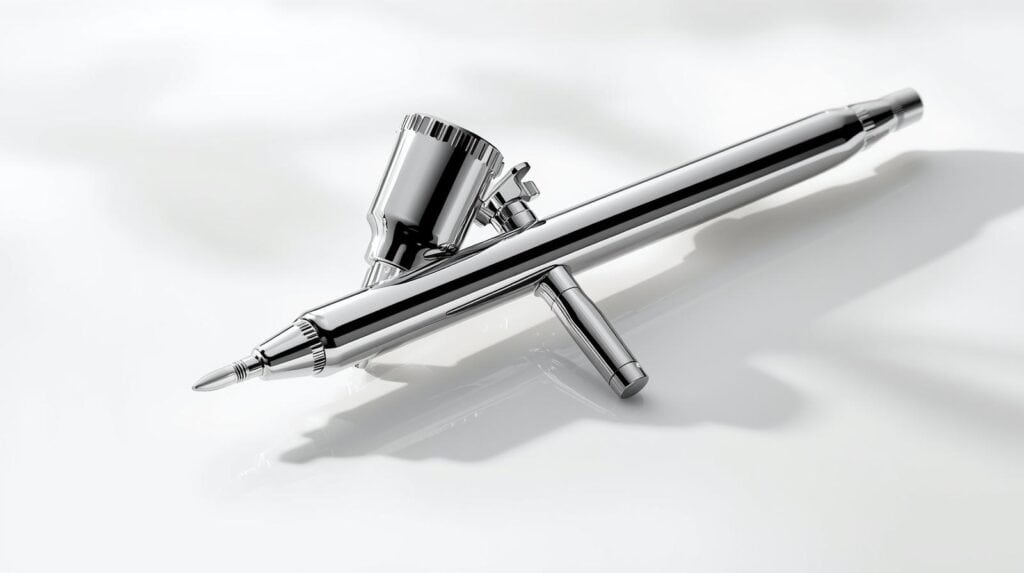
The technique predates digital photo editing and is used by some makeup artists for bridal, event, editorial, and camera work.
If you’re unfamiliar, here’s how it works: the foundation is sprayed onto your face using an airbrush.
It allows a fine mist of foundation to be layered in thin passes across the skin. Skilled application still requires control and blending between areas even though no sponge or brush is used on the face.
With airbrush foundation, the artist can spray and build coverage gradually. Other parts of the makeup look may still use traditional brushes, sponges, or pencils.
The result can be a smooth, lightweight-looking finish when the formula, prep, and application suit the skin. A typical airbrush system uses a compressor, an airbrush gun, and foundation designed to atomize properly through that system.
The foundations used for airbrushing are usually thinner than many traditional foundations. Some formulas are silicone-based, while others use water- or alcohol-based systems, so the ingredients vary by brand.
Your makeup artist may mix shades or adjust undertones to better match your complexion, although the available shade range depends on the system they use.
Here’s a great tutorial from LUMINESS on YouTube for your reference.
Airbrush Makeup Vs Traditional Makeup
| Feature | Airbrush Makeup | Traditional Makeup |
| Application | Fine mist applied with an airbrush gun | Brushes, sponges, fingers, or other conventional tools |
| Coverage | Usually thin and buildable | Ranges from sheer to full depending on formula |
| Finish | Can look very even and lightweight | Can be matte, satin, dewy, skin-like, or full coverage |
| Touch-ups | Can be trickier to match once the sprayed base is disturbed | Usually easier to patch with the same foundation or concealer |
| Shade choice | Depends on the artist’s system and mixing range | Very broad choice across brands and undertones |
| Cost | May include an upgrade fee | Often included in standard event makeup pricing |
| Wear | Can wear very well with the right formula and prep | Can also wear very well with long-wear products and proper prep |
Neither method automatically wins. A traditional foundation that already works beautifully on your skin may be a safer event-day choice than switching to airbrush simply because it sounds more durable or camera-ready.
Benefits Of Airbrush Makeup
Airbrush makeup has a few practical advantages, especially for clients who want thin, buildable coverage and a finish that photographs cleanly when applied well.
Thin, Even-Looking Finish
One of the main appeals of airbrush makeup is the fine, even application. It can soften the look of uneven tone and create a lightweight base without the visible brush or sponge marks that can happen with rushed traditional application.
Because the product is applied in thin layers, airbrush makeup can look natural when coverage is kept light. It can still look heavy or textured if too much product is layered on.
This makes it a useful option if you want buildable coverage with a lighter feel. However, it does not erase pores, acne scars, fine lines, or skin texture, and traditional foundation can achieve a similarly refined finish with the right formula and technique.
Photographs
Makeup can read differently in photos than it does in a mirror because lighting, flash, and camera processing change how texture and contrast appear.
Airbrush makeup can photograph well when the shade match, finish, and powder are compatible with the lighting setup.
For flash photography, it is still worth testing the finished base beforehand, including any setting powder, because flashback depends on the whole product combination rather than the application method alone.
This is one reason airbrush techniques are commonly associated with bridal, event, and camera-ready makeup, although the application method alone does not guarantee better photographs.
Long-Lasting
Wear time depends on the formula, prep, setting products, climate, and skin type. Some airbrush foundations are marketed for long wear, but there is no universal 10-16 hour guarantee.
Some silicone-based formulas resist transfer and humidity well, but heat, sweat, rain, tears, rubbing, and oil can still break down the makeup.
This can make airbrush makeup worth considering for long outdoor events, especially if you have already wear-tested the formula. Traditional long-wear foundation can perform just as well or better depending on the products, climate, prep, and application.
Can Work Well For Oily Or Acne-Prone Skin
If you have oily skin, some matte or silicone-based airbrush formulas may help the complexion look more controlled for part of the day, although oil can still break through over a long event.
The finish varies by formula, so oily skin may still need primer, powder, or blotting during a long event.
Airbrush foundation can even out redness and discoloration, but it does not physically fill indented acne scars or flatten raised texture. Texture can still show depending on the lighting, coverage, and how much product is layered.
It’s Not Just Foundation
Airbrush makeup includes airbrush blush, bronzer, highlighter, and foundation.
Depending on the system, you can build more of the complexion with sprayed-on products or combine airbrush foundation with traditional cheek and highlighting products.
If you want more definition, your makeup artist can add contour, bronzer, highlighter, or blush with airbrush or traditional products depending on the desired finish.
Airbrush systems can create matte, satin, or dewy finishes depending on the products used, so the final look is not limited to one texture.
Airbrush Makeup Hygiene And Comfort
Because airbrush equipment repeatedly carries liquid product through a gun and nozzle, professional cleaning and hygienic product handling matter. Ask how the artist cleans the equipment between clients if you have concerns about sanitation.
During application, keep your eyes and mouth closed when the artist is spraying nearby and tell them immediately if the mist causes stinging, coughing, or discomfort. If you have very sensitive eyes, fragrance sensitivity, or respiratory concerns, discuss that before the appointment rather than waiting until the spray is on your face.
Airbrush makeup should not be sprayed directly into the eyes, nose, or mouth. A skilled artist controls distance and direction and uses only products intended for the airbrush system and the area being applied.
Drawbacks Of Airbrush Makeup
Airbrush makeup also has practical drawbacks. The main ones are cost, limited touch-up flexibility, formula compatibility with dry or textured skin, and the fact that results depend heavily on the artist’s skill.
Cost
Not all makeup artists offer airbrush makeup as a service. After all, they need the equipment and training to do so.
Some artists charge an additional fee for airbrush makeup, while others include it in their standard event package.
The fee may reflect the artist’s equipment, compatible foundations, training, setup, and cleaning time, but whether the upgrade is worth paying for depends on the finish you prefer.
Pricing depends on location, artist experience, event type, travel, and whether a trial or touch-up service is included.
You can purchase an airbrushing kit online and learn how to use it yourself.
At-home kits range widely in price, and you will usually need practice to learn trigger control, distance, shade mixing, and even layering.

If you want to airbrush at home, you may need several shades or refills plus enough practice to learn distance, trigger control, pressure, layering, and cleaning.
If you do not want to learn the technique yourself, booking an experienced professional is the more practical option for a major event.
Getting airbrush makeup professionally done for an event can cost more than traditional makeup, but pricing varies widely by location, artist, package, travel, and event type.
Can Emphasize Dry Or Flaky Texture
If you have dry or flaky skin, some airbrush formulas can emphasize texture when the skin is dehydrated, peeling, or paired with an overly matte product.
That does not mean airbrush makeup is only for oily or combination skin. Dry skin can still wear it successfully when the formula and prep are appropriate.
For dry skin, a hydrating moisturizer, compatible primer, and a satin or more flexible airbrush formula may create a more comfortable finish. Avoid aggressive last-minute exfoliation simply to make the makeup sit flatter.
If the event is important, a trial can show you whether the finish works well with your skin before the day itself.
Hard To Touch Up
If part of the airbrush base comes off from tears, sweat, rubbing, or wiping, matching the original sprayed finish can be harder than touching up a conventional liquid or cream foundation.
You also probably will not have the artist and airbrush system available for every touch-up later in the day.
That means most event-day touch-ups rely on traditional concealer, powder, blotting products, or matching foundation.
Touch-ups can be trickier because adding cream or liquid foundation over a set airbrush base may disturb the finish. Small corrections with concealer, powder, or matching foundation can still work when applied lightly.
Limited Shade Options
Traditional foundation generally offers a broader choice of brands, finishes, undertones, and ready-made shade depths.
Airbrush foundation shade ranges vary by brand. Some systems offer extensive mixing options, while others provide fewer ready-made shades than traditional foundation lines.
Artists can mix shades and undertones, but the result still depends on having the right pigments available and enough experience to match the complexion, neck, and exposed skin accurately.
Who Is Airbrush Makeup Best For?
Airbrush makeup is most worth considering when you like the way it looks on your own skin and the artist is experienced with the finish you want.
- Consider it if: you prefer thin buildable coverage, want a lightweight event base, have a long day planned, or liked the way an airbrush formula performed in a trial.
- Traditional makeup may be easier if: you have significant flaking, need frequent touch-ups, already own a foundation that photographs well, or want a finish unavailable in the artist’s airbrush range.
- For acne or texture: choose based on the finish you prefer. Airbrush can even out color but does not physically erase raised or indented texture.
- For dry skin: prioritize comfortable prep and a flexible finish rather than assuming airbrush itself is the problem.
- For oily skin: long wear still depends on primer, setting, climate, and touch-ups, not just the spraying technique.
The Results Can Vary
The quality of airbrush makeup depends heavily on the skill of the person applying it. Fine mist does not automatically mean even coverage, correct shade matching, or a skin-like finish.
As with traditional makeup, the finish can vary considerably from one artist to another and from one airbrush system to another.
Airbrush makeup can absolutely go wrong if the shade, distance, pressure, layering, or skin prep are off, so experience matters.
If you are getting ready for a special event, review the artist’s work on skin similar to yours and consider a trial so you can assess shade match, texture, wear, photography, comfort, and how the base behaves after several hours.
Questions To Ask Before Booking Airbrush Makeup
- Which airbrush foundation system and finish do you use?
- Do you have examples of airbrush makeup on skin similar to mine?
- Is airbrush included in the quoted price or charged as an upgrade?
- Can we do a trial and photograph the makeup with flash and natural light?
- What should I use for touch-ups if the base gets disturbed later?
- How do you clean the airbrush equipment between clients?
Airbrush Makeup FAQs
Is Airbrush Makeup Better Than Regular Makeup?
Not automatically. Airbrush can create a lightweight, even-looking base, while traditional makeup offers more formula and texture options and is often easier to touch up. The better choice is whichever method performs best on your skin and gives you the finish you want.
Does Airbrush Makeup Last Longer?
Some airbrush formulas are designed for long wear, but the technique alone does not guarantee extra hours. Skin prep, formula, setting products, weather, sweat, oil, tears, and rubbing all affect wear time.
Does Airbrush Makeup Hide Wrinkles Or Acne Scars?
It can even out color and soften the appearance of some surface variation, but it does not physically fill lines, pores, raised texture, or indented scars. Heavy layering may make texture more noticeable rather than less.
Is Airbrush Makeup Good For Mature Skin?
It can be, especially when the formula is flexible and applied in thin layers. Very matte or over-applied formulas may emphasize dryness or fine texture, so a trial is the best way to judge the result on your own skin.
Is Airbrush Makeup Worth It For A Wedding?
It can be worth it if you like the finish, it wears well in your trial, and the extra cost fits your budget. If your usual long-wear foundation already photographs beautifully and lasts through events, airbrush is optional rather than necessary.
Final Thoughts
Airbrush makeup is one option for events such as weddings, but it is not automatically better than well-applied traditional makeup.
The best reason to choose airbrush is that you genuinely prefer its finish and performance on your skin, not simply because it is marketed as the more professional option.
Airbrush makeup can offer a thin, even finish and good wear time, but traditional makeup can perform just as well when the products and technique suit your skin and event.
Ultimately, compare the trial result, skin comfort, wear time, cost, touch-up plan, and artist’s skill rather than assuming either airbrush or traditional makeup is universally superior.
Related Articles
Best Nail Stencils For Airbrushing
Best Color-Changing Foundations
Mixing Foundation With Moisturizer (What To Know)