
How Long Do Eyeshadow Palettes Last?
Eyeshadow is a makeup staple for many people, whether you use a single neutral shade or rotate through several palettes.
It can add dimension, colour, contrast, or softness to an eye look with only a few products.
Lighter or more reflective shades can make the eye area look brighter, while deeper shades can create more definition for an evening look.
Because the finish can change so quickly, it is easy to accumulate palettes for different moods, colours, and occasions.
That variety is useful, but it also means some eyeshadow palettes can stay in a drawer for months or years between uses.
If you’re anything like us, you might have several different eyeshadow palettes for various occasions.
And because a palette can take years to finish, it is easy to lose track of how long it has been open.
So, how long do eyeshadow palettes last?
There is no single expiration date that applies to every eyeshadow palette. Pressed powders often last longer than cream or liquid shadows, but the safest guide is the brand’s own shelf-life or period-after-opening information when it is provided. Discard any eye product sooner if its smell, texture, appearance, or performance changes, if it becomes contaminated, or if you used it while you had an eye infection.
If you have had the same eyeshadow palettes for a long time, check when you opened them, inspect each formula, and compare them with any manufacturer guidance on the packaging.
Below, we explain how long different eyeshadow formulas tend to remain usable, what warning signs matter, how period-after-opening labels work, and when replacing a palette is the safer choice.
Does Eyeshadow Go Bad?
Yes, eyeshadow can go bad. Pressed powder formulas often remain usable longer than wetter eye products, but every formula can deteriorate or become contaminated over time.
Heat, moisture, repeated contact with brushes or fingers, and normal changes in the formula can all affect quality and hygiene.
Using an old or contaminated eye product can increase the chance of eyelid irritation or an eye infection, especially because brushes and applicators repeatedly contact the eye area.
If a product stings, burns, makes your eyelids red or swollen, or irritates the eye itself, stop using it.
Performance can also change as an eyeshadow ages.
An older eyeshadow may also perform differently. It can become harder to pick up, patchier, unusually dry, separated, or different in colour or scent.
If the manufacturer’s recommended use period has passed, or the formula shows suspicious changes, replacing it is the safer option for a product used so close to the eyes.
How Long Should You Keep Eyeshadow?
The right time to retire an eyeshadow depends on the formula, how long it has been open, how it has been stored, and whether anything about it has changed.
There is no universal number for how long powdered eyeshadow remains suitable to use after opening.
The useful life depends on the formula, packaging, storage, hygiene, and manufacturer guidance.
Cream and liquid eyeshadows often have a shorter recommended use period than pressed powders because wetter formulas generally require more careful preservation.
These formulas can also show obvious changes such as separation, drying, thickening, or an altered smell.
Pressed powder palettes often have a longer usable life than cream products, but age alone cannot confirm that a palette is still hygienic or suitable for the eye area.
Start with the packaging and the brand’s directions. If the product lists a period after opening, follow it.
In the US, cosmetics are not generally required to print a specific expiration date or shelf life on the label, so some palettes may not provide a clear discard date.
Some products do show an open-jar symbol with a number such as 12M or 24M. When present, this is the manufacturer’s period-after-opening guidance.
For example, 24M means the brand recommends using the product within 24 months after opening, assuming it has been stored and handled as directed.
That time window is still not a promise that a product cannot become contaminated sooner.
Several factors can shorten the useful life of an eyeshadow, including heat, moisture, dirty applicators, shared use, and damaged packaging.
If the palette is repeatedly exposed to moisture, dirty brushes, or fingers, contamination or formula changes can occur before the period-after-opening window is reached.
So use the manufacturer guidance as your starting point, then also pay attention to changes in smell, texture, colour, performance, packaging, and hygiene history.
Opened Vs Unopened Eyeshadow
An unopened palette has not been repeatedly exposed to fingers, brushes, air, or moisture, so it is not the same as a palette that has been in regular use. However, unopened makeup can still deteriorate with age, heat, poor storage, or damaged packaging.
Once a palette is opened, write the month and year on the back or keep a note on your phone. This makes any period-after-opening guidance much easier to follow.
How To Tell That It’s Time To Throw Your Eyeshadow Away
When an eyeshadow starts to deteriorate, changes in texture, colour, scent, or performance may become noticeable.
Visual and scent changes are useful warning signs, but they cannot prove whether a product is microbiologically safe.
Texture Changes
A change in texture can be a useful clue, but hardness alone does not automatically mean an eyeshadow has expired.
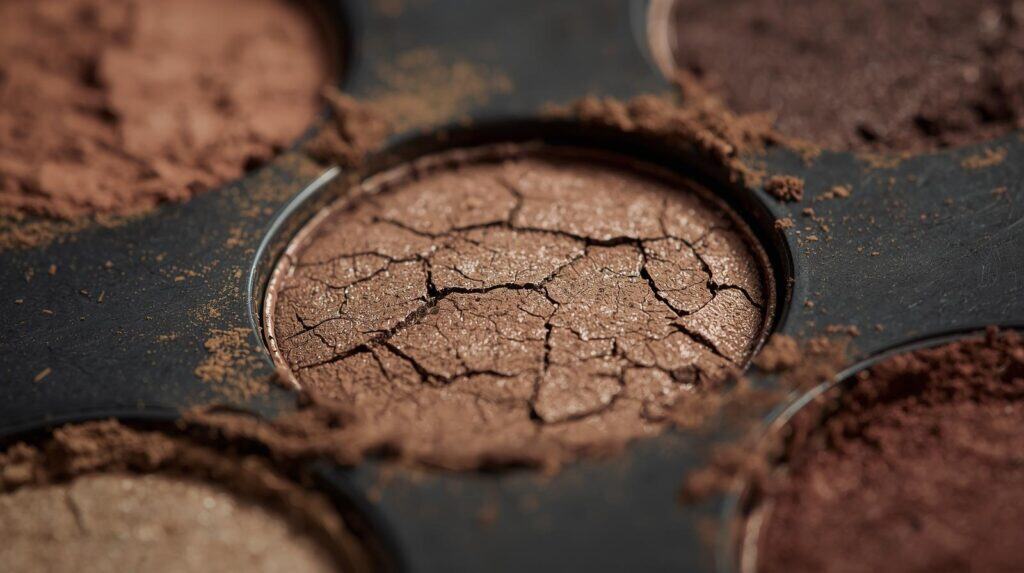
Pressed powder can develop a smooth, hardened surface from repeated contact with skin oils or damp brushes. Age can also affect texture, so consider the whole picture rather than one sign.
If the product has only become harder but still looks and smells normal, check the brand’s guidance and your hygiene habits before deciding what to do.
Do not assume a surface change is harmless if the palette has also been exposed to moisture, shared with other people, or used during an eye infection.
When several warning signs appear together, replacement is the safer choice.
Discoloration
Unexpected spots, fuzzy growth, moisture, or colour changes deserve attention.
Not every colour variation is mould, but you cannot reliably identify contamination just by looking at it.
If you see fuzzy growth, spreading spots, unexpected dampness, or anything that looks like contamination, discard the palette rather than trying to scrape off the affected area.
If you are unsure whether a new spot or colour change is normal for the formula, contact the brand or replace the product.
Funky Smells
A noticeable change in smell is another reason to stop using an old eyeshadow palette.
Pay attention to new or unusual scent changes, especially if the product also looks or performs differently.
An old or deteriorating eyeshadow does not always develop a noticeable smell, so scent should not be your only test.
It may have a more chemical smell or a damp, musty odour.
A musty, rancid, or otherwise unfamiliar odour is a reasonable reason to stop using the product.
If the scent has clearly changed from when the product was new, replacing it is the safer choice for something used so close to the eyes.
You cannot confirm whether an eye product is microbiologically safe by smell alone.
What Happens If You Use Expired Eyeshadow?
Using an old, contaminated, or visibly deteriorated eyeshadow can increase the risk of irritation or infection around the eye area.
The eyelid skin is thin and sensitive, and eye makeup is also used close to the tear film and mucous membranes, which is why hygiene matters more than it does with many other powder products.
Even a product that is within its recommended use period can irritate someone because of an ingredient sensitivity, contamination, or an individual reaction.
The concern is greater when a product has been contaminated, shared, stored in heat or moisture, or used during an eye infection.
A calendar date alone does not tell you exactly what will happen, but if the product is past the brand’s recommended use period or shows suspicious changes in texture, appearance, or smell, it is sensible to dispose of it.
You may experience irritation, swelling, redness, itchiness, and potentially an infection.
If you develop persistent redness, swelling, discharge, significant pain, light sensitivity, or a vision change, seek medical advice promptly rather than continuing to use eye makeup.
Not every use of an older product causes a problem, but eye symptoms should be taken seriously.
If you accidentally used an older palette and feel completely well, simply stop using it if you have concerns and monitor for irritation rather than assuming an infection will occur.
If the product causes irritation, remove it gently, stop using it, and avoid applying additional eye makeup until the area feels normal.
Even if your eyeshadow isn’t technically expired and you’re not noticing any unusual smells, if it causes a rash or discomfort every time you wear it, it’s best to replace it.
If irritation repeatedly returns with the same product, discard it and choose a formula your eyelids tolerate better.
How To Make Your Eyeshadow Palettes Last Longer
You cannot guarantee that a palette will remain suitable until a specific date, but good hygiene and storage can help reduce avoidable contamination and formula changes.
Clean Your Brushes
Keeping applicators clean can reduce the amount of oil, residue, and microorganisms transferred back into the palette. Wash brushes with a suitable cleanser, such as a makeup brush shampoo, and let them dry fully before use.
For personal use, wash brushes regularly, let them dry completely, and use a clean brush when your previous one is dirty or damp.
If you apply shadow with your fingers, wash and dry your hands first. Avoid sharing eye makeup or brushes with other people.
Avoid Moist Environments
Heat and moisture can shorten the useful life of cosmetics and may make it easier for microorganisms to grow.
If you usually keep eyeshadow under the sink or in a steamy bathroom, consider moving it to a cooler, drier location with less temperature and humidity fluctuation.
A steamy bathroom can expose palettes to repeated humidity, so a cool, dry drawer or vanity is usually a better storage spot.
Store eyeshadow palettes in a cool, dry place and close them after each use.
You can use organiser drawers to keep palettes closed, dry, and protected from direct sunlight between uses.
For a visual example of eyeshadow palette storage, the video below shows one way to organise a makeup collection.
Do Not Rely On Alcohol To Reset An Old Palette
Routine alcohol spraying is not a substitute for clean handling, correct storage, or replacing an old or contaminated palette.
Alcohol can also affect the surface texture, binders, or performance of some pressed powders.
More importantly, misting the surface does not prove that the entire product is free of bacteria, fungi, or other contamination.
If a palette was used during an eye infection, has visible contamination, or has changed significantly, discard it instead of trying to disinfect it at home.
Good hygiene is simpler: keep applicators clean, keep the palette dry, close it after use, do not share it, and follow the manufacturer’s use guidance.
Eyeshadow Expiration FAQs
Can Powder Eyeshadow Last Longer Than The Label Suggests?
A palette may still look normal after its recommended use period, but appearance alone cannot verify that it is safe. For eye-area products, following the brand’s guidance and replacing products that are old, contaminated, or irritating is the cautious approach.
Should You Throw Away Eyeshadow After An Eye Infection?
Yes. Eye products and applicators used while you had an eye infection may have become contaminated. Do not share them or continue using them on a healed eye.
Can You Tell If Eyeshadow Is Safe By Smelling It?
No. A changed smell is a warning sign, but a normal smell does not prove that a product is free from contamination.
Does Hard Pan Mean Eyeshadow Is Expired?
Not necessarily. A shiny, hardened surface can develop when oils or moisture transfer from fingers or brushes onto pressed powder. Consider the product’s age, storage, hygiene, manufacturer guidance, and any other changes before deciding whether to keep it.
Related Articles
Best Grayscale Eyeshadow Palettes
Eyeshadow Without Eyeliner – Do or Don’t?
Best Cool-Toned Eyeshadow Palettes