
Beard Balm Vs Wax
Beard care has expanded far beyond basic beard oil and all-in-one wash products, which means there are now more ways to soften, shape, and control facial hair.
Two of the most commonly confused products are beard balm and beard wax.
They can look similar in the tin, and both may contain oils, butters, and waxes. The difference is usually in how much conditioning versus styling hold the formula provides.
If your beard feels rough or dry and only needs light control, balm may make more sense. If your main goal is shaping a longer beard or moustache and keeping flyaways in place, wax usually offers more hold.
Neither category is completely standardized, so always check the ingredient list and product description rather than assuming every balm or wax performs exactly the same way.
Both products can sit alongside beard oil in a grooming routine, but balm and wax serve different priorities.
Although they can look similar at first glance, beard balm and beard wax have different textures, hold levels, and conditioning benefits.
Knowing the difference makes it easier to choose based on whether you want softness, light control, stronger styling, or a combination of those effects.
So, what’s the difference between beard balm and wax?
Beard balm is usually the better fit for softness, conditioning, and light-to-medium control, while beard wax is usually better for stronger hold, flyaway control, and deliberate shaping. Formulas vary, so the ingredient balance matters more than the product name alone.
Below, we compare consistency, ingredients, beard length, texture, styling goals, application, and whether using both products together makes sense.
Beard Balm Vs Wax At A Glance
- Choose beard balm for: softer beard hair, light-to-medium control, reducing a rough feel, and everyday grooming.
- Choose beard wax for: stronger hold, flyaway control, moustache shaping, and more deliberate styling.
- Use both when: you want the conditioning feel of balm but still need extra hold in selected areas.
- Use less product when: your beard is fine, sparse, short, acne-prone around the hairline, or easily weighed down.
The exact result depends on the formula. A firm balm can hold more strongly than a soft wax, so check the product description rather than relying only on the category name.
Beard Balm Vs Wax Consistency
If you were to compare beard balm and beard wax side-by-side, the first distinction you’ll notice is the difference in consistency.
Beard balm is generally softer and more buttery, whereas beard wax can be hard like a salve.
This usually comes down to the ratio of waxes, butters, oils, and resins in the formula.
Both beard balm and beard wax may contain waxy ingredients, such as beeswax, along with oils and butters. Beard wax generally uses a higher proportion of firm hold ingredients.
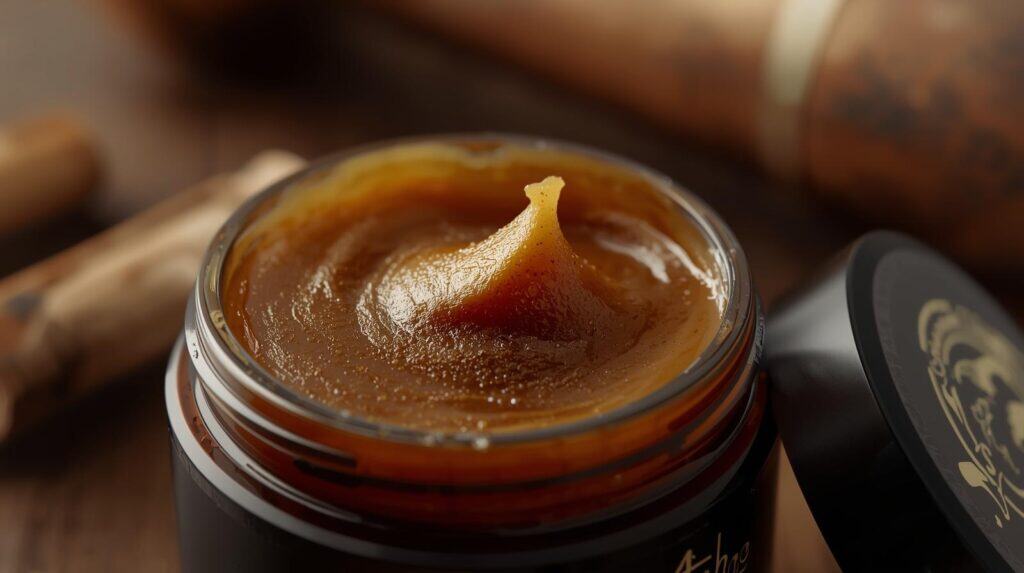
Some beard waxes also contain firmer resins such as pine rosin, although this is not universal and can increase the chance of irritation in sensitive skin.
A higher concentration of waxes and resins can give beard wax stronger holding power, making it useful for taming flyaways, shaping moustaches, and controlling longer beard hair.
Beard balm, on the other hand, often includes more oils and butters that help soften beard hair and reduce a dry or rough feel. Common examples include shea butter, jojoba oil, mango butter, and argan oil; some formulas also contain essential oils for fragrance.
These oils and butters make beard balm softer, so it usually offers less hold than wax. They can help condition beard hair and reduce moisture loss from the skin underneath, but they should not be described as “healing” ingredients.
Ingredients In Beard Balm:
Beard balms often have a good balance of oil, butter, and waxes. Here are some common ingredients found in beard balms:
- Beeswax
- Shea butter
- Mango butter
- Essential oils
- Jojoba oil
- Argan oil
The percentage of waxes and butter determines how firm your beard balm is.
Most beard balms are firm but soft and tend to melt under warmer conditions.
Many beard balms spread thinly through the beard and can leave a relatively natural finish when you use a small amount. Heavier formulas may still feel waxy or look shiny.
Ingredients In Beard Wax:
Beard wax often has a similar composition to beard balm, but a higher concentration of “hard” ingredients like waxes and resins.
Here are the most common ingredients found in beard wax:
- Beeswax
- Shea butter
- Cocoa butter
- Pine resin
- Essential oils
As you can see, beard wax still contains some moisturising ingredients, like shea and cocoa butter.
However, due to the higher concentration of waxes and resins, beard wax tends to sit on top of your hair and provide a stronger hold to the beard.
That means conditioning is usually secondary to styling hold, although some beard waxes still contain useful emollient oils and butters.
Beard Balm Pros And Cons
Beard balm is a leave-in grooming product. It works somewhat like a leave-in conditioner for facial hair by coating and softening the strands while adding light control.
It’s a multipurpose grooming product that can soften the beard, reduce a dry feel, and add light control without the stronger hold of most waxes.
If your goal is to soften and condition your beard while adding a little control, a beard balm may be a useful choice:
Beard Balm Pros:
- Can help reduce a dry or tight feel when the formula reaches the skin underneath the beard
- May make mild dryness-related discomfort feel better, although persistent itching can have causes that grooming products will not fix
- Helps beard hair feel less dry
- Softens the beard hair
- Adds shine to the beard hair
- Can reduce roughness and friction when the beard hair is dry, which may make longer beards easier to manage
- Can provide lasting conditioning, depending on the formula and your beard
- May add fragrance if the formula is scented
- Provides light to medium styling hold
- Works well for small to medium-length beards
Beard Balm Cons:
- Usually provides less styling hold than beard wax
- Rich oils, butters, fragrance, or essential oils may not suit every skin type and can sometimes contribute to irritation or breakouts
- Not ideal for precision styling, e.g., handlebar moustaches
Beard Wax Pros And Cons
Beard wax is generally firmer than beard balm and is designed more for hold and styling than for conditioning.
If you want your handlebar moustache to hold a curl for longer or you need to tame and shape your beard, beard wax may be a useful option:
Beard Wax Pros:
- Provides stronger hold than most beard balms
- Ideal for precision styling
- Can make facial hair look more controlled and intentionally styled
- Ideal for styling an unruly and/or long beard
- Usually sits more noticeably on the hair than a lightweight oil or balm
- Can be applied mainly to the hair if you want to minimize product on the skin underneath
- Can help reduce moisture loss from the beard hair by coating the strands
- Provides a shiny finish to the beard
- It can be used to add texture to the beard
- Some wax-heavy formulas resist light moisture better than balms
- May add fragrance if the wax is scented
Beard Wax Cons:
- Usually provides less conditioning and softening than beard balm
- Wax-heavy formulas can feel occlusive or heavy on the skin underneath the beard
- Primarily a styling product rather than a skin-care treatment
Which Is Best For You?
Choosing between beard balm and beard wax comes down mainly to your styling goal, beard length and density, hair texture, and how your skin tolerates the formula.
You might need both products depending on the day!
Here are some things to consider when you are figuring out which product to get for your beard:
Length Of Beard
The first thing to look at is how long your beard is.
Shorter beards often need less styling hold because there is less length to shape, although coarse or fast-growing hairs can still stick out.
Short beards can still feel dry, rough, itchy, or frizzy. If the skin is persistently flaky, inflamed, or very itchy, consider whether a skin condition rather than simple dryness is involved.
For shorter beards, beard oil or a small amount of beard balm is often enough when softness matters more than strong shaping.
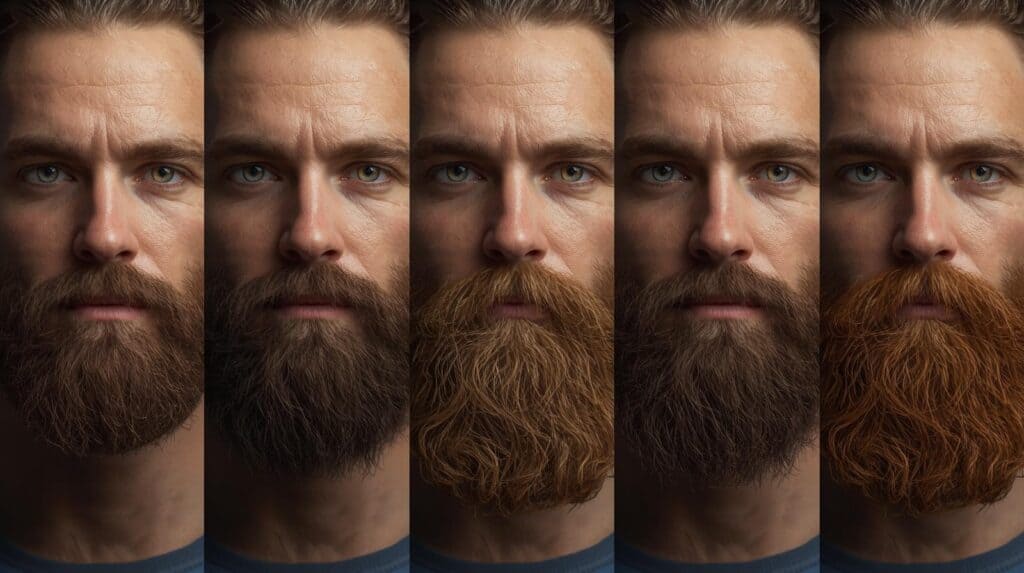
Both can help soften beard hair and reduce a dry feel, although the effect depends on the formula and how much reaches the skin underneath.
A medium-length beard can work with either product. Balm is useful when softness and light control are the priority, while wax makes more sense when the beard needs firmer shaping.
A beard balm works somewhat like a leave-in grooming conditioner, helping a medium-length beard feel softer and look smoother.
Beard balms can provide a light to medium hold that can keep your medium-length beard more or less in place.
If you have a very long beard, you can still use beard balm. Add beard wax only if you want more hold or more precise shaping.
Longer beards often develop more visible flyaways simply because there is more hair to bend, curl, and move out of place.
A beard balm can help reduce flyaways and give a long beard a more cohesive shape. Wax can add stronger control, while regular trimming also helps maintain the outline.
Mustache Style
Another important thing to think about is whether you have a moustache, and how long it is.
If you keep your moustache fairly short and trimmed, a small amount of beard balm may be enough to soften it and add light control.
If you wear a handlebar moustache or another shaped style, beard wax usually gives you more control than balm.
Beard wax can help you shape a handlebar moustache, add curls at the edges, and keep the style in place for longer. Hold time varies with the formula, weather, and hair texture.
Beard Texture
Just as different people have different hair textures, different people also have different beard textures.
Some people have softer facial hair, while others have coarse, curly, or frizzy hair.
Facial hair can be straight, wavy, curly, or coily, and density can vary just as much as texture.
Texture is largely influenced by genetics, while dryness, grooming habits, climate, and product buildup can also change how manageable the beard feels.
For straighter or softer beard hair, beard balm or beard oil may provide enough control if your main goal is softness rather than styling. Texture alone does not determine which product is best.
A small amount can help the beard feel softer without looking overly coated.
You can still use beard wax on straight beard hair if you want more control. The key is using a small amount so the hair does not look stiff or overloaded.
Coarse, curly, frizzy, or coily beards may benefit from the stronger control of a beard wax when shaping is the priority, while balm can still be useful for softness.
Your Personal Goals
Just because you have one type and length of hair doesn’t mean you need to use one product over the other.
Ultimately, which product you use depends on your personal goals. Think about what your beard currently needs:
- Do you need more moisturization and softening?
- Do you want to reduce a dry or rough feeling on the skin underneath?
- Do you care less about styling and more about grooming?
If you answered yes to the questions above, you will find a lot of use for beard balm.
However, if you answer yes to the following questions:
- Do you need a styling product for your beard?
- Do you need stronger hold to keep your beard in shape for longer?
- Do you care less about moisturization and more about the appearance of your beard?
In this case, you’ll probably find that a beard wax works better for you.
Using Both
People often wonder if they can use both a beard balm and a beard wax, or if the products shouldn’t be used together.
The truth is, it depends on your beard type, but most people can use both products at the same time.
If your beard is fine or sparse, a heavy wax can make it look weighed down if you use too much. Start with a very small amount and add more only if needed.
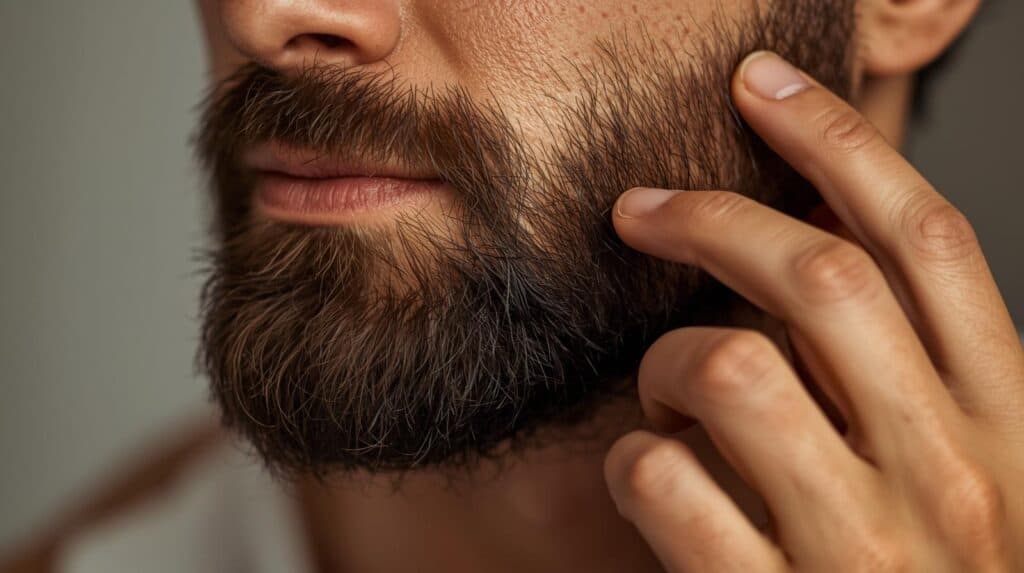
You can use both products if you want the conditioning feel of balm plus the extra hold of wax. Apply light layers so buildup does not become excessive.
A simple comparison is to think of beard balm as a conditioning styling cream and beard wax as a firmer shaping product. The categories overlap, but wax normally prioritizes hold.
For example, you could use beard balm as needed for softness and light control, then add beard wax only on days when you want extra styling.
There is nothing inherently wrong with using both products together, but layering more product is not automatically better. Stop once the beard feels conditioned and holds the shape you want.
How To Use Beard Balm And Beard Wax
If you are new to these products, the easiest rule is to start with less than you think you need. You can always add more.
Here, we will go over step-by-step how to use each product without making the beard feel greasy, stiff, or overloaded.
How To Use Beard Balm
Beard balm can be applied daily or as needed.
A simple routine for beginners is to apply a small amount of beard balm to a clean beard when it feels dry or needs light control. Slightly damp hair can make distribution easier, but follow the product directions.
Here are the steps:
- Start with a clean beard that is dry or slightly damp, depending on the product directions.
- Start with a small amount of balm. The right amount depends on beard length and density, so it is easier to add more than remove excess.
- Spread the balm on your palms by rubbing it between your hands. The balm should begin to melt and soften.
- If your balm is comfortable on your skin, work a small amount toward the skin underneath the beard. If your skin is acne-prone or sensitive, use a lighter layer and pay attention to how the formula behaves.
- Gently pull the balm through your beard hairs down towards the ends, making sure to get the balm on as much of the beard as possible.
- Whatever is left on your palms can then be spread upwards towards the area of your sideburns.
- Finish by brushing or combing your beard to distribute the balm evenly and shape the hair.
That’s it! The balm can leave the beard feeling softer and add light hold. Scent and how long the conditioning effect lasts depend on the formula and how much you use.
Use balm as often as it suits your beard. Clean the beard regularly with a gentle beard cleanser or suitable shampoo, and use a stronger clarifying wash only if you actually notice stubborn buildup.
Here’s a great tutorial from Baddogbeards on YouTube.
How To Use Beard Wax
Unlike beard balm, beard wax is mainly a styling product, so use it when you want more shape or hold rather than as a response to itchiness or dry skin.
Beard wax can be used whenever you need extra hold, whether that is occasionally or as part of a regular styling routine. The right frequency is the one that gives you control without causing uncomfortable buildup.
Here’s how to do it:
- Start with a dry beard.
- Brush or comb your beard gently to remove tangles and arrange the hair before applying wax.
- Once your beard is brushed through and untangled, use your finger (or thumbnail) to scrape out a small amount of beard wax from the tin.
- Warm up the wax by rubbing it between your palms. It should take on a buttery consistency.
- Run the palms of your hand over your beard using a downward motion. This should begin to shape and tame your beard.
- Put any remaining wax over your moustache and sideburns, as well as any areas that seem to be out of place.
- If needed, you can get more wax out of the tin.
- When finished, gently run a brush or comb over the beard to distribute the product and refine the shape.
That’s it! The wax can help keep flyaways and shaped sections in place for longer, although hold time varies with the product, humidity, and beard texture.
When it is time to cleanse, use a beard cleanser or a gentle shampoo that removes the wax without leaving the skin underneath feeling stripped.
If wax buildup remains after normal cleansing, an occasional clarifying wash can help. There is no universal need to clarify on a fixed monthly schedule.
Here’s a great tutorial from Green Beard Grooming Co. on YouTube.
Beard Balm Vs Wax FAQ
Is Beard Balm Better Than Beard Wax?
Neither is automatically better. Balm is usually more useful for softness and everyday control, while wax is usually more useful for stronger styling and shaping.
Can You Use Beard Balm And Wax Together?
Yes. Apply a small amount of balm first if you want conditioning, then use wax only where you need extra hold. Heavy layering can make the beard feel greasy, stiff, or coated.
Is Beard Balm Good For Short Beards?
It can be, especially if a short beard feels rough or needs light control. Start with a very small amount because short facial hair can look greasy quickly when too much product is applied.
Does Beard Wax Wash Out Easily?
That depends on the formula. Softer waxes may wash out with a regular beard cleanser, while wax-heavy or resin-heavy products may take more thorough cleansing. Avoid aggressive scrubbing just to remove product.
Final Thoughts
Beard balm and beard wax overlap, but they are easiest to choose when you focus on the result you want rather than the label on the tin.
Choose beard balm when softness, conditioning, and light-to-medium control matter most. Choose beard wax when stronger hold, flyaway control, or precise moustache and beard shaping are the priority.
If you need both benefits, use balm first in a light layer and add a small amount of wax only where extra hold is needed. Whichever product you choose, regular cleansing and using the smallest effective amount will help keep the beard from feeling coated.
Related Articles