
Can You Paint Over PolyGel Nails?
Modern manicures come with more choices than ever, from traditional polish and gel to structured enhancements such as acrylic and PolyGel.
That variety is useful, but it can also make simple questions, such as what you can paint over an enhancement, surprisingly confusing.
Gel manicures, acrylics, and PolyGel all create different finishes and structures, and the products used on top of them do not always behave in exactly the same way.
PolyGel nails are one option when you want added structure or length while keeping plenty of flexibility for colour and nail art.
You can wear the enhancement in a clear or neutral shade, apply colour during the original service, or change the surface colour later.
That makes PolyGel useful whether you prefer short natural-looking overlays or longer shaped extensions.
PolyGel nails can be used for natural-looking overlays, added length, and a wide range of shapes while still feeling lighter than some traditional enhancement systems.
However, with all the excitement that comes from treating yourself to a fresh manicure comes the pressure of picking the right nail polish shade.
With options ranging from subtle to bold, matte to glitter, it can be hard to choose one shade when an enhancement set may stay on for several weeks.
If you choose to try out PolyGel nails, will you be able to paint over them once they’re on?
Can you polish over PolyGel nails?
Yes. You can apply regular nail polish or compatible gel polish over fully cured PolyGel. Regular polish is easier to change between appointments, while gel polish generally lasts longer but must be cured correctly and removed more carefully.
You can therefore keep the underlying PolyGel enhancement while changing only the surface colour, provided the PolyGel remains well adhered and the polish is removed without peeling, scraping, or over-filing the enhancement.
Regular Polish Vs Gel Polish Over PolyGel
- Regular nail polish: easiest to change, air-dries without a lamp, and is useful when you want a new colour before your next fill.
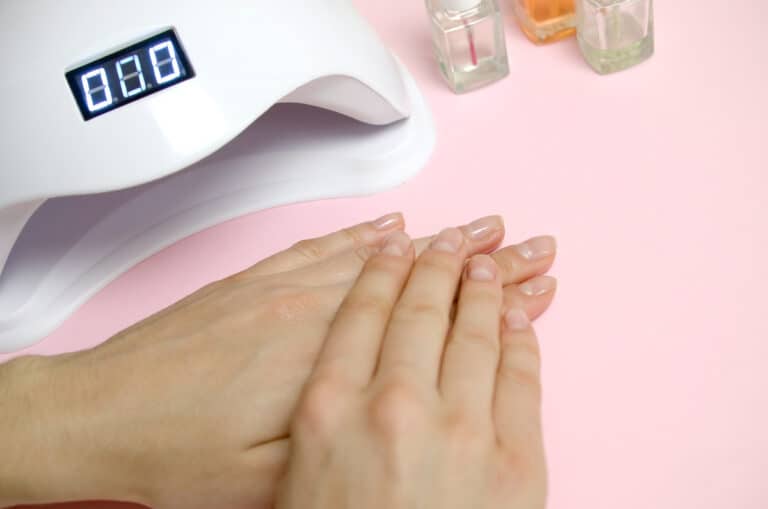
- Gel polish: usually wears longer and keeps a glossy finish for longer, but each layer must be cured with the compatible lamp and cure time.
- For frequent colour changes: regular polish is generally the lower-commitment option because removing the surface colour does not require filing off another cured gel layer.
- For longer wear: gel polish can be more convenient, provided you are prepared for more careful removal later.
What Are PolyGel Nails?
PolyGel nails are a moldable nail-enhancement system that combines characteristics associated with gel and acrylic-style enhancements.
PolyGel nail extensions are nail enhancements that combine features of gel and acrylic-style systems. They are not automatically safer or damage-free, because nail condition depends heavily on preparation, curing, filing, maintenance, and removal.
PolyGel is a thick, moldable enhancement product that combines polymer-based technology with a gel-like application. It is shaped on the nail before being cured under the lamp specified by the manufacturer.
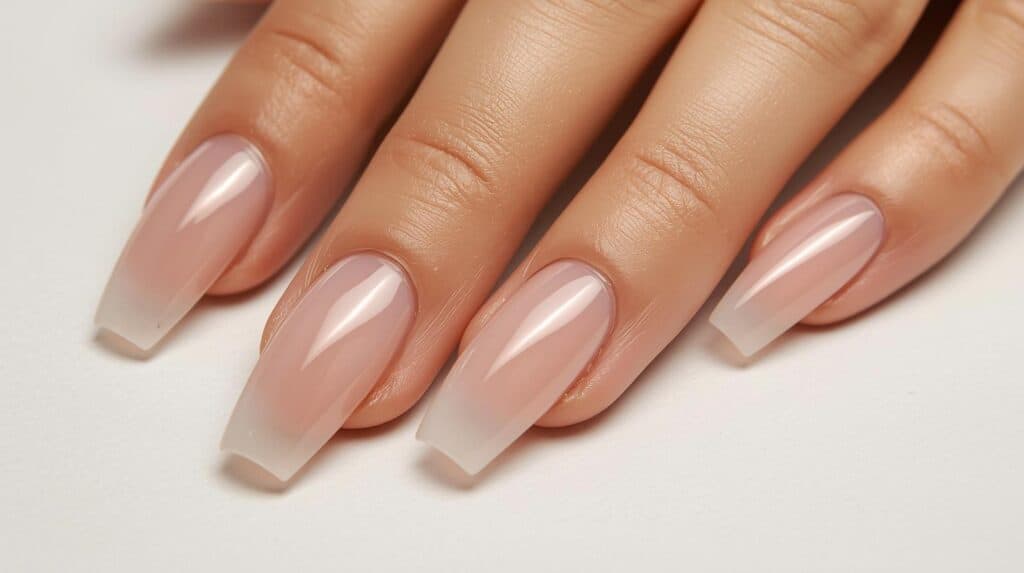
PolyGel often comes in a clear, pink, or white base.
If you’re considering doing your own PolyGel nails, here’s a great tutorial from Jessica Angelique Matini on YouTube.
Benefits Of PolyGel Nails
PolyGel is often described as a hybrid-style enhancement because it has a putty-like consistency that can be shaped before curing while still producing a firm finished nail.
During the application process, PolyGel is cured under a compatible nail lamp. Many modern lamps use UV-emitting LEDs, so follow the exact lamp and cure-time directions for the system you are using.
Once fully cured as directed, PolyGel forms a hard enhancement that can add strength, structure, and length to the natural nail.
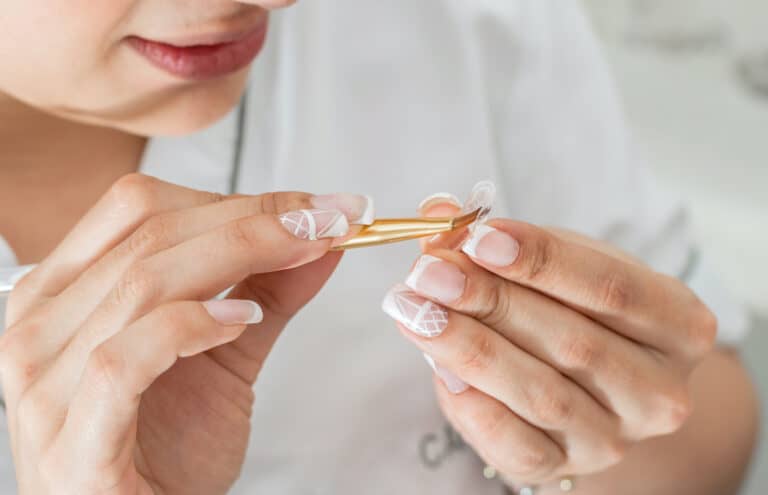
PolyGel can be made to simply overlay and follow the shape of your natural nail, or can be used with nail formers to create an extended appearance.
Through lengthening the nail with the extensions, you can branch out to try different shapes and styles, similar to an acrylic set.
PolyGel also differs from traditional liquid-and-powder acrylic in its application process and odor profile.
PolyGel does not use the same liquid monomer application process as traditional acrylic, but it still contains reactive acrylate ingredients and can create filing dust during shaping or removal. Avoid skin contact with uncured product and cure it fully according to the manufacturer.
PolyGel can feel relatively light when applied in a balanced thickness, although comfort depends on length, structure, and application.
PolyGel does not guarantee less natural-nail damage than gel or acrylic. Over-filing, aggressive scraping, improper removal, or peeling the product off can thin and weaken the nail plate with any enhancement system.
Can You Paint Over PolyGel Nails?
Yes, PolyGel can be painted once it has been fully cured, shaped, and finished. You can use regular nail polish or compatible gel polish, and the better choice depends mainly on how long you want the colour to last and how often you plan to change it.
If you use gel polish, apply thin layers and cure each one under the lamp and for the time recommended for that specific polish system. Do not assume every lamp is compatible with every gel formula.
Keep in mind that the PolyGel nail substance can also come in several shades from clear to neutral shades in the pink family.
You can always wear PolyGel nails as they are and decide to paint over them with a traditional polish colour at a later time.
If you’re interested in applying polish over PolyGel nails, here’s a great tutorial from Nails By Vic on YouTube.
How To Paint Over PolyGel Nails
- Make sure the PolyGel is fully cured, shaped, and finished according to the system directions.
- Remove surface dust and make sure the nail is clean before adding colour.
- For regular polish, apply thin coats and allow each coat to dry before adding the next layer.
- For gel polish, apply thin coats and cure each layer exactly as directed for that gel-polish system.
- Finish with the appropriate top coat if your chosen polish system calls for one.
A smooth finished surface helps colour apply evenly. If the PolyGel is lifting, cracked, or structurally damaged, repair the enhancement rather than simply covering the problem with polish.
What Polishes Are Best To Use?
Because you can paint PolyGel with either standard nail polish or gel polish, knowing your desired results will help you to decide what is best to use.
Gel polish generally wears longer than regular polish on PolyGel, while traditional polish is easier to change if you want a different color before your next fill.
If you like changing colours frequently, traditional polish is usually the simpler option because you can remove the colour without replacing the PolyGel set.
Traditional polish gives you more flexibility to change the surface color without replacing the entire PolyGel enhancement.
If you choose to paint PolyGel nails with traditional polish, make sure the enhancement surface is clean, smooth, and properly finished first.
A cured gel top coat can provide a smooth finished surface beneath traditional polish, but it is optional. Follow the PolyGel and top-coat manufacturer’s instructions so the products are compatible.
Also, another aspect to be mindful of is switching the polish out frequently.
Frequent colour changes mean repeated exposure to remover and extra wiping. A non-acetone remover may be gentler on some finished surfaces, but compatibility still depends on the top coat and PolyGel system underneath.
Gel polish over PolyGel usually gives longer-lasting colour than standard polish, but changing it generally takes more work because the cured colour layer must be removed without accidentally filing into the underlying enhancement.
If you are trying to make visible regrowth less obvious between appointments, sheer, light, or neutral shades can create a softer contrast at the cuticle than very dark or opaque colours.
How Long Do PolyGel Nails Last?
PolyGel enhancements can wear for several weeks when they are applied correctly and maintained well.
Many sets need maintenance after roughly two to four weeks, but timing varies with nail growth, length, daily activities, lifting, and the condition of the enhancement.
Like other enhancement systems, PolyGel can often be maintained with a fill or rebalance when the existing product is still well adhered and structurally sound.
A fill adds additional PolyGel to the space where the nail has grown out and is overlaid over the remainder of the nail.
A completely new set may not be needed at every appointment if the existing product is well adhered and structurally sound. Your nail technician can decide whether a fill, rebalance, repair, or full removal is more appropriate.
Can You Apply PolyGel Nails at Home?
It is possible to apply PolyGel nails at home, but beginners should pay close attention to product control, lamp compatibility, curing time, and keeping uncured gel away from the surrounding skin.
If you want to experiment with PolyGel at home, follow the instructions for your specific kit rather than relying on one universal process.
Begin with careful nail preparation: shape the free edge, gently move back excess cuticle tissue, and avoid cutting or filing living skin.
Clean the nail plate of dust and surface oil using the prep product recommended by the PolyGel system.
Apply the base coat or primer specified by the PolyGel brand, then cure it only if the product directions call for curing.
When you are ready to add the PolyGel, start with a controlled amount appropriate for the nail length rather than relying on one fixed pea-sized amount.
Then, using a slip solution and a small brush, you are able to spread and shape the PolyGel to overlay your natural nail.
If you want to add length to your natural nails, nail formers would be required for this step.
Once you reach the desired shape, cure the nail for the exact time and under the exact lamp type specified by the product manufacturer.
Complete any remaining filing or shaping to ensure nails are even.
You can then apply the recommended top coat and cure it according to the product directions if you want a clear finished look.
If you want more color or nail art, you can also apply traditional polish over a fully cured and cleansed top coat.
If you use gel polish at home, apply thin coats and cure every layer exactly as directed. Keep uncured gel off the surrounding skin to reduce the risk of acrylate sensitization.
How To Remove PolyGel Nails
PolyGel removal depends on the formula. Many systems are primarily filed down, while some remaining product may soften with acetone if the manufacturer describes the system as soak-off. Filing can damage the natural nail if it is too aggressive.
A nail technician may file down most of the enhancement and then follow the manufacturer’s removal method for the remaining layer. Not every PolyGel formula fully dissolves in acetone.
If you are removing PolyGel at home, work slowly and stop before filing into the natural nail. If you are unsure where the product ends, professional removal is safer.
If you have PolyGel extensions, shorten the artificial free edge carefully before reducing the remaining enhancement. Work slowly so you do not clip, file, or thin the natural nail underneath.
If your specific PolyGel system is designed to soften with acetone, follow the manufacturer’s soak-off directions using acetone-soaked cotton and foil or removal clips.
Soak time varies by formula and thickness. Never force, peel, or scrape off product that has not softened sufficiently.
Painting Over PolyGel FAQs
Can You Repaint PolyGel Nails Without Removing Them?
Yes. If the PolyGel enhancement is still well adhered and in good condition, you can remove the surface colour and repaint it instead of removing the entire set.
Can You Put Regular Nail Polish Over A Gel Top Coat?
Yes, regular polish can be applied over a fully cured, clean gel top coat. This can be useful when you want the finished PolyGel underneath to stay intact while changing only the visible colour.
Can Nail Polish Remover Damage PolyGel?
Repeated solvent exposure and aggressive wiping can wear on the finish. A non-acetone remover may be gentler on some surfaces, but follow the PolyGel and top-coat manufacturer’s guidance because formulas differ.
Should You Paint Over Lifted PolyGel?
No. If the enhancement is lifting, cracked, or separating from the natural nail, address the structural problem first. Covering it with colour does not correct the underlying issue.
Conclusion
PolyGel nails are one of several enhancement options for adding structure, length, or a shape that may be difficult to maintain on natural nails alone.
Once the enhancement is fully cured and finished, you can change the surface colour with regular or compatible gel polish without automatically replacing the entire PolyGel set.
PolyGel nails can be worn safely when products are kept off the skin, cured fully with a compatible lamp, maintained properly, and removed without over-filing or peeling. Like other gel-based nail systems, they can still cause irritation or acrylate allergy in susceptible users.
The main takeaway is simple: regular polish is easiest for frequent colour changes, while gel polish is useful when you want longer wear. Whichever you choose, protect the underlying PolyGel by using compatible products and gentle removal.
Related Articles
What Do You Need For Polygel Nails?
Best Polygel Nail Kits With Lamps
Can You Put PolyGel Over Acrylic?